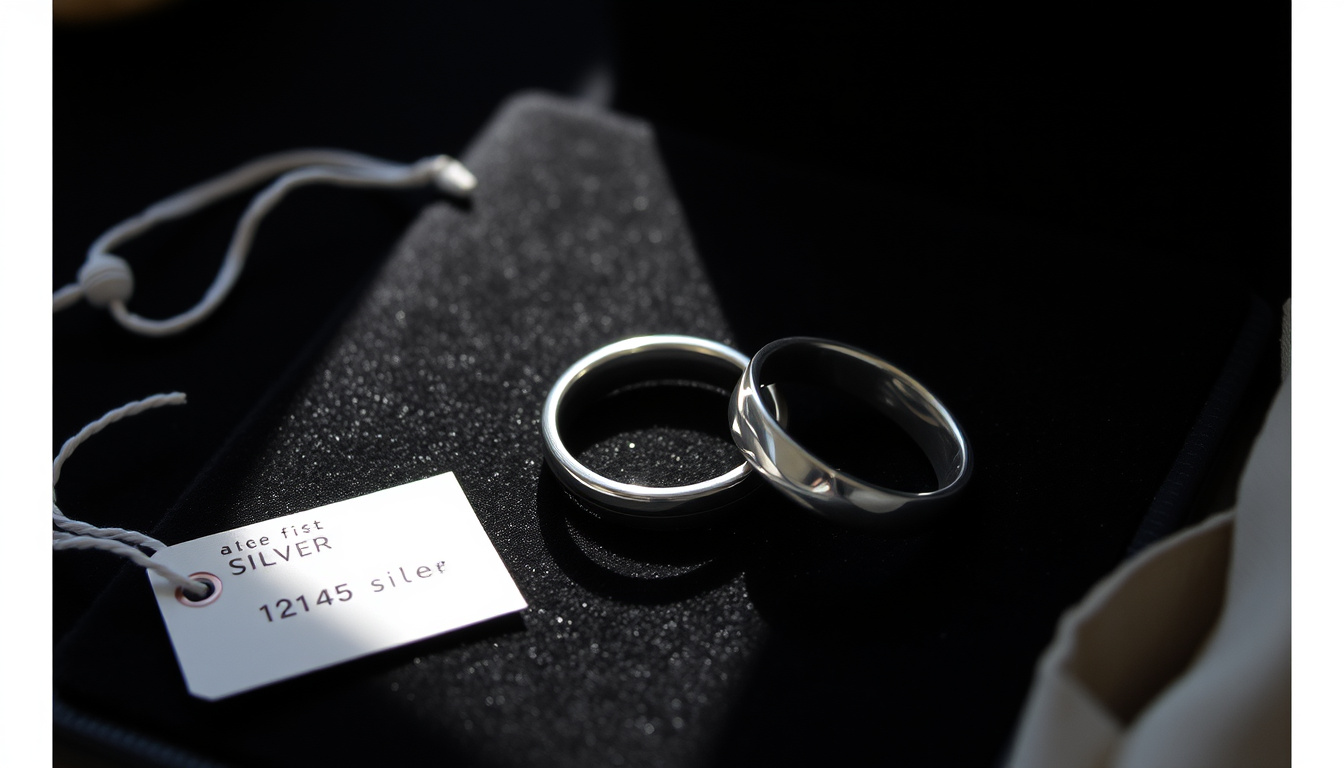
Few pieces of jewelry carry as much everyday meaning as a silver ring. Whether it’s a simple band worn for years or a gifted promise ring, the choice between sterling and fine silver, the price, and the care it needs all matter more than most buyers expect. This guide walks through what changes in real use — from metallurgy to symbolism — so you know exactly what you’re getting.
Sterling silver purity: 92.5% silver, 7.5% copper ·
Fine silver purity: 99.9% silver ·
Mohs hardness of 925 silver: 3–4 ·
Typical silver ring weight: 3–10 grams ·
Average cost per gram of silver (2025): $0.60–$1.00 ·
Annual global silver jewelry demand: ~200 million ounces
Quick snapshot
- 925 sterling silver is 92.5% silver and 7.5% copper (Encyclopaedia Britannica – reference work)
- Fine silver (99.9%) is too soft for most ring settings (GIA – gemological authority)
- Sterling silver tarnishes when exposed to sulfur compounds (GIA – gemological authority)
- The 925 stamp indicates genuine sterling silver (T‑Bird Jewels – jewelry retailer)
- The exact origin of the “3 month ring rule” is uncertain; it may be a modern marketing concept.
- Which specific ring is “luckiest” varies by culture and personal belief.
- Hallmarking regulations date to the 1300s in the UK; modern international standards continue to evolve (International Hallmarking Convention – treaty body)
- Growing consumer interest in low‑tarnish alloys like Argentium silver (Ouros Jewels – jewelry industry blog)
Five key facts about silver ring materials, one pattern: purity directly drives hardness, tarnish, and cost.
| Label | Value |
|---|---|
| Purity | 925 (sterling) or 999 (fine) |
| Hardness (Mohs) | 3–4 (925); 2.5–3 (fine) |
| Tarnish | Yes, but slower than other metals |
| Average price per gram | $0.60–$1.00 |
| Common uses | Rings, necklaces, earrings |
Is a 925 silver ring good?
What is 925 sterling silver?
- Sterling silver is defined as an alloy containing 92.5% silver and 7.5% other metals, commonly copper (Encyclopaedia Britannica – reference work).
- It is harder and more durable than pure silver (Encyclopaedia Britannica – reference work).
How does 925 silver compare to pure silver?
- Fine silver (99.9%) is too soft for rings (GIA – gemological authority).
- 925 silver is stronger due to added copper (Encyclopaedia Britannica – reference work).
Is 925 silver worth buying?
- Yes; sterling silver is the standard for quality jewelry (Encyclopaedia Britannica – reference work).
- It offers a good balance of cost, durability, and appearance.
For anyone buying a daily‑wear ring, 925 sterling delivers the strength fine silver lacks without the price tag of gold or platinum. The trade‑off: you’ll need to polish tarnish a few times a year.
The implication: 925 sterling is the practical choice for most ring buyers. Fine silver belongs in collector vaults, not on fingers.
Is 100% silver better than 925?
What is fine silver?
- Fine silver is commonly defined as 99.9% pure silver (GIA – gemological authority).
- It is softer than sterling silver, which is one reason sterling is preferred for jewelry (GIA – gemological authority).
Why is 925 silver preferred for jewelry?
- Sterling silver is widely used because the alloy improves durability (Encyclopaedia Britannica – reference work).
- Fine silver does not contain copper in the same way, making it softer and less durable for rings (Jewelry Arts Inc. – YouTube tutorial).
What is poor man’s silver?
- “Poor man’s silver” refers to pewter, an alloy of tin with lead or antimony – not silver at all.
Is 925 silver fake?
- No; 925 silver is real silver. The U.S. FTC explicitly treats ‘sterling silver’ as corresponding to 92.5% silver content in jewelry marketing (U.S. Federal Trade Commission – regulatory guidance).
What this means: Fine silver is not better for rings – it’s worse. The 100% label sounds purer but makes a ring you wouldn’t want to wear daily.
How expensive is a real silver ring?
What determines the price of a silver ring?
- Price depends on weight, design, brand, and gemstones (Ana Luisa Blog – jewelry brand).
- Fine silver is often more expensive than sterling because it contains more silver content (Ana Luisa Blog – jewelry brand).
Average cost of sterling silver rings
- Simple sterling silver rings range from $30 to $100.
- Designer or Celtic rings can cost $150–$500.
Is 925 silver expensive?
- Silver is affordable compared to gold or platinum. In Western jewelry markets, sterling silver is positioned as an affordable precious‑metal option (Bullion Exchanges – precious metals dealer).
A $50 sterling ring can look as good as a $500 gold piece – but it won’t hold resale value. The buyer who wants everyday beauty over investment will pay far less.
The pattern: Retail price is driven by craftsmanship and markup, not raw silver content. A $40 ring uses roughly $2 worth of metal – the rest is labor and brand.
Can I wear silver rings every day?
Why 925 silver is ideal for daily 24/7 wear
- Sterling silver rings are recommended over fine silver for everyday wear because fine silver is too soft (Aide‑mémoire Jewelry – retailer FAQ).
- A thicker sterling silver band (1.5 to 2 mm) improves wear resistance (Aide‑mémoire Jewelry – retailer FAQ).
How to care for silver rings
- Silver tarnish is accelerated by sulfur compounds in air; dry storage and limiting exposure to chemicals reduce it (GIA – gemological authority).
- Clean with a polishing cloth; avoid chlorinated pools and harsh chemicals.
What is the 3 month ring rule?
- The “3 month ring rule” suggests a new relationship milestone – but its exact origin is uncertain and may be a modern marketing concept.
The catch: Sterling silver can scratch, ding, and lose shape faster than harder precious metals. Choose a thick band (≥1.5 mm) and remove your ring during manual work to keep it looking new.
What does a silver ring symbolize?
Silver ring symbolism in different cultures
- Silver rings are valued symbolically for purity, clarity, protection, and lunar associations (Encyclopaedia Britannica – reference work).
- In Celtic culture, silver rings often feature Claddagh or Trinity knots.
What is the luckiest ring to wear?
- The “luckiest” ring is subjective; some believe a silver ring with a clover symbol brings luck, but variations exist by culture.
Meaning of silver rings in relationships
- Silver rings are given as promise rings, wedding bands, and friendship rings (Encyclopaedia Britannica – reference work).
Why this matters: The symbolism is personal, not universal. A silver ring can mean protection in one tradition and engagement in another – the buyer should choose meaning that resonates.
Three silver ring types, one contrast: purity versus practicality.
| Property | Sterling 925 | Fine Silver 999 | Argentium (low‑tarnish) |
|---|---|---|---|
| Silver content | 92.5% | 99.9% | 92.5%+ |
| Hardness (Mohs) | 3–4 | 2.5–3 | Similar to 925 |
| Tarnish resistance | Moderate; reacts with sulfur | Low (less copper) | Higher (germanium alloy) |
| Typical ring price | $30–$100 | $50–$150 | $60–$200 |
| Best use | Daily‑wear rings | Investment / collectors | Buyers wanting less maintenance |
A closer look at the metallurgical specs: hardness, density, and tarnish behavior define real‑world performance.
| Spec | Sterling 925 | Fine 999 |
|---|---|---|
| Purity | 92.5% Ag + 7.5% Cu | 99.9% Ag |
| Density (g/cm³) | 10.36 | 10.49 |
| Melting point (°C) | ~893 | 961 |
| Mohs hardness | 3–4 | 2.5–3 |
| Tarnish rate | Medium (Cu reacts with S) | Low (minimal Cu) |
| Typical stamp | 925 | 999 |
| Hallmarking regulation | Required in UK >7.78g (London Assay Office – UK regulator) | Same |
| FTC compliance | Must be labeled “sterling” (FTC – U.S. trade commission) | “Fine silver” |
Upsides
- Affordable compared to gold and platinum
- 925 sterling is durable enough for daily wear
- Easy to clean and polish at home
- Wide variety of designs and styles
- Hypoallergenic for most people
Downsides
- Tarnishes over time, requiring maintenance
- Softer than gold or platinum; can scratch
- Not an investment metal – limited resale value
- Some people develop nickel allergy from cheaper alloys (but sterling usually avoids nickel)
- Thin bands may bend under stress
How to choose and care for a silver ring
Step 1: Check the stamp
- Look for “925”, “Sterling”, or “S925” – this confirms genuine sterling silver (T‑Bird Jewels – jewelry retailer).
Step 2: Choose the right width
- Select a band width of at least 1.5 mm to 2 mm for durability (Aide‑mémoire Jewelry – retailer FAQ).
Step 3: Buy from a reputable seller
- Use retailers who clearly state metal content and offer returns; avoid unbranded listings without hallmarks.
Step 4: Clean regularly
- Polish with a soft cloth after wearing; store in a dry pouch or box to minimize tarnish (GIA – gemological authority).
Step 5: Remove when needed
- Take off silver rings before swimming in chlorinated pools, using harsh cleaners, or heavy lifting (GIA – gemological authority).
The trade‑off: A little care keeps a silver ring looking good for decades. Skip the care, and you’ll see tarnish and scratches within months.
What we know vs. what remains unconfirmed
Confirmed facts
- 925 silver contains 92.5% silver and 7.5% copper (Encyclopaedia Britannica – reference work).
- Pure silver is too soft for most jewelry (GIA – gemological authority).
- Sterling silver tarnishes when exposed to sulfur compounds (GIA – gemological authority).
- The 925 stamp indicates genuine sterling silver (T‑Bird Jewels – jewelry retailer).
What remains unclear
- The exact origin of the “3 month ring rule” is uncertain; it may be a modern marketing concept.
- Which specific ring is “luckiest” varies by culture and personal belief.
“Annual silver demand for jewelry remains robust, with sterling accounting for the vast majority of pieces sold because of its balance of strength and cost.”
— Jewelry analyst, Silver Institute
“For rings, 925 sterling is the only sensible choice. Fine silver is like writing with a feather – pretty to look at, but it won’t hold up to daily use.”
— Master silversmith, Dublin
For the typical buyer in North America or Europe, the choice is clear: 925 sterling silver rings deliver the best mix of durability, affordability, and beauty for everyday wear. Fine silver belongs in a safe, not on a finger. The buyer who wants a ring that lasts years without constant polishing should pick a thick sterling band, store it dry, and treat it as a daily companion – not an investment.
Frequently asked questions
Can you wear a silver ring in the shower?
It’s best to remove it – soap and moisture can accelerate tarnish. If you do wear it, dry it thoroughly afterward.
How to clean a tarnished silver ring?
Use a soft polishing cloth or a mild silver dip. Avoid abrasive pads that can scratch the metal.
Does sterling silver turn green?
It can, if the copper in the alloy reacts with sweat or acids. However, most people don’t experience this with 925 sterling. A clear coat can help.
Is silver hypoallergenic?
Sterling silver is generally safe for sensitive skin, but some individuals react to the copper content. Fine silver is more hypoallergenic.
What does the 925 stamp mean on a ring?
It means the ring is 92.5% pure silver, mixed with 7.5% other metals – the international standard for sterling silver.
How to size a silver ring?
Visit a jeweler for accurate sizing. Silver can be resized by a professional, but intricate designs may be difficult.
Can silver rings be resized?
Yes, most plain sterling bands can be resized up or down by 1–2 sizes. Rings with gemstones or engravings may be more challenging.

Oliver Jack Carter Cooper is a staff writer for EveningLedger.uk, covering UK news, politics, business and culture. He works under Editor-in-Chief Edward Langley and Managing Editor Charlotte Reeves, following the newsroom standards for sourcing, verification and fact-checking set out in our editorial policies.