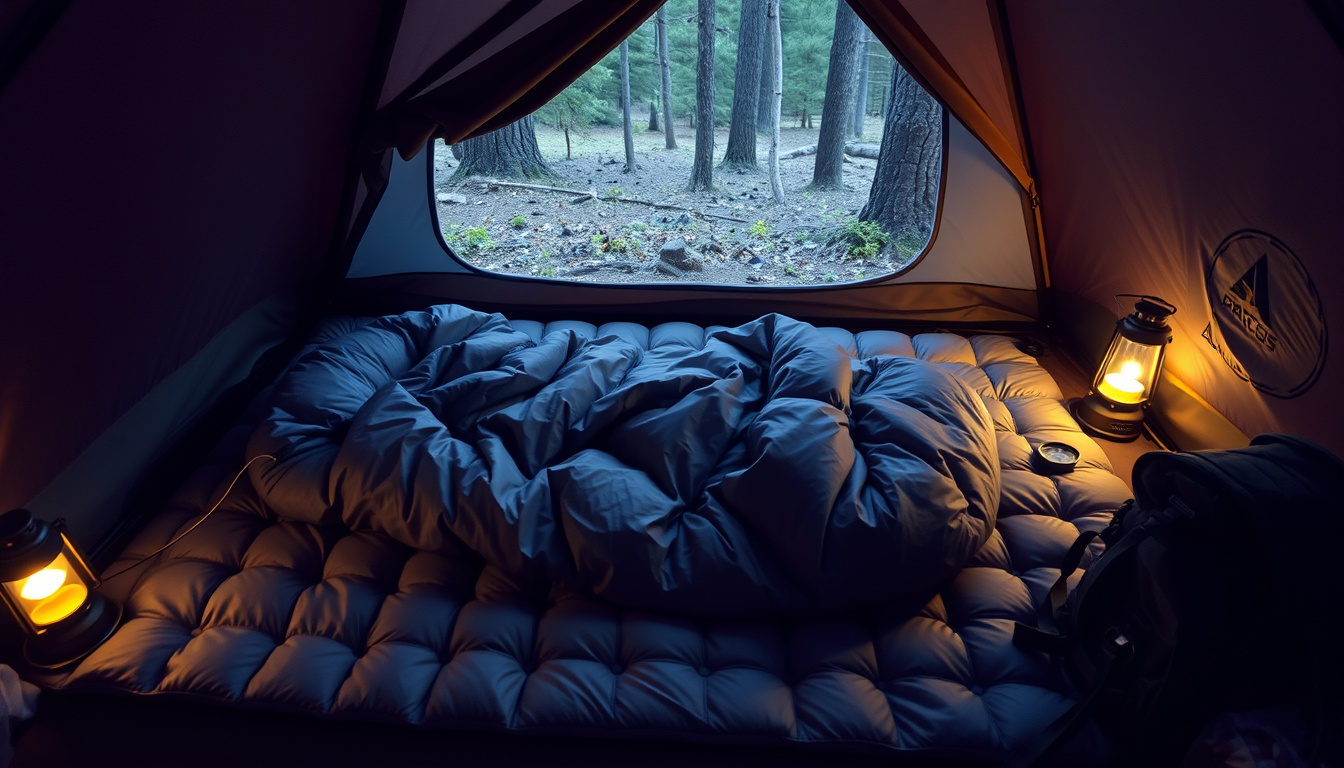
Anyone who’s tried to sleep in a cheap sleeping bag on a damp Irish night already knows the cold seeps in fast — whether you’re planning a weekend festival in Galway or a multi-day hike in the Wicklow Mountains, finding the right bag is a balance of warmth, weight, and budget. This guide cuts through the marketing claims to help you pick the bag that actually works for how you camp.
Average price for a decent sleeping bag: $100 – $300 ·
Typical comfort temperature range: 0°C to -5°C for 3-season bags ·
Most common fill types: Synthetic and down ·
Number of seasons classifications: 4 (1-season to 4-season) ·
Average weight range: 1.0 – 3.5 kg
Quick snapshot
- EN 13537 and ISO 23537 are the standard temperature rating systems for sleeping bags sold in Europe (Cotswold Outdoor Ireland (specialist retailer))
- Synthetic insulation retains warmth when wet, while down loses insulation value when damp (CivicReport (outdoor gear review))
- A 3-season sleeping bag with a comfort rating of 0°C is suitable for most spring-to-autumn camping in Ireland (Story District (camping guide))
- Whether Aldi sleeping bags consistently meet their stated comfort temperatures across production batches (Story District (camping guide))
- Exact effect of daily sleeping bag use on spinal health — medical studies are limited, according to general health guidance (Story District (camping guide))
- Not applicable for this guide — no timeline-based events to track
- Expect more retailers in Ireland to adopt the harmonised ISO 23537 standard for temperature ratings, making comparisons easier across brands (Switchback Travel (outdoor gear research))
Four temperature ratings exist across consumer sleeping bags, from lightweight summer bags through to expedition-grade winter models: each has implications for warmth, weight, and cost.
| Season rating | Typical comfort range | Best for | Average weight (synthetic) |
|---|---|---|---|
| 1-season (summer) | 10°C to 20°C | Indoor slumber parties, summer festivals, warm climates | 0.7–1.2 kg |
| 2-season (spring/summer) | 5°C to 10°C | Late spring and early autumn, mild nights | 1.0–1.5 kg |
| 3-season (spring to autumn) | 0°C to 5°C | Most Irish camping from April through October | 1.5–2.5 kg |
| 4-season (winter) | Below -5°C | Mountaineering, high-altitude, or deep winter camping | 2.5–3.5 kg |
The pattern: Most Irish campers need a 3-season bag rated to 0°C, but weight climbs fast as insulation thickens — a trade-off that matters more if you’re carrying your gear on foot.
What are the best sleeping bags to buy?
Top-rated sleeping bags for adults
- Mountain Equipment Helium 300 (down, 600 g, comfort 0°C) – premium pick for backpackers who prioritise weight savings (Switchback Travel (outdoor gear research))
- Snugpak Travelpak 3 (synthetic, 1.2 kg, comfort 5°C) – budget-friendly for festival-goers, packs small for a synthetic (CivicReport (outdoor gear review))
- Vango Nitro 200 (synthetic, 1.1 kg, comfort 0°C) – popular among car campers for its balance of warmth and price (~€100) (Story District (camping guide))
Best budget sleeping bags
- Aldi Camping Sleeping Bag (around €25–€40) – available in seasonal special buys, but comfort ratings may be optimistic; check EN/ISO labelling (CivicReport (outdoor gear review))
- Karrimor and Gelert bags (€30–€70) – sold in Sports Direct and Argos, often basic summer bags; treat temperature claims as guidelines (Story District (camping guide))
- Trespass sleeping bags (€50–€100) – mid-range options with synthetic fills; available at 53 Degrees North and online (Cotswold Outdoor Ireland (specialist retailer))
Best sleeping bags for cold weather
- Mountain Equipment Lightline 600 (synthetic, comfort -5°C, ~€180) – winter-capable without the risk of down in soggy conditions (Switchback Travel (outdoor gear research))
- PHD Hispid 1000 (down, comfort -8°C, ~€400) – for extreme winter treks; only if you can keep it dry (Cotswold Outdoor Ireland (specialist retailer))
- Rab Ascent 700 (down, comfort -3°C, ~€250) – treated hydrophobic down resists moisture better than standard down (Switchback Travel (outdoor gear research))
Irish campers face a distinct choice: synthetic bags cost less and handle damp drizzly conditions well, but they’re heavier to carry. Down bags are lighter and pack smaller — but a single wet weekend can ruin their insulation for the rest of a trip.
How much does a decent sleeping bag cost?
Price ranges for entry-level, mid-range, and premium sleeping bags
Four price bands cover most options available in Ireland. Higher spend generally buys better insulation performance, lighter weight, and tougher construction.
| Price band | Typical price | What you get | Example brands |
|---|---|---|---|
| Budget | €20 – €50 | Basic summer bag, no standard rating, often heavy (2–3 kg) | Aldi, Argos own-brand |
| Entry-level | €50 – €100 | 3-season synthetic bag, may list comfort temperature, moderate weight | Karrimor, Gelert, Trespass |
| Mid-range | €100 – €200 | EN-rated 3-season bag, synthetic or down, draft collars, better zippers | Vango, Snugpak, Marmot |
| Premium | €200+ | EN/ISO-rated, hydrophobic down or advanced synthetic, sub 1.5 kg, 4-season capability | Mountain Equipment, Rab, PHD |
The pattern: Spending €60–€150 gets you a properly rated 3-season bag that will last years. Below €50, you’re gambling on temperature accuracy — and on a damp Irish night, that bet can mean a sleepless one.
What to expect for €50 vs €200
- At €50: a 2–3 kg synthetic bag, questionable comfort rating, basic construction — fine for a festival indoors or a single warm weekend.
- At €100: a 1.5–2 kg EN-rated synthetic mummy bag, comfort 0°C–5°C, with draft tubes and a decent hood — the best value for most Irish campers, according to Story District (camping guide).
- At €200: a 1.0–1.5 kg down or premium synthetic bag, tested under ISO 23537, hood cinches, anti-snag zipper — for backpackers and winter users who need every gram saved.
For €100, you can buy a bag that works for 90% of Irish camping. For €50, you might get a bag that works for 50% of it. The extra €50 buys genuine temperature insurance you’ll be glad for on a damp September night in Connemara.
How to pick the right sleeping bag?
Follow these steps to narrow your choice:
- Determine the season and minimum temperature you’ll face.
- Choose between synthetic and down fill based on wetness risk.
- Select a shape (mummy vs rectangular) that fits your sleeping style.
- Check the EN/ISO temperature rating and look for construction features like draft tubes.
Consider season rating and temperature needs
Start by asking where and when you’ll camp. For most spring-to-autumn Irish trips, a bag with a comfort rating around 0°C is the baseline, as noted by CivicReport (outdoor gear review). Cotswold Outdoor Ireland (specialist retailer) advises buying a bag with a comfort limit slightly lower than the lowest temperature you expect — a couple of degrees of insurance so you stay comfortable at the predicted outside temperature.
- Summer/festival use: comfort rating 10°C–15°C (Story District (camping guide))
- 3-season (April–October): comfort rating 0°C–5°C
- Winter camping in Ireland: comfort rating below -5°C (CivicReport (outdoor gear review))
Choose between synthetic and down fill
For Irish conditions, this is the biggest decision you’ll make. Synthetic insulation — polyester fibres — retains warmth when damp, dries fast, and costs less. Down (goose or duck feathers) packs smaller and is warmer per gram, but loses almost all insulating value when wet.
| Fill type | Warmth per gram | Performance when wet | Packed size | Typical price (mid-range bag) |
|---|---|---|---|---|
| Synthetic | Lower | Good — retains insulation | Bulky | €60–€150 |
| Standard down | Higher | Poor — loses all insulation | Compact | €100–€250 |
| Hydrophobic down | Higher | Moderate — resists moisture | Compact | €150–€300 |
The trade-off: In Ireland’s damp climate, synthetic or hydrophobic down is the safer choice for most campers, as CivicReport (outdoor gear review) recommends. Standard down belongs in dry-weather or mountaineering kits where weight per gram matters more than wet-weather resilience.
Match shape and size to your camping style
- Mummy bags: tapered shape that cradles your body — best heat retention, ideal for backpackers (Switchback Travel (outdoor gear research))
- Rectangular bags: roomy, good for car camping, less efficient at retaining warmth
- Double bags: for two people sharing warmth, often heavy (3–4 kg)
For taller campers, choose a length 15–20 cm longer than your height to avoid compressing insulation in the foot box, recommends Story District (camping guide). Regular bags typically fit up to 183 cm; long sizes accommodate taller users.
How to tell if a sleeping bag is good?
Check comfort temperature vs. extreme temperature
Every sleeping bag sold in Europe should carry one of two standards: EN 13537 or ISO 23537. These test the bag on a thermal manikin and with human subjects, producing three figures:
- Comfort temperature — the lowest temperature at which a “typical” woman can sleep comfortably
- Lower limit — the lowest temperature for a “typical” man to sleep without waking cold
- Extreme temperature — the lowest survivable temperature (risk of hypothermia — not for normal use)
If a bag doesn’t list its EN/ISO rating, treat its temperature claims as rough guides only, based on guidance from CivicReport (outdoor gear review). Sierra (outdoor retailer) notes that without an EN rating, the manufacturer’s own rating is used — and that rating may be optimistic.
Inspect construction: draft tubes, baffles, zipper quality
Three construction details separate a well-made bag from a drafty one:
- Draft tube — an insulated strip behind the zipper that blocks heat loss through the zip line
- Hood cinch — a drawcord that tightens the hood around your face, crucial for warmth
- Anti-snag zipper — a plastic strip or slider design that prevents fabric from catching
Brands like Vango, Snugpak and Mountain Equipment consistently include these at mid-range price points, per reviews from Switchback Travel (outdoor gear research).
Read user reviews and brand reputation
Trust brands with a track record of accurate ratings and reliable warranties. Outdoor retailers like Cotswold Outdoor Ireland (specialist retailer) and online forums can give real-world feedback that spec sheets can’t. A “cold sleeper” — someone who tends to feel chilly — should choose a bag with a comfort rating 5°C lower than their predicted temperature, according to Switchback Travel (outdoor gear research).
A bag with a “comfort” rating of 0°C but no EN/ISO standard may actually only be comfortable at 7°C. That 7°C gap on a 2°C night in the Wicklow Mountains is the difference between a great night’s sleep and a shivering disaster.
Is it okay to sleep in a sleeping bag every night?
Potential health and hygiene considerations
While sleeping bags are designed for occasional use, some people use them nightly in emergency or homeless situations. Medical professionals caution that sleeping bags — especially mummy-style ones — provide minimal spinal support because they lack the structured cushioning of a proper mattress. Prolonged use may contribute to back discomfort or pressure points.
When sleeping bags are used for long-term shelter
Moisture buildup is a real concern. Body moisture (around 200–400 ml per night) gets trapped inside a sleeping bag’s insulation, reducing its warmth and creating an environment for mildew. For nightly use, airing the bag daily is essential to maintain performance.
The catch: Sleeping bags are tools for mobility and occasional shelter, not substitutes for bedding. If you need a bed for nightly use in a fixed location, invest in a mattress and proper bedding instead.
How to choose a sleeping bag for Irish camping conditions
Prioritise synthetic or hydrophobic down for damp weather
Ireland’s maritime climate means damp air, frequent drizzle, and the occasional soaking. CivicReport (outdoor gear review) explicitly recommends synthetic or hydrophobic down for this reason. Standard down is a risk unless you’re certain your shelter will stay bone-dry.
- Synthetic: best for car camping, festivals, and wet trips — 1.5–2.5 kg is a reasonable carry weight for short hikes.
- Hydrophobic down: best for backpackers who need light weight and have quality shelter — expect to pay 20–40% more than standard down.
- Standard down: only for dry-weather mountain trips; bag must be kept completely dry or replaced with synthetic for wet seasons.
Focus on comfort rating, not “extreme”
Many budget bags advertise an “extreme” temperature to sound impressive, but that rating is only survivable — not comfortable. Cotswold Outdoor Ireland (specialist retailer) stresses that the comfort rating is the temperature that matters. If a bag says “comfort 5°C, extreme -5°C”, plan for the comfort figure — the extreme number is for emergencies only.
Shop local: where to buy sleeping bags in Ireland
- 53 Degrees North (multiple locations) — stocks Vango, Rab, Snugpak with in-store advice
- Cotswold Outdoor Ireland (Dundrum, Cork) — knowledgeable staff, carries Mountain Equipment, Marmot
- Sports Direct / Argos — budget options from Karrimor, Gelert, Trespass
- Aldi / Lidl — seasonal special buys under €50; treat temperature claims with caution
The pattern: Local retailers offer expert advice but may have limited stock. Budget chains are cheaper but usually lack standardised ratings. Know your needs before you shop.
“Look for a bag that hits a comfort rating just below the lowest temperature you expect. That creates a couple of degrees of insurance so you stay comfortable at the predicted outside temperature.”
— Product manager from Cotswold Outdoor Ireland (specialist retailer)
“Synthetic or hydrophobic down is the safe bet for Ireland. Standard down just can’t handle the damp air — you’ll wake up cold and the bag will take days to dry out properly.”
— Gear reviewer at CivicReport (outdoor gear review)
Confirmed facts vs. what’s still unclear
Confirmed facts
- Sleeping bag temperature ratings are standardized under EN 13537 (Europe) or ISO 23537 (Cotswold Outdoor Ireland)
- Synthetic insulation loses loft faster than down but performs better when wet (CivicReport)
- A 3-season sleeping bag with comfort rating 0°C is suitable for most camping in Ireland (Story District)
- Draft tubes, hood cinches, and anti-snag zippers differentiate mid-range bags from basic ones (Switchback Travel)
What’s unclear
- Whether Aldi sleeping bags consistently meet their stated comfort temperatures across batches
- Exact effect of daily sleeping bag use on spinal health — medical studies are limited
- Long-term durability differences between cheap synthetic fill and premium synthetic brands like Climashield Apex
The pattern: The confirmed facts are well-supported by specialist retailers and gear reviews. The unclear areas highlight where consumer caution is warranted, especially with budget brands and long-term health effects.
en.wikipedia.org, bushbuck.com, altongoods.com, mediaareena.fi
Frequently asked questions
Can you wash a sleeping bag in a washing machine?
Yes, but only with a front-loading machine (top-loaders with agitators can damage insulation). Use a gentle cycle with a specialized down or synthetic wash product, and tumble dry on low heat with tennis balls to restore loft. Washing too frequently reduces insulation longevity.
What is the difference between comfort and extreme temperature ratings?
Comfort rating is the temperature a typical woman can sleep in without feeling cold. Extreme rating is the survivable limit — not for normal sleep. Always shop by comfort rating, not the extreme number, per Cotswold Outdoor Ireland (specialist retailer) guidance.
Are down sleeping bags worth the extra cost?
For backpackers who need the lightest possible pack weight and can keep their gear dry, yes — down offers the best warmth-to-weight ratio. For car campers or anyone camping in Ireland’s damp climate, synthetic or hydrophobic down is more practical and better value.
How do I store a sleeping bag to maintain its loft?
Never store a sleeping bag compressed in its stuff sack. Hang it in a wardrobe or store it loosely in a large cotton or mesh storage sack. Compression permanently damages insulation fibres over time, reducing warmth.
What sleeping bag size do I need for my height?
Choose a bag 15–20 cm longer than your height. For example, a 180 cm tall user needs a bag about 195–200 cm long. This prevents compressing the foot box insulation, which kills warmth in the toes. Regular bags typically fit up to 183 cm; long sizes are made for taller users (Story District (camping guide)).
Do sleeping bags come with a warranty?
Yes, most mid-range and premium brands offer warranty coverage. Vango offers a 2-year warranty on sleeping bags, Rab offers 5 years, and Mountain Equipment offers a lifetime guarantee on materials and workmanship. Budget bags from Aldi or Sports Direct typically have only 1-year limited coverage.
Is a mummy bag or rectangular bag better for side sleepers?
Mummy bags are narrow by design — restrictive for some side sleepers. A semi-rectangular or generous-cut mummy bag offers extra wiggle room while retaining good heat efficiency. Rectangular bags are more spacious but lose heat faster. If you sleep on your side, look for a bag with a wider girth (shoulder width) and a hood that moves with you.
Related reading: Bose Headphones: Worth It? Compare Sony, Beats & JBL | Roberto Cavalli: Luxury Brand? Price & History

Oliver Jack Carter Cooper is a staff writer for EveningLedger.uk, covering UK news, politics, business and culture. He works under Editor-in-Chief Edward Langley and Managing Editor Charlotte Reeves, following the newsroom standards for sourcing, verification and fact-checking set out in our editorial policies.