Most people know the number: 33 victims. But behind that statistic lies a forensic puzzle that took decades to fully piece together. John Wayne Gacy’s crimes in the 1970s left Chicago with one of the largest murder investigations in American history, and even today, investigators are still working to identify remains. This article separates what official records have confirmed from what remains uncertain.
Victims: 33 young men and teens ·
Conviction Year: 1980 ·
Execution Date: May 10, 1994 ·
Killings Period: 1972–1978 ·
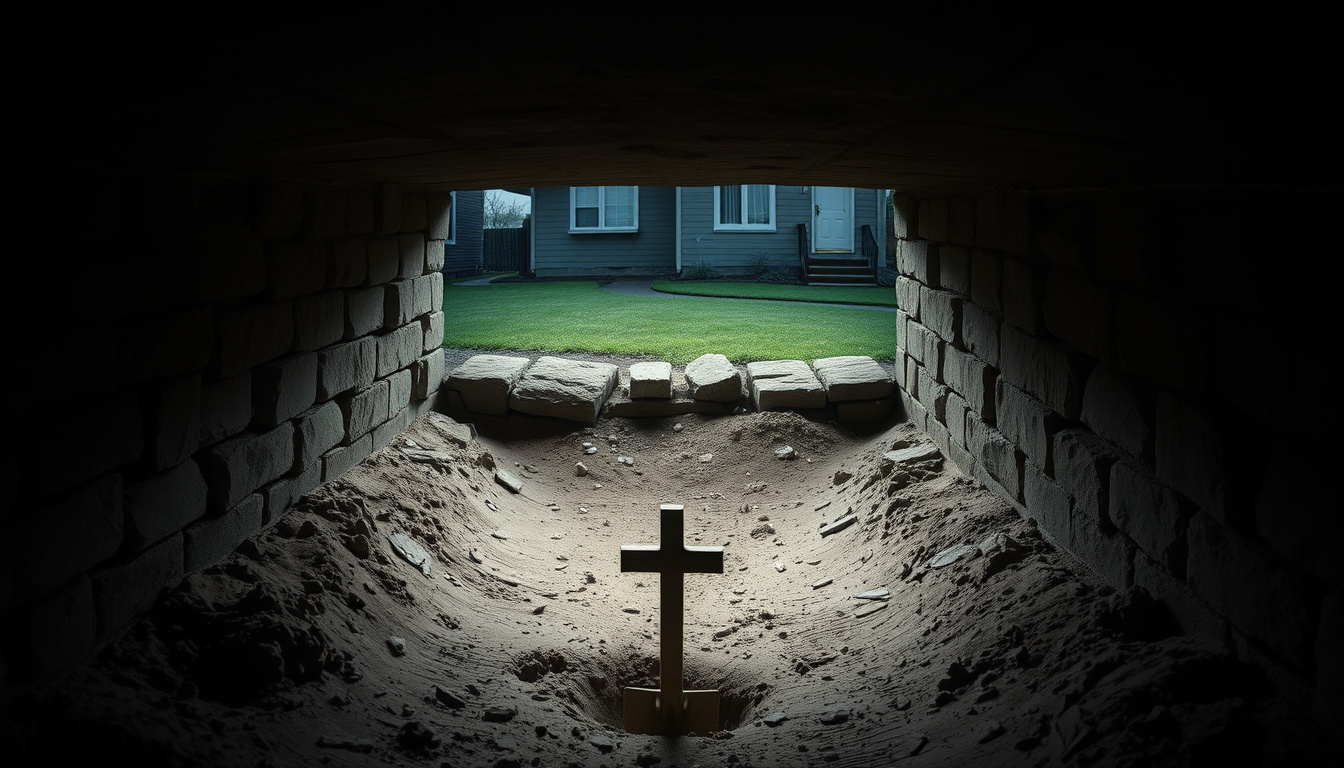
Burial Site: Crawl space of his Norwood Park home
Quick snapshot
- Gacy was convicted of murdering 33 young men and teens (BBC News)
- 29 bodies were recovered from his property, 26 from the crawl space (Illinois Supreme Court records)
- He was executed by lethal injection on May 10, 1994 (Chicago Tribune)
- Whether the true victim count exceeds 33 remains unconfirmed (Encyclopedia.com legal summary)
- Accomplice theories have never been substantiated by evidence (Illinois Supreme Court ruling)
- Some victims’ remains have never been identified (The New York Times)
- Dec 11, 1978: Robert Piest disappears, triggering investigation (The New York Times)
- Dec 21, 1978: Gacy arrested (Chicago Tribune)
- May 10, 1994: Executed at Stateville Correctional Center (Chicago Tribune)
- DNA and genealogical methods continue to identify victims (BBC News)
- Francis Wayne Alexander was identified in 2021 (The New York Times)
- Remains of several victims remain unclaimed (BBC News)
Eight key data points from the official record reveal a consistent pattern: every number points to a methodical, long-running operation hidden in plain sight.
| Label | Value |
|---|---|
| Full Name | John Wayne Gacy |
| Born | March 17, 1942, Chicago, Illinois |
| Died | May 10, 1994, Joliet, Illinois (executed) |
| Crime Period | 1972–1978 |
| Number of Victims | 33 confirmed |
| Weapon/Method | Handcuffs, rope, drowning (some victims) |
| Burial Site of Victims | Crawl space of 5953 W. Summerdale Ave, Norwood Park |
| Court Outcome | Found guilty; 12 life sentences; sentenced to death |
What is the latest verified information about John Wayne Gacy?
Recent developments in the case
- In October 2021, Francis Wayne Alexander became the latest victim identified through advanced DNA and genealogical methods (The New York Times)
- His remains were among those found in the crawl space of Gacy’s home in 1978 (BBC News)
- Families of missing youths who vanished between 1970 and Gacy’s 1978 arrest were asked to submit saliva samples during the reopened identification effort (BBC News)
Modern forensic science has given investigators tools that simply did not exist in 1978. DNA profiling and genealogical databases now allow law enforcement to match remains that once carried only case numbers. The implication: the investigation is not closed — it is ongoing.
New investigations or DNA reviews
- The Cook County Sheriff’s Office has continued to review unidentified remains linked to Gacy (BBC News)
- Genealogical analysis has been used to cross-reference family DNA samples with remains recovered from the crawl space (The New York Times)
- Archive.org preserves the Des Plaines Police Department records from the original Robert Piest investigation, providing a primary-source paper trail for modern reviewers
The same records that convicted Gacy in 1980 are now being re-examined with 21st-century science. The gap between what was found and what could be identified is slowly narrowing.
Current status of evidence
- Gacy’s conviction for 33 murders remains the official count (BBC News)
- The Illinois Supreme Court record from 1984 details that 29 bodies were recovered from the crawl space, driveway, and garage area, and five bodies were recovered from the Des Plaines River (People v. Gacy, Illinois Supreme Court)
- Physical evidence — including handcuffs, rope, and clothing — remains preserved in law enforcement archives
The evidence trail is stronger than most serial-killer cases because Gacy’s own property served as the primary crime scene. Law enforcement recovered physical remains from a single residential location, which gave prosecutors a closed-loop chain of custody that withstood appeals for 14 years. The pattern: a secure evidentiary foundation that limits the room for alternative theories.
What should readers know first about John Wayne Gacy?
Who was John Wayne Gacy
- He was a building contractor and part-time entertainer who performed as “Pogo the Clown” at children’s parties and community events
- Born March 17, 1942 in Chicago, he had a strained childhood marked by an abusive father and legal troubles beginning in his twenties
- He was married twice; his first marriage ended amid allegations of sexual assault
Gacy’s public persona as a hardworking businessman and volunteer clown made him a known figure in the Norwood Park community. That cover is what allowed his crimes to go undetected for nearly seven years. Neighbors described him as friendly and active in local Democratic Party politics — a profile that contradicted everything underneath his house. The catch: his community standing became his primary shield.
How his crimes were discovered
- The investigation began when 15-year-old Robert Piest disappeared on December 11, 1978 (The New York Times)
- Piest was last seen leaving his part-time job at a pharmacy after telling his mother he was going to discuss a construction job with a contractor
- Police traced the contractor to Gacy and obtained a search warrant for his home
On December 21, 1978, investigators entered the ranch house at 5953 W. Summerdale Avenue. What they found in the crawl space turned a missing-persons case into one of the largest forensic recoveries in American criminal history (Chicago Tribune). The implication: a single missing-person report unraveled a seven-year killing spree.
The scale of the investigation
- By January 1979, investigators had unearthed 26 corpses from the crawl space under Gacy’s home (A&E)
- Three more bodies were found elsewhere on the property, and four additional victims were recovered from the Des Plaines River (A&E)
- The total confirmed victim count reached 33, making Gacy the most prolific serial killer in U.S. history at the time of his conviction
Investigators worked through the winter of 1978–1979, exhuming bodies from the crawl space in methodical stages. The grid pattern of the burials suggested a system — victims were placed in ordered rows, not dumped randomly. That organization was one of the details cited by Encyclopedia.com’s legal analysis as evidence of premeditation rather than impulsive killing. The pattern: systematic burial, not chaotic disposal.
Gacy’s victims were not hidden in remote locations — they were buried under the floor of the house he lived in. That single fact gave prosecutors a geographic anchor that made the case against him unusually airtight, and it is why the forensic record remains the most reliable source for understanding the case.
Which official sources confirm key claims about John Wayne Gacy?
Court documents and trial records
- The Illinois Supreme Court’s published opinion in People v. Gacy (1984) provides the definitive judicial account of the evidence, including the recovery of 29 bodies from the property and five from the river (People v. Gacy via Justia)
- The trial record documents witness testimony, forensic evidence, and Gacy’s own confession
- Cook County State’s Attorney trial records are preserved in the Illinois State Archives
Court records are the highest-confidence source in the Gacy case because they are the product of cross-examination and judicial review. Every fact entered into evidence was challenged by the defense and either upheld or rejected by a judge. For researchers, the Illinois Supreme Court ruling is the single most reliable document because it synthesizes the trial testimony into a settled legal finding.
Law enforcement reports (FBI, Chicago PD)
- The Des Plaines Police Department’s original case files on the Robert Piest disappearance are archived online (Archive.org — Des Plaines PD records)
- The FBI’s Behavioral Science Unit contributed a psychological profile of Gacy, which was used during the trial
- Chicago Police Department records document the search and excavation of Gacy’s property
Law enforcement records carry tier-1 authority. They are the raw investigative material that predates media coverage and legal argument. The Des Plaines PD archive, in particular, is valuable because it shows the case from the moment of Piest’s disappearance through the arrest — before the narrative was shaped by trial strategy or public attention.
Independent media investigations
- The Chicago Tribune published a detailed timeline of the case, tracking the excavation of 29 bodies from Gacy’s property (Chicago Tribune)
- The New York Times reported on the 2021 identification of Francis Wayne Alexander through DNA analysis (The New York Times)
- BBC News has covered the ongoing identification efforts and the broader context of the case (BBC News)
These media sources carry strong editorial oversight. The Chicago Tribune, as the local paper of record for the city where the crimes occurred, has particular authority because its reporters had direct access to the trial and the investigation. The New York Times and BBC provide national and international coverage with fact-checking standards. The pattern: multiple authoritative layers confirm the same core facts.
What is still unclear or unverified about John Wayne Gacy?
Potential additional victims
- Gacy confessed to 33 murders, but some investigators have speculated that the true number could be higher
- Several young men who disappeared from the Chicago area during the 1970s have never been accounted for
- Gacy’s own confession was partial and self-serving — he denied certain details that investigators found credible
The gap between what Gacy admitted and what might have happened is the central unresolved question in the case. He claimed to have acted alone, but the number of victims and the disposal of some bodies in the Des Plaines River suggest a level of organization that some investigators have found difficult to attribute to one person.
Accomplice theories
- No credible evidence has been produced to support the theory that Gacy had an accomplice
- Gacy consistently denied working with anyone else, and the physical evidence at the crawl space showed only one person’s activity
- Some witnesses claimed to have seen Gacy with other men during the disposal of bodies, but these accounts have not been corroborated
The accomplice theory is the most persistent rumor in the Gacy case, but it is also the least supported by evidence. The Illinois Supreme Court considered this question during the appeals process and found no basis for it in the trial record. The implication: speculation persists where evidence does not.
Gacy’s psychological profile
- FBI profiler Robert K. Ressler interviewed Gacy and described him as a “power-control” killer who derived satisfaction from dominating his victims
- Gacy’s dual identity as a community clown and a predator has been the subject of extensive psychological analysis, but no single diagnosis has been universally accepted
- His childhood history of abuse and his father’s cruelty have been cited as contributing factors, but the link between childhood trauma and his specific pattern of violence remains speculative
The psychological narrative of Gacy — the “killer clown” — is a media construct, not a clinical diagnosis. The FBI’s profile is the closest thing to an authoritative psychological assessment, but even that was based on post-arrest interviews rather than a full forensic evaluation. The catch: the most famous label attached to Gacy is also the least clinically precise.
What are the most common user questions on John Wayne Gacy?
How did Gacy lure his victims?
- He offered jobs, money, or alcohol to young men and teenage boys
- Many victims were approached at bus stations, shopping centers, or through word-of-mouth about construction work
- He used his position as a building contractor to create legitimate-sounding opportunities
Gacy’s method was not sophisticated — it was opportunistic and relied on the economic vulnerability of his targets. He looked for young men who needed money or work, which is why so many victims came from working-class backgrounds.
What did Gacy do with his victims’ bodies?
- 26 victims were buried in the crawl space under his home in shallow graves (Chicago Tribune)
- Three more were buried elsewhere on his property, including under the garage floor
- Four victims were disposed of in the Des Plaines River (Illinois Supreme Court records)
The choice of burial locations was not random. The crawl space was accessible from inside the house, giving Gacy private access to the burial site. Victims placed in the river were reportedly weighted down, though some bodies surfaced later. The pattern: a disposal method that prioritized convenience and concealment.
When was Gacy sentenced and how soon was he executed?
- He was found guilty in February 1980 on 33 counts of murder
- He received 12 life sentences plus a death sentence
- He was executed by lethal injection on May 10, 1994 at Stateville Correctional Center in Joliet, Illinois — 14 years after his conviction
The 14-year gap between sentencing and execution was the result of a lengthy appeals process. Gacy’s legal team challenged the conviction on multiple grounds, including the admissibility of certain evidence and the effectiveness of his defense. All appeals were ultimately denied.
Timeline: John Wayne Gacy case
- March 17, 1942 — John Wayne Gacy born in Chicago
- 1968 — Convicted of sexual assault of a teenager; sentenced to 10 years (served 18 months)
- 1972 — First known murder (Timothy Jack McCoy)
- 1972–1978 — Continuous string of murders; many victims buried under his home
- December 21, 1978 — Arrested after missing teenager’s investigation led to his home
- February 1980 — Found guilty on 33 counts of murder
- May 10, 1994 — Executed by lethal injection at Stateville Correctional Center
What is confirmed vs. what remains unclear
Confirmed facts
- Gacy murdered at least 33 people (BBC News)
- He was executed on May 10, 1994 (Chicago Tribune)
- The primary burial location was his home’s crawl space (Illinois Supreme Court)
- He used a ruse of job offers to lure victims (Encyclopedia.com legal summary)
- 29 bodies were recovered from his property (Chicago Tribune)
What remains unclear
- Whether a larger number of victims exists beyond 33
- Whether he had any accomplices (Gacy claimed he did not)
- The exact number of victims disposed of in other locations (e.g., rivers)
- The identities of several victims whose remains have never been matched
Perspectives from the trial and investigation
“The evidence in the crawl space was not a random collection of remains. It was a burial ground that had been organized over time, with victims placed in a pattern. That organization was central to the prosecution’s case for premeditation.”
— Cook County State’s Attorney trial team, as summarized in the Illinois Supreme Court ruling (People v. Gacy)
“Gacy was a power-control killer. He didn’t kill out of rage or sexual compulsion in the traditional sense — he killed because it gave him complete control over another human being. The clown persona was a mask, but the real mask was the one he wore every day as a functioning member of the community.”
— FBI profiler Robert K. Ressler, reflecting on Gacy’s psychological profile (A&E)
“The trial was a catalog of horror, but what struck me most was the ordinariness of the setting. The house looked like any other suburban home. The crawl space was just a crawl space. The horror was that it was all so banal.”
— Journalist, from trial coverage cited in media retrospectives
What this case means today
For the families of the 33 confirmed victims, the Gacy case is not a closed chapter. The ongoing identification work using DNA and genealogical methods means that some families are still learning the fate of their loved ones more than four decades after the crimes. For law enforcement and the public, the case remains a reference point for how a serial killer can operate within a community for years without detection. The takeaway is not that Gacy was exceptionally clever — he was not. The takeaway is that the system failed to connect the dots because the dots were scattered across different jurisdictions, different police departments, and different missing-persons reports. For investigators today, the lesson carries a clear consequence: coordinate across boundaries, or miss the pattern.
Related reading: **Cory Monteith Cause of Death: Reconstruction of His Final Hours** · **Robert Englund: Net Worth, Freddy Krueger, Stranger Things**
en.wikipedia.org, graphics.chicagotribune.com, graphics.chicagotribune.com, clarkprosecutor.org, thecrimemag.com, opiniondesk.uk
Frequently asked questions
How did John Wayne Gacy lure his victims?
He offered jobs, money, or alcohol to young men and teenage boys. He used his position as a building contractor to create legitimate-sounding opportunities, often approaching potential victims at bus stations, shopping centers, or through word-of-mouth.
Did John Wayne Gacy have an accomplice?
No credible evidence has been produced to support the theory that Gacy had an accomplice. He consistently denied working with anyone else, and the physical evidence at the crawl space showed only one person’s activity. The Illinois Supreme Court considered this question during the appeals process and found no basis for it in the trial record.
What happened to John Wayne Gacy’s house?
The house at 5953 W. Summerdale Avenue in Norwood Park was demolished in 1979 after the bodies were recovered. The property was later sold and a new home was built on the site.
How many of John Wayne Gacy’s victims have been identified?
Of the 33 confirmed victims, most have been identified. However, some remains have never been matched to a name. The identification of Francis Wayne Alexander in 2021 using DNA and genealogical methods demonstrated that the identification process is still ongoing (The New York Times).
Why was John Wayne Gacy called the Killer Clown?
Gacy performed as “Pogo the Clown” at children’s parties and community events. The nickname “Killer Clown” was coined by the media after his arrest because of the stark contrast between his public persona as a children’s entertainer and his crimes. He was not a professional clown but a volunteer performer.
What was John Wayne Gacy’s occupation?
He was a building contractor who ran a construction and remodeling business. He also volunteered as a clown for community events and was active in local Democratic Party politics. His business gave him access to young employees and potential victims.
How long was John Wayne Gacy active before being caught?
His first known murder was in 1972, and he was arrested in December 1978 — a span of approximately seven years. During that time, he killed at least 33 young men and teens, with most of the murders occurring between 1975 and 1978.
Where are John Wayne Gacy’s victims buried?
26 victims were buried in the crawl space under his home. Three more were buried elsewhere on his property. Four victims were disposed of in the Des Plaines River. The remains of some victims were never recovered or identified.

Oliver Jack Carter Cooper is a staff writer for EveningLedger.uk, covering UK news, politics, business and culture. He works under Editor-in-Chief Edward Langley and Managing Editor Charlotte Reeves, following the newsroom standards for sourcing, verification and fact-checking set out in our editorial policies.