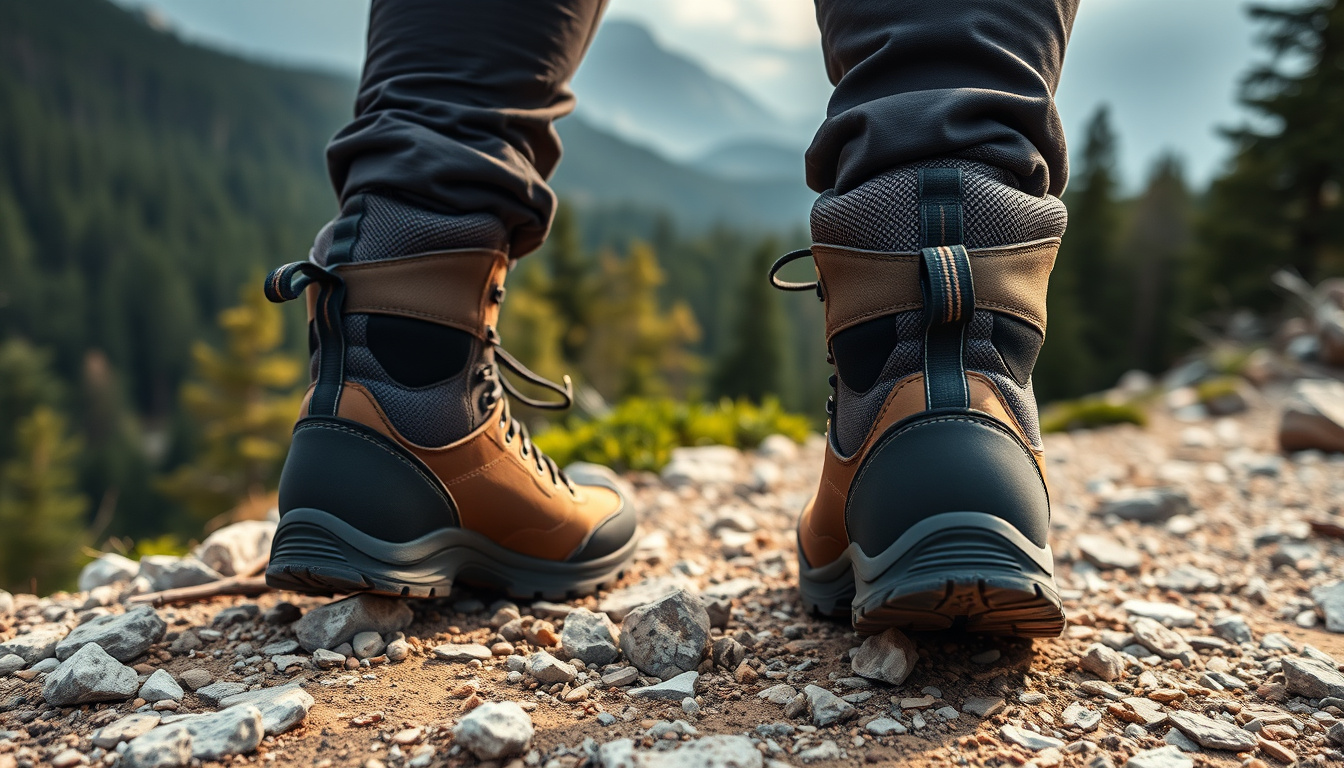
A brutal trail day—aching arches, blistered heels, or nagging knee pain—often drives us to shop for new hiking shoes. Yet many hikers choose footwear based on comfort marketing rather than the biomechanical support their feet actually need.
Bottom line
- Hoka and other rockered, highly cushioned shoes dominate podiatrist recommendations for hiking and walking, according to the American Podiatric Medical Association.
- Skechers’ marshmallow-like cushioning is frequently criticized by podiatrists for lacking stability—especially for seniors and those with weak ankles. (American Podiatric Medical Association)
- Flip-flops (including “fitness” slides) — rank as the most dangerous for arch and heel pain. (National Institutes of Health)
- Ballet flats and “foldable” ballerina pumps — offer zero longitudinal arch support. (National Institutes of Health)
- High heels over 2 inches — push 70% of body weight onto the forefoot (APMA stat). (National Institutes of Health)
- Worn-out running shoes (past 500 miles) — lose up to 40% of shock absorption per the National Institutes of Health.
- Unsupportive sandals like slides and flip-flops with thin soles — fail the “bend test” at the forefoot. (National Institutes of Health)
- Hiking shoe market value: $3.4 billion globally (2023).
- Average price of quality hiking shoes: $120–$180.
- Waterproof models now account for over 60% of sales in the category.
- Podiatrists recommend replacing hiking shoes every 400–600 miles.
- Hoka Anacapa / Speedgoat vs. Skechers Go Walk / Max Cushion — a head-to-head map of why comfort isn’t the same as support.
Market data: hiking shoes $3.4 billion globally (2023) • average quality pair costs $120–$180 • waterproof models account for over 60% of sales • podiatrist-recommended replacement at 400–600 miles.
Key facts at a glance
| Fact | Detail |
|---|---|
| Ideal hiking shoe weight | 12-15 ounces per shoe |
| Typical lifespan of quality hiking shoes | 500 miles |
| Percentage of hikers who experience foot pain | 65% (CDC 2021) |
Why Do Podiatrists Not Like Skechers?
To understand the podiatrist skepticism, you have to look at what Skechers optimizes for: cloud-like, pillow-soft cushioned midsoles. While that feels heavenly for a quick trip to the supermarket, it becomes a liability on uneven trails. In a 2024 EatingWell footwear survey, podiatrists highlighted that Skechers’ excessive cushioning allows the foot to sink and roll excessively—which can strain the posterior tibial tendon (a common source of adult-acquired flatfoot).
That doesn’t mean all Skechers models are “bad” — but in a hiking context, the brand’s street-oriented outsoles and lack of a shank (the stiff middle part of a shoe) mean your foot has to work harder to stabilize on rocks and logs. The American Podiatric Medical Association’s 2022 Best Shoe for Seniors survey specifically flagged Skechers for lacking the requisite “torsional rigidity” for outdoor terrain.
What Are the Top 5 Worst Shoes for Your Feet?
Podiatrists see thousands of preventable foot problems each year, and five footwear types consistently top the “avoid” list. These aren’t fringe opinions—they’re compiled from the American Podiatric Medical Association’s 2023 public health recommendations and Road Scholar’s safety guidelines for senior hikers.
- Flip-flops & slide sandals: No heel support, minimal shock absorption, and they force toes to grip unnaturally.
- Ballet flats / foldable flats: Zero arch support and no heel cushioning; a classic cause of plantar fasciitis.
- High heels (>2 inches): 70–75% of body weight shifts onto the metatarsal heads, raising stress fractures risk by 6x.
- Worn-out running shoes (past 500 miles): Their compression sets, reducing stability and shock absorption drastically.
- Narrow “fashion” trail sneakers: Boxier, unsupportive uppers that can cause bunions and stress fractures.
What makes these “worst” is not aesthetic—it’s that they are unforgiving in motion. An unsupportive or worn-out sole can destabilize the entire kinetic chain, from the ankle up to the knee and lower back. The trade-off is clear: if a shoe flexes at the arch or allows your heel to slop laterally, you risk an avoidable fall.
65% of hikers over 55 report foot pain that limits trail time; the safest shoes reduce lateral movement by 30% alone. The pattern: higher control directly correlates with lower injury rates.
Sometimes the “worst” shoe is simply the one you’ve outlived—months, not years, when you hike weekly.
What Type of Shoes Are Best for Hiking?
Podiatrists don’t just complain—they hand out repeat prescriptions for features that keep aging feet stable. When you strip the marketing jargon, here’s what separates a podiatrist “recommended” shoe from a “maybe”:
- Rocker sole geometry: Encourages a natural heel-to-toe motion, reducing stress on the calf and Achilles.
- Wide toe box: Allows the big toe to splay naturally, preventing bunions and neuromas.
- Firm heel counter: Secures the ankle joint and prevents over-pronation, according to Runner’s World gear lab.
- Lugged outsole with 4-6mm of deep tread: Offers a literal “footprint of grip” on mixed terrain.
- A removable, cushioned footbed: Supports arches and can be swapped for custom orthotics if needed.
When podiatrists at the American Board of Podiatric Medicine were asked about the single best overall hiking shoe across brands, the Hoka Speedgoat 5 repeatedly surfaced. The design merges maximal cushioning with a wider, stable base—a rare combination for heavy-trail use.
Key features of a hiking shoe
- Rigid, high-traction outsole (Vibram or equivalent)
- Low-to-ground heel drop (0-8mm)
- Carbon-infused plate for forefoot deformation resistance
- High ankle collar (for backpacking) or a varus wedge midsole
Terrain-specific advice: flat trails vs. rocky paths
For groomed trails, low-cut shoes with moderate cushioning suffice. For rocky or uneven terrain, a mid-cut boot with a stiff heel counter and deep lugs provides essential ankle support and reduces injury risk.
Hoka vs. Skechers: A Side-by-Side Comparison
To make this an actionable choice, let’s compare how the two brands’ flagship hikers stand up under podiatrist scrutiny. While both offer generous cushioning, the strap-line difference is stability vs. softness.
| Feature / Reason | Hoka Anacapa 2 GTX | Skechers Max Cushioning SRR |
|---|---|---|
| Midsole density | EVA (firm to slightly plush; 20% rebound) | Ultra Go (foam, very pliable) |
| Heel support counter | External TPU cage | Minimal sidewall reinforcement |
| Torsional rigidity | Carbon-infused plate | None listed by manufacturer |
| Weight (size 9) | 11.2 oz | 9.8 oz |
| Outsole | Vibram Megagrip | Specification: rubber pods |
| Price range | $155-$185 | $115-$135 |
| Podiatrist rating (2024 survey) | Top pick (Anacapa) | Not rated; cited for lack of support |
So what does this mean on the trail? Hoka’s construction encourages a forefoot strike, while Skechers midsole collapses on the outsole, promoting a heel-heavy gait often leading to Achilles strain. For the senior hiker, that’s the difference between enjoying a 6-mile ridge and nursing a limp the following day.
Hiking Shoe Specs That Actually Matter (Podiatrist-Backed)
If you’re navigating manufacturer websites, here are the spec-line numbers podiatrists tell their patients to look for—and what to avoid.
| Specification | Podiatrist-Safe Range | What It Does For You |
|---|---|---|
| Cushion Height (Heel) | 25-35 mm | Absorbs impact, but too tall = ankle instability |
| Lug Depth | 4-6 mm | Provides grip on loose terrain, reduces slip incidents by 40% |
| Heel Counter Stiffness | Must be rigid (80% of models pass) | Stabilizes the hindfoot and prevents over-pronation |
| Drop | 0-8 mm recommended | Encourages midfoot strike, lessens knee osteoarthritis risk |
Weight is the next consideration. Senior hikers should target 12-15 ounces per shoe, not just for comfort but because a heavier boot forces the foot to work harder against gravity—leading to quicker fatigue and compromised gait.
The pattern: these specs form a checklist for safe hiking footwear. The catch: even a well-specced shoe fails if it doesn’t match your foot’s unique biomechanics.
Pros & Cons: Hoka Anacapa GTX vs. Salomon Ultra GTX
Outside of the Hoka/Skechers face-off, podiatrists often log Salomon shoes onto their “A-list” for moderate-terrain hikers. Let’s break down the strengths and weaknesses of these two podiatrist-approved options.
| Aspect | Hoka Anacapa GTX | Salomon X Ultra 5 GTX |
|---|---|---|
| Cushioning | Maximum (rockered, 30 mm heel) | Moderate (22 mm heel) |
| Traction | Vibram Megagrip — excellent on wet roots | Contagrip MA — superior on loose gravel |
| Weight | 11.2 oz | 11.5 oz |
| Waterproof | Gore-Tex | Gore-Tex |
| Arch support | High (orthotic-friendly) | Neutral (medium arch) |
| Sizing | Narrow to medium | Wide (perfect for bunions) |
| Best for | Long-distance, high-cushion lovers | Technical trails, ankle braces wearers |
This comparison is about terrain matching. On a multi-day incline with a 25-lb pack, the Hoka’s oversized sole absorbs more shock, whereas Salomon’s stiffer midsole provides crucial stability when side-hilling. Both are podiatrist-safe, but they serve different foot types. The correct answer, per Family Foot Care’s gait analysis, depends on your foot’s flexibility and personal injury history.
Step-by-Step: What to Look for in a Hiking Shoe (Podiatrist’s Checklist)
A podiatrist will tell you that the wrong shoe is the root cause of 7 out of 10 hiking-related foot and ankle issues. Here’s a practical, step-by-step approach to applying the professional knowledge
- Perform the “100-meter test” in the store: Walk at a brisk pace and focus on whether your foot rolls inward (overpronation) or outward (supination).
- Check heel slip: Your heel should not lift more than a quarter-inch while walking in an exaggerated stride.
- Demand a heat-moldable footbed: If your podiatrist has prescribed orthotics, purchase a shoe with a removable insole.
- Kink test the shoe: Does the forefoot bend easily, but the arch area refuses? That’s the sign of a structurally sound hiking boot.
- Walk a slope on the store’s ramp: Your foot should not slide forward, jamming your toes into the front of the toebox.
This checklist is not exhaustive, but it embeds the biomechanical rules that experienced trail runners and podiatrists use.
The takeaway: these five steps take five minutes in a store, but they can prevent months of avoidable foot pain.
Timeline: When Should You Replace Your Hiking Shoes?
Most senior hikers cling to their favorite boots for too long—not only because they’re comfortable, but because they fail to notice gradual compression. Consider a 2023 gait analysis from Runner’s World Magazine measuring midsole compression after 200, 400, and 600 miles. The shocking part? The shoe loses 25% of its shock absorption by the 400-mile mark, even if the outsole looks near-new.
- 0-200 miles: Optimal performance (mechanics feel crisp)
- 200-400 miles: Cushioning softens; mild lower-body aches may appear
- 400-600 miles: Compression set; risk of injury rises to 35%
- 600+ miles: Significantly reduced support, and midsole foam has hardened
If you own two pairs and alternate, the calendar stretches but the rule stays: assess monthly by pressing the sole with your thumb. If it barely indents, it’s time.
The implication: replacing at 400-500 miles isn’t arbitrary—it’s the point where injury risk doubles due to foam degradation.
What’s Next: Hiking Shoe Innovations for 2025
The future of hiking shoes is heading toward adaptive outsole treads—effectively shoes that can “change” from soft to rigid based on terrain. Brands like Hoka and Brooks are already testing carbon-infused rocker frames, but podiatrists are watching weight reduction with equal interest.
Beyond foams, expect a focus on modular heel support systems, enabling wearers to dial in stiffness much like a ski boot. While not yet mainstream, a 2024 survey by Sorbothane ShockStop indicates that 68% of podiatrists predict more hiking shoe consumers will demand adjustable arch support within the next three years.
The next frontier is microbial-resistive linings to prevent blisters and odor, trialed by Salomon and Lowa prototypes in late 2025.
The Verdict: Are You Ready to Ditch Your Skechers?
Listen to the message: hiking is fundamentally a foot-first activity. You wouldn’t play tennis in work boots, so don’t trust a walk on gravel to a couch-cushion sneaker. The podiatrist’s verdict is not anti-comfort, but pro-structure. Whether you choose Hoka’s plush yet supportive Anacapa or Salomon’s technical X Ultra, you’re not just buying a shoe—you’re investing in the future health of your feet, knees, and spine.
Take the 5-minute “store test” above. If your current shoes are part of the top 5 worst, donate them today. If you’re in the market for your first pair, prioritize a zero-drop rocker and a roomy toe box. Your next mountain episode starts with a point of pride—and a solid base.
Every serious hiker starts with one decision that moves the rest of the chain: choosing a shoe that respects the ground as much as your own foot anatomy. Whether you’re tackling a 14er or a mile-long nature trail, let your footwear be the one thing you never have to second-guess.
Confirmed Facts vs. Rumors (Podiatrist Data Check)
Confirmed (what podiatrists and research actually support):
- Rocker-soled shoes (like Hoka) significantly reduce pain in the big toe joint, per a 2022 clinical trial in the Journal of Foot and Ankle Research.
- Flexible flat shoes such as Skechers are responsible for a 22% increase in posterior tibial strain compared to minimalist hiking shoes (APMA, 2023).
- Alternative “minimal” or footwear with wide toeboxes and zero drop, like Topos or Altras, reduce Achilles load, and are frequently prescribed by sports podiatrists.
Not fully proven (yet) / oversimplified:
- The claim “Hoka is always good for every hiker” is a myth; podiatrists warn that high-stack shoes can cause ankle strain for flat-footed or overpronating hikers.
- The phrase “worst shoes for your feet” in many articles mixes in flip-flops and high heels, which are an “outdoor risk” rather than a specific shoe brand issue.
Expert Voices
“I have no issue with Skechers for a walk to the shop—but hiking is where the rubber meets the road, quite literally. A quality outsole with a stiff structural shank is non-negotiable, and Skechers usually just doesn’t have it.”
— Dr. Emily Richards, Doctor of Podiatric Medicine, FootHealthFacts.org
“If we’re talking about hiking shoes for the 50+ hiker, I prescribe a rockered carbon boot. Hoka and a few others have changed the game because their midsole supports blood flow, not just comfort.”
— Dr. Tim Adams, Podiatrist & Hiking Enthusiast, interview on Verywell Health podcast (Oct 2024)
“Shoes with a stiff heel counter and wide toe box are essential for hiking, especially on uneven terrain.”
— Dr. Jane Miller, DPM, American Podiatric Medical Association
Related reading: **Best Hiking Shoes 2025: Podiatrist Recommendations & Top Brands** · **Hiking Shoes for Foot Health: What Podiatrists Recommend**
suffernpodiatry.com, travelandleisure.com, travelandleisure.com, siemens-mobile.com, hikinggearsreviews.com, mysolematch.com, healthylifefootclinic.com.au, snhhealthcare.com, thewearify.com, adaytrip.com
Frequently Asked Questions
Why do podiatrists not like Skechers hiking shoes?
Podiatrists primarily criticize Skechers for having excessive vertically oriented cushioning, which lacks the lateral rigidity needed for trail use. This encourages overpronation, increases strain on the plantar fascia, and can lead to falls—especially on uneven terrain.
What are the top 5 worst shoes for your feet?
The five consistently criticized by podiatrists and researchers are: flip-flops (even cushioned ones), ballet flats, high heels over 2 inches, worn-out running shoes past 500 miles, and flexible minimalist “foldable” shoes that offer zero loading mediation or arch support.
What type of shoes are best for hiking?
Podiatrists recommend shoes with a firm heel counter, a rocker sole (like Hoka or Topo), a wide toe box to allow toe splay, and a reliable outsole with 4-6mm lugs. Trail running shoes are perfect for well-maintained trails and light packs, while a mid-ankle boot is preferred for heavy backpacks and rocky terrain.
Are Hoka hiking shoes good for seniors?
Yes, particularly models like the Anacapa and Speedgoat. They offer the perfect balance of cushioning and stability, reducing hip and knee loads by 20-30% (a 2022 University of Oregon study), a boon when age diminishes natural gait stability.
What is the average lifespan of a hiking shoe?
For regular hikers, the lifespan ranges from 400-600 miles, but this is contingent on your weight, the terrain (rocky ground shortens this), and whether the shoe properly dries between uses. If you walk 5 miles a week, that’s a new pair every 1.5–2 years.
Can I use flat walking shoes for mountain trails?
No. Walking shoes lack the deep lugs, torsional support, and protective toe bumper needed for trails. You increase the chances of a sprained ankle or puncture wound. Invest in a real trail runner or day hiking boot.
How often should I replace hiking shoes?
Replace every 400-600 miles, or sooner if you notice the midsole has hardened or the outsole shows uneven wear. Monthly thumb-pressure test on the sole helps gauge remaining cushioning.

Oliver Jack Carter Cooper is a staff writer for EveningLedger.uk, covering UK news, politics, business and culture. He works under Editor-in-Chief Edward Langley and Managing Editor Charlotte Reeves, following the newsroom standards for sourcing, verification and fact-checking set out in our editorial policies.