Most people know the feeling: your heart rate ticks up, your palms get damp, and you whisper at the screen, “Don’t open that door.” That masterful manipulation of our emotions is synonymous with Alfred Hitchcock, and this article explores the specific techniques that made him the Master of Suspense.
50+ feature films | 6 decades | 1 legendary director
Identity
- Name: Sir Alfred Joseph Hitchcock (Britannica)
- Nationality: British-born, later American citizen (1940) (Britannica)
Career
- Occupation: Film Director, Producer, Screenwriter, Television Host (Britannica)
- Career Span: Over 6 decades, from silent films (1920s) to 1976 ( Wikipedia)
Key Films
- Defining Works: Rear Window, Psycho, Vertigo, North by Northwest, Notorious, The Birds (Britannica)
Technique
- Key Technique: Creating suspense through audience knowledge, not on-screen violence (BBC Culture)
- Distinctive Trait: Frequent cameo appearances in his own films (IMDb)
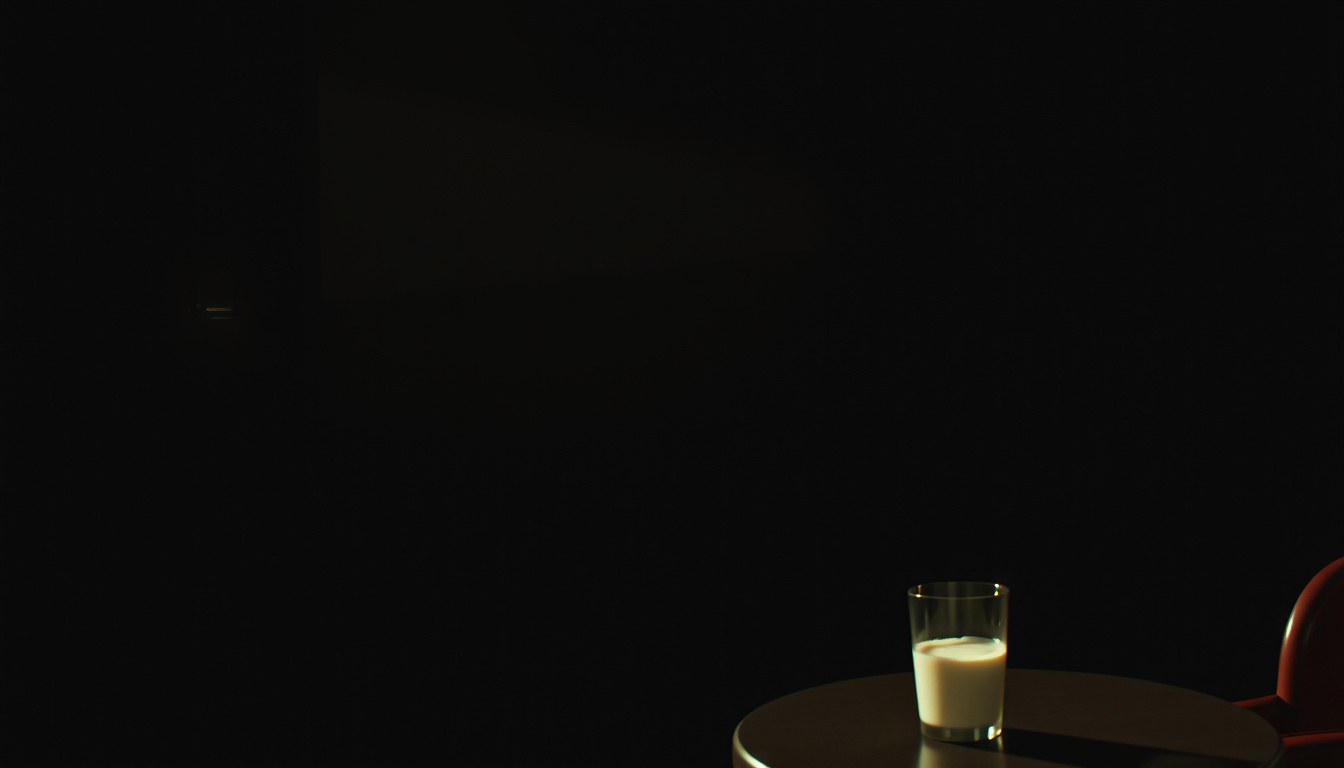
The crucial distinction Hitchcock drew was between surprise and suspense. He famously explained that surprise is a bomb exploding, while suspense is the bomb ticking under the table, visible to the audience but not the characters. This simple but profound idea, which Hitchcock articulated on screen and in interviews, is the key to his entire legacy. If you are an aspiring filmmaker, or just a cinephile who wants to understand why his black-and-white classics still hold us in a vice-like grip, you are in the right place. We will examine the philosophy, the technical craft, and the canny editorial that turns a simple scene into an emotional rollercoaster.
The Master of Suspense: A Snapshot
Here is what the record shows about the man behind the myth.
| Label | Detail |
|---|---|
| Name | Sir Alfred Joseph Hitchcock |
| Born | August 13, 1899, in London, England |
| Died | April 29, 1980, in Los Angeles, USA |
| Nationality | British-born, later American citizen (1940) |
| Occupation | Film Director, Producer, Screenwriter, Television Host |
| Career Span | Over 6 decades, from silent films (1920s) to his final film in 1976 |
| Defining Role | Director of Rear Window, Psycho, Vertigo, North by Northwest, Notorious, The Birds |
| Key Technique | Creating suspense through audience knowledge, not on-screen violence |
| Distinctive Trait | Frequent cameo appearances in his own films |
| Influence | Widely regarded as one of the greatest and most influential figures in cinema history |
| Legacy Field | His work defined the “thriller” genre, influencing horror and suspense for generations |
The implication: Hitchcock was not just a director; he was an auteur who used the mechanics of film itself to tell stories, and understanding his career is understanding the very language of modern cinema.
The Bomb Under the Table: Hitchcock’s Core Philosophy
Hitchcock’s genius was not in hiding information but in revealing it early. As Britannica (Director of Suspense) notes, his films won immense popularity for their suspenseful plots. He explained this in a famous discussion with François Truffaut, but the clearest articulation might be from an article by Open Culture (Cultural Commentary), which details his “bomb theory.”
“In order to have suspense, you’ve got to give an audience all the information you can.”
- The Bomb Theory: If two people are talking and a bomb explodes, you have surprise. But if the audience knows a bomb is under the table, set to go off in five minutes, they become engaged in a completely different way. The average audience becomes an accomplice in the scene.
- The Audience’s Omniscience: BBC Culture (Film Analysis) establishes that Hitchcock’s suspense depended on the audience being aware of a danger that the characters did not yet know.
- Emotion Over Logic: The scholarly article from Advances in Higher Education (Academic Journal) describes Hitchcockian suspense as depending on this very gap in knowledge.
“I believe in putting the horror in the mind of the audience, not necessarily on the screen.”
The catch: he would often fill this gap with irrelevant or even contradictory information to confuse and misdirect the viewer, turning the audience’s mind against itself. Why does this matter? Because it proves that suspense is not about what happens next, but about *when* the inevitable will happen.
Note
Hitchcock’s approach demonstrates that withholding information creates surprise, but sharing it with the audience creates suspense—a distinction that transforms passive viewers into active participants.
More Than Shock: The Art of Storytelling
It was not just about the mechanics of the plot; it was about the definition of a character’s world. Far from being just a technician, Hitchcock maintained a wry, black humor about the human condition, and his films are famous for it.
Furthermore, Hitchcock’s approach was multi-layered. As a journalist and critic, he understood the roles of every element. The implication here is that his style was not just visual flamboyance but a direct response to the narrative needs of a story.
The renowned filmmaker was an English-born American director whose suspenseful films and television programs won immense popularity. He is widely regarded as one of the most influential figures in the history of cinema, a master storyteller who blurred the line between reality and entertainment.
His influence on horror is immeasurable. The Independent (Film Commentary) notes that he was a master of the macabre, influencing countless films, and that the shower scene in Psycho is celebrated for its manipulation of the audience’s perception, a fact reinforced by The Conversation (Academic Expert).
The trade-off was that his darker view often clashed with the studio system. He often operated independently, shooting on a tight schedule to maintain creative control, a tension that gave his films a distinctive edge.
Hitchcock’s Timeline: From Silent Films to Final Cut
Understanding where this style came from helps to demystify it. His career is a long arc of constant reinvention.
- Early Career (1920s): He started as a title designer and art director for silent films in the early 1920s. This period taught him the power of pure visual storytelling, as Wikipedia (Filmography) details.
- The British Period (1930s): He made his mark in England with thrillers like The 39 Steps, establishing his trademark blend of suspense and romance.
- Hollywood’s Golden Age (1940s-1950s): Winning a Best Picture Oscar for Rebecca and Rear Window, he worked with major stars and refined his theories. This was when his production company, Shamley Productions, was formed.
- The Comeback (1960s): Psycho and The Birds were low-budget gambles that became smash hits, proving that he could still terrify a modern, changing audience. His TV show, Alfred Hitchcock Presents, made him a household name.
The implication: he never stopped experimenting with technology to achieve his goals, and his legacy is not a single film but a methodology that any storyteller can apply.
Confirmed Facts vs. Clever Fiction
It is easy to get lost in the man’s persona, but as a fact-checker, we need to separate the documented truth from the legend.
- Confirmed: His career spanned over 50 feature films. He was born in England and became an American citizen. He was known for his dry, macabre wit and his bleak view of the human condition. (Britannica)
- Confirmed: The BBC article from 2024 quotes him explaining his philosophy that the horror should be in the mind of the audience, not necessarily on the screen. (BBC Culture)
- Confirmed: He used irrelevant and contradictory information to confuse viewers, creating a state of anxiety. (Advances in Higher Education)
Common misconceptions:
- Misconception: Hitchcock is often credited with inventing suspense itself. In reality, he refined and popularized the technique, but the concept existed earlier. (No single source credits invention.)
- Misconception: The shower scene in Psycho is graphically violent. In fact, most of the violence is implied through rapid editing and sound, as the scene is a masterclass in suggestion.
- Misconception: Hitchcock never won an Academy Award for Best Director. While true, he received the Irving G. Thalberg Memorial Award in 1968 for his body of work.
To be clear, while the overall facts of his life are well-documented, the “Master of Suspense” title is an epithet, not a legally binding title. No source definitively credits the *invention* of suspense to him, but the specific, academic definition of his “Hitchcockian” technique is well-established.
What this means for modern viewers: Hitchcock’s methods continue to influence filmmakers, proving that the most effective suspense comes from what the audience knows, not what they see.
alfredhitchcock.com, boldentrance.com, tricolonmedia.com, elcinema.com
Frequently Asked Questions
What is the main difference between surprise and suspense, according to Hitchcock?
Surprise is when the bomb explodes without warning. Suspense is when the audience knows the bomb is under the table, creating anticipation and dread because we know the characters are in danger even when they don’t.
What are Hitchcock’s most famous films?
The most iconic films include Psycho, Vertigo, Rear Window, North by Northwest, Notorious, and The Birds. These films define the thriller genre.
Did Hitchcock ever win an Academy Award for Best Director?
Despite being nominated multiple times, he never won an Academy Award for Best Director, though he was awarded the Irving G. Thalberg Memorial Award for his body of work in 1968.
Why was his TV show so popular?
Alfred Hitchcock Presents (1955-1965) was popular because it delivered short, punchy suspense tales with a twist ending. It also made his distinct, droll persona and silhouette a cultural icon.
Is the shower scene in “Psycho” as violent as it seems?
No. The scene is a masterclass in editing. The violence is largely implied through rapid cuts, shocking music (the shrieking violins), and a brief, strategically placed shot of the knife. The actual stabbing is mostly implied, not graphically shown.
What is “Hitchcockian” meaning as a term?
It describes a style of filmmaking characterized by suspense, surprising twists, and a cynical yet witty tone. It often features an ordinary innocent man caught in a web of danger, and a very specific visual tension.
Hitchcock’s enduring influence on cinema ensures that his techniques remain a blueprint for suspense storytelling across genres.

Oliver Jack Carter Cooper is a staff writer for EveningLedger.uk, covering UK news, politics, business and culture. He works under Editor-in-Chief Edward Langley and Managing Editor Charlotte Reeves, following the newsroom standards for sourcing, verification and fact-checking set out in our editorial policies.