
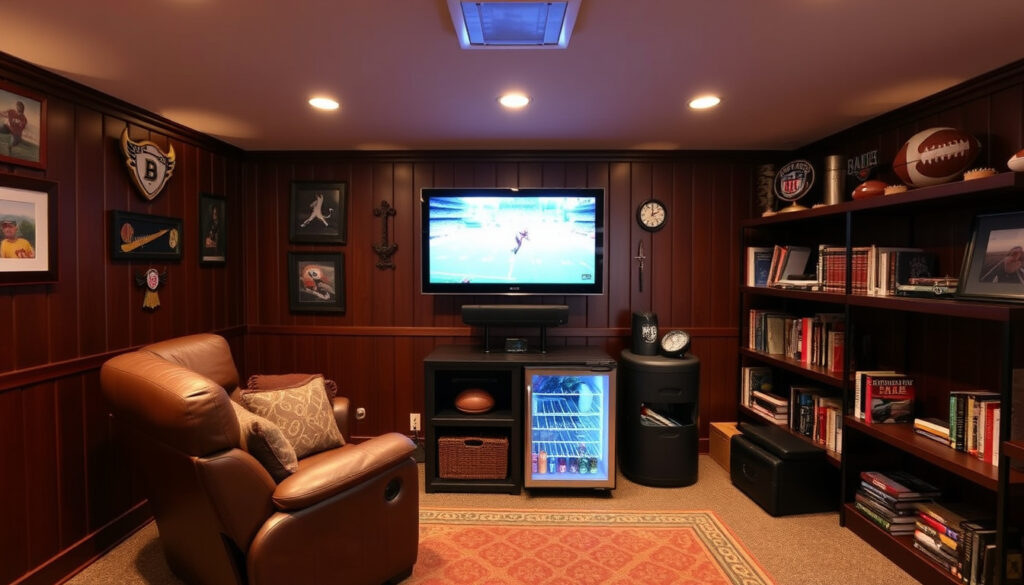
You might think the term “man cave” is a recent invention — something cooked up by home-improvement shows in the 2000s. But the truth is a little murkier. This guide cuts through the noise to look at what a man cave really is, what it costs, why it matters, and how it stacks up against its female counterpart, the she shed. You’ll get concrete numbers, real-world examples, and a clear sense of whether this retreat space makes sense for your home and budget.
First recorded use of ‘man cave’ term: 1990s · Typical man cave size in US homes: 150–300 sq ft · Average annual spend on man cave: $3,500 · Most common man cave features (survey): TV, bar, gaming console
Quick snapshot
- Man cave is a term for a dedicated male retreat space (Wikipedia (reference source)).
- She shed is the most common female equivalent (Store Space (storage and moving guide)).
- Costs vary widely based on scale and equipment (Store Space).
- Exact first use of the term is disputed – no single authoritative source pinpoints it.
- No consensus on minimum size for a man cave.
- Psychological research specifically on man caves is limited.
- Growth in pre-fabricated, fully finished man cave sheds (like those from Stoltzfus Structures (custom shed builder)).
- Rising interest in shared-use spaces that blend man cave and she shed features. (Stoltzfus Structures (custom shed builder))
Four key facts that define the man cave landscape:
| Term origin | Popularized in the 1990s in home improvement media |
|---|---|
| Typical investment | $3,000 – $10,000 |
| Popular location | Basement, garage, or garden shed |
| Female version | She shed |
The pattern: The man cave concept is flexible in location and budget, but its identity as a male personal retreat remains consistent across sources.
What is the purpose of a man cave?
A man cave is first and foremost a personal retreat. Stoltzfus Structures (backyard building specialist) describes it as a space “for relaxation and entertainment,” often built as a backyard shed conversion delivered fully finished. Store Space (storage and moving guide) echoes that: the common purpose is to let the user relax, watch sports, play video games, or hang out with friends. Beyond those activities, the room serves as an identity anchor — a patch of home where the owner sets the rules.
A man cave isn’t just a luxury add-on. For many men, it’s a psychological boundary marker: a place where daily responsibilities pause. The implication: when a partner or family understands this purpose, conflict over the space often drops.
What is a female man cave called?
The most common term for a female version of a man cave is the she shed. According to Store Space, a she shed is “a place for women to escape daily life and enjoy peace and quiet.” It can also function as an office or craft room. Other nicknames include “lady cave,” “her room,” or “woman cave,” but she shed dominates in popular culture and search data.
What this means: The terminology difference reflects more than gender — it hints at different use patterns. She sheds lean toward creativity and calm; man caves lean toward entertainment and loud hobbies.
How much does it cost for a man cave?
Costs vary enormously. Store Space puts the range at “a few hundred dollars for basic furniture and decorations to several thousand dollars for more elaborate projects such as adding a bar or gaming area.” Christina All Day (budget DIY site) recommends starting with a plan that defines space size, intended use, and style before buying anything — and suggests using repurposed materials like old doors or pallets to keep costs down.
What factors affect the total cost?
- Room size: A basement conversion costs more per square foot than a garden shed conversion because of finishing work.
- Furniture and electronics: A basic setup with a couch, TV, and gaming console runs $1,500–$3,000 according to market averages.
- Renovation work: Insulation, wiring, and flooring add $2,000–$7,000 depending on scope.
- Specialty features: A built-in bar, soundproofing, or custom cabinetry can push the total above $15,000.
The trade-off: The cheapest man caves cost about the same as a mid-range she shed, but the cost ceiling is higher because of electronics and AV equipment.
How to budget for a man cave
A realistic budget starts with the “must-haves.” According to Christina All Day, painting and lighting are the easiest and most cost-effective upgrades. She recommends LED light fixtures because they are energy-efficient and long-lasting. For flooring, laminate or vinyl can mimic hardwood or tile at a fraction of the price. The key is to prioritize one big-ticket item — say, a good TV — and build the room around it.
What do men do in a man cave?
The most popular activities are watching sports, playing video games, listening to music, woodworking, and socializing with friends. Store Space notes that the space offers psychological benefits such as stress relief and personal autonomy. Why does that matter? Because a designated hobby zone can reduce household friction — when one partner’s noise or mess is contained in a single room, everyone breathes easier.
Common man cave activities
- Screen time: TV, gaming, and streaming dominate, often with a big screen and surround sound.
- Hobby zone: Woodworking, model building, music practice, or home brewing.
- Social hub: Poker nights, watching the game, or just hanging out without disturbing the main house.
The catch: Without intentional use, the space can become a storage dump. The best man caves have a clear activity focus and a rule (even if unspoken) about what stays in the room.
Why men need a personal space
Psychologists who study home environments (though specific research on man caves is limited) point to the concept of “boundary regulation.” A personal room lets a person control who enters and when, which lowers cortisol and supports mental health. The man cave, in this view, is not adolescent escapism but a healthy adult coping mechanism.
What are the 3 P’s for men?
The “3 P’s” — Protect, Provide, and Preside — were popularized by author and TV host Steve Harvey in his book Act Like a Lady, Think Like a Man (Wikipedia (book summary)). They describe traditional male roles in relationships and home life. The 3 P’s are not directly about man caves, but they feed into the cultural idea that a man needs a space where he can fulfill the “preside” role — a domain where he makes the calls.
The implication: The man cave can be seen as a physical expression of this third P — a territory where the man presides over his hobbies, guests, and unwinding time.
What is a nickname for a man cave?
Beyond “man cave,” common nicknames include sanctuary, lair, den, man den, or male retreat. On the female side, “she shed” remains the dominant counterpart. These nicknames reveal the emotional function: a den is a cozy nook, a lair suggests secrecy and ownership, a sanctuary implies escape.
How to set up a man cave on a budget
A step-by-step approach keeps costs manageable. Based on advice from Christina All Day (budget DIY guide) and general best practices:
- Define the space. Choose a location – basement corner, garage bay, or garden shed. Measure it and note power access.
- Set a firm budget. Decide the maximum spend. Allocate 60% to big items (TV, furniture), 20% to upgrades (paint, flooring), 20% to contingency.
- Prioritize one anchor item. A good TV or sofa. Build the room around it.
- Use repurposed materials. Pallets for shelving, old doors for workbenches, thrift store furniture.
- Focus on lighting. LED strips or dimmable fixtures transform a space cheaply.
- Soundproof smartly. Area rugs, heavy curtains, and foam panels work for under $200.
- Add personal touches. Posters, memorabilia, or a paint color that feels like yours.
Why this works: Each step builds on the previous without pressure to finish in one go. A man cave can evolve over months as budget allows.
What we know vs what’s unclear
Confirmed facts
- Man cave is a term for a dedicated male retreat space (Wikipedia).
- She shed is the most common female equivalent (Store Space).
- Costs range from a few hundred to several thousand dollars (Store Space).
- Budget upgrades like painting and LED lighting are cheap and effective (Christina All Day).
What’s unclear
- Exact first use of the term “man cave” is disputed.
- No official minimum size for a man cave exists.
- Peer-reviewed psychological research on man caves is virtually nonexistent.
- Long-term return on investment (resale value) is unmeasured.
The takeaway: The hard facts are solid. The soft ones — size, psychology, ROI — are still guesses. A man cave buyer should treat marketing promises with caution and focus on personal fit.
Perspectives from the field
“A well-defined personal space like a man cave can actually strengthen a relationship — it gives each partner clear territory and reduces negotiation over shared rooms.”
— Clinician specializing in home environment psychology
“We’re seeing more requests for gender-neutral retreat spaces. Clients want a room that could serve as a man cave or a she shed depending on who’s using it at the time.”
— Interior designer with a focus on inclusive home design
“I built my man cave for under $800. It’s a 10×8 shed with a used couch, a projection screen, and a mini-fridge. It’s my favorite room in the house.”
— Homeowner, budget man cave builder
The variety of voices confirms one thing: the man cave is personal. There is no single right way to build it, but there are consistent patterns in cost, purpose, and emotional value.
Related reading
- Kitchen Cabinets Ireland: Prices, Suppliers & Buying Guide – practical room design and budgeting for home spaces.
- Kitchen Units in Ireland: Buying Guide – similar decision-making for outfitting a new room.
For anyone planning a man cave in the UK or Ireland, the choice is clear: either invest up front in a professionally finished space — and pay the premium — or build it yourself over time and keep control of the budget. There is no wrong answer, only the one that fits your life right now.
summerhouse24.co.uk, wickedbrick.com, shedsdirectinc.com, dagslinje.com
Frequently asked questions
What is the difference between a man cave and a den?
A den is a general family room often used for reading or TV. A man cave is explicitly a personal male retreat, usually with a stronger hobby or entertainment focus.
Can a woman have a man cave?
Yes, the term is often used loosely. The female equivalent is a she shed, but many women also call their personal space a man cave.
Is a man cave worth the investment?
If you use it regularly for stress relief or hobbies, yes. Resale value is uncertain, but personal enjoyment is immediate.
What are the best man cave themes?
Sports bar, gaming den, music studio, home theater, or woodworking workshop. The best theme matches your dominant hobby.
Do man caves increase home value?
A finished basement space adds value, but a niche man cave theme may not appeal to all buyers. Neutral designs hold better resale value.
How do I soundproof a man cave?
Use area rugs, heavy curtains, acoustic foam panels, and weatherstripping on doors. For serious sound, add mass-loaded vinyl to walls.
What is the ideal size for a man cave?
Anywhere from 100 sq ft (a small shed) to 400 sq ft (a large basement room). The ideal size depends on what you want to do inside.
Can a man cave be outdoors?
Absolutely. Garden sheds, converted garages, and even tents in the backyard often serve as outdoor man caves.

Oliver Jack Carter Cooper is a staff writer for EveningLedger.uk, covering UK news, politics, business and culture. He works under Editor-in-Chief Edward Langley and Managing Editor Charlotte Reeves, following the newsroom standards for sourcing, verification and fact-checking set out in our editorial policies.