
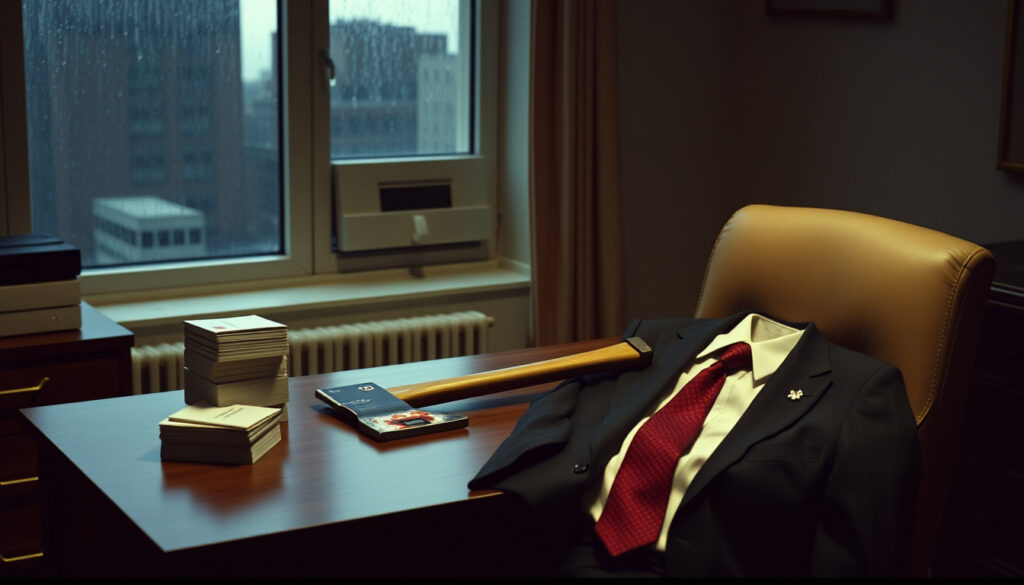
You’ve seen the business card scene. You’ve probably quoted the “I have to return some videotapes” line. But behind the memes and the sigma‑male edits is a character designed to unsettle—a Wall Street yuppie whose violence may be entirely in his head. This article pulls together the facts, the psychology, and the cultural afterlife of Patrick Bateman, the fictional creation of Bret Easton Ellis that refuses to fade away.
Full name: Patrick Bateman · Occupation: Investment banker · First appearance: American Psycho (1991) · Portrayed by: Christian Bale · Kills (book): At least 12 · Diagnosis: Narcissistic personality disorder (suggested)
Quick snapshot
- Suggests narcissistic personality disorder (Encyclopaedia Britannica)
- Exhibits psychopathic traits (Encyclopaedia Britannica)
- Possible schizophrenia or delusional disorder (Encyclopaedia Britannica)
- Unreliable narrator (Encyclopaedia Britannica)
- Meme and sigma male icon
- Business card scene widely referenced
- Influence on fashion and aesthetic
- Ongoing debates about reality of killings
- Novel follows Bateman’s descent into violence
- Blur between fantasy and reality
- Climax: Bateman confesses but no one believes him
- Ending ambiguous
Six key dimensions of the character, one pattern: every fact about Bateman is filtered through an unreliable narrator who may be confessing crimes he never committed. The details below are sourced where the record allows, and flagged where it does not.
| Label | Value |
|---|---|
| Creator | Bret Easton Ellis |
| Year created | 1991 |
| Portrayed by | Christian Bale |
| Residence | New York City |
| Victims (book) | At least 12 |
| Famous quote | “I have to return some videotapes.” |
The pattern in the table: the character’s concrete details are few, while his symbolic weight is enormous. Bateman is less a person than a pressure test for how readers interpret excess.
Is Patrick Bateman based off a real person?
No. Patrick Bateman is a purely fictional character created by Bret Easton Ellis. The Encyclopaedia Britannica (reference work) confirms that Ellis invented Bateman as the protagonist of the 1991 novel American Psycho. The character is not based on any single real person, though he embodies the excesses of 1980s Wall Street culture. Ellis himself told MovieMaker (film industry site) that the novel is a “dark comic satire of shallow, greedy men” he encountered in 1980s Manhattan.
Is it all in Bateman’s head?
The narrative’s reality is deliberately ambiguous. The novel and film both leave the question open—many events may be imagined. PubMed Central (National Institutes of Health) notes that the film follows Bateman’s “apparent decline from a cynical misanthrope into a bloodied psychopath unable to control violent compulsions,” but the word “apparent” is key. The Metacritic (review aggregator) summary describes a “zealously materialistic and misogynistic Wall Street executive who murders by night,” yet the possibility that the murders are fantasy is never ruled out.
Because Bateman is an unreliable narrator, any claim about the number of kills, the reality of the violence, or even his own identity remains unverifiable. The ambiguity is the point—readers who demand a clear true‑crime account will not find one here.
What does Patrick Bateman suffer from?
Bateman exhibits symptoms consistent with narcissistic personality disorder, psychopathy, and possibly antisocial personality disorder. The Encyclopaedia Britannica describes him as a “psychopath who works on Wall Street,” noting his business meetings, upscale dining, and acts of rape, cannibalism, and murder. His motives for killing are tied to a need for control, status, and a distorted sense of identity.
Why did Bateman start killing?
Literary critics argue that Bateman’s violence is a grotesque extension of consumerism: he treats people as objects to be consumed and discarded. The The Guardian (UK daily newspaper) characterizes him as a “brand‑conscious mass murderer” representing 1980s greed and consumer emptiness. The killings are less about rage than about a desperate attempt to feel real in a world of surfaces.
What is Patrick Bateman’s IQ?
His IQ is never stated in the novel or film. Some analyses suggest high intelligence—he navigates high‑finance jargon and social rituals—but no official figure exists. The Britannica entry offers no IQ claim, confirming this is speculation.
Why is Patrick Bateman so popular?
Bateman’s popularity stems from his dark humor, iconic quotes, and visual aesthetic. The business card scene, the morning routine, the “I have to return some videotapes” line—all have become memes. He is frequently celebrated in meme culture and the “sigma male” archetype. Christian Bale’s portrayal contributed heavily to the character’s enduring appeal. Bale told MovieMaker he initially knew little about the project beyond that it was based on a novel that angered many readers.
Is Patrick Bateman considered attractive?
Yes, within the story and in popular culture. The novel repeatedly describes Bateman’s flawless physique and grooming. In the film, Bale’s portrayal cemented the image of the handsome, well‑dressed killer. The Melbourne International Film Festival (film festival) describes him as a “Wall Street player and status‑obsessed consumer devoted to material gain,” which includes his own body as a product.
His appeal extends to modern internet subcultures that celebrate “sigma” traits—independence, detachment, and a perceived superiority over conventional society. The The Ringer (sports and culture site) has noted that American Psycho has grown more timely over time and remains embedded in collective memory.
A character designed to mock hyper‑masculine Wall Street culture has become a mascot for the very archetype he satirizes. The joke is on the memes—and on anyone who misses the satire.
How many kills did Patrick Bateman have?
In the novel, at least 12 murders are explicitly mentioned, with many more implied or ambiguous—including a prostitute, a homeless man, a colleague, and an ex‑girlfriend. In the film, the number is reduced and left vague. The unreliability of the narrator makes it impossible to confirm a precise count. The Britannica entry catalogs the range of his atrocities (rape, cannibalism, murder) but stops short of tallying. The Metacritic summary refers to him as a “Wall Street executive who murders by night,” without numbers.
What is the main message of American Psycho?
The novel critiques consumerism, identity, and the emptiness of 1980s yuppie culture. Bateman’s famous line, “I have to return some videotapes,” encapsulates his avoidance of accountability—a trivial excuse for evading consequences. The The Guardian frames Bateman as a “brand‑conscious mass murderer representing… Wall Street rapaciousness.” The Apple TV (streaming service) describes the story as about a “mentally unhinged yuppie who gives in to uncontrollable bloodlust.”
Is Patrick Bateman LGBTQ?
Sexuality in the novel is complex and ambiguous. Bateman has encounters with men (e.g., a scene with a coworker, an episode with a trans sex worker) but the text does not confirm his orientation. The deliberate confusion contributes to the theme of identity as performance. The RogerEbert.com (film critic site) review notes the project’s development history but does not address Bateman’s sexuality, reflecting the lack of definitive textual evidence.
The novel uses sexual ambiguity as another layer of unreliability. Bateman’s identity—like his kills—is fluid and manufactured. For readers wanting a clear orientation label, the text refuses to provide one—and that refusal is itself the message.
Clarity: confirmed vs. unclear
Confirmed facts
- Patrick Bateman is a fictional character (Britannica)
- He is the protagonist/narrator of American Psycho (Britannica)
- Christian Bale played him in the 2000 film (IMDb)
- The novel was published in 1991 (Britannica)
What’s unclear
- Whether Bateman actually committed any murders
- The exact number of kills
- His sexual orientation
- Whether his IQ is high or average
The pattern here is consistent: the confirmed facts are all about the text’s existence, not about Bateman’s inner reality. Everything else remains deliberately open to interpretation.
Voices on Bateman
“A dark comic satire of shallow, greedy men I encountered in 1980s Manhattan.”
— Bret Easton Ellis, via MovieMaker
“I didn’t know much about the project except that it was based on a novel that had angered a lot of readers.”
— Christian Bale, via MovieMaker
“A brand‑conscious mass murderer representing 1980s greed, Wall Street rapaciousness, and consumer emptiness.”
The pattern in these voices: everyone agrees Bateman is a satire, but the satire lands differently depending on who is speaking—the author, the actor, or the critic. Each perspective sharpens a different edge of the character.
For readers in the UK and US who grew up with American Psycho as a touchstone, the character remains a mirror. The choice is clear: take him at face value and you celebrate the surface; scratch the surface and you confront the emptiness. Either way, Patrick Bateman is not going anywhere—and the ambiguity ensures he stays relevant.
Frequently asked questions
Who did Patrick Bateman sleep with?
In the novel, Bateman has sexual encounters with several women, including his fiancée Evelyn, his mistress Courtney, and prostitutes. The film includes a scene with a trans sex worker. The encounters are often dehumanizing and contribute to the theme of objectification.
What is Patrick Bateman’s catchphrase?
His most famous line is “I have to return some videotapes,” used repeatedly as an excuse to exit uncomfortable situations.
Does Patrick Bateman ever get caught?
In the novel, Bateman confesses his crimes to his lawyer, but the lawyer mistakes him for someone else and dismisses the confession. He faces no legal consequences. The film ends similarly ambiguously.
What is the significance of the business card scene?
The scene where Bateman and his colleagues compare business cards reveals the absurdity of their status obsession. The cards are nearly identical, but Bateman becomes envious over minute font and color differences, highlighting the emptiness of yuppie competition.
How does American Psycho end?
Both the novel and film end ambiguously. Bateman commits murders, confesses, but no one believes him. The final scenes suggest the violence may have been a fantasy. A sign reading “THIS IS NOT AN EXIT” emphasizes the narrative loop.
Why is Patrick Bateman considered a sigma male?
Online communities categorize Bateman as a “sigma male” because he is depicted as independent, emotionally detached, and operating outside conventional social hierarchies—traits that align with the sigma archetype, even though the text satirizes those very traits.
What is Patrick Bateman’s full name?
His full name is Patrick Bateman. No middle name is given. He is sometimes referred to as “Patrick” or “Bateman.”
What is Patrick Bateman’s address?
He resides on the Upper West Side of New York City. The specific address is not provided in the novel or film.

Oliver Jack Carter Cooper is a staff writer for EveningLedger.uk, covering UK news, politics, business and culture. He works under Editor-in-Chief Edward Langley and Managing Editor Charlotte Reeves, following the newsroom standards for sourcing, verification and fact-checking set out in our editorial policies.