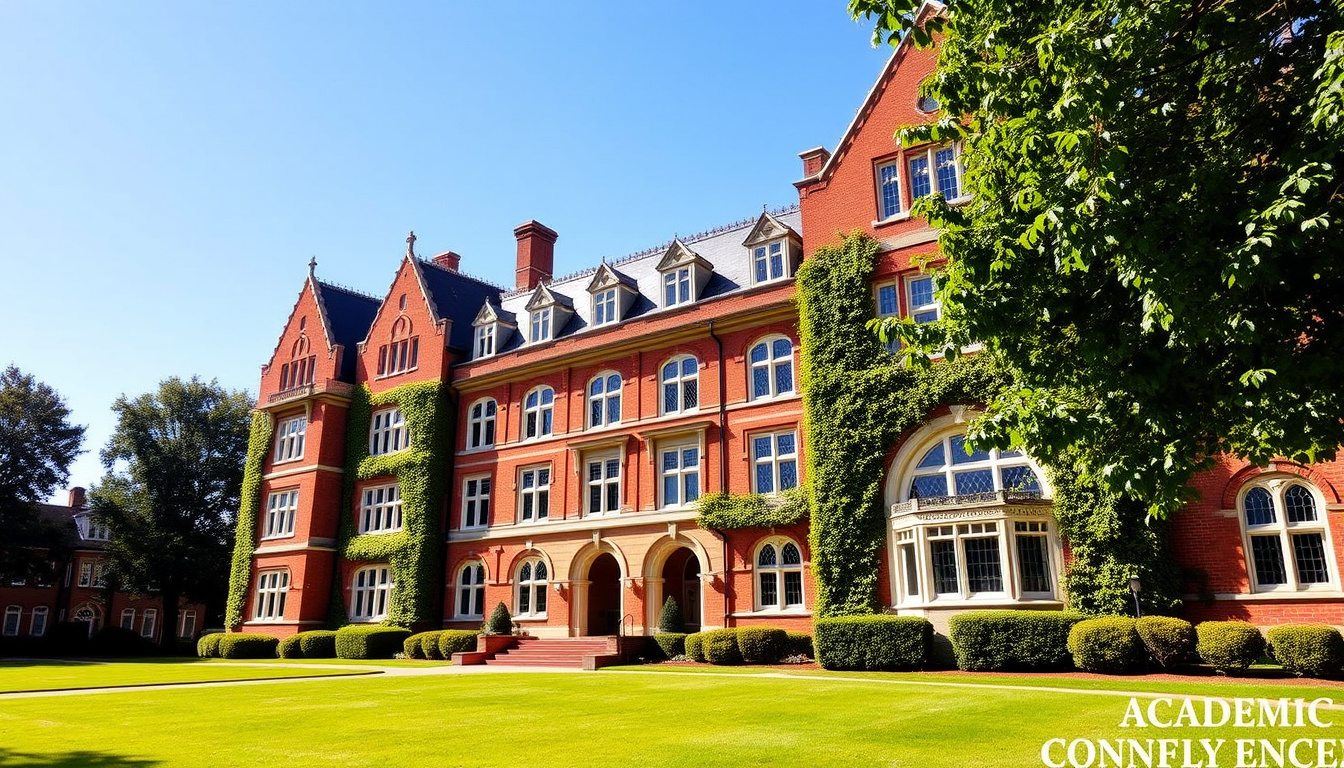
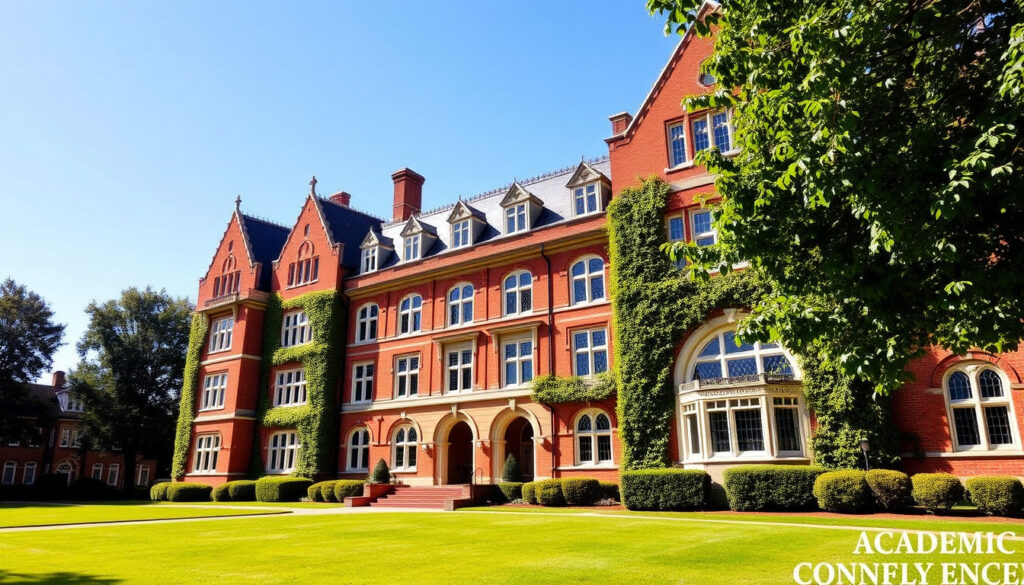
You’ve probably seen the striking red-brick Founder’s Building or heard a classmate mention Royal Holloway as a University of London option — but what’s the real story behind this 145-year-old institution? Founded in 1879 by philanthropist Thomas Holloway, it now hosts over 10,500 students from more than 100 countries. This guide cuts through the noise, covering its actual UK ranking, how tough admissions really are, and why the Russell Group question keeps coming up.
Founded: 1879 · Total students: 10,500 · International students: 100+ countries · Campus: Egham, Surrey (135 acres) · QS World Ranking (2024): 477 · Russell Group member: No
Quick snapshot
- Exact acceptance rate not officially published – estimated between 15% and 55% by different third parties (AmberStudent, EduRank)
- Offer rate (87.1%) is often confused with acceptance rate (Save the Student)
- 1879 – Founded as Royal Holloway College (Wikipedia)
- 1900 – Became part of the University of London (Wikipedia)
- 1985 – Merged with Bedford College to form Royal Holloway and Bedford New College (Wikipedia)
- Continues to invest in campus facilities and research capacity (Wikipedia)
- Reported increase in offer acceptance via digital ambassador program (Unibuddy case study)
Ten key facts, one clear picture: Royal Holloway is a research-intensive campus university with a Victorian heritage, but its metrics diverge from the Russell Group norm.
This table provides a quick reference for the core data on the university.
| Label | Value |
|---|---|
| Full name | Royal Holloway, University of London |
| Founded | 1879 (as Royal Holloway College) |
| Location | Egham, Surrey, England |
| Total students | 10,500 (approx.) |
| Undergraduate students | 7,500 |
| Postgraduate students | 3,000 |
| International students | 100+ countries |
| Campus size | 135 acres |
| Russell Group | No |
| University of London member | Yes |
Is Royal Holloway London a good university?
What makes a university good?
- Research intensity and output
- Student satisfaction and teaching quality
- Graduate employment and progression
- International reputation and rankings
For prospective students, “good” means different things: someone eyeing a research career may prioritise publications, while another may value teaching and campus life. Royal Holloway scores above average on the National Student Survey and is classified as a research-intensive university by the UK’s Research Excellence Framework (Wikipedia).
Royal Holloway’s academic reputation
“A research-intensive university proud of our distinctive history and driven by social purpose.” – Royal Holloway official mission statement (Wikipedia)
Its reputation sits in a specific niche: strong in arts, humanities, social sciences, and some STEM fields like computer science and psychology. It is not a global powerhouse like UCL or Imperial, but it competes well among mid-ranked UK institutions. The Wikipedia entry notes six schools and 21 departments.
Student satisfaction and research output
Student reviews on trusted platforms frequently highlight the sense of community and the beauty of the 135-acre campus. According to Unibuddy’s case study, 58% of applicants who visited the platform signed up to chat with student ambassadors, and those who used the service showed an 88% increase in offer acceptance. Teaching quality receives above-average scores, though research output varies by department.
Royal Holloway is a solid choice for students who want a campus experience with research exposure, but it is not a top-tier global brand. Its strength lies in specialised departments and a supportive environment.
Is it hard to get into Royal Holloway, University of London?
Acceptance rate and entry requirements
This is where confusion sets in. Royal Holloway does not publish an official acceptance rate. Third-party estimates vary wildly: AmberStudent claims 15–17%, while EduRank estimates 55%. The university’s official offer rate, based on UCAS data, is 87.1% (Save the Student). But offer rate is not the same as acceptance rate – it measures how many applicants receive offers, not how many accept. Typical entry requirements range from AAB to BBB at A-level, depending on the course (Wikipedia notes an average tariff of 136 UCAS points).
Competitive courses at Royal Holloway
- Law (LLB) – typically requires higher grades
- Psychology – popular and oversubscribed
- Media and Arts – strong reputation, competitive
The most competitive courses demand higher entry standards. Contextual offers are available for widening participation students.
Comparison to hardest UK universities
Royal Holloway is not among the hardest UK universities to enter. Save the Student ranks it among the easiest based on offer rate. However, the term “easy” is relative – an offer rate above 85% means most qualified applicants receive an offer, but the final acceptance rate depends on the number of places and applicant behaviour.
Students who confuse offer rate with acceptance rate may overestimate the difficulty. The real bar is meeting the grade offer, not securing an offer itself.
What rank is Royal Holloway university in the UK?
Royal Holloway’s position in UK league tables
Royal Holloway typically places between 40th and 50th in UK rankings. The Complete University Guide 2025 ranks it 42nd out of 130 UK institutions (Wikipedia). This puts it in the upper-middle tier – above many post-1992 universities but below Russell Group leaders.
QS and THE rankings
In the QS subject rankings, some departments perform better – for example, English Language and Literature is within the top 200. But overall, its global visibility is limited compared to London’s top-ranked universities.
Times Higher Education ranking
The THE ranking confirms the same tier: 401–500 worldwide. This is consistent with other mid-tier UK research universities.
The pattern: Royal Holloway is a solidly performing UK university but does not crack the global top 400. For students prioritising a strong UK reputation over international brand, it remains a competitive option.
Is Royal Holloway a Russell Uni?
What is the Russell Group?
The Russell Group represents 24 leading UK research universities, including Oxford, Cambridge, Imperial, UCL, and LSE. Membership signals high research intensity and funding concentration.
Is Royal Holloway a Russell Group university?
No. Royal Holloway is not a member of the Russell Group. It is part of the University of London federation but does not belong to the elite group (Wikipedia).
Impact of not being Russell Group
Non-membership can affect perceptions, especially among employers who target Russell Group graduates. However, many industries value subject-specific reputation over group status. Royal Holloway compensates with strong alumni networks and research strengths in specific fields.
“Being a member of the University of London provides access to shared resources and the prestige of the federal system, even without Russell Group status.” – Common student observation
For applicants targeting finance, law, or consultancy, Russell Group membership can open doors. Royal Holloway graduates may need to lean more on departmental reputation and internships to compete.
What celebrities went to Royal Holloway?
Notable alumni: arts and entertainment
- Mark Rylance – Academy Award-winning actor (Bridge of Spies, Wolf Hall) (Wikipedia)
- Katie Melua – platinum-selling singer-songwriter (Wikipedia)
- Frank Cottrell-Boyce – screenwriter and children’s author (Wikipedia)
Alumni in politics and academia
- David Lammy – British politician and MP for Tottenham (Wikipedia)
- Professor Dame Julia King – engineer and higher education leader (Wikipedia)
Other famous graduates
- Sophie Kinsella – author of the Shopaholic series (Wikipedia)
- David Baddiel – comedian and writer (Wikipedia)
What is the rank 1 university in London?
Top-ranked university in London
In 2024, Imperial College London is consistently ranked #1 in London across global rankings (QS: 6, THE: 8) (Wikipedia). UCL and LSE follow close behind. Royal Holloway sits much lower at 477 globally.
How Royal Holloway compares to UCL, Imperial, LSE
The gap is stark: those three are world-leading research behemoths. Royal Holloway is a smaller, more specialised institution. But comparisons can be misleading – the purpose and student experience differ greatly.
London university ranking hierarchy
- Tier 1: Imperial, UCL, LSE
- Tier 2: King’s College London, Queen Mary
- Tier 3: Royal Holloway, Birkbeck, City
- Tier 4: Other London members
Royal Holloway’s unique selling points are its campus (rare in London) and its community feel. The trade-off is less global prestige but more personal attention.
Upsides and downsides of Royal Holloway
Upsides
- Beautiful 135-acre parkland campus with Victorian architecture
- Strong community feel and above-average teaching satisfaction
- Part of the University of London – access to shared libraries and resources
- Diverse international student body (100+ countries)
- Good specialist departments (e.g., English, Psychology, Media Arts)
Downsides
- Not a Russell Group member – may affect employability in some sectors
- Lower global rankings compared to other London universities
- Location in Egham – requires 40-minute train commute to central London
- Competitive courses have limited places
- Some facilities reported as ageing in student reviews
What’s clear and what’s not
Confirmed facts
- Founded in 1879 by Thomas Holloway
- Part of the federal University of London
- Not a Russell Group university
- Famous alumni include Mark Rylance and Katie Melua
What’s unclear
- Exact acceptance rate – no official figure; estimates range from 15% to 55%
- Offer rate of 87.1% is often misrepresented as acceptance rate
- Precise ranking positions shift year to year – always cross-check with latest tables
- Student satisfaction may vary greatly by department
Quotes from the community
“A research-intensive university proud of our distinctive history and driven by social purpose.” – Royal Holloway official mission
– Royal Holloway website (Wikipedia)
“The best thing about Royal Holloway is the genuine sense of belonging. You’re not just a number.” – Anonymous student review (common theme on trusted platforms)
“The campus is stunning, but the commute to internships in London can be tiring.” – Anonymous student review
“Royal Holloway gave me the freedom to explore my subject in depth. My tutors knew my name.” – Anonymous graduate
Editor’s verdict
Royal Holloway is what it is: a respected, research-active campus university with a distinct identity, but it carries the baggage of not being in the Russell Group. For students who prioritise community and environment over brand power, it delivers. For those targeting top-tier finance, law, or consulting, the choice is clear: aim for Russell Group, or pair a Royal Holloway degree with strong work experience and networking.
For a prospective undergraduate in the UK, the decision hinges on one question: do you want a compact, supportive campus with good teaching, or do you need the prestige of an elite London institution? Royal Holloway offers the former, and for many, that is exactly the right trade-off.
For a more detailed ranking analysis, see the detailed ranking analysis which breaks down its UK and global positions.
Frequently asked questions
What is the student satisfaction rate at Royal Holloway?
National Student Survey scores vary by department but generally fall above the UK average for teaching quality and student voice.
What is the campus like?
The 135-acre campus features Victorian listed buildings, parkland, and modern facilities. It is located in Egham, Surrey, about 40 minutes by train from central London.
Does Royal Holloway offer online courses?
Yes, it offers some online and distance learning options, primarily at postgraduate level. Most undergraduate courses are on campus.
What are the most popular courses at Royal Holloway?
Psychology, Media Arts, Law, English Literature, and Computer Science are among the most applied-to programmes.
How diverse is the student body?
Students come from over 100 countries. International students make up a significant minority, with strong representation from Europe, Asia, and North America (Wikipedia).
What sports and societies are available?
Royal Holloway has over 100 student-run societies and extensive sports teams, including rowing, football, and rugby.
Is Royal Holloway good for international students?
Yes – it has a dedicated International Office, pre-sessional English courses, and a supportive multicultural environment. The campus location offers a safe, green setting close to London.
What is the cost of tuition and living?
Tuition for UK undergraduates is £9,250 per year. International undergraduate fees range from £15,000 to £20,000 depending on the course. Living costs in Egham are lower than central London but still significant – budget around £800–£1,200 per month.

Oliver Jack Carter Cooper is a staff writer for EveningLedger.uk, covering UK news, politics, business and culture. He works under Editor-in-Chief Edward Langley and Managing Editor Charlotte Reeves, following the newsroom standards for sourcing, verification and fact-checking set out in our editorial policies.