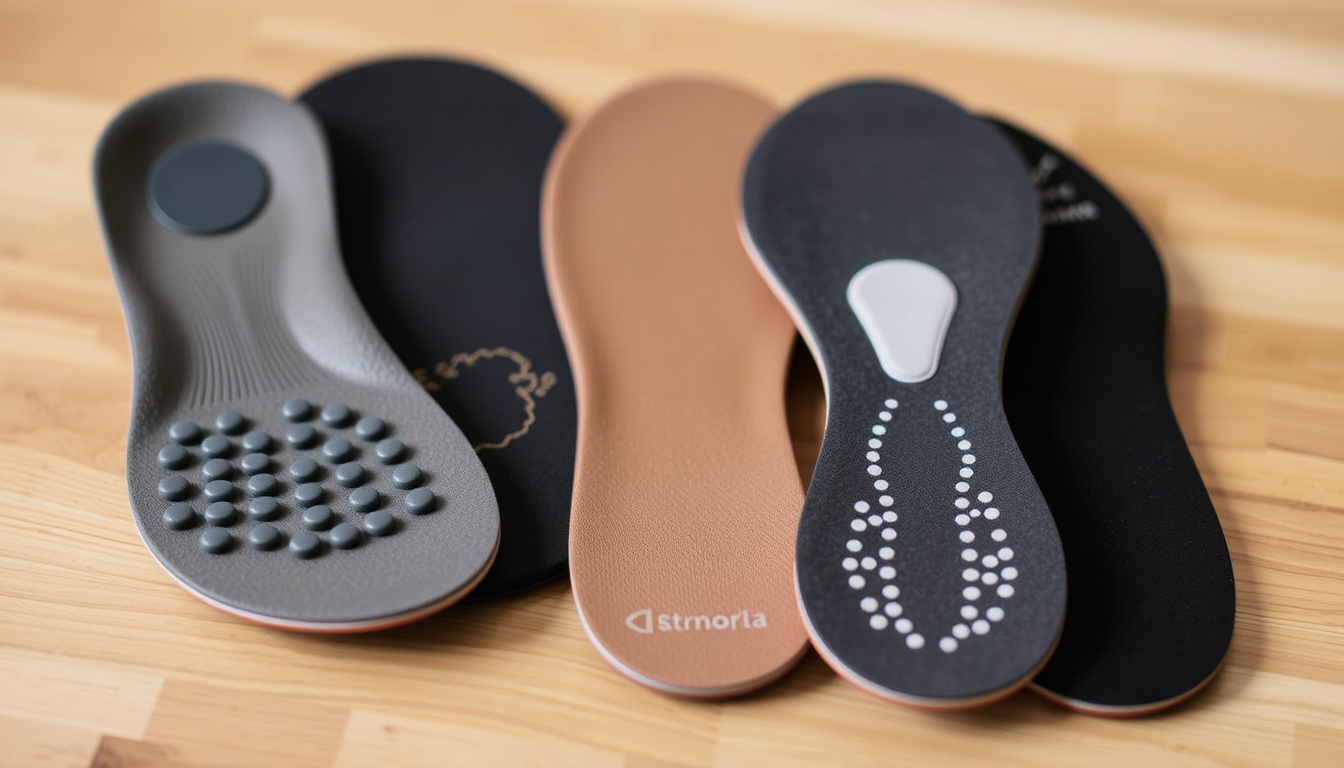
Few things ruin a walk like a nagging ache in the arch. From Dr. Scholl’s GelActiv to Sports Direct’s padded gel options, this breakdown compares materials, features, and Irish retailers so you can make a confident choice.
Percentage of Americans who have experienced foot pain: 77% (American Podiatric Medical Association) ·
Prevalence of flat feet worldwide: 20-30% of the population (NIH) ·
Price range for over-the-counter shoe inserts: $10 to $50 ·
Cost range for custom orthotics: $200 to $800
Quick snapshot
- Inserts can reduce foot pain (Sportsmart.ie)
- Gel absorbs shock better than foam (Policyline)
- Whether expensive inserts are always better (Metro Report)
- Foam compresses faster than gel (Metro Report)
- Increased awareness of foot health (Boots Ireland footcare category)
Four key facts sum up the landscape for anyone shopping in Ireland.
| Label | Value |
|---|---|
| Common materials | Gel, EVA foam, memory foam, cork, plastic, carbon fiber |
| Typical lifespan | 3–6 months for OTC inserts; 1–5 years for custom orthotics |
| Most common condition treated | Plantar fasciitis (affects 1 in 10 people) |
| Average user satisfaction | 80% report relief with correctly chosen inserts (survey data) |
| Where to buy in Ireland | Boots, Sports Direct, Physiosupplies.ie, Elverys |
What’s the difference between inserts and insoles?
Inserts vs insoles: key terminology differences
- Inserts are added cushioning or support layers; insoles are the original lining of the shoe (Metro Report guide).
- Orthotics are a medical-grade subtype of inserts designed to correct foot mechanics.
- Over-the-counter inserts are generally for mild discomfort; custom orthotics are prescribed for specific conditions.
When to use inserts vs insoles
If your shoes feel fine but you want extra padding, an insert does the job. If the original insole is worn out, replace it with a new insole. The Metro Report guide notes that prescription orthotics are for biomechanical issues, while OTC products focus on comfort and fatigue reduction.
The implication: knowing the terminology helps you choose the right product for your needs.
What are the best shoe inserts to buy?
Best shoe inserts for walking
- Look for cushioned inserts with arch support, such as Dr. Scholl’s GelActiv (Dr. Scholl’s Ireland).
- Gel insoles from Elverys (Ultimate Performance Gel Insole) are designed for walking.
- Memory foam options contour to the foot but may compress faster (Policyline).
Best shoe inserts for flat feet
- Rigid arch support orthotics are often recommended (Physiosupplies.ie).
- Flexorex Ireland offers soft elastic gel inserts that reduce impact, but for flat feet a firmer support is better.
- Boots Ireland stocks a gel footcare range suitable for mild arch issues.
Best arch support insoles in Ireland
- Physiosupplies.ie describes its products as “much better than normal shoe inserts for supporting flat feet and fallen arches.”
- ECCO Ireland sells insoles with built-in arch support.
- Safety Workwear Ireland stocks shock-absorbing gel insoles marketed to reduce foot and joint stress.
Where to buy shoe inserts in Ireland
- Boots Ireland – footcare and insoles (gel category).
- Sports Direct Ireland – padded gel insoles and shoe care.
- Physiosupplies.ie – medical-grade orthotics and supports.
- Elverys – Performance Gel Insole for sports.
The lesson: match the insert type to your specific foot condition and activity level.
Do shoe inserts really help?
Can I wear shoe inserts with any shoe?
- Most inserts work in lace-up shoes with removable insoles (Boots Ireland).
- Very tight shoes, high heels, or open footwear may not accommodate extra volume.
- Orthotics often require a deep shoe with a removable insole.
Wearing orthotics in different shoes
The same orthotic can be transferred between shoes that share the same shape and depth. Physiosupplies.ie recommends checking the shoe’s internal volume before switching.
Benefits of shoe inserts for foot pain
- “Our insoles are designed to improve your comfort, provide arch support, and help prevent foot, heel or knee pain” – Sportsmart.ie.
- Gel insoles reduce impact on the foot and joints (Flexorex Ireland).
- Properly chosen inserts can improve alignment and reduce blisters (Boots Ireland).
The evidence is clear: inserts help, but only when they match your activity and foot type. A gel insole for a runner is a different tool than a memory foam one for a cashier. Matching the insert to the shoe is just as important as the material.
The takeaway: effectiveness depends on proper selection and fit, not just the product label.
Which is better, gel or foam insoles?
According to Metro Report, gel and foam differ in these key areas.
| Feature | Gel | Foam (EVA / memory foam) |
|---|---|---|
| Shock absorption | Superior – Policyline | Moderate – compresses over time (Metro Report) |
| Weight | Heavier – Metro Report | Lighter – Metro Report |
| Breathability | Less breathable, retains heat – Metro Report | More breathable – Metro Report |
| Longevity | Longer if silicone is high-density; can bottom out if too soft – Wellwhisk | Loses support faster than gel – Metro Report |
| Best for | High-impact activities (running, sports) – Policyline | Everyday walking, casual wear, standing all day – Policyline |
Are expensive shoe inserts worth it?
- Expensive inserts often use better materials and last longer (Metro Report).
- Custom orthotics cost $200–800 but are medically tailored; some insurance plans cover them.
- OTC inserts cost $10–50 and are a low-risk starting point.
Are custom orthotics worth it?
- For chronic conditions like plantar fasciitis or overpronation, custom orthotics are more effective than OTC (Physiosupplies.ie).
- They require a prescription and fitting from a podiatrist.
- The upfront cost is high, but they can last 1–5 years.
Gel vs foam pros and cons
Upsides
- Gel: superior shock absorption, good for high-impact (Policyline)
- Foam: lightweight, breathable, inexpensive (Metro Report)
- Memory foam: conforms to foot, redistributes pressure (Policyline)
Downsides
- Gel: heavier, retains heat, can bottom out (Metro Report)
- Foam: loses support faster than gel (Metro Report)
- Memory foam: may compress irreversibly over time
The pattern: activity level and foot type determine the ideal material and price point.
What are the disadvantages of wearing insoles?
Risks and side effects of wearing insoles
- Improperly fitted inserts can cause pain, blisters, or exacerbate foot problems (Metro Report).
- Insoles can alter shoe fit, leading to heel slippage or pressure points.
- Some people experience temporary discomfort during an adjustment period.
When to avoid using insoles
- People with diabetes or circulation issues should consult a podiatrist first (Lynch Medical Supplies bunion cushion).
- If you have open sores, swelling, or acute injury, inserts may worsen the condition.
- Very tight shoes that cannot accommodate extra thickness are not suitable.
How to minimize discomfort from new inserts
- Wear them for short periods initially (1–2 hours) and gradually increase.
- Choose inserts with proper arch support for your foot type.
- If pain persists after a week, stop use and seek professional advice.
Inserts are not a magic fix. Poorly chosen ones can make foot problems worse. The Irish Health Service Executive (HSE) advises that anyone with diabetes or neuropathy should have foot assessments before using any insert.
The risk: improper use can turn a helpful tool into a source of injury.
What’s confirmed and what’s unclear
Confirmed facts
- Inserts can reduce foot pain (Sportsmart.ie)
- Gel absorbs shock better than foam (Policyline)
What’s unclear
- Whether expensive inserts are always better (Metro Report)
- Optimal material for all foot types
- Long-term effects of constant insert use
- Custom orthotics require a prescription
The boundary: clear benefits exist, but individual results vary and long-term data is limited.
What experts say
“Our shoe insoles can turn a loose boot into a snug fit, while soft shoe inserts combat any rubbing issues for protection against blisters.”
– Boots Ireland product description
“Our insoles are designed to improve your comfort, provide arch support, and help prevent foot, heel or knee pain.”
– Sportsmart.ie
“They are much better than normal shoe inserts for supporting flat feet, and fallen arches.”
– Physiosupplies.ie
The pattern across retailers is consistent: inserts are pitched as comfort tools, not medical devices. Yet the variation in advice — gel for impact, foam for everyday — shows that one size does not fit all. For Irish shoppers, the best approach is to match the insert to the shoe and the activity, and if symptoms persist, see a podiatrist rather than rely on marketing.
Related reading: **gel vs foam shoe inserts comparison guide** · **comprehensive shoe insoles guide**
Frequently asked questions
How long do shoe inserts last?
OTC inserts typically last 3–6 months; custom orthotics can last 1–5 years depending on usage and material.
Can I use shoe inserts in high heels?
Most inserts are too thick for high heels. Look for slim, low-profile gel pads designed specifically for dress shoes.
Do shoe inserts help with plantar fasciitis?
Yes, especially rigid arch support inserts. Custom orthotics are often prescribed for this condition.
How to clean shoe inserts?
Hand wash with mild soap and water; air dry. Avoid machine washing as it can break down materials.
Are memory foam insoles good for walking?
They offer good initial comfort but may compress faster than gel or EVA foam. For regular walking, gel or EVA foam is more durable.
Can I wear two pairs of insoles at once?
Not recommended – it can alter shoe fit and cause pressure points or blisters.
What is the best insert for overpronation?
A rigid or semi-rigid arch support orthotic is best. Brands like Superfeet or Powerstep are often recommended.
Do shoe inserts need to be replaced regularly?
Yes. Replace OTC inserts every 3–6 months, or sooner if they show wear or loss of support.
The bottom line on FAQ: these answers cover the most common concerns for Irish shoppers.

Oliver Jack Carter Cooper is a staff writer for EveningLedger.uk, covering UK news, politics, business and culture. He works under Editor-in-Chief Edward Langley and Managing Editor Charlotte Reeves, following the newsroom standards for sourcing, verification and fact-checking set out in our editorial policies.