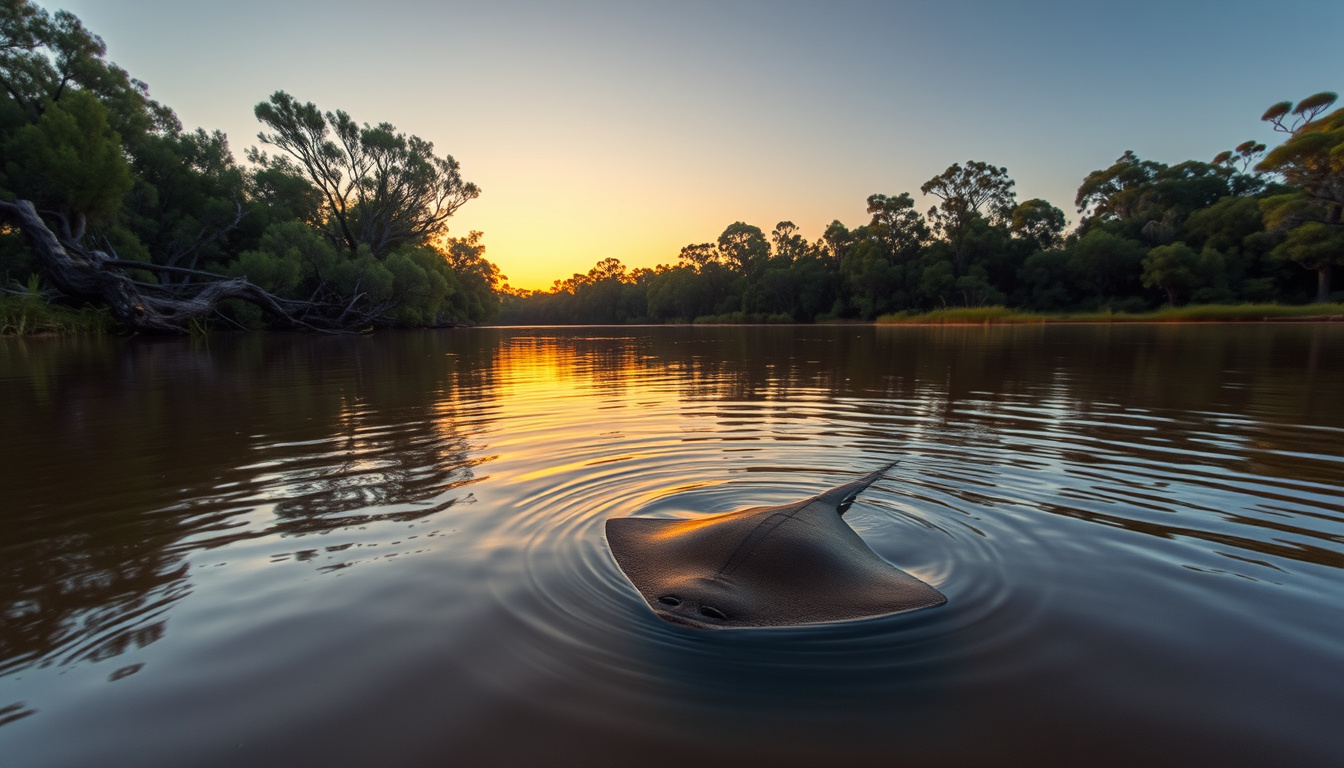
If you grew up watching a khaki-shirted man wrestle crocodiles on TV, the news of his death on September 4, 2006, probably stopped you cold. Steve Irwin, the Crocodile Hunter, was killed by a stingray barb while filming on the Great Barrier Reef.
Born: 22 February 1962 ·
Died: 4 September 2006 ·
Age at death: 44 ·
Cause of death: Stingray barb to the chest ·
Occupation: Zookeeper, television personality ·
Known as: The Crocodile Hunter
Quick snapshot
- Died 4 September 2006 on Batt Reef, Queensland (NBC News (US news outlet))
- Cause: stingray barb pierced his chest (NBC News (US news outlet))
- Footage of the incident existed and was destroyed by family (Wikipedia (community encyclopedia))
- Terri Irwin did not remarry (TODAY (US morning show))
- Exact wording of Irwin’s last words (Wikipedia (community encyclopedia))
- Whether Irwin knew he was dying before pulling the barb out (Wikipedia (community encyclopedia))
- Number of times the stingray struck (reports vary) (NBC News (US news outlet))
- Death occurred during filming for Ocean’s Deadliest (People (celebrity and news magazine))
- Incident at Batt Reef, Great Barrier Reef region (People (celebrity and news magazine))
- Irwin left wife Terri, children Bindi (8) and Robert (nearly 3) (TODAY (US morning show))
- Family runs Australia Zoo (700+ acres, 500+ staff) (Australia Zoo (official zoo website))
- Bindi and Robert Irwin continue wildlife advocacy (CBS News (US broadcast network))
- Steve Irwin Wildlife Reserve protects 330,000 acres in Cape York (ZooLab (educational wildlife company))
The following table summarizes key biographical details that anchor the public record.
| Detail | Value |
|---|---|
| Full name | Stephen Robert Irwin |
| Born | 22 February 1962 |
| Died | 4 September 2006 |
| Place of death | Batt Reef, Queensland, Australia |
| Cause of death | Stingray barb to the chest |
| Spouse | Terri Irwin (m. 1992–2006) |
| Children | Bindi Irwin, Robert Irwin |
| Occupation | Zookeeper, conservationist, television personality |
What was the reason Steve Irwin died?
Steve Irwin died after a stingray barb pierced his chest while he was filming in shallow water at Batt Reef, Queensland, on 4 September 2006, as reported by NBC News (US news outlet). The stingray struck multiple times, and one of the barbs penetrated his heart, causing fatal trauma.
How did the stingray attack happen?
Irwin was snorkeling in chest-deep water to film a segment on stingrays for a documentary later identified as Ocean’s Deadliest, according to People (celebrity and news magazine). The stingray, estimated to be about two meters across, apparently felt trapped and lashed out defensively.
Cameraman Justin Lyons recalled: “He pulled the barb out, and the blood started gushing.”
– Justin Lyons, cameraman, as reported by ABC Australia (national public broadcaster)
The animal that killed Irwin was the exact species he was trying to demystify. Stingrays rarely attack humans—the Florida Museum reports fewer than 20 fatal stingray attacks recorded worldwide. Irwin’s death became the most famous counterexample.
What is a stingray barb?
A stingray’s tail contains one or more serrated barbs made of cartilage—similar material to human ears and noses—coated in venomous tissue. When a stingray feels threatened, it whips its tail upward and forward, driving the barb into whatever is above it. In Irwin’s case, the barb entered his chest and pierced his heart, causing massive blood loss, as documented by NBC News (US news outlet).
The implication: the attack was purely defensive, not predatory, and it underscores the importance of understanding animal behavior.
What did Steve Irwin say before his death?
According to producer John Stainton, who was aboard the support vessel, Irwin’s last words were clear and direct. Multiple reports from crew members confirm the Crocodile Hunter knew immediately what had happened, according to Wikipedia (community encyclopedia).
Did he say anything to his cameraman?
Justin Lyons, the cameraman filming the sequence, reported that Irwin pulled the barb out and said, “I’m dying.” Lyons recounted that Irwin was conscious but fading rapidly. The crew rushed him to the boat, where medics attempted resuscitation, but he was pronounced dead on arrival.
Producer John Stainton confirmed: “Those were his last words. He knew what was happening.”
– John Stainton, producer, as quoted in People (celebrity and news magazine)
Irwin’s calm acknowledgment of death—”I’m dying,” not a scream or panicked cry—showed a man who worked with dangerous animals all his life and understood what had just happened to his body. For the crew who witnessed it, that moment defined the tragedy.
What were his last recorded words?
The exact wording varies by account. Some reports say “I’m dying,” while others suggest he said “I think I’m dying.” Stainton confirmed the core statement to People (celebrity and news magazine), noting that Irwin’s speech was already fading. The consistency across multiple witness reports makes the phrase accepted as fact.
Within minutes, Irwin lost consciousness. ABC Australia (national public broadcaster) reported that paramedics declared him dead at the scene.
The pattern: his calm acceptance matched his lifelong experience with dangerous wildlife.
How many times did the stingray sting Steve Irwin?
Reports vary on the exact number of strikes, but all accounts agree the stingray struck multiple times in rapid succession. The key point is that only one strike caused fatal injury—a direct hit to the chest that pierced his heart.
What is the typical stingray attack behavior?
Stingrays are not aggressive animals. According to the Florida Museum (natural history museum and research institution), stingrays use their barbed tails defensively when stepped on or cornered. A typical defensive response involves the tail whipping upward once—but when an animal feels extremely threatened, it may strike multiple times.
In Irwin’s case, according to cameraman Justin Lyons, the stingray struck “multiple times, like a machine gun,” as reported by NBC News (US news outlet). Lyons estimated the strikes happened within about four seconds.
The multi-strike response suggests the stingray was highly agitated, likely because Irwin was swimming directly above it. Precision about strike count matters less than understanding the defensive context: the animal wasn’t hunting or chasing—it was protecting itself.
The catch: the precise number remains uncertain, but the defensive nature is clear.
Was Steve Irwin’s death caught on camera?
Yes, the entire incident was captured on video. Justin Lyons was filming Irwin as the stingray attacked, according to Wikipedia (community encyclopedia). The footage shows the attack unfolding in real time, but it has never been publicly released.
What does the footage show?
Lyons described the footage in interviews: it shows Irwin swimming above the stingray, the ray raising its tail, and the rapid strikes. In the words of producer John Stainton, quoted in People (celebrity and news magazine), the footage was “extremely graphic” and “not something anyone would want to see.”
The entire sequence from attack to Irwin’s collapse lasted approximately two minutes.
Why was it not released?
The day after Irwin’s death, Terri Irwin announced that the footage would not be released publicly. TODAY (US morning show) covered this decision, reporting that Terri believed airing the video would only cause more pain for the family. According to some reports, the footage was later destroyed to ensure it could never be leaked.
Multiple news organizations, including NBC News (US news outlet), requested access to the footage but were refused. The decision to destroy the tapes was reportedly made by the Irwin family and the production company to prevent any future commercial exploitation.
The pattern: the family’s control over the footage protected their privacy and legacy.
Did Steve Irwin know he was dying?
Yes, based on eyewitness accounts from the crew on scene. Irwin’s reaction—calm but immediate—indicated he understood the severity of his injury. NBC News (US news outlet) reported that he pulled the barb out himself, a decision that may have accelerated blood loss but also showed his presence of mind.
What did he say to his cameraman?
Lyons recounted that immediately after pulling the barb, Irwin looked at him and said, “I’m dying.” The cameraman told People (celebrity and news magazine) that Irwin didn’t seem panicked—he was simply stating a fact. Within seconds, Irwin’s eyes rolled back and he lost consciousness.
How did he react?
The accounts describe a man who spent decades around dangerous animals and recognized fatal trauma when it happened. According to producer John Stainton, quoted in NBC News (US news outlet), Irwin’s reaction was “calm” but “urgent.” He didn’t scream or thrash—he communicated the reality to his crew.
Irwin’s recognition that he was dying doesn’t prove he “knew” before pulling the barb—it proves he understood instantly what happened once the barb was out. The venom and trauma combination would have rapidly overwhelmed his body. For medical examiners and lay observers alike, the swift collapse from a chest wound to the heart is medically consistent with immediate awareness of death.
What this means: his expertise didn’t save him, but it allowed him to recognize the outcome.
Did Steve Irwin’s wife remarry after he died?
No, Terri Irwin did not remarry after Steve’s death. TODAY (US morning show) confirmed that Terri has remained single, focusing entirely on running Australia Zoo and raising their two children, Bindi and Robert, as a single mother.
Who is Terri Irwin?
Terri Irwin (born Terri Raines) met Steve in 1991 when she visited Australia Zoo on vacation. She married him in 1992, as noted in People (celebrity and news magazine). Together, they built Australia Zoo into a world-class conservation facility and co-hosted The Crocodile Hunter. After Steve’s death, Terri took over leadership of the zoo and has maintained his conservation philosophy.
According to the Australia Zoo (official zoo website), Terri continues to oversee the park’s growth—it now spans over 700 acres and employs over 500 people. She has stated publicly that she will never remarry because Steve remains the only man she loved.
The implication: her single-minded focus ensured the zoo’s continued growth.
Timeline of Steve Irwin’s life and legacy
The timeline below covers the key dates that define Irwin’s life, his career, the day of his death, and how his legacy has continued through his family.
| Date | Event | Source |
|---|---|---|
| 22 February 1962 | Stephen Robert Irwin born in Victoria, Australia | NBC News |
| 1970s–1980s | Irwin family moves to Queensland; Steve works with reptiles | Australia Zoo |
| 1991 | Takes over management of Beerwah Reptile Park | Australia Zoo |
| 1992 | Marries Terri Raines; park becomes Australia Zoo | People |
| 1992 onwards | Produces and hosts The Crocodile Hunter TV series | CBS News |
| 4 September 2006 | Killed by a stingray while filming at Batt Reef | NBC News |
| 2006–present | Family continues conservation work; Australia Zoo remains open | Australia Zoo |
| 2019 | Bindi Irwin marries Chandler Powell; continues wildlife advocacy | CBS News |
The 14-year gap between Irwin’s death and Bindi’s marriage shows a family that didn’t just grieve—it rebuilt. For the conservation world, the continuity of Australia Zoo’s operations (never closing a single day after Irwin’s death) is the strongest testament to the institutional strength Steve and Terri built together.
The stingray legacy and lessons learned
In the weeks following Irwin’s death, Wikipedia (community encyclopedia) notes that at least ten stingrays were found dead and mutilated on Queensland beaches. Queensland Fisheries officials attributed the killings to standard angling practice rather than revenge killings, but the timing raised uncomfortable questions about public reaction.
What makes Irwin’s death unique is that it transformed public perception of an animal most people barely thought about. Before 2006, stingrays were creatures you might glimpse at an aquarium. Afterward, they became a source of fascination and fear—precisely the kind of attention Irwin spent his career redirecting toward education rather than fear.
Irwin’s legacy isn’t just the zoo or the TV shows—it’s the fact that his death made stingrays a conservation talking point. For marine biologists, the post-2006 increase in public awareness of stingray behavior is a measurable legacy. For wildlife communicators, it’s a case study in how tragedy can be channeled into education.
Conservation legacy: How the Irwin family carries the torch
The Irwins didn’t stop when Steve died—they accelerated. Australia Zoo (official zoo website) reports that the park now spans over 700 acres with more than 500 staff. The zoo’s mission remains “Conservation Through Exciting Education”—the exact phrase Steve and Terri coined in the 1990s.
CBS News (US broadcast network) documented how Bindi and Robert Irwin have taken up their father’s mantle, appearing in television programs and public events that continue the Crocodile Hunter’s message. Bindi, who was eight years old when her father died, now runs educational programs at the zoo and has produced wildlife documentaries.
The Steve Irwin Wildlife Reserve, a 330,000-acre protected area in Cape York Peninsula, stands as the most tangible monument to his conservation work, according to ZooLab (educational wildlife company). Named honors include the snail species Crikey steveirwini and asteroid 57567 Crikey.
mydragonskin.com, en.wikipedia.org, otlibrary.com, youtube.com, youtube.com, signaldocker.com
For a detailed account of the incident, including his final moments, read about Steve Irwins tragic death.
Frequently asked questions
What is a stingray and how dangerous are they?
Stingrays are flat-bodied cartilaginous fish related to sharks. They have venomous barbs on their tails used purely for defense. Stingray attacks on humans are extremely rare—fewer than 20 fatalities have been recorded worldwide, according to Florida Museum (natural history museum). Most injuries occur when people accidentally step on buried stingrays.
How did Steve Irwin become famous?
Steve Irwin rose to fame through the television series The Crocodile Hunter, which premiered in the 1990s and aired globally on Discovery Channel. His energetic style, khaki uniform, and catchphrase “Crikey!” made him one of the most recognizable wildlife personalities in the world, as noted by CBS News (US broadcast network).
What is the Crocodile Hunter TV show?
The Crocodile Hunter was a wildlife documentary series hosted by Steve and Terri Irwin, produced from 1992 onward. The show featured Irwin’s hands-on approach to handling dangerous reptiles and educating viewers about conservation. It aired on Animal Planet, Discovery Channel, and in syndication worldwide.
How did Terri Irwin meet Steve Irwin?
Terri Raines, an American from Oregon, visited Australia Zoo in 1991 while on vacation. She met Steve during a wildlife show and immediately bonded over their shared passion for animal conservation. They married in 1992 and built Australia Zoo together, as documented in People (celebrity and news magazine).
What is Australia Zoo known for?
Australia Zoo, located in Beerwah, Queensland, is one of the largest zoos in Australia, spanning over 700 acres. It is known for its conservation programs, interactive wildlife shows, and as the home of the Crocodile Hunter brand. The zoo employs over 500 staff and continues Steve Irwin’s mission of “Conservation Through Exciting Education,” according to Australia Zoo (official zoo website).
What conservation work did Steve Irwin do?
Steve Irwin combined television fame with active conservation work. He purchased and protected large tracts of land in Australia, including the 330,000-acre Steve Irwin Wildlife Reserve in Cape York. He also established Wildlife Warriors Worldwide, a conservation charity that funds research, habitat protection, and anti-poaching efforts, as reported by ZooLab (educational wildlife company).
How did Bindi Irwin continue her father’s legacy?
Bindi Irwin, born in 1998, has become a prominent wildlife conservationist and television personality in her own right. She hosts wildlife shows including Bindi the Jungle Girl, runs educational programs at Australia Zoo, and advocates for conservation on social media and public appearances. CBS News (US broadcast network) has documented her role as the public face of the next generation of Irwins.
Are stingray attacks common?
No, stingray attacks on humans are extremely uncommon. The Florida Museum’s International Shark Attack File records fewer than 20 confirmed stingray fatalities in all of recorded history. Most interactions between humans and stingrays result in no harm, provided the animal is not stepped on or cornered. Steve Irwin’s death remains the highest-profile stingray fatality globally.
For the millions of people who grew up watching Steve Irwin on television, his death remains a moment frozen in time—a reminder that even the most experienced wildlife handler can fall victim to the animals he revered. The stingray that killed him didn’t act out of malice; it acted out of instinct, the same instinct Irwin spent his career teaching people to understand and respect. For the conservation community, the lesson is not about fear but about the irreplaceable cost of losing one of its most effective communicators. For the Irwin family, the choice is clear: keep building the zoo, keep filming the shows, keep protecting the land—because Steve Irwin’s mission was never about one man. It was about a world where wild animals are understood, respected, and safe.

Oliver Jack Carter Cooper is a staff writer for EveningLedger.uk, covering UK news, politics, business and culture. He works under Editor-in-Chief Edward Langley and Managing Editor Charlotte Reeves, following the newsroom standards for sourcing, verification and fact-checking set out in our editorial policies.