
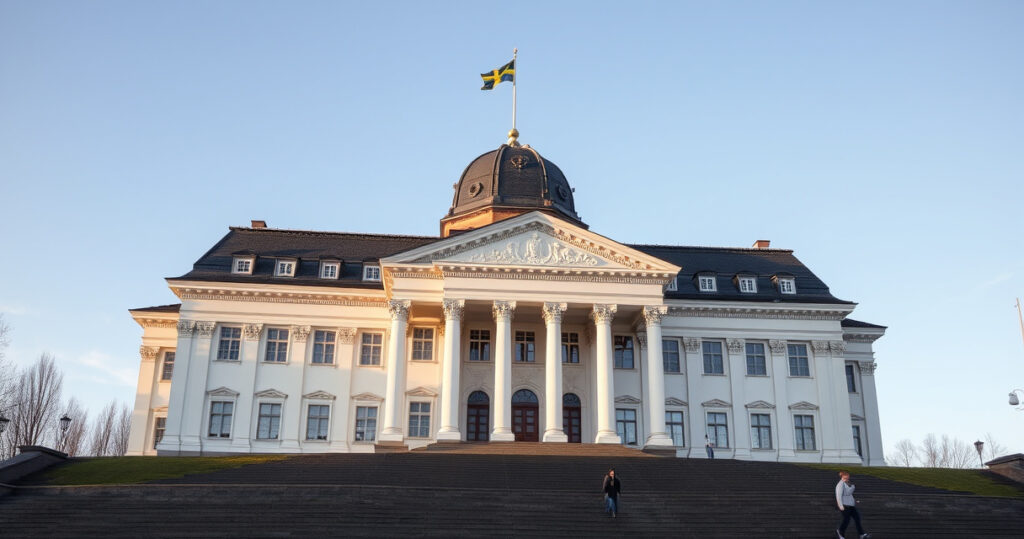
Sweden’s licensing model for online gambling is under mounting pressure from unlicensed offshore operators that bypass the Spelinspektionen system. The government now considers abandoning the principle of voluntary channelisation in favor of mandatory ISP blocking—a shift that would reshape Nordic enforcement.
Sweden’s gambling regulator, Spelinspektionen, has long relied on a voluntary channelisation model—encouraging players to use licensed operators by offering a safe, state-supervised market. Yet a growing number of Swedish consumers are turning to offshore casinos that operate without a Swedish license, often based in Malta, Curaçao or Estonia. These sites evade Swedish tax, ignore deposit limits and offer no links to the national self-exclusion registry Spelpaus.se. The result is a regulatory drain: lost tax revenue, weaker consumer protection and rising problem gambling rates. In response, the Swedish government is now weighing a fundamental break from its own framework by introducing mandatory internet service provider (ISP) blocking for unlicensed gambling domains. The proposal, debated since a 2023 government inquiry, would align Sweden with Norway and Denmark—neighbors that already deploy DNS blocking and payment bans to fence off their markets.
The core problem: why channelisation is failing in Sweden
Sweden’s 2019 re-regulation of gambling was built on the assumption that a well-regulated licensed market would attract the vast majority of players voluntarily. The key tool was a 18% tax on gross gaming revenue for licensees, combined with strict advertising rules and mandatory registration with Spelpaus. However, offshore operators have exploited a regulatory loophole: they are not physically present in Sweden and can legally offer services to Swedish consumers from within the EU via the e-commerce directive (2000/31/EC). The Swedish Gambling Act (2018:1138) prohibits unlicensed gambling directed at Sweden, but enforcement relies on Spelinspektionen issuing cease-and-desist orders—which often take months and are easily ignored by operators based abroad.
Data from Spelinspektionen’s 2023 market report shows that the channelisation rate—the proportion of gambling turnover captured by licensed operators—has fallen to approximately 82% for online casino, down from 90% in 2020. This means nearly 18% of all online casino play in Sweden occurs on unlicensed sites, representing an estimated SEK 2.5 billion in untaxed revenue annually. The trend is accelerating: in 2024, Spelinspektionen identified 57 new unlicensed domains targeting Swedish players, a 40% increase from the previous year. This erosion directly undermines the regulatory bargain: lower channelisation means weaker consumer protection and less funding for problem gambling support, including Stödlinjen.
How Norway and Denmark already block offshore gambling
The Swedish government is studying two Nordic models that have achieved higher channelisation rates by using proactive enforcement. Denmark’s Spillemyndigheden introduced mandatory ISP blocking in 2012 under the Danish Gambling Act, requiring internet providers to block payment transactions to unlicensed operators. The system, combined with a payment-blocking list updated weekly by the regulator, has kept online channelisation above 90% for most verticals. Norway’s Lotteritilsynet goes further: since 2019, it operates a DNS blocking system that forces ISPs to block access to unlicensed gambling websites entirely, not just payments. The Norwegian model also includes a ban on credit card deposits for all gambling, licensed or not.
A 2023 report from the Norwegian regulator shows that the blocking system reduced traffic to targeted offshore sites by 85% within six months. Sweden’s government inquiry, presented in January 2024, recommended a similar approach but with a narrower scope—only blocking domains that have been formally identified as targeting Swedish consumers without a license. The proposed law, expected to be submitted to the Riksdag in 2025, would amend the Swedish Gambling Act to give Spelinspektionen the power to order ISPs to block specific gambling websites. The proposal also includes a payment-blocking mechanism, following Denmark’s model, where banks must refuse transactions to listed operators.
The legal hurdles: EU law and proportionality
Any Swedish ISP blocking regime must comply with EU law, particularly the e-commerce directive and the Services Directive (2006/123/EC). The European Court of Justice (CJEU) has repeatedly ruled that member states can restrict the free movement of services for reasons of public policy, including consumer protection and the prevention of gambling addiction. In the landmark 2010 case Carmen Media Group (C-46/08), the CJEU confirmed that national gambling monopolies and licensing systems are permissible if they are proportionate and non-discriminatory. However, outright blocking of websites can be challenged as a disproportionate restriction on the freedom to provide services.
Sweden’s proposal attempts to address this by requiring a formal administrative decision from Spelinspektionen before any blocking order is issued, with a right of appeal to the Administrative Court in Linköping. The regulator must also renew the blocking order every six months, ensuring that operators who later obtain a license are removed from the list. The Swedish government’s legal assessment, published in 2024, argues that the system is proportionate because it only targets operators that have been found to violate Swedish law and are not licensed in any EU/EEA member state. Nevertheless, legal experts expect challenges from offshore operators, who may argue that the blocking system violates the e-commerce directive’s “country of origin” principle for services lawfully established in another EU state.
What the data tells us about the likely impact
A simulation conducted by the Swedish Agency for Public Management (Statskontoret) in 2023 estimated that a combined ISP and payment blocking system could increase channelisation for online casino to 94% within two years, reducing unlicensed market share from 18% to roughly 6%. The fiscal impact would be significant: the government estimates an additional SEK 700 million in annual tax revenue, assuming a 90% channelisation rate. The proposal also aims to reduce problem gambling prevalence, which according to the Public Health Agency of Sweden (Folkhälsomyndigheten) affects about 4.5% of the adult population—a figure that rises to 12% among online casino players who use unlicensed sites.
The table below summarises the current channelisation data across Nordic countries for online casino:
| Country | Channelisation rate (2023) | Blocking method | Regulator |
|———|—————————|—————-|———–|
| Sweden | 82% | None (voluntary) | Spelinspektionen |
| Denmark | 91% | Payment blocking | Spillemyndigheden |
| Norway | 94% | DNS + payment blocking | Lotteritilsynet |
| Finland | 78% | None (monopoly system) | Poliisihallitus |
The data shows that Sweden’s channelisation is now the second lowest in the Nordics, trailing only Finland’s outdated monopoly system. Without intervention, the trend is expected to continue: Spelinspektionen projects that unlicensed market share could reach 25% by 2026 if no enforcement measures are introduced.
Conclusion: a paradigm shift in Swedish gambling regulation
Sweden’s move toward ISP blocking represents a fundamental departure from the voluntary channelisation principle that underpinned the 2019 reform. The government acknowledges that the current system is unsustainable—offshore operators have learned to exploit the enforcement gap, and the cost of chasing them through administrative orders alone is rising. The new approach, modelled on Denmark and Norway, would give Spelinspektionen proactive tools to cut off access and payment flows to unlicensed sites. If implemented, Sweden would join a growing EU trend toward mandatory blocking, alongside countries like Belgium, the Netherlands and Italy.
The proposal, however, is not without risks. Critics argue that blocking systems can be circumvented via VPNs and that they risk overblocking legitimate services. The Swedish government has promised a safeguard mechanism requiring judicial oversight for each domain, but the practical effectiveness will depend on how quickly Spelinspektionen can update the blocklist. The Riksdag is expected to debate the bill in early 2025, with a potential implementation date of mid-2026. For the Nordic market, the outcome will set a precedent: if Sweden succeeds, other EU member states may follow; if it fails, the voluntary licensing model may be abandoned across the region.
Sources and further reading
- Spelinspektionen – Swedish Gambling Authority
- Swedish Gambling Act (2018:1138) – Riksdagen
- EU E-commerce Directive (2000/31/EC) – EUR-Lex
- Stödlinjen – Swedish national gambling helpline
- Statskontoret – Swedish Agency for Public Management
- genomgången av spellagen — Swedish-market reference with citations to regulators and case law.

Daniel Reed is a staff writer for EveningLedger.uk, reporting on consumer affairs, technology and everyday life in the UK. His work is reviewed by the editorial desk and checked against our sourcing and fact-checking standards before publication.