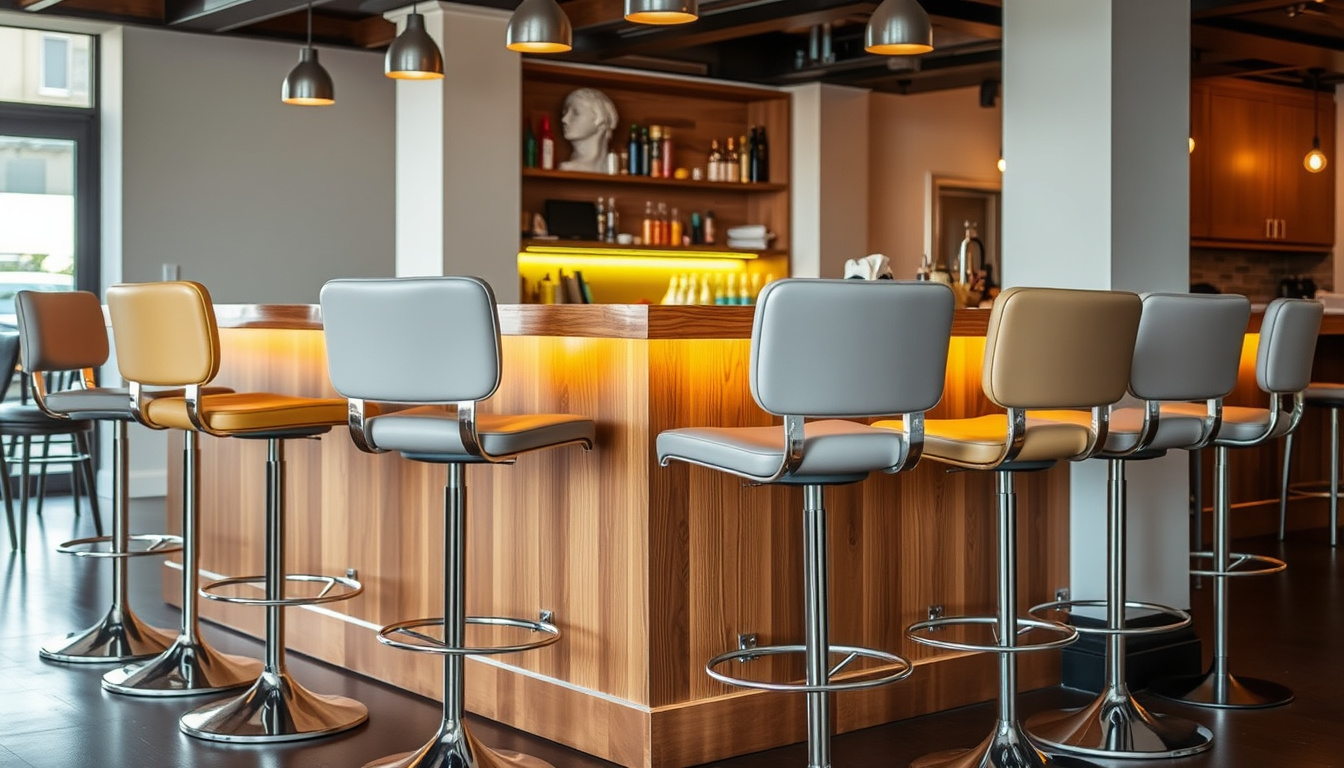
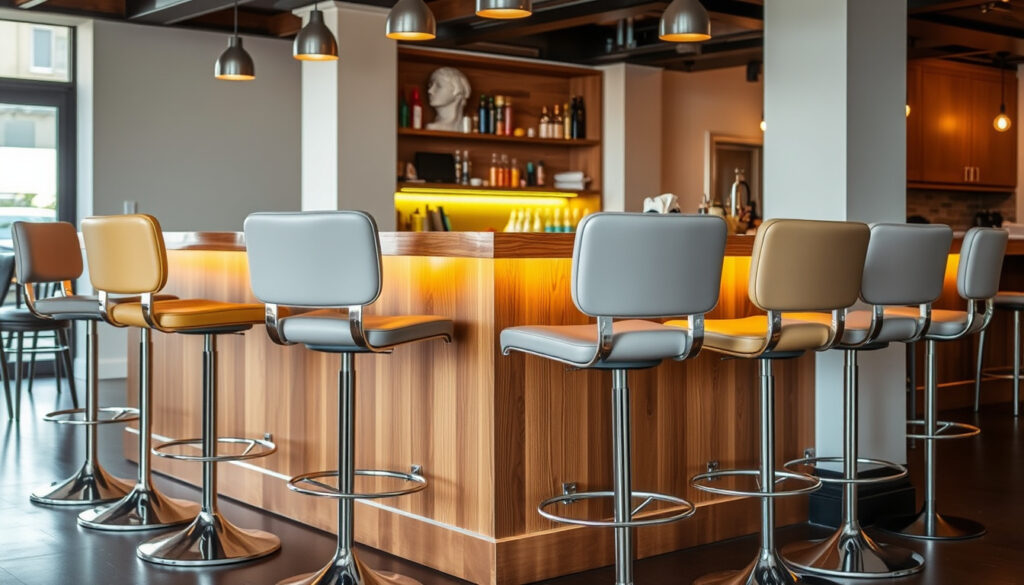
You might be surprised to learn that despite the volume of bar stools sold in the UK, no guide honestly wraps comfort, price, and the practical realities of the 2026 market. This guide cuts through the noise with a buying checklist focused on where to invest and where to save.
Standard counter stool height: 65 cm (26 inches) · Average weight capacity: 120 kg (265 lbs) · Most popular material: Wood (45% of UK sales) · Typical quality price: £150 – £250
“Many online listings don’t specify a load capacity, a key issue for heavier users.” — Aosom UK
Quick Facts for UK Buyers
- Aosom UK notes that many online listings don’t specify a load capacity, a key issue for heavier users.
- While PU leather is championed for easy cleaning, Aosom UK reveals that linen and velvet-feel options are softer but require more upkeep around spills.
- Café-inspired, industrial designs are the trending aesthetic for 2026, but as Ideal Home points out, they aren’t a fleeting fad—they’re a structural shift in kitchen design.
- UK retailers offer over 30,000 distinct bar stool styles, with UKPicks highlighting this massive variety as both a blessing and a pitfall for the indecisive buyer.
What are the comfiest bar stools?
The biggest misconception is that comfort and budget live at opposite ends of the spectrum. While you won’t find a £40 stool that offers the same lumbar support as a £300 chair, the real differentiation happens in the cushioning and the backrest design—not just the price tag. Let’s break down what actually dictates a comfortable seat.
Top Materials for Comfort
- Memory foam vs. foam: Aosom UK explains that memory foam contours to your shape after a few minutes, while standard foam gives a firmer, bouncier feel that some prefer for shorter sits.
- Cushion support: The inside structure matters as much as the top layer. A solid wood seat with a thin cushion is a different comfort story than a fully upholstered back-and-seat combo.
- Ergonomic design: Look for a footrest at the correct height; if your feet dangle, your thighs bear the strain. Houzz emphasises that the seat should be 25–30 cm lower than the countertop overhang for optimal thigh clearance.
Popular brands like Danetti and Atlantic Shopping (featured across UKPicks) have built their reputations on balancing comfort with modern aesthetics, but you’ll often pay a premium for the “designer” label. The catch is that many budget models from Eastern European imports skimp on the internal frame, leading to a wobbly seat within months.
“Café-inspired, industrial designs are the trending aesthetic for 2026, a structural shift in kitchen design.” — Ideal Home
The sweet spot is often £150–£250, where you get denser foam and a sturdier base.
Where can I get bar stools for cheap?
If you’re hunting for a bargain, the UK online market is fiercely competitive. The key is knowing where the markdowns hide rather than settling for the first “sale” banner.
Where Discounts Actually Live
- IKEA: The Swedish giant offers surprisingly durable options at entry price points. While their range isn’t vast, their basic swivel stools are a staple for a reason—they work.
- Clearance sections: Sites like UKPicks specifically mention that savvy shoppers should check end-of-season sales at retailers like Danetti, which often discount discontinued colours by up to 40%.
- Hidden gems: Don’t overlook stores like Sklum or Maisons du Monde for periodic 50%-off homeware events. The trade-off is often delivery time (up to 4 weeks) rather than quality.
The trick isn’t just finding a stool under £80; it’s finding one under £80 that won’t be a wobbling hazard by spring. The budget category is where you have to be most vigilant about the absence of a stated load capacity. If a listing doesn’t mention it, assume it’s the bare minimum.
Stick to established retailers with physical UK returns if you can’t test the stool in person.
What are the trends for bar stools in 2026?
Café-inspired industrial designs are the trending aesthetic for 2026, a shift noted by Ideal Home. Material preferences lean toward easy-clean PU leather, while velvet offers softer feel but requires more upkeep. With over 30,000 styles available, buyers have plenty to choose from.
The pattern: buyers are moving away from purely decorative stools toward those that blend durability with on-trend finishes. Industrial metal frames and natural wood tones dominate the 2026 palette.
What to consider when buying bar stools?
When buying bar stools, consider the cushioning type, backrest design, and load capacity. Measure your counter height to ensure a 25–30 cm leg gap. Choose materials based on usage – PU leather for easy cleaning, velvet for comfort but more maintenance. Always check for a stated load capacity to avoid wobbling issues.
Comparison: The Top Contenders for 2026
To see how the market breaks down, here’s a look at how the main purchasing paths differ across key metrics. The difference between them explains why one shopper’s “cheap” is another’s “expensive mistake.”
| Metric | Budget Pick (Under £80) | Mid-Range (UKPicks Favourite) | Premium (Designer) |
|---|---|---|---|
| Frame Material | Steel (thin gauge) | Hardwood (Oak or Beech) | Solid Walnut or Brass |
| Cushion Type | 1-inch foam (firm) | High-resilience foam with webbing | Feather-wrapped foam core |
| Load Capacity | Often unstated | 120 kg (stated) | 150 kg+ |
| Warranty | 6 months | 2 years | Lifetime frame guarantee |
| Assembly | Requires tools | Minimal, hex key included | White-glove delivery |
| Typical Price (After Discount) | £60 | £150 | £400+ |
The pattern is clear: you’re paying for the deeper seat depth and the density of the foam. For a UK home bar where an evening of conversation is expected, the premium for the 120 kg-rated frame is the difference between a stool that lasts a decade and one that ends up in the shed by year two. The right choice isn’t about how much you spend; it’s about how confident you feel leaning back on it.
You’re not paying for a label on a premium stool; you’re paying for the 30% denser seat foam that keeps your legs from falling asleep. The cheap version saves money at the till, but it’s the one place where “making do” equals a broken seat post sooner rather than later.
meetfelix.ai, joybuy.co.uk, ezlivingfurniture.co.uk, elystraliving.co.uk, povison.com, jb-commercial-furniture.co.uk, scopepress.uk, the-independent.com
Frequently Asked Questions
Are bar stools safe for children to use at a kitchen island?
Generally yes, if they meet the BS 5852 fire safety standard (as stated for upholstered options by Aosom UK) and have a wide base to prevent tipping. For young children, a step-stool design integrated into a stool is safer than a tall backless model.
Should I choose a stool with a backrest or a backless design?
Backless stools fit neatly under the counter when not in use and are often cheaper. However, for extended sitting (over 1 hour), a lower backrest (around 25 cm above the seat) supports the lumbar spine and reduces fatigue, as highlighted by ergonomic guidance from Aosom UK.
Is it normal for bar stools to feel wobbly even when new?
No. A new, quality stool should have zero lateral movement. If yours wobbles, check if the floor is level first. Per UKPicks, most wobbly stools from reputable retailers are due to an uneven frame, not a loose screw, and are a defect you should return.
How do I clean a velvet-feel bar stool without ruining it?
Don’t. According to Aosom UK, velvet-feel fabrics are notoriously high-maintenance. Use a dry microfiber cloth to dab spills immediately, and never rub. If you need heavy-duty cleaning, consider a stain-proof spray designed for upholstery, but test it on a hidden area first.
What is the best height for a bar stool if my counter is 90 cm high?
Your seat should sit between 65 cm and 68 cm. Houzz confirms you need a 25–30 cm leg gap to cross your legs comfortably, so a counter stool (rather than a bar stool) is the correct spec for a 90 cm countertop.
Related Reading
If you’re diving deeper into kitchen design, check out our other guides on Kitchen Lighting Ideas and Dining Table Shapes to ensure your entire space feels cohesive. Pairing the right stool with the wrong table height is a common oversight, so look for our height calculator tool in the kitchen planner section. For the home bar enthusiast, we also have a piece on Glassware Essentials to complete the look.

Oliver Jack Carter Cooper is a staff writer for EveningLedger.uk, covering UK news, politics, business and culture. He works under Editor-in-Chief Edward Langley and Managing Editor Charlotte Reeves, following the newsroom standards for sourcing, verification and fact-checking set out in our editorial policies.