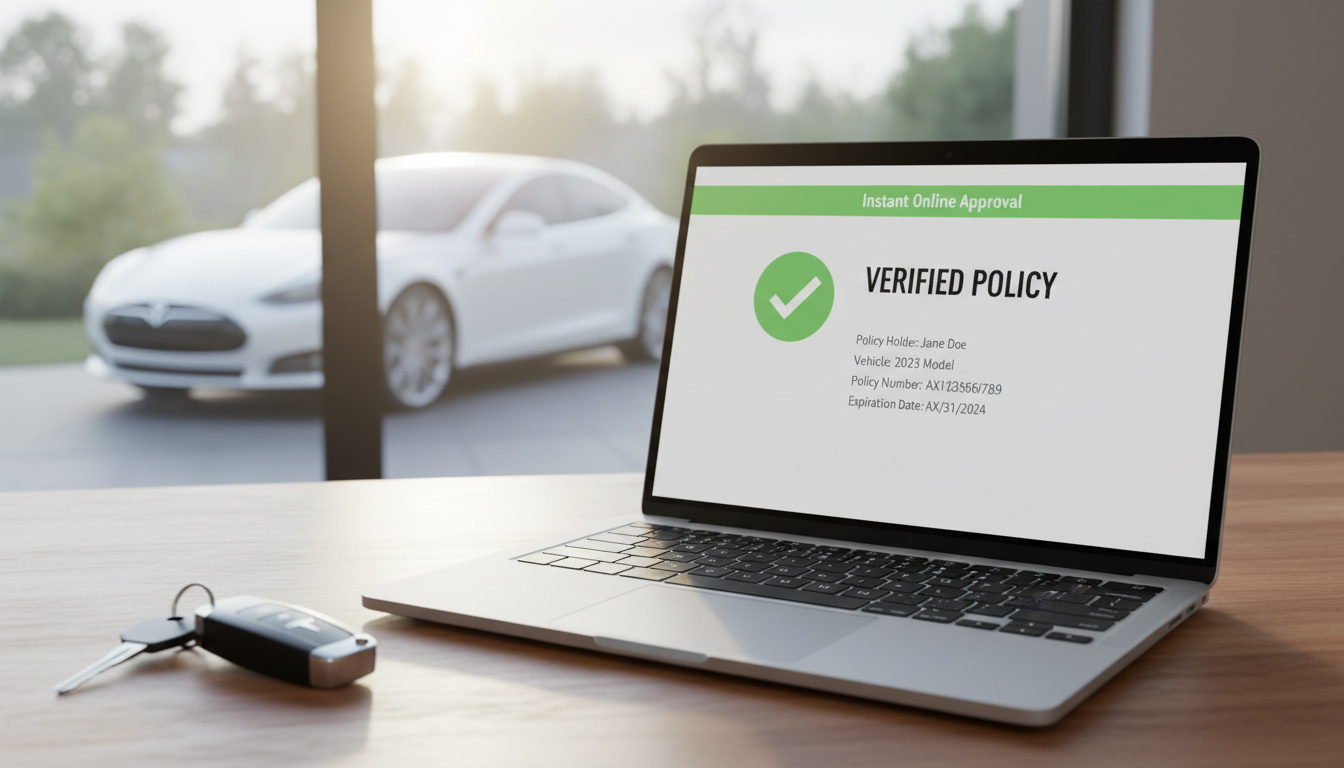

Verifying active coverage remains a critical responsibility for vehicle owners. Financial responsibility laws across jurisdictions mandate continuous insurance, with lapses triggering registration suspensions, monetary penalties, and legal liability exposure for uninsured accidents.
Digital verification methods have streamlined this process. Policyholders now access real-time status updates through secure insurer portals, mobile applications, and state-run databases. These systems confirm coverage validity, display renewal dates, and provide instant proof of insurance documentation for law enforcement or registration purposes.
The verification process varies significantly by region. United States drivers utilize insurer-specific platforms integrated with state DMV systems, while United Kingdom motorists access the centralized Motor Insurance Database alongside direct carrier portals.
How Can I Check My Car Insurance Status Online?
Multiple digital pathways exist for coverage verification. Each method requires specific authentication credentials and serves distinct purposes, from routine status checks to compliance verification for registration renewal.
Methods
Online portal, mobile app, physical documents
Requirements
Policy number, login credentials, VIN
Time
2-5 minutes for completion
Best For
Validity checks, renewal dates, coverage details
Strategic approaches enhance verification efficiency:
- Bookmark official insurer portals to avoid phishing sites
- Set calendar alerts 30 days before policy expiration
- Download digital insurance cards immediately upon renewal
- Verify VIN accuracy matches registration documents
- Review liability limits during each status check
- Update contact information to receive renewal notifications
- Cross-reference state DMV records with insurer data
| Aspect | Details | Action |
|---|---|---|
| Policy Number Location | Insurance ID card, declarations page, welcome email | Locate 10-digit alphanumeric code |
| Online Portal Access | Insurer website or mobile application | Enter credentials or policy number |
| Validity Indicator | Active, expired, or pending cancellation status | Note expiration date and time zone |
| Coverage Verification | Liability, comprehensive, collision details | Confirm state minimum requirements met |
| Document Download | PDF policy cards, proof of insurance | Save to secure mobile location |
| Renewal Status | Upcoming expiration alerts, payment due dates | Schedule payment to avoid lapse |
| DMV Integration | State database compliance verification | Check for registration holds |
| Mobile App Features | Real-time status, digital ID cards | Enable biometric login for security |
What Are the Specific Steps to Verify Coverage in the US?
American drivers navigate a dual-system verification environment. Insurance carriers maintain proprietary databases, while state Departments of Motor Vehicles operate parallel compliance tracking systems tied to vehicle registrations.
Accessing Insurer Digital Platforms
Direct carrier access provides the most immediate verification. Policyholders log into secure websites or mobile applications using policy numbers and registered personal details. Plymouth Rock Insurance and Direct Auto exemplify platforms offering real-time status updates, coverage date confirmations, and digital document retrieval. The declarations page displays effective and expiration dates, while mobile apps store proof of insurance for law enforcement presentation.
State DMV Verification Systems
State governments maintain independent verification mechanisms to enforce financial responsibility laws. Georgia operates the GEICS (Georgia Electronic Insurance Compliance System) and DRIVES e-Services, allowing registered owners to confirm insurer-reported status using VIN or plate numbers. Texas utilizes TexasSure for plate-based lookups, while Florida provides FLHSMV Online Verification. These state systems serve primarily compliance functions rather than providing full policy documentation.
Insurance status updates require transmission time between carriers and state databases. Georgia Department of Revenue documentation confirms that recent policy changes may not immediately reflect in DMV systems. Drivers should verify directly with insurers for time-sensitive matters.
How Does Insurance Verification Work in the UK?
British motorists access coverage verification through two primary channels. The Motor Insurance Database serves as the central repository, while individual insurers provide detailed policy management portals.
Motor Insurance Database Checks
The MID system via AskMID.com enables instant validity confirmation using vehicle registration numbers alone. This government-integrated database, overseen by the Association of British Insurers, connects with DVLA records for MOT and taxation compliance. Results typically display within seconds, though updates may require up to 48 hours following policy inception or modification.
Direct Insurer Access
Major carriers including Aviva and Admiral provide comprehensive account management through dedicated portals and mobile applications. These platforms require policy numbers for authentication and offer granular detail unavailable through MID, including excess amounts, no-claims discount status, and coverage modifications. Digital policy documents meet legal requirements for proof of insurance during traffic stops.
What Information Do I Need to Locate My Policy Details?
Successful verification requires specific identifiers that authenticate ownership and link vehicles to active coverage periods. Locating these credentials before initiating checks prevents authentication failures.
Locating Your Policy Number
Insurance identification cards contain the primary policy number, typically displayed prominently in alphanumeric format. Physical documents received at policy inception remain valid references, though digital versions now dominate. Email confirmations from policy activation, mobile application profiles, and previous correspondence with agents contain these critical identifiers. The declarations page summarizes coverage periods alongside the policy number.
Vehicle Identification Requirements
State DMV systems require Vehicle Identification Numbers or license plate numbers for compliance verification. The 17-character VIN appears on registration documents, windshields, and driver-side door frames. Plate numbers suffice for basic validity checks but cannot retrieve full policy details without additional authentication.
Privacy regulations restrict public access to specific policy details. Verification systems require ownership proof or legal authorization. Third parties cannot legally check another driver’s coverage status without consent or court order.
What Is the Step-by-Step Process to Check My Car Insurance?
Systematic verification follows a logical sequence from credential gathering through documentation storage. This workflow applies across both US and UK verification methods.
- Document Retrieval: Locate physical insurance cards, welcome emails, or mobile app credentials. Plymouth Rock
- Portal Navigation: Access official insurer websites or state DMV verification pages directly, avoiding search engine advertisements that may lead to phishing sites. Finhabits
- Authentication: Enter policy numbers, VINs, or registration plates alongside personal identifiers such as ZIP codes or birth dates for identity confirmation.
- Status Review: Examine active coverage dates, liability limits, and any pending cancellation notices. Cross-reference expiration dates with calendar entries.
- Documentation: Download current proof of insurance, screenshot digital cards, or print verification receipts for vehicle storage and law enforcement presentation.
What Is Certain and Uncertain About Online Insurance Checks?
Understanding the reliability boundaries of digital verification prevents compliance gaps and legal exposure.
Established Information
- Official insurer portals provide authoritative, real-time coverage status
- State DMV systems accurately confirm legal compliance for registration
- Policy numbers link directly to active coverage periods and expiration dates
- Digital documents carry equivalent legal weight to physical cards
Remaining Uncertainties
- Third-party aggregator sites may display cached or outdated information
- Real-time synchronization between insurers and government databases varies by jurisdiction
- International coverage verification lacks standardized protocols
- Data lag periods for newly issued policies remain inconsistently defined
Why Is Regular Insurance Verification Legally Required?
Continuous coverage mandates form the foundation of financial responsibility legislation. These laws ensure accident victims receive compensation regardless of at-fault driver solvency. Registration systems automatically flag vehicles with lapsed coverage, triggering suspension notices and reinstatement fees that often exceed standard premium costs.
Verification prevents unintentional coverage gaps during renewal transitions. Policyholders checking status before expiration dates avoid the higher premiums and underwriting scrutiny associated with reinstating lapsed policies. Drivers planning journeys to specific destinations often verify local conditions alongside insurance status. Those traveling through West Sussex may consult the BBC Weather Burgess Hill – Current Conditions and Forecasts before departure.
Commercial and personal use distinctions require different verification protocols. Ride-share operators and delivery drivers must confirm business-use endorsements that standard policies often exclude, necessitating more frequent status checks.
Which Authorities Verify Insurance Information?
Government agencies and industry bodies establish verification standards while protecting consumer privacy through restricted database access.
The Georgia Electronic Insurance Compliance System receives data directly from insurance companies to verify that vehicle owners maintain the required minimum liability coverage.
Georgia Department of Revenue, Motor Vehicle Division
State databases confirm compliance with financial responsibility laws but do not replace direct insurer contact for coverage disputes or detailed policy questions.
Finhabits Insurance Verification Guide
How Do I Ensure My Car Insurance Stays Current?
Proactive verification through official insurer portals and state databases prevents compliance lapses. Drivers should establish calendar reminders 30 days before expiration, download digital proof immediately upon renewal, and cross-reference DMV records when registering vehicles. Maintaining organized policy documentation ensures rapid authentication when required. Beyond insurance verification, maintaining financial health includes monitoring savings rates. The Nationwide Loyalty Saver Interest Rate – Current 3.75% AER and Eligibility Guide provides current information for account holders managing comprehensive financial portfolios alongside vehicle coverage.
Frequently Asked Questions
Can I check someone else’s car insurance status?
No. Privacy laws restrict database access to vehicle owners, authorized representatives, or legal entities with court orders. Public lookup tools require ownership verification.
Why does my insurance status show a delay on DMV websites?
State systems update periodically rather than instantly. Insurance companies transmit data in batches, creating 24-48 hour gaps between policy activation and DMV visibility.
What if I lost my policy number?
Contact your insurance agent or customer service department with your name, address, and vehicle VIN. They verify identity through security questions before releasing policy details.
Is there a universal app to check any car insurance?
No single application accesses all insurers. Each carrier maintains proprietary systems. Government databases like AskMID (UK) or state DMV sites provide limited universal coverage confirmation only.
How often should I verify my coverage?
Check status monthly and immediately after any policy changes. Verify 30 days before renewal and whenever receiving cancellation or non-renewal notices from your carrier.

Oliver Jack Carter Cooper is a staff writer for EveningLedger.uk, covering UK news, politics, business and culture. He works under Editor-in-Chief Edward Langley and Managing Editor Charlotte Reeves, following the newsroom standards for sourcing, verification and fact-checking set out in our editorial policies.