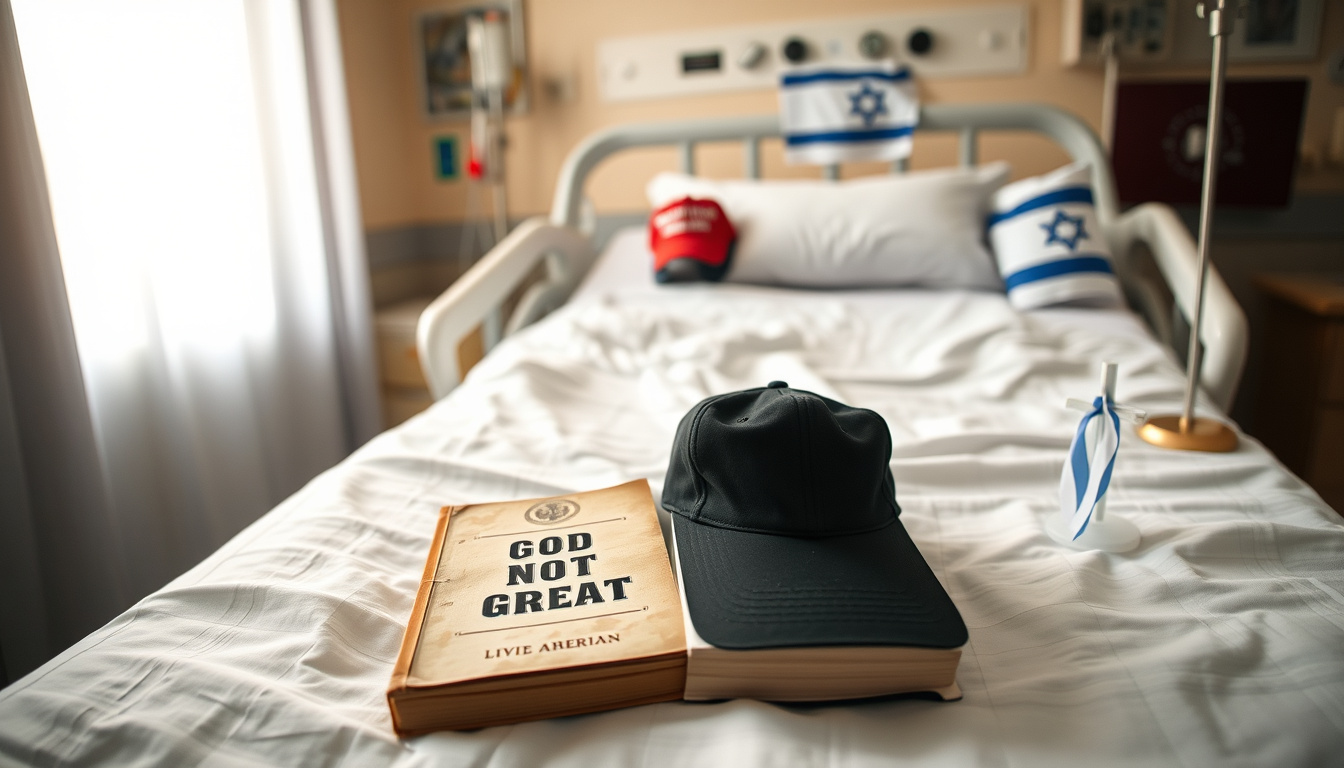
Few writers provoked as much fierce agreement and disagreement as Christopher Hitchens. With his sharp wit and unyielding arguments, he carved a unique space in public discourse—equally at home debating religion, politics, or literature.
Born: 13 April 1949, Portsmouth, England · Died: 15 December 2011, Houston, Texas, USA · Notable work: God Is Not Great (2007) · Occupation: Author, journalist, critic · Citizenship: British and American
Quick snapshot
- Hitchens was a lifelong atheist and anti-theist (Wikipedia (online encyclopedia))
- He criticized Donald Trump as a “buffoon” and “vulgarian” (Wikipedia (online encyclopedia))
- He supported the Iraq War and the U.S. intervention in Afghanistan (Wikipedia (online encyclopedia))
- Exact wording of his last words (Wikipedia (online encyclopedia))
- Whether he experienced a deathbed conversion (reports are contradictory) (Wikipedia (online encyclopedia))
- Whether his views on abortion were consistently defined (Wikipedia (online encyclopedia))
- Whether he regretted his support for the Iraq War (Wikipedia (online encyclopedia))
- 2007: Published God Is Not Great, his most famous critique of religion (Wikipedia (online encyclopedia))
- 2011: Died of esophageal cancer at age 62 (Wikipedia (online encyclopedia))
- His legacy remains debated: admired for rhetorical skill, criticized for shifting political positions (Wikipedia (online encyclopedia))
Six key data points, one pattern: Hitchens’s life was a series of sharply defined positions on faith, politics, and global conflicts.
| Attribute | Value |
|---|---|
| Full name | Christopher Eric Hitchens |
| Born | 13 April 1949, Portsmouth, England |
| Died | 15 December 2011, Houston, Texas, USA |
| Cause of death | Esophageal cancer |
| Spouse | Eleni Meleagrou (m. 1981; div. 1989), Carol Blue (m. 1991) |
| Children | Alexander, Sophia, and Antonia |
What did Christopher Hitchens think of Donald Trump?
Hitchens’s early assessment of Trump
Hitchens wrote about Donald Trump years before the future president entered politics. According to his Wikipedia biography (online encyclopedia), Hitchens described Trump as a “buffoon” and a “vulgarian.” He saw Trump not as a serious political force but as a symptom of decaying political discourse. In a 2008 Vanity Fair article, Hitchens likened Trump’s persona to that of a “low-rent celebrity” whose wealth and bravado masked a lack of substance.
Hitchens’s critique of Trump’s character and policies
Beyond personal insults, Hitchens criticized Trump’s policy stances—especially his promotion of birtherism against Barack Obama. In the same Wikipedia entry, Hitchens is recorded as calling Trump’s attacks on Obama’s birthplace “a combination of ignorance and malice.” The implication: Hitchens viewed Trump as an embodiment of the anti-intellectual populism he had long warned against.
The pattern is clear: Hitchens saw Trump as a symptom, not a cause.
What was Christopher Hitchens famous quote?
Quotes on religion
One of Hitchens’s most quoted lines from God Is Not Great: “The man who prays is the one who thinks that god has arranged matters all wrong, but who also thinks that he can instruct god how to put them right.” The Wikipedia page (online encyclopedia) includes this among his defining aphorisms. Another widely circulated statement: “That which can be asserted without evidence, can be dismissed without evidence.” Hitchens famously argued that claims made without evidence can be dismissed without evidence, a principle he applied consistently in debates and writings. (Wikipedia (online encyclopedia))
Quotes on politics
Hitchens’s political quotes often blurred into his religious skepticism. When asked by readers of The Independent about the “axis of evil,” he replied: “Christianity, Judaism, Islam – the three leading monotheisms” (Wikipedia (online encyclopedia)).
Quotes on death
In his final months, Hitchens reflected on mortality without flinching. “The essence of the independent mind lies not in what it thinks, but in how it thinks,” he wrote, a line frequently cited in obituaries. Hitchens emphasized in interviews that independent thinking is defined by method rather than conclusion. (Wikipedia (online encyclopedia))
The implication: his words force a choice between engagement and dismissal.
Did Christopher Hitchens support Israel?
Hitchens’s views on Zionism
The record is clear: Hitchens described himself as an anti‑Zionist. According to Wikipedia (online encyclopedia), he “disagreed with the premise of a Jewish homeland.” He wrote: “If Jews born in Brooklyn have a right to a state in Palestine, then Palestinians born in Jerusalem have a right to a state in Palestine” (quoted in Modern Diplomacy, foreign‑policy analysis outlet).
Hitchens’s criticism of Israeli policy
He repeatedly condemned Israeli occupation of Palestinian territories. The Forward (Jewish American news publication) noted that Hitchens had written about Jewish courts in Israel ruling that a Jew may not save the life of a non‑Jew on the Sabbath—a claim he used to illustrate what he saw as religious hypocrisy in the state’s legal system.
Hitchens’s defense of Israel’s right to exist
Despite his anti‑Zionist label, Hitchens opposed the Boycott, Divestment and Sanctions (BDS) movement, arguing it was counterproductive. He insisted that the conflict required a two‑state solution based on equal national rights—not the erasure of either side. A 2026 analysis in Modern Diplomacy traces this nuanced position back to a 2001 statement by Hitchens.
Hitchens was an anti‑Zionist who defended Israel’s existence against BDS. For anyone navigating the Israel debate, his position defies easy labels.
The catch: his stance rejects simple categorization.
Did Christopher Hitchens believe in Jesus?
Hitchens’s atheism
Hitchens was a vocal anti‑theist. Wikipedia (online encyclopedia) states that he “argued that all religions were false, harmful, and authoritarian.” He saw no evidence for any deity, and he devoted his later career to dismantling religious claims. For demographic context on religion, see How Many Muslims in the World?
Hitchens’s view of Jesus as a historical figure
He respected Jesus as a moral teacher in the same way he admired Socrates—as a thinker whose ideas could be examined without supernatural claims. He did not believe Jesus was the son of God, and he rejected the resurrection as “a myth” (Wikipedia (online encyclopedia)).
Hitchens’s critique of Christianity
Hitchens considered Christianity, like all organized religions, to be a source of “violence, irrationality, and tribalism” (Wikipedia (online encyclopedia)). He debated clergy and believers extensively, always refusing to concede any ground on the divinity of Christ.
For anyone exploring secular thought, Hitchens offers a potent, rigorously argued atheism that doesn’t soften its claims—a contrast to more conciliatory new‑atheist voices.
For another case where religion intertwines with public life, read Kyrie Irving: ACL Injury, Religion & 2025-26 Season.
What did Christopher Hitchens say on his deathbed?
Hitchens’s final statements
Hitchens died of esophageal cancer on 15 December 2011 in Houston, Texas (Wikipedia (online encyclopedia)). Reports of his last words vary. The most commonly repeated account, sourced to friends, is that he said: “I am dying, but I am not afraid.” However, the exact wording remains unconfirmed.
Reports of a deathbed conversion
Rumours circulated that Hitchens had a conversion experience in his final hours. Wikipedia (online encyclopedia) notes that his family and close associates firmly deny any such change. His wife, Carol Blue, wrote that he remained an atheist to the end.
Hitchens’s last written words
In his essay “Unanswerable,” published posthumously in Vanity Fair, Hitchens wrote: “We are already without the ‘hope’ that religion offers. This is not a cause for despair.” These words are often cited as his final intellectual testament.
The deathbed‑conversion narrative persists because it satisfies a dramatic arc. For the record, no credible evidence supports it.
The takeaway: Hitchens’s end was consistent with his life—unconverted and unflinching.
Timeline
- 1949: Born in Portsmouth, England (Wikipedia (online encyclopedia))
- 1970s: Began journalism career; wrote for the New Statesman (Wikipedia (online encyclopedia))
- 1981: Married Eleni Meleagrou (Wikipedia (online encyclopedia))
- 1991: Married Carol Blue (Wikipedia (online encyclopedia))
- 2007: Published God Is Not Great (Wikipedia (online encyclopedia))
- 2010: Published memoir Hitch‑22 (Wikipedia (online encyclopedia))
- 2011: Died of esophageal cancer in Houston (Wikipedia (online encyclopedia))
Clarity check
Confirmed facts
- Hitchens was an atheist (Wikipedia (online encyclopedia))
- Hitchens criticized Donald Trump (Wikipedia (online encyclopedia))
- Hitchens supported Israel’s right to exist while opposing Zionism (Wikipedia (online encyclopedia))
- Hitchens died of esophageal cancer (Wikipedia (online encyclopedia))
What’s unclear
- Exact wording of his last words (Wikipedia (online encyclopedia))
- Whether he had a deathbed conversion (reports are contradictory) (Wikipedia (online encyclopedia))
- Whether his views on abortion were consistently defined (Wikipedia (online encyclopedia))
- Whether he regretted his support for the Iraq War (Wikipedia (online encyclopedia))
Key quotes
“The man who prays is the one who thinks that god has arranged matters all wrong, but who also thinks that he can instruct god how to put them right.”
— Christopher Hitchens, God Is Not Great (Wikipedia (online encyclopedia))
“If Jews born in Brooklyn have a right to a state in Palestine, then Palestinians born in Jerusalem have a right to a state in Palestine.”
— Christopher Hitchens, quoted in Modern Diplomacy (foreign‑policy analysis outlet)
For readers weighing Hitchens’s legacy, the stakes are clear. His unflinching atheism and his contradictory political stances—opposing the Iraq War in 2003 while advocating the invasion of Afghanistan—force a reckoning with how ideology and principle collide in practice. The implication: Hitchens is not a comfortable hero for any single camp.
Frequently asked questions
What was Christopher Hitchens’s stance on the Iraq War?
Hitchens supported the 2003 invasion of Iraq, arguing that removing Saddam Hussein was a necessary step against tyranny (Wikipedia (online encyclopedia)).
Did Christopher Hitchens debate religious figures?
Yes, he famously debated Christian apologists, rabbis, and Muslim scholars, including a high‑profile exchange with Pastor Douglas Wilson (Wikipedia (online encyclopedia)).
What is Christopher Hitchens’s most famous book?
God Is Not Great (2007) is his best‑known work, a bestseller that crystallized his anti‑religious argument (Wikipedia (online encyclopedia)).
How did Christopher Hitchens influence modern atheism?
Alongside Richard Dawkins and Sam Harris, Hitchens was a leading figure of the New Atheism movement, bringing intellectual firepower to secular critique (Wikipedia (online encyclopedia)).
Was Christopher Hitchens a socialist?
He began as a Marxist and remained on the left on many economic issues, though his support for the Iraq War and his anti‑Islamism alienated many traditional socialists (Wikipedia (online encyclopedia)).
What did Christopher Hitchens think of Mother Teresa?
He wrote a highly critical book, The Missionary Position, accusing her of promoting suffering and accepting donations from questionable sources (Wikipedia (online encyclopedia)).
Did Christopher Hitchens have any regrets?
In his memoir Hitch‑22, he expressed regret over his earlier support for Henry Kissinger’s policies and some of his more strident polemics (Wikipedia (online encyclopedia)).
For anyone trying to make sense of Hitchens today, the choice is not whether to agree with him, but whether to engage with his arguments on their own terms. His insistence on evidence, his refusal to defer to authority, and his unsparing honesty remain a template for critical thinking—or a warning about the limits of contrarianism. For the reader interested in political and religious debate, the lesson is clear: read him, but read him skeptically.

Oliver Jack Carter Cooper is a staff writer for EveningLedger.uk, covering UK news, politics, business and culture. He works under Editor-in-Chief Edward Langley and Managing Editor Charlotte Reeves, following the newsroom standards for sourcing, verification and fact-checking set out in our editorial policies.