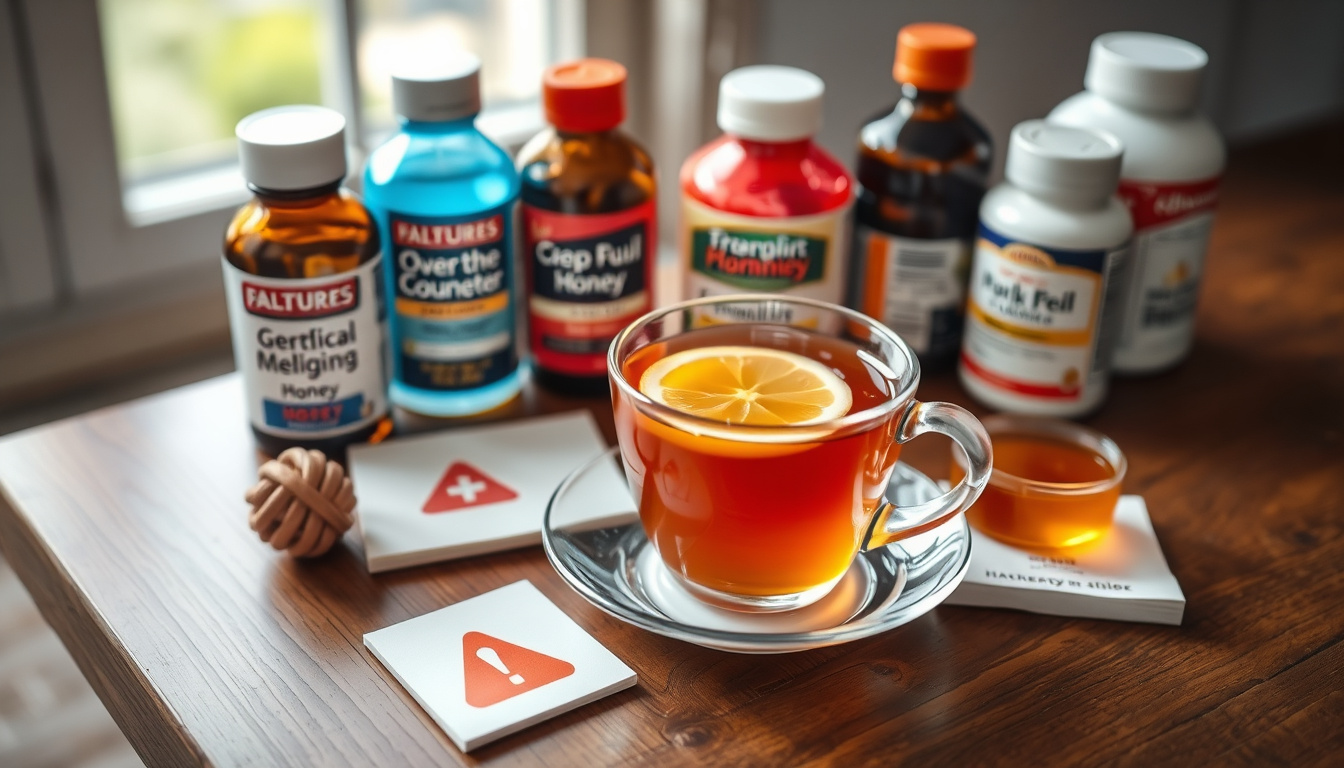
Anyone who’s found themselves staring at a pharmacy shelf full of colourful syrups knows the feeling: which one, if any, actually works? Most coughs sort themselves out in a few weeks, but the impulse to speed things along is hard to ignore. In Ireland, the official guidance is simpler than you might expect — and often starts in the kitchen, not the medicine cabinet.
Typical duration of a cough: 3-4 weeks ·
Recommended first-line remedy: Hot lemon with honey ·
Age restriction for cough medicines: Not for children under 6 ·
Example of sugar-free cough medicine: Exputex
Quick snapshot
- Dry cough (Irish Pharmacy Union – cough consultation)
- Chesty cough (productive) (Irish Pharmacy Union – cough consultation)
- Whooping cough (Irish Pharmacy Union – cough consultation)
- Croup (Irish Pharmacy Union – cough consultation)
- Suppressants (e.g., dextromethorphan) (HSE – cough guidance)
- Expectorants (e.g., guaifenesin) (HSE – cough guidance)
- Combination products (HSE – cough guidance)
- Sugar-free options like Exputex (HSE – cough guidance)
- Hot lemon with honey (HSE – home remedy)
- Steam inhalation (HSE – home remedy)
- Hydration (HSE – chest infection tips)
- Humidifier use (HSE – home remedy)
- Cough lasting >3 weeks (HSE – red flags)
- Coughing up blood (HSE – red flags)
- Shortness of breath (HSE – pneumonia advice)
- High fever (HSE – children’s coughs)
- Weight loss (HSE – red flags)
Four key facts show how HSE advice maps to what you can expect from a typical cough:
| Cough duration | 3-4 weeks |
|---|---|
| Common cause | Viral upper respiratory tract infection |
| First-line treatment | Rest, fluids, hot lemon with honey |
| OTC cough medicine use | Not recommended for children under 6 |
The pattern: official guidelines consistently steer towards home remedies first and reserve pharmacy products for specific cases.
What is the best medicine for coughing?
There is no single best cough medicine because different coughs need different approaches. The HSE – cough guidance makes clear that most coughs do not need any medicine at all — they resolve on their own within 3 weeks. For those who want relief, the choice comes down to whether your cough is dry or chesty.
Suppressants stop the reflex but do nothing for mucus. Expectorants loosen phlegm but may increase coughing in the short term. The right pick depends on your symptoms — and many people pick the wrong one.
What is the pill that stops coughing?
The most common cough suppressant found in tablets is dextromethorphan, an active ingredient that works by reducing the cough reflex in the brain. According to the HSE – cough guidance, lozenges and cough medicines can help you cough less, but they will not get rid of the cough. Expectorants like guaifenesin work differently — they thin mucus, making it easier to cough up.
- Dextromethorphan – suppressant, best for dry, tickly coughs
- Guaifenesin – expectorant, best for chesty coughs with phlegm
- Combination products – contain both, but may not target either effectively
The implication: checking the active ingredient is more useful than picking a brand name. A sugar-free expectorant like Exputex targets chesty coughs, while Benylin Dry Cough uses dextromethorphan for dry coughs.
What is the fastest way to cure a cough?
There is no fast cure — but there are fast ways to ease symptoms. The HSE – cough guidance advises rest, plenty of fluids, and hot lemon with honey as the first steps. Clinical evidence supports honey for cough relief in adults and children over 1 year old.
A dose of honey before bed can be as effective as some OTC suppressants — but only if the person is over 1. For infants under 1, honey carries a risk of infant botulism and must be avoided.
How can I get rid of a hard cough?
For a hard, persistent cough that disrupts sleep or daily life, the HSE – chest infection tips recommends these step-by-step measures:
- Hydrate frequently – water loosens mucus and soothes the throat
- Try hot lemon with honey – the HSE says it has a similar effect as cough medicines
- Use steam – a warm shower or bowl of hot water can calm the cough reflex
- Elevate your head at night – extra pillows reduce post-nasal drip triggering cough
- Speak to a pharmacist – they can recommend a suppressant or expectorant based on your symptoms
What this means: a hard cough often responds better to physical measures and targeted advice from a pharmacist than to random OTC purchases. The HSE – cough guidance explicitly says to speak to a pharmacist if you have a cough, rather than self-prescribing.
What drink will stop a cough?
No drink stops a cough entirely, but some can significantly ease the reflex. The HSE – cough guidance recommends hot lemon with honey as the first-line drink, stating it has a similar effect as cough medicines. For children over 1, the HSE – children’s coughs also recommends a warm drink of lemon and honey.
What makes a cough worse?
- Dairy – can thicken mucus for some people, making it harder to clear
- Caffeine – dehydrates, which can irritate throat and thicken phlegm
- Alcohol – suppresses the immune response and dehydrates
- Cold drinks – can trigger the cough reflex in sensitive individuals
The pattern: warm, hydrating drinks help; cold, dehydrating, or mucus-thickening ones do not. The HSE – chest infection tips emphasises drinking lots of water to loosen mucus, and herbal teas can serve the same purpose.
What is a red flag in coughing?
Most coughs are harmless, but certain signs demand medical attention. The HSE – cough guidance lists these red flags: a cough lasting more than 3 weeks, coughing up blood, shortness of breath, high fever, and unexplained weight loss. For children, the HSE – children’s coughs advises urgent GP review if the child is not better after 3 weeks or is short of breath.
Coughing up blood, chest pain, or difficulty breathing are not waiting-room issues — they warrant same-day medical assessment. Do not self-medicate with OTC cough medicine in these cases.
How to tell if a cough is from the lungs?
According to the Irish Pharmacy Union – cough consultation, a chesty cough typically comes from the lungs and brings up phlegm or mucus. A dry cough, by contrast, is usually felt in the throat and is often associated with hay fever, asthma, or acid reflux. If you feel rattling in your chest when you breathe, that suggests the cough is originating from the lower airways.
How long is too long to keep coughing?
The HSE – cough guidance is specific: most coughs clear within 3 weeks. A cough that persists beyond 3 weeks warrants a GP visit — it could indicate asthma, acid reflux, or a more serious respiratory condition. For pneumonia, the HSE – pneumonia advice advises not to take cough medicine, as suppressing the reflex can trap infection in the lungs.
How to stop coughing at night?
Night-time coughing disrupts sleep and recovery. The HSE – chest infection tips recommends using extra pillows to raise your head while sleeping, which reduces mucus from dripping down the back of the throat. Combining that with a warm drink of honey tea before bed can ease the reflex going into sleep.
How to trick the body to stop coughing?
Several physical techniques can interrupt the cough reflex without medicine:
- Swallow forcefully – overrides the reflex with a different muscle movement
- Slow breathing exercises – 4 seconds in, 4 seconds out can calm the irritation
- Distraction – counting backward from 100 can stop the cycle
- Sip cold water slowly – resets the throat nerves
The catch: these tricks work best for dry, tickly coughs. If the cough is chesty, expectorant-based medicine may be a better fit, allowing you to clear mucus before sleep rather than suppressing it.
Clarity Check: What we know and what remains unclear
Confirmed facts
- Honey is effective for cough relief in children over 1 (HSE – children’s coughs)
- Hot lemon with honey is recommended by HSE (HSE – cough guidance)
- Coughs usually resolve within 3-4 weeks (HSE – cough guidance)
- OTC cough medicines are not recommended for children under 6 (HSE – children’s coughs)
What’s unclear
- Effectiveness of many OTC cough medicines is debated
- Whether home remedies are as effective as medicines for all cough types
www2.hse.ie, www2.hse.ie, www2.hse.ie, hse.ie, www2.hse.ie, citizensinformation.ie, www2.hse.ie, www2.hse.ie, psi.ie, nhsinform.scot
Frequently asked questions
Can cough medicine be taken with other medications?
Check with a pharmacist or GP before combining cough medicine with other medications, especially if you take blood pressure medication, antidepressants (MAOIs), or sedatives. Some cough suppressants interact with these drugs.
Is it safe to use cough medicine for children?
The HSE advises against giving cough or cold remedies to children under 6 unless a GP or pharmacist specifically recommends them. For children over 6, a pharmacist might suggest a cough medicine, but honey and lemon remain safer first-line options.
How does cough medicine work?
Suppressants like dextromethorphan act on the cough centre in the brain to reduce the urge to cough. Expectorants like guaifenesin thin mucus in the airways, making it easier to cough up. Neither treats the underlying cause — they manage symptoms only.
What is the difference between dry cough and chesty cough?
According to the Irish Pharmacy Union, a dry cough usually originates in the throat and produces no mucus, while a chesty cough originates in the lungs and typically brings up phlegm. Dry coughs are often linked to allergies or asthma; chesty coughs usually stem from viral infections.
How long does cough medicine take to work?
Most OTC cough medicines take 15–30 minutes to start providing relief. Liquid formulations typically absorb faster than lozenges or tablets. Effects last 4–6 hours depending on the active ingredient and dosage.
Are there natural alternatives to cough medicine?
Yes. HSE endorses hot lemon with honey, steam inhalation, and hydration. Honey has clinical evidence supporting its use for cough relief in adults and children over 1. Breathing exercises and sleeping with extra pillows also help.
What should I avoid while taking cough medicine?
Avoid alcohol, as it can increase drowsiness and affect how the medicine works. Do not exceed the recommended dose. Avoid driving or operating heavy machinery if the medicine causes drowsiness. Avoid combining with other cold and flu remedies that contain the same active ingredients.

Oliver Jack Carter Cooper is a staff writer for EveningLedger.uk, covering UK news, politics, business and culture. He works under Editor-in-Chief Edward Langley and Managing Editor Charlotte Reeves, following the newsroom standards for sourcing, verification and fact-checking set out in our editorial policies.