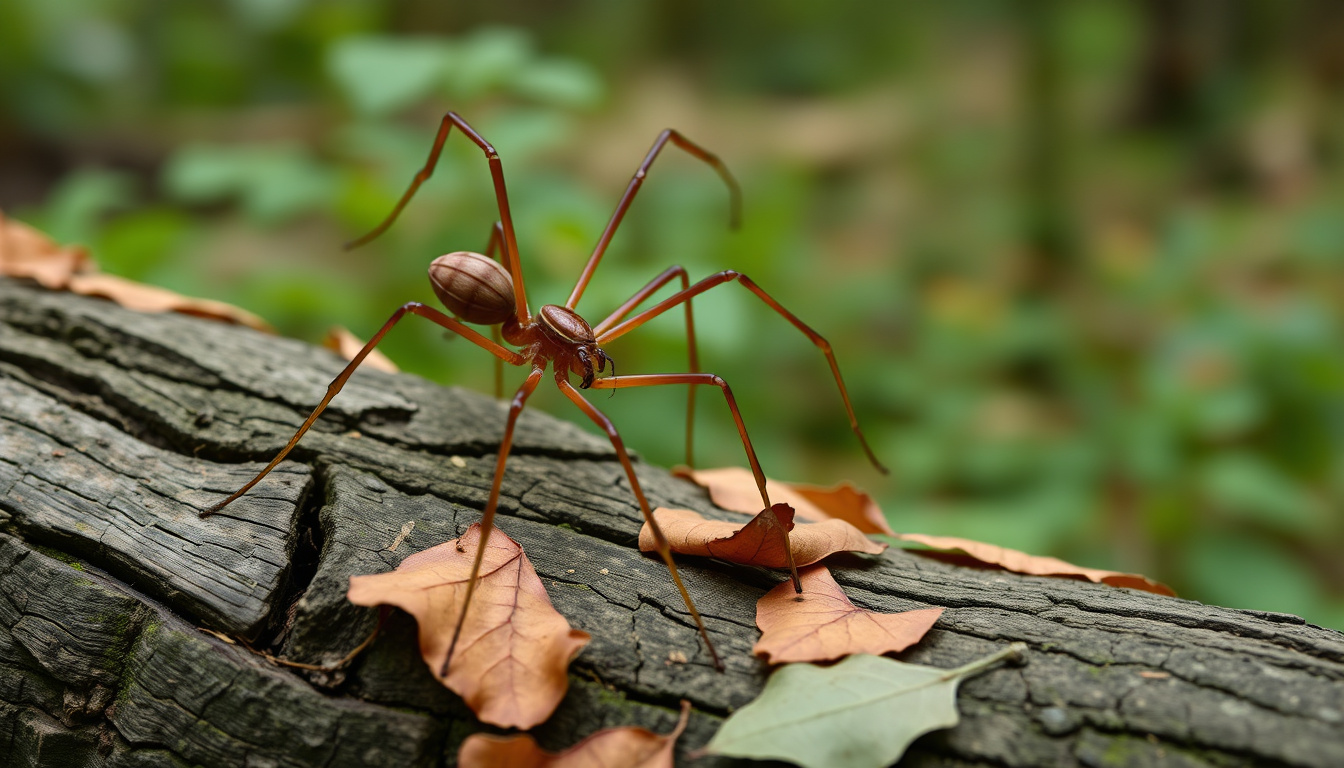
There’s a good chance you’ve pointed at a long-legged creature in your home and called it a daddy long legs, but that nickname actually refers to three entirely different animals: a spider, an insect, and an arachnid that is neither. Understanding which one you’re looking at depends on where you live and whether it has wings, a fused body, or a web.
Species called daddy long legs: 3 distinct types (Encyclopaedia Britannica) ·
Species in Pholcidae family: over 2,000 (Wikipedia) ·
Cranefly species in the UK: 94 (Wikipedia) ·
Harvestmen species worldwide: over 6,500 (Wikipedia) ·
Fangs capable of piercing human skin: cellar spider: yes (Encyclopaedia Britannica) ·
Venomous to humans: no (UF/IFAS Extension)
Quick snapshot
- ‘Daddy long legs’ refers to three distinct organism groups (Encyclopaedia Britannica)
- None of the three types are dangerous to humans (UF/IFAS Extension)
- Which specific cranefly species is most commonly called daddy long legs in Ireland (Reddit regional discussions)
- Whether the nickname originated separately for each type or drifted across species (Encyclopaedia Britannica)
- The name ‘harvestman’ appears in 17th-century English texts (Reddit regional discussions)
- The ‘most venomous spider’ myth spread through folklore, not science (Reddit regional discussions)
- The myth that daddy long legs are the most venomous spiders spread through folklore, not science (UF/IFAS Extension)
- Regional surveys could clarify local naming preferences (Encyclopaedia Britannica)
- Public awareness campaigns continue correcting the venom myth (UF/IFAS Extension)
Here is a quick overview of the three creatures.
| Scientifically known as | Pholcidae (spider), Tipulidae (fly), Opiliones (harvestman) |
| Leg count | 8 for spider and harvestman, 6 for cranefly |
| Wings | Cranefly only |
| Venomous to humans | No |
| Bite risk to humans | Spider bite possible but harmless; others cannot bite |
| Body segments | Cellar spider: 2 (cephalothorax + abdomen); Harvestman: 1 (fused) |
Is a daddy long legs a spider or an insect?
The simplest way to end the confusion is to recognize that “daddy long legs” is not a scientific label but a folk name. It can describe three very different animals depending on context: the cellar spider (Pholcidae), the cranefly (Tipulidae), or the harvestman (Opiliones).
What is the scientific classification of a daddy long legs?
- Cellar spider (Pholcidae): A true spider, member of the Araneae order. Has 8 legs, 2 body segments, and produces silk.
- Cranefly (Tipulidae): A true insect, member of the Diptera order (flies). Has 6 legs, wings, and 3 body segments.
- Harvestman (Opiliones): An arachnid, but not a spider. Has 8 legs, 1 fused body segment, no silk, no venom.
The key split is between the arachnids (spider, harvestman) and the insect (cranefly). According to the Missouri Department of Conservation, harvestmen are quite different from spiders and are frequently misidentified as the same creature.
How to tell apart a cellar spider, a cranefly, and a harvestman
- Look at the body shape: a cellar spider has two visible segments; a harvestman has one round, fused body; a cranefly has three segments and wings.
- Count the legs: spiders and harvestmen have eight; craneflies have six.
- Check for silk or webbing: if you see a messy web, it’s a cellar spider.
The implication for any household: if it has wings and six legs, it is an insect. If it has eight legs and a split body, it is a spider. If it has eight legs and a round, fused body, it is a harmless harvestman.
What are daddy long legs in Ireland?
Across Ireland, the nickname “daddy long legs” almost exclusively refers to the cranefly—a gangly flying insect that emerges in late summer. This sharply contrasts with North American usage, proving that the same folk name can mean completely different things depending on geography.
This differs sharply from North America, where the term is often applied to the cellar spider or harvestman. A UK pest control guide confirms that across Britain, the ceiling-corner spider is the cellar spider, while the garden arachnid is the harvestman, and the flying insect is the cranefly (JG Pest Control).
Which creature is called a daddy long legs in Irish English?
If you are in Ireland and someone points at a flying, long-legged creature near a window, they mean a cranefly. The cranefly holds the title in Hiberno-English, a usage confirmed by local discussions and regional pest guides.
Is the Irish daddy long legs a cranefly?
- Cranefly larvae live in soil and feed on roots or decomposing matter.
- Adult craneflies live just long enough to mate and lay eggs.
- Irish Reddit discussions consistently use “daddy long legs” for the winged, mosquito-like insect, not a spider (Reddit regional discussions).
What this means for anyone in Ireland: the cranefly you see is a harmless adult in its final, brief stage of life. There is nothing to fear.
The naming confusion is a matter of geography, not biology.
Why are they called daddy long legs?
Meaning: “daddy long legs” = long-legged · Harvestman alternative name: granddaddy long legs · Morphological link: all three have extremely long legs relative to their body size
What is the origin of the name daddy long legs?
“Daddy” functions as a generic personification, while “long legs” is an obvious physical description. The name has been applied independently across centuries to any arthropod whose legs are dramatically longer than its body.
Is the name related to their leg length?
- The name is a direct physical description: “daddy” (a generic male personification) plus “long legs”.
- Each creature has legs that are several times longer than its body, a trait that invites the same nickname despite profound biological differences.
- Encyclopaedia Britannica notes that the common name is applied to “several long-legged arthropods,” emphasizing the descriptive, non-scientific nature of the term (Encyclopaedia Britannica).
The pattern is simple: whenever a creature’s legs are disproportionately long, human language seems to default to the same affectionate nickname, regardless of taxonomy.
Can a daddy long leg bite you?
- Cellar spider: Has venom glands, but venom is extremely weak and harmless to humans. The Encyclopaedia Britannica states its short fangs can pierce human skin, but bites are virtually unheard of (Encyclopaedia Britannica).
- Cranefly: No venom glands. Cannot bite or sting.
- Harvestman: No venom glands at all. Defines itself by scavenging, not hunting with venom (UF/IFAS Extension).
Do daddy long legs have venom?
- Cellar spider venom is mild and not medically significant.
- Craneflies and harvestmen have absolutely no venom.
- The idea that any of them is “the most venomous” is a myth with zero scientific backing.
Is the myth about them being the most venomous spider true?
The persistent urban legend that daddy long legs are the most venomous creatures on Earth—but physically incapable of biting humans—is entirely unsupported by science. Cellar spider venom is weak, craneflies and harvestmen have no venom glands at all, and no recorded case of a dangerous bite exists.
The rumor appears to stem from a misreading of arachnid toxicity studies. While cellar spiders can pierce human skin, their venom poses no risk. The UF/IFAS Extension explicitly lists all three groups as harmless to humans (UF/IFAS Extension).
| Claim | Reality |
|---|---|
| Most venomous creature on Earth | False. Cellar spider venom is weak; craneflies and harvestmen have no venom. |
| Can’t bite because fangs are too short | False for cellar spiders. Their fangs can pierce skin, but they rarely bite. |
| Bite would kill a human if fangs were longer | Unfounded. Toxicity studies show no risk to mammals. |
The trade-off in this debate is clear: cellar spiders can bite, but they never do so meaningfully to humans, while craneflies and harvestmen are physically incapable of biting at all.
The myth is harmless, but the creatures are even more so.
Is it safe to sleep in a room with a daddy long legs?
Cellar spider: beneficial predator of flies and mosquitoes · Cranefly: harmless, short-lived visitor · Harvestman: scavenger, cannot bite
Are daddy long legs dangerous in the house?
- Cellar spiders are actually beneficial, catching mosquitoes, moths, and other pests in their webs.
- Craneflies do not lay eggs in houses; they prefer damp soil outdoors.
- Harvestmen wander in accidentally and cannot defend themselves against humans.
What harm can a daddy long legs cause?
- The only harm is psychological discomfort for people who fear long-legged bugs.
- All three are harmless to humans, pets, and property.
- Zero recorded cases of any of them causing medically significant injury.
Why this matters: the risk of a daddy long legs is zero. The only real danger is missing out on a free, natural pest control agent in your own home.
| Trait | Cellar Spider | Cranefly | Harvestman |
|---|---|---|---|
| Classification | True spider (Pholcidae) | True insect (Tipulidae) | Arachnid, not a spider (Opiliones) |
| Body shape | 2 segments, long thin legs | 3 segments, wings, thin legs | 1 fused segment, pill-like body |
| Legs | 8 | 6 | 8 |
| Bite risk | Yes, but harmless | Cannot bite | Cannot bite |
| Venom | Harmless to humans | None | None |
For a closer look at the cellar spider, see the table below.
| Family | Pholcidae |
| Species count in family | Over 2,000 (Wikipedia) |
| Venom risk to humans | Harmless (no confirmed dangerous bites) |
| Fangs | Short, capable of piercing human skin, but bites are rare (Encyclopaedia Britannica) |
| Silk production | Spins irregular webs (UF/IFAS Extension) |
| Distinguishing feature | Two visible body segments, 8 eyes (UF/IFAS Extension) |
| Primary diet | Predator of pests like mosquitoes and moths |
Confirmed facts
- ‘Daddy long legs’ refers to three distinct organism groups: cellar spiders, craneflies, and harvestmen.
- None of the three types are dangerously venomous to humans.
- The name is colloquial with no scientific basis in taxonomy.
Rumors and what’s unclear
- Which specific cranefly species is the default in Ireland remains unclear.
- The exact origin of the shared nickname across species is not formally documented.
- The “most venomous spider” myth persists despite being repeatedly debunked.
Expert perspectives
“There are three distinct organisms that share the common name daddy long legs: crane flies, harvestmen, and cellar spiders.”
— UF/IFAS Extension Manatee County, the agricultural research and outreach arm of the University of Florida
“The name daddy longlegs is used in many parts of the world to describe a variety of long-legged arthropods, but it is most commonly applied to two very different creatures.”
— Missouri Department of Conservation, the state’s wildlife management agency
“The true daddy longlegs belongs to the order Opiliones, while the common cellar spider is a true spider.”
— Encyclopaedia Britannica, the authoritative reference publisher
For the curious homeowner in Ireland or the UK, the choice is simple: enjoy the cranefly’s brief visit, welcome the cellar spider as a pest controller, or leave the harvestman to its decomposing duties. Confusing them is the only risk.
youtube.com, faunafacts.com, en.wikipedia.org, jetpunk.com, notopests.com, thesun.co.uk, asahiglobal.tokyo
For a deeper look at the common misconceptions surrounding these creatures, check out this guide on daddy long legs facts and myths.
Frequently asked questions
Do daddy long legs eat other spiders?
Cellar spiders (Pholcidae) are known predators of other spiders and insects. Harvestmen and craneflies do not hunt spiders.
Why are they called harvestmen?
The name “harvestman” comes from their appearance in late summer and autumn, coinciding with the harvest season. They are also called granddaddy long legs (Wikipedia).
What family does the cellar spider belong to?
The cellar spider belongs to the family Pholcidae, a group of true spiders with more than 2,000 species worldwide (Wikipedia).
Is a daddy long legs in the UK a spider?
It depends. A ceiling-corner spider is a cellar spider (a true spider). A garden arachnid is a harvestman (not a spider). A flying daddy long legs is a cranefly (an insect) (JG Pest Control).
Can a daddy long legs spider harm my pets?
No. There are no recorded cases of cellar spiders, craneflies, or harvestmen causing harm to pets. Their venom (if any) is not considered medically significant (Encyclopaedia Britannica).
Why do daddy long legs seem to appear in autumn?
Craneflies emerge in late summer and autumn to mate. Harvestmen also appear in high numbers around harvest time. Cellar spiders are active year-round indoors.
Related reading

Oliver Jack Carter Cooper is a staff writer for EveningLedger.uk, covering UK news, politics, business and culture. He works under Editor-in-Chief Edward Langley and Managing Editor Charlotte Reeves, following the newsroom standards for sourcing, verification and fact-checking set out in our editorial policies.