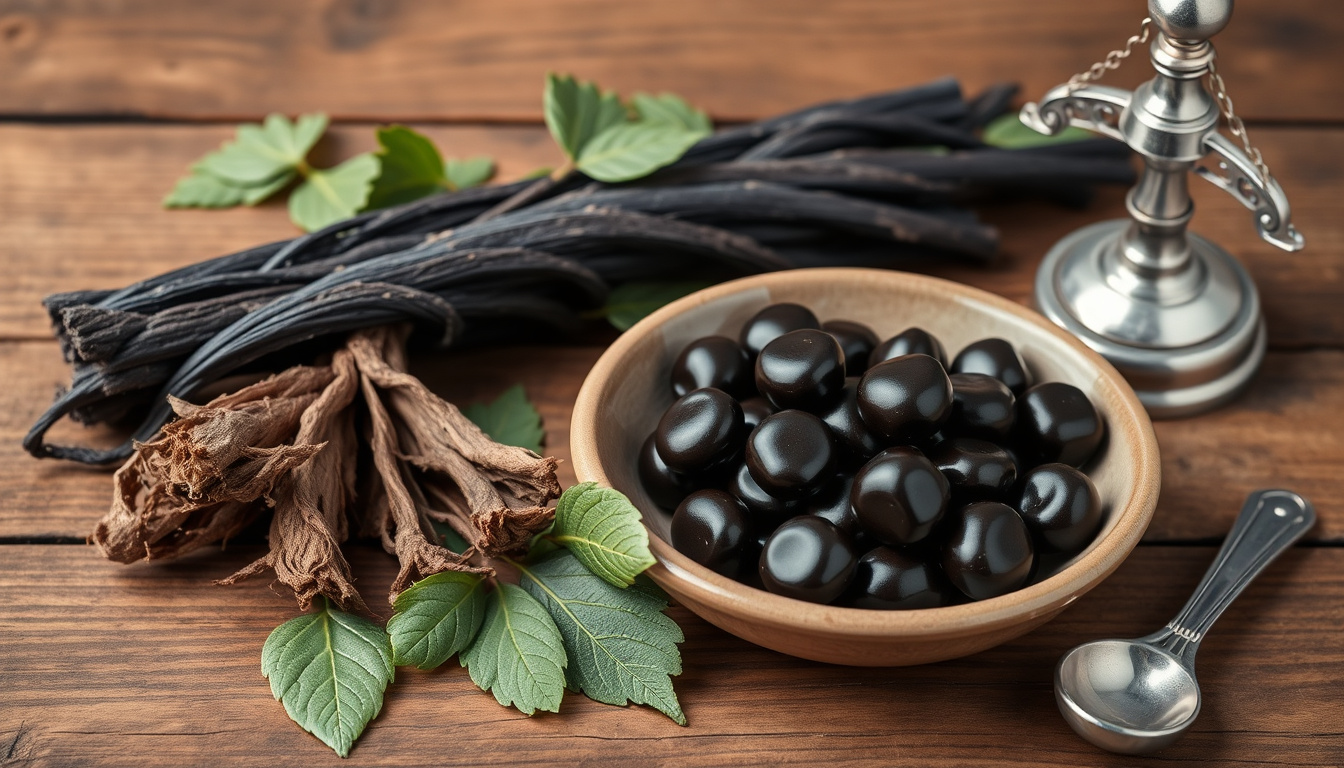
There’s something almost nostalgic about the sharp, sweet bite of black liquorice—but the question of whether it’s actually good for you has never had a simple answer. For centuries, the root has been credited with calming upset stomachs and soothing sore throats. Modern health authorities, however, have grown increasingly watchful. The culprit is glycyrrhizin, a compound that can send blood pressure climbing with alarming speed. This piece weighs what the science actually says, so you can decide whether that handful of twists is worth it.
Active compound: glycyrrhizin · Top benefit source: BBC Good Food · Key authority: NCCIH.gov · Risk trigger: excess consumption
Quick snapshot
- Digestive and throat relief from traditional use (BBC Good Food)
- Blood pressure risks from glycyrrhizin confirmed by multiple health bodies (British Heart Foundation)
- Cavity prevention potential remains debated (Rutgers University)
- Weight loss effects lack robust clinical evidence (WebMD)
- FDA issued warnings on black liquorice in October 2022 (American Heart Association)
- Deglycyrrhizinated licorice (DGL) offers a safer alternative for those seeking traditional benefits (National Center for Complementary and Integrative Health)
Four data points surface across authoritative sources, and they paint a clear pattern: the same compound that gives liquorice its distinctive punch also drives its most serious health risks.
| Label | Value |
|---|---|
| Primary compound | glycyrrhizin |
| Top benefit source | BBC Good Food |
| Key authority | NCCIH.gov |
| Risk trigger | excess consumption |
| Sweetness vs sugar | 50× sweeter |
| Upper limit recommended | 100 mg/day glycyrrhizin |
| Reversible on cessation | Yes (sodium, potassium, fluid levels) |
Is liquorice good for you, or can it raise blood pressure?
Liquorice root has a long history as a folk remedy. According to BBC Good Food, it may ease digestive issues, coughs, and sore throats—the kind of traditional use that modern supplements still lean on. The National Center for Complementary and Integrative Health (NCCIH) notes that the chemicals in licorice may decrease swelling and increase ulcer-healing compounds, calling it “likely safe in typical food amounts.”
But that qualifier—”typical food amounts”—carries significant weight. The British Heart Foundation (BHF) warns that consuming too much liquorice can cause high blood pressure, fluid retention, muscle weakness, and abnormal heart rhythms. The mechanism is well-documented. Research from PubMed explains that glycyrrhizic acid inhibits 11 beta-hydroxysteroid dehydrogenase, increasing cortisol levels in the kidneys and mimicking aldosterone effects. The result: sodium retention, potassium loss, oedema, and raised blood pressure.
Potential benefits
- May relieve digestive discomfort and acid reflux (Healthline)
- Traditionally used to soothe coughs and sore throats (BBC Good Food)
- May support peptic ulcer healing in some formulations
Blood pressure risks
- Alters potassium and sodium balance, leading to fluid retention (British Heart Foundation)
- Large or moderate daily intake (57g or 2oz) causes negative effects, especially in those over 40 with cardiovascular disease or high blood pressure
- Can trigger heart rhythm abnormalities and, in extreme cases, cardiac arrest (American Heart Association)
The pattern is unmistakable: the same compound responsible for liquorice’s therapeutic reputation also drives its most dangerous side effects when consumed in excess.
For most people, the occasional small serving poses minimal risk. But for anyone managing hypertension or heart conditions, even moderate amounts warrant a conversation with a doctor.
How much liquorice can you eat a day?
The answer hinges on glycyrrhizin content, and the thresholds are more precise than most people realize. According to research published in PubMed, individual susceptibility varies dramatically. Sensitive individuals may experience adverse effects from just 100 mg of glycyrrhizic acid daily—roughly equivalent to 50g of liquorice sweets at 0.2% content. Most people, however, won’t see problems until reaching 400 mg per day.
Health authorities have translated these findings into practical guidance. Medsafe (New Zealand’s medicines regulatory authority) recommends an upper limit of 100 mg/day of glycyrrhizin—approximately 60–70g of liquorice sweets. The WebMD notes that consuming 5g+ daily for weeks risks heart attack, while Rutgers University warns that black liquorice’s glycyrrhizic acid can cause swelling, high blood pressure, and potassium depletion, risking arrhythmia or arrest.
The American Heart Association reinforces that glycyrrhizin is 50 times sweeter than sugar and lowers potassium levels significantly when eaten in large amounts, leading to abnormal heart rhythms and heart failure.
Safe limits
- Conservative safe dose: 10 mg glycyrrhizin daily (using a safety factor of 10 from the 100 mg lowest-observed-adverse-effect level) (PubMed)
- Upper limit recommended by Medsafe: 100 mg/day
- Sensitivity increases with age, hypertension, and prolonged digestive transit
Glycyrrhizin thresholds
- 100 mg/day: upper limit (Medsafe guidance)
- 400 mg/day: where most individuals experience adverse effects
- Effects are typically reversible upon cessation—sodium, potassium, and fluid levels return to normal (British Heart Foundation)
The catch is that most products don’t disclose glycyrrhizin content, making precise tracking nearly impossible for consumers. Reaching for the deglycyrrhizinated version sidesteps this uncertainty entirely.
A single 100g bag of premium black liquorice could contain several days’ worth of glycyrrhizin for a sensitive individual—yet the packaging rarely tells you that.
Is liquorice good for your bowels?
The short answer is: potentially, but the evidence is mixed and the mechanism isn’t straightforward. Traditional use supports liquorice as a digestive aid, and BBC Good Food cites its ability to ease digestive issues among its key benefits. Healthline notes that licorice root may relieve acid reflux and support peptic ulcer healing.
However, the relationship between black liquorice and bowel regularity is more complex. High glycyrrhizin intake can cause electrolyte imbalances—including potassium depletion—that affect muscle function throughout the body, including the digestive tract. While this isn’t the same mechanism as a true laxative, the resulting disruption can lead to irregular bowel movements in some people.
Digestive benefits
- May soothe acid reflux and heartburn symptoms
- Traditional use for dyspepsia and stomach discomfort (WebMD)
- Deglycyrrhizinated licorice (DGL) specifically marketed for digestive support
Laxative effects
- Not a primary effect—but potassium depletion from excess consumption can disrupt normal bowel function
- Some commercial liquorice formulations include laxative ingredients (like ammonium chloride in certain European varieties)
- The laxative-like effects people sometimes report are more likely from other ingredients than the root itself
The implication: if you’re reaching for black liquorice specifically hoping to improve bowel regularity, you’re relying more on anecdote than evidence. The more reliable path to digestive comfort runs through DGL supplements or other well-studied approaches.
Is black licorice a healthy snack?
Comparing black liquorice to other sweets reveals a nuanced picture. At its core, it’s still candy—high in sugar, often high in salt (in the case of salty varieties), and calorie-dense. But the root extract does contain compounds that differ meaningfully from purely refined sweets.
Rutgers University notes that antibacterial properties in licorice root extract might help prevent cavities—a benefit you’d never get from, say, gummy bears. This places black liquorice in an odd middle ground: not health food, but not exactly empty calories either.
Nutritional profile
- Contains glycyrrhizin (the compound driving both benefits and risks)
- Antibacterial properties may support oral health (Rutgers University)
- High sugar content—no different from other candy on that front
- Salt content significant in Scandinavian-style varieties
Compared to red licorice
- Red licorice typically contains no actual licorice root—only anise flavoring
- This means red licorice avoids glycyrrhizin’s risks entirely but also gains none of the root’s potential benefits
- Red licorice is essentially sugar, gelatin, and food dye—comparable to other gummy candies
- For those sensitive to glycyrrhizin but wanting the flavor, red licorice offers a risk-free alternative
The trade-off is clear: black liquorice carries real risks if overconsumed, but it also offers something red licorice doesn’t—a plant with documented (if modest) bioactive properties. Whether that tilts the scale depends entirely on how much you eat and who you are.
Who should not consume licorice?
Certain groups face elevated risk and should approach liquorice with considerable caution—or avoid it entirely. The British Heart Foundation specifically highlights people over 40 with cardiovascular disease or high blood pressure as particularly vulnerable. Medsafe notes that sensitivity increases with old age, hypertension, prolonged gastrointestinal transit, and is more common in females.
The WebMD warns that licorice (glycyrrhizin-containing forms) is unsafe in large amounts or long-term, with risks including high blood pressure, low potassium, arrhythmia, kidney failure, heart failure, and pulmonary edema.
High-risk groups
- Anyone with hypertension or cardiovascular disease (British Heart Foundation)
- People over 40, particularly those with existing health conditions
- Individuals on medications that affect potassium levels or blood pressure
- Those with kidney disease or compromised kidney function
Pregnancy and pets
- Pregnancy: The NCCIH advises caution, noting insufficient reliable information about licorice’s safety during pregnancy. High glycyrrhizin intake may affect fetal development through its mineralocorticoid effects.
- Pets: Dogs are particularly sensitive to glycyrrhizin, and accidental ingestion of large quantities of black liquorice can cause serious health issues. Keep all liquorice products well out of reach.
What this means: if you fall into any of these categories, the question isn’t just “how much is safe?”—it’s whether any amount of glycyrrhizin-containing liquorice fits into your health picture at all. Consult your healthcare provider before making it a regular habit.
Pregnant people should treat licorice root—tea, supplements, and candy alike—as something to avoid until better evidence emerges. The mineralocorticoid effects that raise blood pressure in adults haven’t been studied for safety in pregnancy.
Upsides
- May ease digestive discomfort and acid reflux
- Traditional use for soothing coughs and sore throats
- Antibacterial properties could support oral health
- Effects are reversible upon cessation
- Deglycyrrhizinated alternatives available
Downsides
- Raises blood pressure through mineralocorticoid effect
- Depletes potassium, risking heart rhythm problems
- No clear safe threshold for sensitive individuals
- Most products don’t disclose glycyrrhizin content
- High sugar content regardless of root benefits
What the experts say
Consuming too much liquorice or liquorice products can cause high blood pressure, fluid retention, muscle weakness and abnormal heart rhythms.
— British Heart Foundation, heart health authority
Glycyrrhizin is 50 times sweeter than sugar and lowers potassium levels significantly when eaten in large amounts, leading to abnormal heart rhythms and heart failure.
— American Heart Association, cardiovascular research organization
Licorice root is generally considered safe as a food ingredient.
— National Center for Complementary and Integrative Health, federal research center
May ease digestive issues, coughs and sore throats.
— BBC Good Food, food and nutrition publication
Related reading: How to Lower Blood Pressure Quickly · Pain Left Side of Stomach
Frequently asked questions
Is liquorice good for losing weight?
No credible evidence supports liquorice as a weight-loss aid. While some animal studies have explored glycyrrhizin’s effects on metabolism, human clinical evidence is lacking. High glycyrrhizin intake can cause fluid retention that might temporarily affect the scale, but that’s not fat loss—and the potassium depletion and blood pressure effects make this a dangerous approach.
Is red licorice good for you?
Red licorice typically contains no actual licorice root—it relies on anise flavoring for its taste. This means it avoids glycyrrhizin’s risks but also gains none of the root’s potential benefits. Nutritionally, it’s essentially sugar, gelatin, and food coloring—comparable to other gummy candies with no particular health advantages.
Is liquorice good for your stomach?
Traditional use and some modern supplements support liquorice root for digestive comfort, particularly for acid reflux and stomach discomfort. However, this applies primarily to deglycyrrhizinated forms (DGL). Regular black liquorice’s glycyrrhizin content can actually disrupt electrolyte balance, potentially worsening digestive issues rather than helping them.
Is liquorice tea good for you?
Liquorice root tea delivers the same glycyrrhizin compounds as candy, just in a different form. For those seeking digestive or throat-soothing benefits without the sugar, tea might seem appealing—but it carries the same cardiovascular risks. DGL tea versions offer a safer alternative if you want the flavor and potential benefits without the mineralocorticoid effects.
Is liquorice good for your liver?
Limited evidence suggests liquorice root compounds may have hepatoprotective properties, but most research involves concentrated extracts or specific preparations—not typical dietary consumption. High glycyrrhizin intake from excessive liquorice consumption could actually strain the liver over time. If you’re concerned about liver health, liquorice candy is not a supported intervention.
What country eats the most black licorice?
The Netherlands and Finland consistently rank among the highest per-capita consumers of black licorice. Dutch Drop (drop) and Finnish salmiakki represent deeply entrenched confectionery traditions in those cultures. Interestingly, these countries have also produced much of the medical literature documenting glycyrrhizin toxicity—suggesting their consumption patterns have informed real-world clinical observation.

Oliver Jack Carter Cooper is a staff writer for EveningLedger.uk, covering UK news, politics, business and culture. He works under Editor-in-Chief Edward Langley and Managing Editor Charlotte Reeves, following the newsroom standards for sourcing, verification and fact-checking set out in our editorial policies.