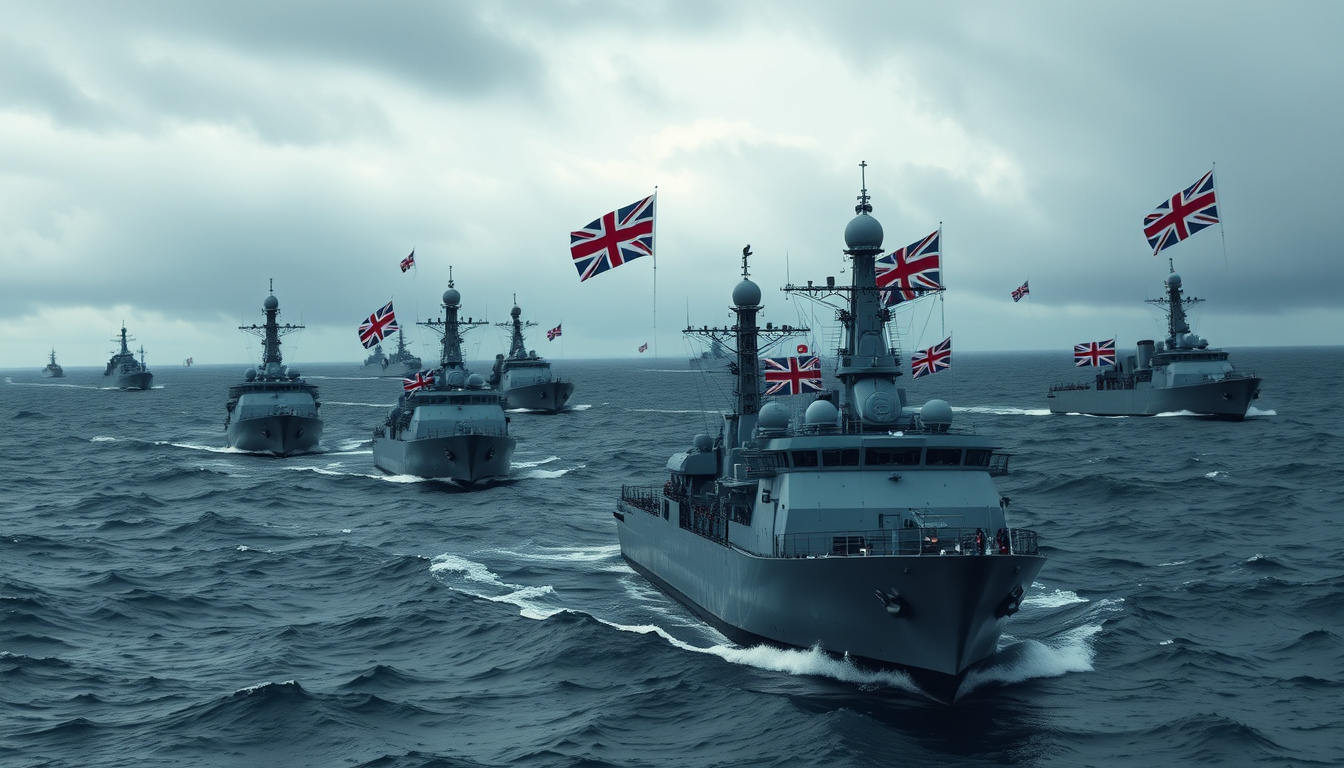
Walk into any London pub or scroll through Twitter and you’ll sense it—the quiet dread that Britain might sleepwalk into a major war. Yet on paper, the UK is far from idle: the Prime Minister issued a direct warning to Iran in February 2026, and a new national war-readiness plan was announced just weeks later. This article lays out what’s actually happening, what remains unclear, and what it means for you.
Britons expecting WW3 in 5–10 years: most (YouGov) ·
UK preparing national war plan: announced April 2026 (Anadolu Agency) ·
Terrorism threat level: published by GOV.UK ·
PM statement on Iran: 28 February 2026 (GOV.UK) ·
National Security Strategy: 2025 (GOV.UK)
Quick snapshot
- Russia is the most acute threat per UK Government’s National Security Strategy 2025 (UK Government)
- UK developing new national war-readiness plan as of April 2026 (Anadolu Agency)
- UK must prepare for homeland under direct threat (UK Government)
- UK military chiefs feel preparation needed for war as soon as 2027 (YouTube/The Times)
- Exact probability of UK entering direct hostilities with Russia or Iran
- Full scope of Iranian hostile activity on British soil
- Whether conscription would actually be triggered if conflict escalates
- NATO Secretary General warned of Russian attack within 5 years (December 2025) (Britain’s World)
- UK war-readiness plan announced 10 April 2026 (Anadolu Agency)
- UK chiefs cite 2027 as earliest plausible conflict window (YouTube/The Times)
- Russia threat to Europe predicted to peak by 2030 (YouTube/The Times)
- Further government statements expected as threats evolve
- Defence spending reviews likely ahead of potential 2027 tensions
- Public will likely see more official communications on preparedness
| Fact | Detail |
|---|---|
| UK War Readiness Plan | Developing new version (Sky News, April 2026) |
| National Security Strategy | Published 2025 (GOV.UK) |
| Terrorism Threat Levels | GOV.UK official |
| Armed Forces | British Armed Forces (Wikipedia) |
Who will side with the UK in WW3?
The question of allied support is central to any UK conflict scenario. Britain’s longest-standing alliance is NATO, and the National Security Strategy 2025 explicitly adopts a “NATO-first” approach. This means the UK would act within the collective defence framework, not alone.
The UK is already actively supporting Ukraine against Russia—an effort the government describes as designed to destroy Russia’s will to fight. This places the UK in a de facto conflict posture with Russia, even without formal declaration of war.
Prime Minister Keir Starmer has reinforced ties with European partners, while the US remains Britain’s most powerful ally under the special relationship. However, specific bilateral commitments beyond NATO remain loosely defined in public documentation.
NATO Secretary General Mark Rutte warned in December 2025 that a Russian attack on NATO could come within five years. That statement came from the Dutch weekly weekblad Elsevier and signals NATO leadership is taking the threat timeline seriously at the highest levels. The implication: Britain’s allies are preparing for the same threat, but whether they would commit troops to a UK-specific conflict remains an open question.
NATO membership guarantees collective defence under Article 5, but it does not specify the scope or duration of response. Britain gets insurance—but the premium could be steep.
Who is Britain’s longest ally?
The Portugal–United Kingdom alliance dates to 1373, making it Britain’s oldest continuously active treaty (Wikipedia). France and the US follow closely. In practical terms, the US-UK special relationship provides the deepest military integration, including intelligence sharing and nuclear deterrence.
Is Iran a threat to the UK?
The short answer is yes—and the UK Government says so explicitly. The National Security Strategy 2025 identifies “Iranian hostile activity on British soil” as increasing. This includes reported plots targeting UK nationals and infrastructure.
Beyond direct threats, Iran poses an economic risk through its ability to disrupt the Strait of Hormuz. Roughly 20% of the world’s oil passes through that chokepoint. The UK Defence Secretary has warned Iran that the strait must remain open, underscoring how Iranian actions could directly affect British interests.
Assessments indicate the conflict exposed British armed forces’ operational weaknesses—particularly readiness gaps that would matter if Britain also had to counter Russia simultaneously (Global Defense Corp).
The Prime Minister issued a direct statement on Iran on 28 February 2026, signalling that Downing Street views Iranian behaviour as a direct concern. The government has made clear it will not tolerate actions that threaten UK interests or its allies in the region.
The pattern is straightforward: Iran is not merely a distant concern. It is active on British soil, capable of disrupting global energy markets, and increasingly aligned with Russia’s adversarial posture. The catch is that the full scope of Iranian operations inside the UK remains classified—so the public can only act on official confirmations of increasing activity, not the details.
The UK faces pressure from two directions simultaneously: Russia in Europe and Iran in the Middle East. Managing both is the challenge officials are now openly preparing for.
Is the UK going to war with Iran?
No declaration has been made. However, the tone from government has hardened. The Prime Minister’s February 2026 statement, combined with warnings from the Defence Secretary over Strait of Hormuz, suggests the UK is prepared to use force if necessary to protect its interests—but the red line remains undefined in public statements.
Who would be drafted in WW3 in the UK?
Britain abolished conscription in 1960, but the question is no longer theoretical. Military planners at the Royal United Services Institute (RUSI) have urged scaling up draft recruits into the armed forces, citing a limited window for orderly mobilisation if conflict erupts (YouTube/Sun).
The logic is grim: Britain’s land forces would need to approximately double in size to provide credible deterrence against Russia. The regular army, current at roughly 75,000, falls well short of what analysts say is needed. Conscription is being discussed as an option precisely because the professional force alone cannot meet the threat.
The funding picture compounds the problem. The UK is reportedly short by approximately £28 billion for the defences it has already promised. RUSI expert Paul O’Neill put it bluntly: the ideal time to ramp up mobilisation was ten years ago. The next best time is now.
The human dimension is significant: if conscription were introduced, young men aged 18–30 would likely form the primary pool. Medical personnel, engineers, and logistics specialists would be in high demand. Families should anticipate that a conflict of this scale would pull in broad segments of the working-age population.
Even if conscription were introduced, the UK’s readiness gaps mean newly drafted personnel would face shortages in equipment, training time, and infrastructure. Numbers without equipment don’t win wars.
The next best time is now.
— Paul O’Neill, RUSI expert
What wars is the UK currently fighting?
The UK is not at war in the formal sense—but it is engaged in ways that matter. Britain is actively supporting Ukraine with weapons, training, and intelligence as it seeks to degrade Russia’s capacity and will to fight. The government frames this as a strategic investment, not an act of war—but Russia does not make that distinction.
Beyond Ukraine, UK forces conduct counter-terrorism operations in multiple regions, cyber operations against hostile state actors, and maritime security missions in the North Atlantic and elsewhere.
Russia remains the primary threat to European security per the UK Government’s own assessment. Russia’s aggression includes drone incursions into NATO airspace, attacks on undersea cables critical to global communications, and targeting of space-based assets.
Russia conducted 55,000 drone and missile strikes on Ukraine in 2025 alone, and is now sustaining approximately 7,000 attacks daily along the front line post-ceasefire. The scale of violence is staggering—and it is happening while the UK and its allies are still developing the forces needed to respond to a direct attack.
Russia remains the primary threat to European security.
— UK Minister for Armed Forces, London Defence Conference
Is the UK going to war with Russia?
The UK has not declared war on Russia. However, by arming Ukraine and imposing sanctions, Britain has positioned itself as a principal adversary in Moscow’s eyes. NATO’s secretary general warned in December 2025 that a major Russian attack on the alliance could come within five years. If that happens, Britain is treaty-bound to respond—militarily if necessary.
What will happen if the UK goes to war with Russia?
A direct UK–Russia conflict would likely mean NATO activation under Article 5. The UK would be fighting alongside the US, France, Germany, Poland, and other allies. Air superiority, naval dominance, and cyber operations would feature prominently. On the ground, British forces would need the doubling in size that defence analysts are now calling for.
The stakes extend beyond the battlefield: Russia’s stated doctrine includes targeting Western energy infrastructure and supply chains. Civilians could face shortages, power disruptions, and direct attacks on British soil. The National Security Strategy 2025 explicitly addresses scenarios where the homeland faces direct threat—language that would have seemed alarmist five years ago.
Where is the safest place to be if WW3 starts?
This is perhaps the most human question—and the hardest to answer. The UK Government has not published evacuation plans. Instead, official guidance focuses on resilience: securing supply chains, protecting critical national infrastructure, and maintaining civil contingency capabilities.
Geographic factors matter. Urban centres and coastal areas would likely face greater risk from missile strikes or amphibious threats. Rural inland areas offer some natural buffer—but no location is immune in a conflict involving Russia’s long-range strike capabilities.
The National Security Strategy 2025 explicitly acknowledges that adversaries are “positioning to disrupt UK energy and supply chains.” This is not speculation—it is a stated concern from the government’s own threat assessment.
For Britons, the practical preparation is less about fleeing and more about readiness: stockpiling essential medicines, maintaining cash reserves, understanding local emergency protocols, and staying informed through official channels. The government has not called for mass evacuation—but it has shifted from a post-Cold War assumption of safety to active preparation for homeland threat.
There’s a general feeling amongst the chiefs that they need to prepare for war… even as soon as ’27.
— UK Chief of the Air Staff, via The Times
The government’s next defence spending review will signal how serious it is about closing the £28 billion shortfall. A credible uplift would deter Moscow; continued underfunding would invite miscalculation.
Where do we go if WW3 starts?
No mass evacuation has been planned or announced. The official advice during a major conflict would come through GOV.UK and emergency broadcast systems. Citizens should monitor official channels, maintain emergency supplies, and follow guidance from local authorities.
Is the UK in danger of bombing?
The National Security Strategy 2025 explicitly states the UK must prepare for the homeland under direct threat in wartime scenarios. This is new language for an official government document—it reflects a genuine shift in threat assessment, not rhetorical alarmism. The question is no longer whether British soil could be attacked, but how likely that is and how prepared the country is to withstand it.
Related reading: Should Britain prepare for war? · How can warfighting readiness be balanced?
The Prime Minister’s Iran warnings coincide with preparations outlined in Russia threats and readiness facts, as the UK bolsters defenses against looming Russia threats.
Frequently asked questions
Does the UK have a powerful military?
The UK retains significant military capabilities, including nuclear deterrence, a capable air force, and the Royal Navy. However, the regular army is smaller than defence analysts say is needed to deter Russia, and funding gaps of £28 billion have been documented. The answer is nuanced: powerful by some measures, under-resourced by others.
What is the UK war threat level?
The UK uses a terrorism threat level system published by GOV.UK. For state-level threats, the National Security Strategy 2025 identifies Russia as the most acute threat. NATO’s secretary general has warned of potential Russian attack within five years. The threat level is elevated—not imminent, but not the peacetime baseline of previous decades.
UK war warning details?
The Prime Minister issued a direct statement to Iran on 28 February 2026. The UK Defence Secretary has warned Iran over Strait of Hormuz. The National Security Strategy 2025 explicitly states the UK must prepare for homeland under direct threat. The government has also announced a new national war-readiness plan as of April 2026.
Will the UK go to war 2026?
No declaration has been made. However, UK military chiefs have stated Britain must prepare for war as soon as 2027. The window for orderly mobilisation is described as limited. The UK is building its forces and strengthening alliances—but for now, war has not been formally declared.
What is the UK Government War Book?
The “War Book” refers to official civil contingency planning for major conflicts or emergencies. The new national war-readiness plan announced in April 2026 involves military-civilian coordination for potential wartime scenarios. Details remain classified, but the existence of active planning is confirmed.
Is the UK in danger of bombing?
The National Security Strategy 2025 explicitly acknowledges the need to prepare for the homeland under direct threat in wartime scenarios. This is new language for an official government document. The UK is not currently under direct attack, but the threat assessment has shifted from post-Cold War complacency to active preparation.
World War 3 likely in next 5–10 years?
Most Britons believe so, according to YouGov polling. NATO’s secretary general warned in December 2025 of potential Russian attack within five years. UK military chiefs cite 2027 as the earliest plausible conflict window, with Russia expected to peak as a threat to Europe by 2030. The consensus among officials and analysts is that the probability is rising.
What wars is the UK currently fighting?
The UK is not formally at war, but it is actively supporting Ukraine against Russia with weapons, training, and intelligence. It also conducts counter-terrorism operations, cyber operations against hostile states, and maritime security missions. The government frames support for Ukraine as strategic, not an act of war—but Russia makes no such distinction.

Oliver Jack Carter Cooper is a staff writer for EveningLedger.uk, covering UK news, politics, business and culture. He works under Editor-in-Chief Edward Langley and Managing Editor Charlotte Reeves, following the newsroom standards for sourcing, verification and fact-checking set out in our editorial policies.