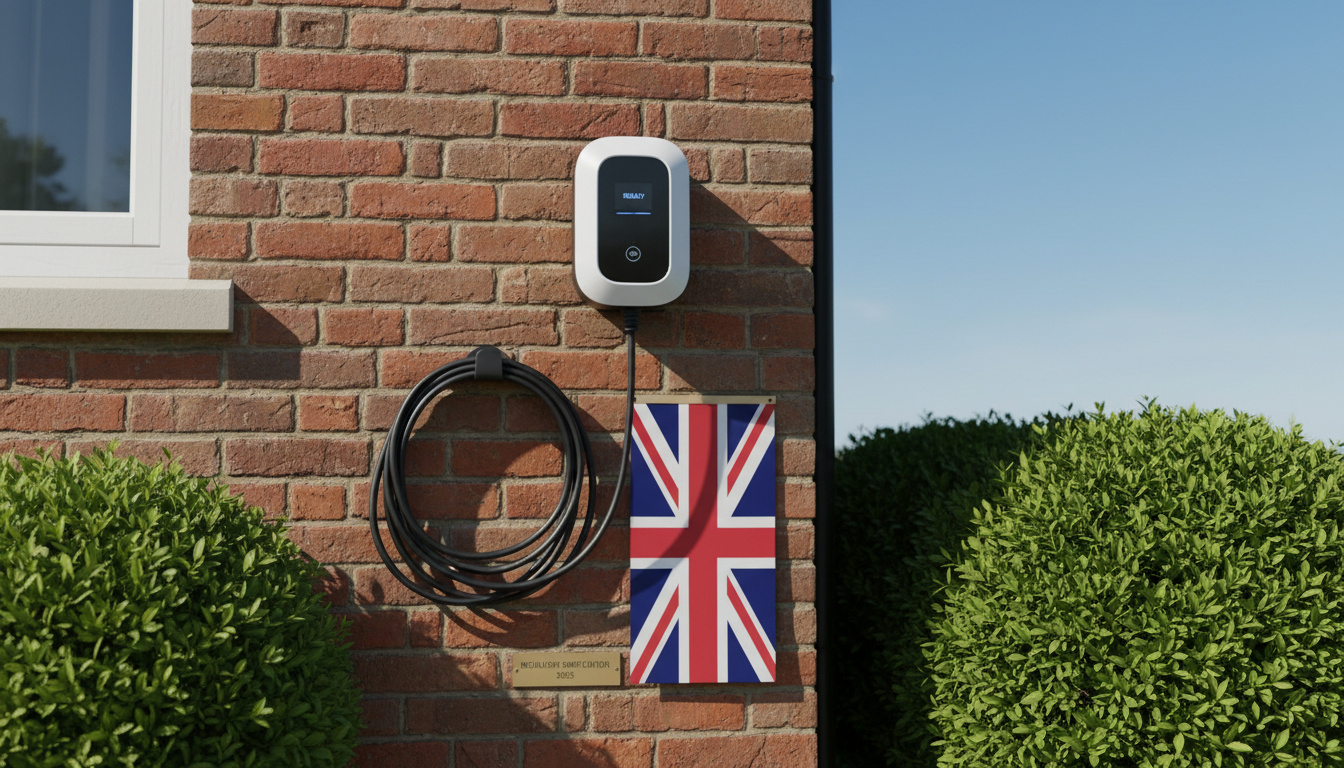
New Permitted Development Rights took effect on May 29, 2025, eliminating planning permission requirements for most electric vehicle charger installations across England. The reforms apply to residential driveways, workplaces, and commercial sites, provided units remain under 0.2 cubic meters in volume and maintain at least two meters distance from public highways.
The Department for Transport and Office for Zero Emission Vehicles announced the changes as part of the UK’s Plan for Change strategy. By removing red tape, officials aim to cut installation costs by up to £1,100 per unit and accelerate the country’s transition to electric mobility.
While planning barriers have fallen, regulatory frameworks from 2022 and 2023 continue to govern technical standards, smart charging capabilities, and public infrastructure reliability. Understanding how these overlapping rules interact remains essential for homeowners, landlords, and businesses considering installation.
What is the EV chargers England regulation change from gov.uk?
The most significant shift involves the relaxation of Permitted Development Rights for EV charging equipment. Previously, homeowners and businesses often faced lengthy local authority applications, fees, and potential delays lasting weeks or months.
No planning permission required for most residential and workplace installations effective May 29, 2025
Units must not exceed 0.2 cubic meters and must sit at least 2 meters from public highways
Applies specifically to England; Scotland, Wales, and Northern Ireland maintain separate planning frameworks
Distribution Network Operator approval remains mandatory to verify grid capacity
Critical developments since 2022 include:
- Mandatory smart charging functions for all private and workplace units sold after June 30, 2022
- Part S Building Regulations requiring EV infrastructure in new builds and major renovations
- Public Charge Point Regulations establishing 95% uptime requirements and contactless payment mandates
- Increased grant funding from £350 to £500 per socket beginning April 1, 2026
- Extension of the Workplace Charging Scheme through its final year to 2026-27
- Preparation for ISO 15118 Plug & Charge standards and OCPP 2.0 cybersecurity protocols
| Regulatory Aspect | Effective Date | Practical Impact |
|---|---|---|
| PDR Elimination | May 29, 2025 | Average £1,100 savings per installation |
| Smart Charge Mandate | June 30, 2022 | Off-peak scheduling and random delays required |
| Public Uptime Standard | November 24, 2024 | 95% minimum availability enforced |
| Payment Transparency | November 2023 | Contactless and roaming access mandated |
| Grant Rate Increase | April 1, 2026 | Maximum grant rises to £500 per socket |
| WCS Extension | April 1, 2026 | Final year of workplace funding |
| PAS 1899 Accessibility | 2026 (anticipated) | Potential mandates for inclusive design |
What EV charger regulation changes happened in England in 2023 and 2022?
2022 Smart Infrastructure Requirements
The Smart Charge Points Regulations introduced mandatory technical specifications for all domestic and workplace charging equipment sold or installed after June 30, 2022. These rules require units to offer off-peak scheduling, incorporate randomised start delays up to ten minutes to prevent grid surges, and maintain specific cybersecurity standards.
Simultaneously, amendments to Building Regulations Part S mandated EV charging infrastructure in all new residential buildings and major renovations featuring on-site parking. Developers must now install either charge points or cable routes capable of supporting future units, ensuring new housing stock arrives EV-ready.
2023 Public Charger Standardization
November 2023 brought the Public Charge Point Regulations, creating UK-wide standards for rapid and ultra-rapid public infrastructure. Operators must now provide contactless payment options, transparent pricing displays, and roaming capabilities allowing third-party access. Non-compliance attracts penalties up to £10,000 per charge point.
Despite the removal of planning permission requirements in 2025, all installations require approval from the local Distribution Network Operator to confirm sufficient grid capacity. DNO fees typically range from £100 to £300 depending on infrastructure upgrades needed.
Who is eligible for EV charger grant UK?
Homeowner and Resident Eligibility
From April 1, 2026, residents and landlords may claim up to £500 per socket, an increase from the previous £350 maximum. The grant applies to one socket per applicant and covers installations in flats and shared residential spaces, not just detached houses.
Eligibility requires applicants to own, lease, or have permission to install equipment at the property. The scheme specifically targets those with dedicated off-street parking or allocated bay rights. Toyota Dealers Near Me – UK Locator Guide for Buyers often provide guidance on manufacturer-specific charging solutions compatible with these grants.
Workplace and Commercial Support
Businesses, charities, and public sector organisations installing sockets primarily for employee use qualify for the Workplace Charging Scheme. The programme, administered by OZEV, offers support covering up to 75% of installation costs for small and medium enterprises, though specific 2026 rates require verification through official government portals.
What is the Workplace Charging Scheme and costs of EV chargers England regulation change?
Workplace Charging Scheme Extension
The Workplace Charging Scheme enters its final operational year on April 1, 2026, with streamlined application processes. Applications must submit before the scheme closes after 2026-27 unless policymakers announce further extensions. Eligible entities include limited companies, partnerships, and public sector bodies providing charging as staff benefit.
The maximum OZEV grant per socket increases from £350 to £500 effective April 1, 2026. Each applicant may claim for one socket only, regardless of property type or number of vehicles owned.
Installation Cost Breakdown
Homeowners typically save £1,100 per installation under the new Permitted Development Rights by avoiding planning fees and associated delays. Basic wallbox installation generally ranges between £500 and £1,500 depending on electrical requirements and cable run lengths.
Additional costs include Distribution Network Operator fees for grid connection assessments, typically £100 to £300. Running costs remain economical at approximately 2 pence per mile when charging at home on standard tariffs.
The Workplace Charging Scheme concludes after 2026-27. Businesses considering workplace infrastructure should initiate applications during the final extension period to secure funding before potential closure.
How has EV charging regulation evolved in England since 2022?
-
Smart Charge Points Regulations mandate smart functionality and cybersecurity standards for private and workplace units.
-
Building Regulations Part S require EV-ready infrastructure in new residential developments and major renovations.
-
Public Charge Point Regulations standardise payment systems, roaming access, and uptime reporting for public infrastructure.
-
95% minimum uptime requirement becomes enforceable for public charge point operators.
-
Permitted Development Rights eliminate planning permission for most installations under 0.2 cubic meters in England.
-
Full roaming access enforcement begins, requiring all public networks to accept third-party payment providers.
-
Grant rates increase to £500 per socket; Workplace Charging Scheme enters final year.
-
Anticipated adoption of ISO 15118 Plug & Charge standards and OCPP 2.0/2.1 cybersecurity protocols.
What is certain and what remains unclear about EV charger regulations?
Established Requirements
- Planning permission eliminated for qualifying installations under 0.2 cubic meters
- DNO approval mandatory regardless of planning status
- Smart charging functions required for all new private units
- £500 grant maximum confirmed from April 1, 2026
- Workplace scheme extended through 2026-27
Outstanding Questions
- Whether Workplace Charging Scheme will continue beyond 2027
- Exact enforcement mechanisms for PAS 1899 accessibility standards
- Specific DNO fee structures varying by regional operator
- Final implementation dates for ISO 15118 mandates
- Potential planning requirement variations in conservation areas
Why do these regulation changes matter for England’s EV adoption?
The UK government has invested over £2.3 billion in charging infrastructure through the Taking Charge strategy, supporting more than 80,000 public charge points nationwide. The 2025 PDR reforms directly address the primary barrier cited by homeowners: bureaucratic delay and uncertainty.
By standardising public charger reliability—mandating 95% uptime—and ensuring new builds arrive EV-capable, policymakers aim to match infrastructure growth with the 2030 ban on new petrol and diesel sales. Recent accessibility powers target PAS 1899 standards to ensure inclusive design for disabled drivers.
Drivers navigating parking restrictions near charging infrastructure should consult Single Yellow Line Parking – UK Rules, Times & Fines Explained to avoid penalties while charging on residential streets.
What do official sources say about EV charger regulations?
The changes to Permitted Development Rights represent a significant step in removing barriers to electric vehicle adoption, allowing homeowners and businesses to install charging infrastructure more quickly and at lower cost.
— Department for Transport consultation summary, 2025
All charge points must provide smart functionality to help manage electricity demand and reduce costs for consumers.
— Office for Zero Emission Vehicles, Smart Charge Points Regulations guidance
What should homeowners and businesses do next?
Property owners should verify DNO capacity before purchasing equipment, confirm unit dimensions remain under 0.2 cubic meters to qualify for planning exemptions, and apply for OZEV grants before the 2026-27 scheme closures. Businesses must act before the Workplace Charging Scheme concludes to secure final-year funding.
Frequently asked questions
Do I need planning permission for an EV charger on my driveway?
Not if installed after May 29, 2025, in England. Units under 0.2 cubic meters and positioned at least 2 meters from public highways qualify for permitted development rights. DNO approval remains necessary.
How much does a home EV charger installation cost?
Typical wallbox installation ranges £500 to £1,500. The 2025 PDR changes save approximately £1,100 in planning fees and delays. Grants cover up to £500 from April 2026.
What is the 0.2 cubic meter rule?
This volume limit defines which chargers qualify for permitted development rights in England. Most standard home wallboxes fall well below this threshold, excluding only large commercial or ultra-rapid units.
Can flat owners get EV charger grants?
Yes. The OZEV grant applies to flats and shared residential spaces, covering one socket per applicant at £350 (rising to £500 from April 2026).
What if a public charger is not working?
Since November 2024, public operators must maintain 95% uptime or face fines up to £10,000 per non-compliant charge point. Report failures to the operator and local trading standards.
Do these rules apply in Scotland and Wales?
No. Permitted Development Rights reforms apply specifically to England. Scotland, Wales, and Northern Ireland maintain distinct planning frameworks; check devolved administration guidance for local requirements.

Oliver Jack Carter Cooper is a staff writer for EveningLedger.uk, covering UK news, politics, business and culture. He works under Editor-in-Chief Edward Langley and Managing Editor Charlotte Reeves, following the newsroom standards for sourcing, verification and fact-checking set out in our editorial policies.