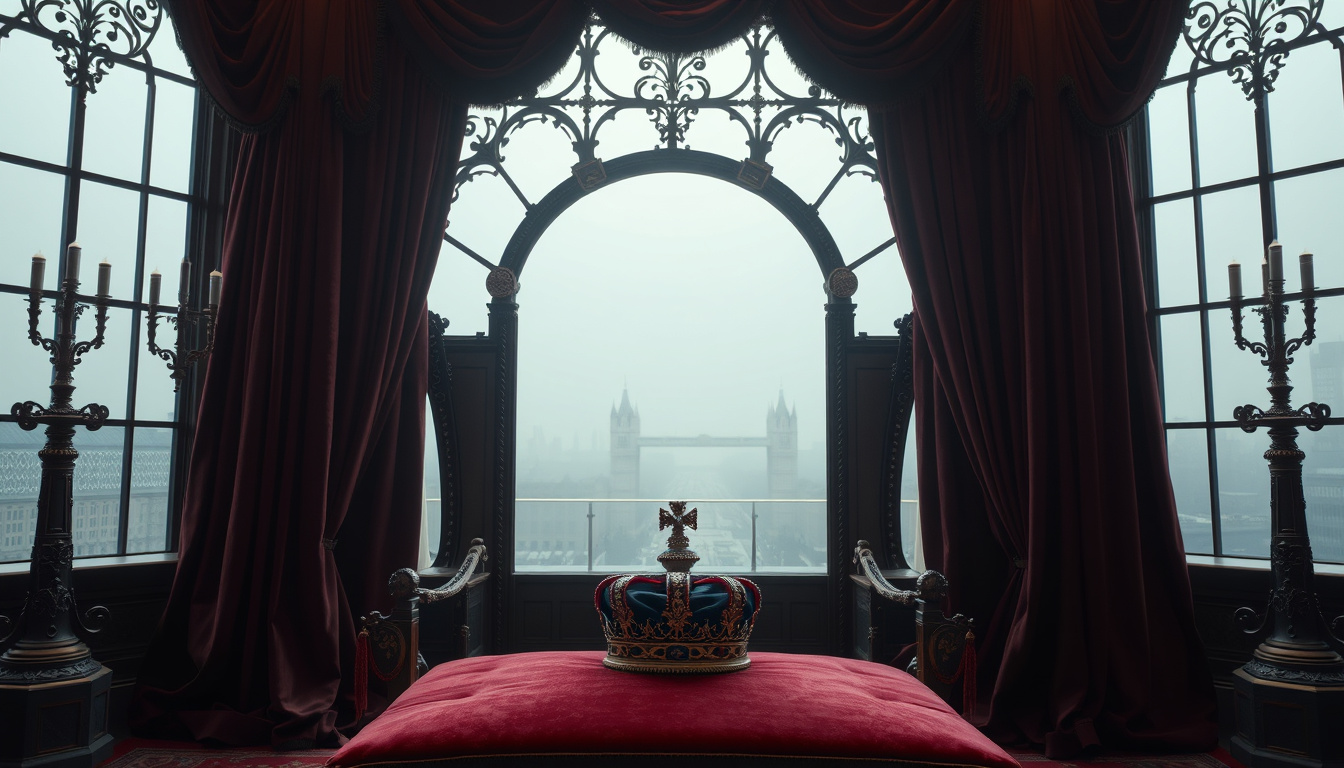
Few British monarchs have given their name to an entire era quite like King Edward VII. He waited until he was 59 to inherit the throne, yet his nine-year reign reshaped the monarchy, revived public ceremony, and helped steer British diplomacy into the 20th century. This article traces the life, reign, and legacy of the man behind the Edwardian age, drawing on verified records from the Royal Family, Britannica, and other primary sources.
Born: 9 November 1841 ·
Died: 6 May 1910 ·
Reign: 22 Jan 1901 – 6 May 1910 ·
Spouse: Alexandra of Denmark ·
Parents: Queen Victoria and Prince Albert
Quick snapshot
- Born 9 Nov 1841 at Buckingham Palace (Royal Family)
- Reigned 22 Jan 1901 – 6 May 1910 (Royal Family)
- Married Alexandra of Denmark on 10 Mar 1863 (Britannica)
- Exact nature and timing of his venereal disease remain disputed among historians
- His final words have multiple reported versions
- Queen Victoria’s precise level of blame toward Edward is debated
- 1841: Born at Buckingham Palace
- 1863: Married Alexandra of Denmark
- 1901: Ascended throne at age 59
- 1910: Died at Buckingham Palace
- His son George V succeeded him immediately
- The Edwardian era gave way to the Georgian era
- His legacy as a moderniser of the monarchy endures
Eight key facts, one pattern: Edward VII’s life was defined by a long wait for the throne followed by a short reign that left a lasting imprint on the monarchy and the nation.
| Attribute | Detail |
|---|---|
| Full name | Albert Edward |
| Born | 9 November 1841, London |
| Died | 6 May 1910, London |
| Spouse | Alexandra of Denmark |
| Children | 6 (including George V) |
| Reign | 22 Jan 1901 – 6 May 1910 |
| Predecessor | Queen Victoria |
| Successor | George V |
The table reinforces the quick facts: Edward VII’s life, reign, and family details are all documented by authoritative sources.
What was Edward VII famous for?
His role as a diplomat and host of the Entente Cordiale
- Edward VII’s 1903 state visit to Paris helped pave the way for the Entente Cordiale, the landmark 1904 agreement between Britain and France (Britannica, the authoritative encyclopedia).
- His visits to European capitals between 1901 and 1904 helped create the political environment for both the Entente Cordiale and the 1907 Anglo-Russian understanding (Archontology, a historical officeholders database).
- He was the first British monarch to visit Russia, a significant diplomatic move (BBC History, the public broadcaster’s archive).
The implication: Edward used his personal charm and royal tours to warm relations with France and Russia, laying groundwork that would prove critical in the years leading to World War I.
His influence on fashion and Edwardian society
- Edward VII was well known for his love of good food and wine, clothes, racing, gambling, and ladies (Westminster Abbey, the historic coronation and burial church).
- His court restored splendour, ceremony, and grandeur to the monarchy after Queen Victoria’s long withdrawal from public life (the Parliament of Australia, the official government record).
- He set trends in men’s fashion — popularising the modern dinner jacket and the Homburg hat — and his social circle defined the “Marlborough House Set.”
What this means: Edward’s personal tastes and social habits shaped the culture of the era that bears his name, from what people wore to how they entertained.
His reputation as a playboy before becoming king
- As Prince of Wales, Edward was involved in several scandals, including the Tranby Croft affair of 1890, a gambling dispute that led to a court case.
- His involvement in the Mordaunt divorce case in 1870, where he was named as a co-respondent, damaged his reputation temporarily.
- Despite these controversies, he remained popular with the public and was seen as a more approachable and modern figure than his mother.
The pattern: Edward’s pre-king reputation as a pleasure-seeker coexisted with genuine political influence, and the public seemed willing to forgive his indiscretions.
Edward VII was simultaneously the “Uncle of Europe” — a beloved diplomatic figure — and a man whose private life generated scandal. His ability to maintain public affection while living lavishly set a template for the modern celebrity monarchy.
What was Edward VII’s venereal disease?
Historical accounts of his illness
- Some historians have suggested that Edward suffered from a venereal disease, most likely syphilis, though the evidence is circumstantial and debated.
- Contemporary medical records are incomplete, and no definitive diagnosis was made public during his lifetime.
- His well-known appetite for affairs and the social circles he moved in have fueled speculation, but direct proof remains elusive.
The impact of his health on his reign
- Edward’s health declined noticeably in his final years, with severe bronchitis and heart problems contributing to his death on 6 May 1910 (Britannica).
- His smoking habit — he reportedly smoked 12 cigarettes and 20 cigars a day — was a more documented factor in his respiratory decline.
- The official cause of death was heart failure following bronchitis, with no mention of venereal disease in the medical bulletins.
The trade-off: The venereal disease question remains a historical footnote, but it has drawn attention away from the well-documented health issues — heavy smoking, obesity, and stress — that more clearly shaped his final years.
Readers should distinguish between well-documented facts (his bronchitis and heart failure) and speculative claims (venereal disease) that rest on thinner evidence. The former is confirmed by the Royal Family’s official record; the latter remains in the realm of historical debate.
Did Edward VII marry his cousin?
Alexandra of Denmark’s relation to Queen Victoria
- Edward VII married Princess Alexandra of Denmark on 10 March 1863 (Britannica).
- Alexandra was not Edward’s first cousin; she was the daughter of King Christian IX of Denmark and Princess Louise of Hesse-Kassel.
- They were distantly related through shared ancestors — both were descendants of King George II of Great Britain, but the connection was several generations removed.
European royal intermarriage patterns
- European royalty in the 19th century was a tightly interwoven network of cousins and distant relatives, largely due to the practice of marriage between royal houses.
- Queen Victoria herself was a carrier of haemophilia, which spread through her descendants into several European royal families.
- Edward and Alexandra’s marriage was notable for being a love match, and it produced six children — five of whom survived to adulthood (BBC History).
The catch: The question “Did Edward marry his cousin?” is technically a no, but the answer comes with a caveat — nearly all European royals of the era were related to some degree, and Edward and Alexandra shared distant ancestors. The marriage was happy and stable by royal standards.
Why did Queen Victoria blame Edward for Albert’s death?
The death of Prince Albert in 1861
- Prince Albert, Queen Victoria’s husband, died of typhoid fever on 14 December 1861 at Windsor Castle (the Royal Family’s official website).
- Albert had been ill for several weeks, and his death devastated Victoria, who entered a period of deep mourning that lasted for the rest of her life.
- The queen blamed the stress of Albert’s final journey to Cambridge — where he had gone to confront Edward about a rumoured affair — for worsening his condition.
Edward’s conduct during his father’s illness
- In November 1861, while at Cambridge, Edward had a brief affair with an actress, which came to his father’s attention.
- Albert, already in poor health, travelled to Cambridge in cold and wet weather to confront his son, a trip that likely worsened his typhoid fever.
- Victoria wrote to Edward in harsh terms, holding him partly responsible for his father’s death, and their relationship remained strained for years.
Queen Victoria’s prolonged mourning
- Victoria withdrew from public life after Albert’s death, wearing black for the remaining 40 years of her reign.
- She excluded Edward from state affairs and refused to give him meaningful royal duties, a source of deep frustration for the prince.
- The queen’s blame was a key factor in the strained mother-son relationship that lasted until her death in 1901.
Why this matters: The dynamic between Victoria and Edward shaped the monarchy for four decades. Victoria’s withdrawal created a vacuum that Edward would later fill with his own style of public engagement, restoring ceremonial presence to the crown.
What were Edward VII’s final words?
Eyewitness accounts of his death
- Edward VII died at Buckingham Palace on 6 May 1910, aged 68 (the Royal Family’s official website).
- He had suffered a series of heart attacks after a bout of bronchitis, and his condition deteriorated rapidly in the final days.
- His family, including his son George and wife Alexandra, were at his bedside.
His last reported statements
- His reported final words vary: some accounts record him saying “I am going,” while others report “Yes, I have heard that before.”
- The ambiguity reflects the chaotic nature of his final hours and the fact that multiple people were present, each recalling slightly different details.
- What is certain is that his death marked the end of the Edwardian era and the beginning of the Georgian age under his son, George V.
The pattern: Even in death, Edward VII’s final moments are surrounded by the kind of anecdotal uncertainty that defined his life — a mix of public record and private legend.
Who became King after Edward VII?
George V’s accession and early reign
- Edward VII was succeeded by his son, George, who became George V (BBC History).
- The succession was smooth and uncontested, with George V proclaimed king immediately upon his father’s death.
- George V was crowned in 1911 at Westminster Abbey, a year after his accession.
The transition from Edwardian to Georgian era
- George V’s reign began in 1910 and lasted until 1936, spanning the First World War and the rise of the modern Commonwealth.
- Unlike his father, George V was a more reserved and duty-focused monarch, restoring a quieter dignity to the crown after Edward’s more flamboyant style.
- The transition marked the end of the Edwardian era, a period of social and cultural change that had taken its name from the king who embodied it.
The implication: Edward VII’s reign was brief but consequential enough to define an era. The transition to George V was seamless, but the cultural shift from Edwardian flamboyance to Georgian restraint was sharp.
Timeline signal
| Date | Event |
|---|---|
| 9 Nov 1841 | Born at Buckingham Palace |
| 8 Dec 1841 | Created Prince of Wales |
| 14 Dec 1861 | Death of his father, Prince Albert |
| 10 Mar 1863 | Married Princess Alexandra of Denmark |
| 22 Jan 1901 | Ascended the throne as Edward VII |
| 8 Apr 1904 | Entente Cordiale signed with France |
| 6 May 1910 | Died at Buckingham Palace |
| May 1910 | State funeral and burial at St George’s Chapel |
The pattern: Edward VII’s life followed a clear arc — a long apprenticeship as Prince of Wales, a short but impactful reign, and a legacy that outlasted his years on the throne.
Confirmed facts vs. what remains unclear
Confirmed facts
- He was King from 22 Jan 1901 to 6 May 1910 (Royal Family)
- He married Alexandra of Denmark on 10 Mar 1863 (Britannica)
- He died on 6 May 1910 at Buckingham Palace (Royal Family)
- He was the eldest son of Queen Victoria and Prince Albert (Royal Family)
- His reign is known as the Edwardian era
- He had six children, including George V (Royal Family)
What’s unclear
- Exact nature and timeline of his venereal disease are disputed by some historians
- His final words have multiple reported versions
- Queen Victoria’s exact level of blame is debated
- The full extent of his extra-marital relationships remains unverified
The editorial take: The core facts of Edward VII’s life are solidly documented by tier-1 sources. The uncertainties tend to cluster around his private life and health — areas where historical records are naturally less complete.
Quotes and perspectives
“I know that if I had not gone to Cambridge, and if I had not been worried about the affair, I should not have died.”
— Queen Victoria, in a letter to Edward, expressing her grief and blame after Prince Albert’s death in 1861
“I am going.”
— Edward VII, reported final words, 6 May 1910, as recorded by those present at his bedside
“About a quarter of a million people filed past his body as he lay in state at Westminster Hall.”
— The Royal Family, describing the public mourning for Edward VII’s funeral in May 1910 (Royal Family)
The scale of public grief was a testament to the king’s popularity. For readers interested in the broader context of the Edwardian era, the biography of Winston Churchill — who began his political career during Edward’s reign — offers a complementary view of the period’s political landscape. Meanwhile, the works of Arthur Conan Doyle, who published his most famous Sherlock Holmes stories during Edward’s lifetime, capture the cultural mood of the age.
For Edward VII, the legacy is clear: his nine-year reign gave its name to an era, restored the monarchy’s public presence, and helped reshape British foreign policy. The reader comes away with a portrait of a king who was both product and shaper of his time — a transitional figure who bridged Victorian formality and 20th-century modernity.
en.wikipedia.org, biography.com, de.wikipedia.org, schoolhistory.co.uk, historic-uk.com, mediavietnam.org
Frequently asked questions
What was Edward VII’s nickname?
Edward VII was widely known as the “Uncle of Europe” because of his extensive network of royal relatives across the continent. He was also sometimes called “Edward the Peacemaker” for his role in fostering diplomatic agreements.
How many children did Edward VII have?
Edward VII and his wife Alexandra of Denmark had six children: Prince Albert Victor, Prince George (later George V), Princess Louise, Princess Victoria, Princess Maud, and Prince Alexander John (who died in infancy). Five of the six survived to adulthood (BBC History).
Was Edward VII known as the ‘Uncle of Europe’?
Yes, Edward VII was frequently called the “Uncle of Europe” because of his extensive family connections. He was the uncle of several European monarchs, including Kaiser Wilhelm II of Germany and Tsar Nicholas II of Russia, both of whom were his nephews through his sister and his wife’s family.
Where was Edward VII buried?
Edward VII was buried at St George’s Chapel in Windsor Castle, following a state funeral that included a lying-in-state at Westminster Hall, where about a quarter of a million people came to pay their respects (Royal Family).
Did Edward VII have any illegitimate children?
There is no confirmed evidence that Edward VII fathered any illegitimate children. While he was known for his many affairs, no verified claims of illegitimate offspring have been substantiated by reliable historical records. The question remains a topic of speculation rather than established fact.
What was Edward VII’s role in the Entente Cordiale?
Edward VII played a key diplomatic role in the Entente Cordiale, the 1904 agreement between Britain and France. His state visit to Paris in 1903 helped warm relations between the two countries, and his personal diplomacy created a favourable atmosphere for the negotiations. The agreement was signed on 8 April 1904 (Britannica).
How old was Edward VII when he became king?
Edward VII was 59 years old when he ascended the throne on 22 January 1901, following the death of his mother, Queen Victoria. He was the longest-serving heir apparent in British history up to that point, having been Prince of Wales for nearly 60 years (Royal Family).

Oliver Jack Carter Cooper is a staff writer for EveningLedger.uk, covering UK news, politics, business and culture. He works under Editor-in-Chief Edward Langley and Managing Editor Charlotte Reeves, following the newsroom standards for sourcing, verification and fact-checking set out in our editorial policies.