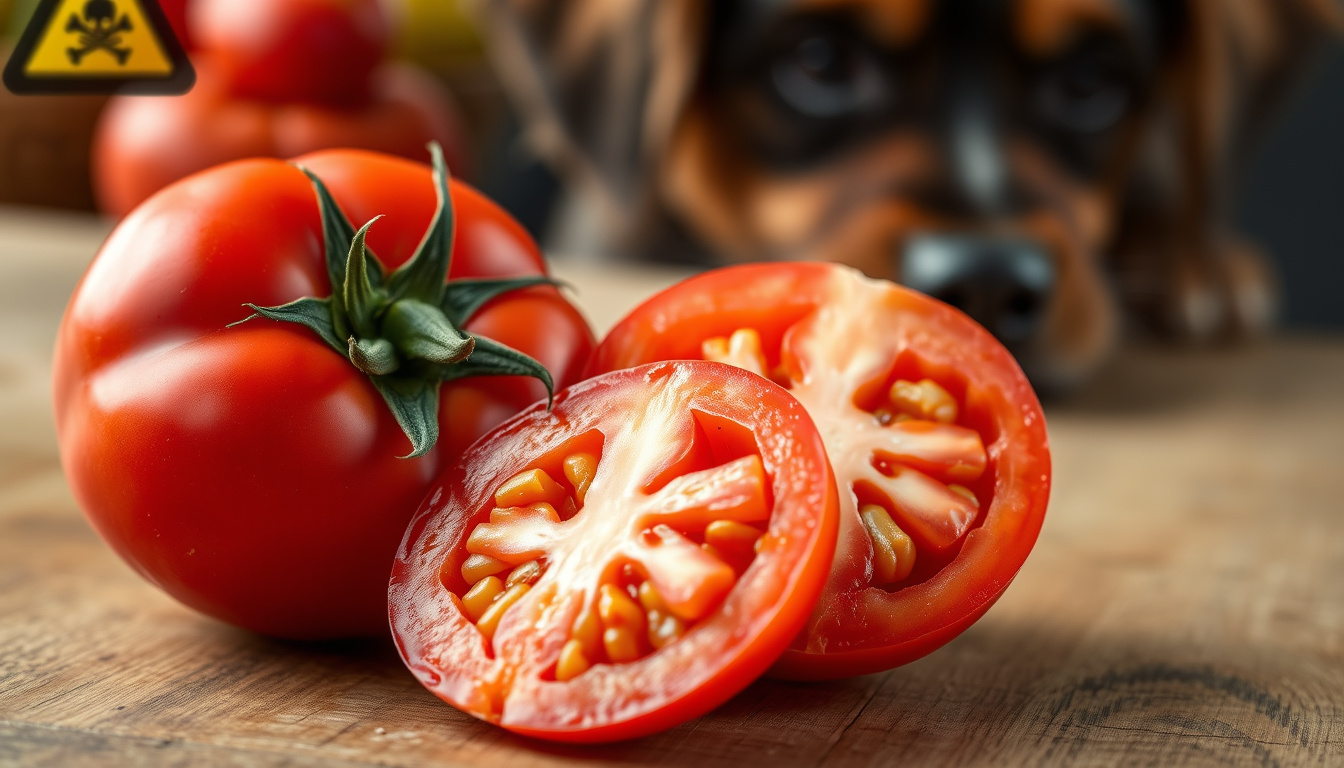

You’ve probably glanced at your dog while eating a cherry tomato and wondered if sharing is safe. The answer is simple for the ripe red fruit — yes, in tiny portions — but the green parts of the tomato plant contain a compound called tomatine that can be dangerous. This guide walks through which parts are safe, what symptoms to watch for, and how to serve tomatoes without risking your dog’s health.
Safe to eat (ripe): Yes, in small amounts ·
Tomatine in green parts: Toxic; can cause poisoning ·
Recommended maximum: 1‑2 cherry tomatoes for small dogs ·
Poisoning risk: Low if ripe and limited ·
Cherry tomato size: Safe when ripe, but cut in half
Quick snapshot
- Ripe tomatoes are safe in small amounts (PetMD (veterinary health resource))
- Green tomatoes and plant parts contain tomatine, which is toxic (American Kennel Club (dog health authority))
- Tomatine can cause gastrointestinal and neurological signs (Hill’s Pet Nutrition (veterinary nutrition brand))
- Exact long‑term effects of low‑level tomatine ingestion are not well studied
- Optimal safe serving size per dog weight is not formally established
- The precise lethal dose of tomatine for dogs is estimated, not definitively established
- Symptoms of tomatine poisoning can appear within hours of ingestion (Hill’s Pet Nutrition)
- No delayed‑onset risks reported with a single small ripe tomato (Hill’s Pet Nutrition)
- If your dog eats a green tomato or plant part, call a veterinarian immediately (Hill’s Pet Nutrition)
- For ripe tomatoes, start with a tiny piece and watch for any reaction (PetMD)
Tomatine levels vary dramatically between ripe and green fruit. Here is a snapshot of the numbers every owner should know:
| Part of tomato plant | Tomatine content (mg/100g) |
|---|---|
| Ripe fruit (red) | 0.5–5 mg/100g |
| Green fruit (unripe) | 10–50 mg/100g |
| Acute lethal dose (estimated) | ~10 mg/kg body weight |
| Most common poisoning source | Green tomatoes or plant parts |
Are tomatoes ok for a dog to eat?
The short answer: ripe, red tomatoes are generally safe for dogs when fed in moderation, but the green parts of the plant are not. This distinction is crucial because the same fruit contains very different levels of tomatine depending on ripeness.
Ripe vs unripe tomatoes
- Ripe tomatoes: Low tomatine levels, safe in small amounts. PetMD (veterinary health resource) states they are “generally considered safe” when fed sparingly (PetMD).
- Unripe (green) tomatoes: High tomatine — 10 to 50 mg per 100g — and can cause poisoning (Chewy (pet retailer with veterinary experts)).
Tomatine concentration in different parts
- The ripe red flesh is the only part considered acceptable for dogs (Hill’s Pet Nutrition).
- Stems, leaves, blossoms, and vines all contain tomatine and should never be chewed or swallowed. AKC (dog health authority) warns owners to keep dogs away from the plant altogether (American Kennel Club).
A single green cherry tomato can contain as much tomatine as a dozen ripe ones. That’s why ripeness matters far more than tomato size.
The pattern: Ripe tomatoes are safe; unripe tomatoes and all green plant parts are not. The risk isn’t in the fruit itself but in how it’s harvested and prepared for your dog.
What happens if a dog eats a bit of tomatoes?
If your dog nibbles one ripe cherry tomato, you will likely see nothing at all. Problems arise when the amount is large or when the tomato is green.
Immediate mild symptoms
- Small amounts of ripe tomato rarely cause issues, but some dogs may have mild gastrointestinal upset (PetMD).
- If a dog eats several ripe tomatoes, vomiting or diarrhea can occur within a few hours (Hill’s Pet Nutrition).
When to call the vet
- Green tomato ingestion — no matter how small — warrants a call to your veterinarian. The Pet Poison Helpline advises that even a few bites of green plant parts can trigger poisoning (Hill’s Pet Nutrition quoting Pet Poison Helpline).
- Also call the vet if your dog shows coordination loss, tremors, or seizures after eating any tomato part (American Kennel Club).
Why this matters: A small amount of ripe tomato is unlikely to cause harm, but the same volume of green tomato can mean a trip to the clinic. The dose makes the poison — and here, ripeness controls the dose.
What are early signs of tomato poisoning in dogs?
Tomatine poisoning can escalate quickly. Knowing the early signs lets you act before symptoms worsen.
Gastrointestinal signs
- Drooling, vomiting, diarrhea — often the first signals (Hill’s Pet Nutrition).
- Loss of appetite and stomach pain may follow.
Neurological signs
- Dilated pupils, weakness, loss of coordination, tremors (Hill’s Pet Nutrition).
- Seizures and muscle weakness in severe cases (Chewy).
Cardiac effects
- A slow heart rate can occur with significant tomatine ingestion (PetMD).
- This is rare but serious — prompt veterinary care is critical.
The trade-off: Early GI signs are reversible, but neurological and cardiac effects indicate higher tomatine levels and require immediate intervention. Don’t wait for severe symptoms to appear.
Can dogs eat cherry tomatoes?
Yes, cherry tomatoes are safe if ripe and given sparingly. The same tomatine rules apply as with larger tomatoes — only the red, ripe fruit is okay.
Size and preparation
- Cut cherry tomatoes in half to prevent choking risk (PetMD).
- Remove stems and leaves before serving (PetMD).
- Start with a tiny piece to check for tolerance — every dog is different.
Nutritional benefits
- Ripe tomatoes provide vitamins A, C, and K (Chewy).
- They are low in calories and make a refreshing occasional treat — but only 1–2 cherry tomatoes for a small dog (under 10 kg).
The pattern: Cherry tomatoes aren’t inherently more dangerous than any other tomato — the danger is in the green stage, not the size.
Can dogs eat tomato sauce or soup?
Tomatoes in processed forms are a different story. The additives often present a greater risk than the tomatoes themselves.
Added ingredients to avoid
- Tomato sauce usually contains garlic and onion — both toxic to dogs (Chewy).
- Many recipes also include salt, sugar, herbs, and spices that can upset a dog’s stomach.
Plain vs seasoned products
- Plain canned tomatoes without added seasonings are safer, but still high in sodium — rinse them first if you share a tiny amount.
- Tomato soup is high in salt and may contain dairy, which can cause digestive issues in lactose‑intolerant dogs (PetMD).
Why this matters: A spoonful of pasta sauce likely contains more garlic per gram than tomatoes. Processed tomato products can be far riskier than the whole fruit, so stick to plain, ripe, raw tomatoes if you want to share.
Upsides
- Low‑calorie, hydrating treat
- Provides vitamins A, C, and K
- Easy to prepare (cut, wash, serve plain)
- Can be used as training reward in tiny amounts
Downsides
- Green parts are toxic and require vigilance
- Choking risk if not cut into small pieces
- Can cause digestive upset if overfed
- Processed products often contain harmful additives
How to safely feed your dog tomatoes: step‑by‑step guide
- Choose ripe, red tomatoes. Avoid any with green patches. Cherry tomatoes work well because they’re easy to portion.
- Wash thoroughly to remove pesticides and dirt.
- Remove the stem and any leaves. Discard all green parts immediately.
- Cut into bite‑size pieces. For small dogs, quarter a cherry tomato. For larger dogs, dice into ½‑inch cubes (PetMD).
- Start with one piece. Wait 24 hours and watch for signs of upset.
- Limit to the recommended maximum: 1–2 cherry tomatoes for a small dog, 3–4 for a medium dog, up to half a medium tomato for a large dog — and never daily (American Kennel Club).
- Never add salt, oil, spices, or seasonings. Plain is the only safe way (Chewy).
The pattern: Following these steps ensures your dog gets the benefit of a safe treat without the risk of tomatine exposure.
Clarity: what’s confirmed and what remains uncertain
Confirmed facts
- Ripe tomatoes are safe in small amounts (PetMD)
- Green tomatoes and tomato plants contain tomatine, which is toxic (American Kennel Club)
- Tomatine can cause gastrointestinal and neurological signs (Hill’s Pet Nutrition)
What’s unclear
- Exact long‑term effects of low‑level tomatine ingestion are not formally studied
- Optimal safe serving size per dog weight is not established by rigorous research
- The precise lethal dose of tomatine for dogs is estimated, not definitively established
The implication: The evidence is clear that ripe tomatoes are safe in moderation, but the unknowns around precise serving sizes call for caution.
“The answer is yes and no. Dogs can eat tomatoes but only in small amounts. Ripe tomatoes are considered non‑toxic to dogs.”
— American Kennel Club (AKC)
“Yes and no. Dogs can eat tomatoes in moderation, but only ripe ones.”
— Purina UK (via Hill’s Pet Nutrition)
“Ripe tomatoes are safe for dogs. Avoid unripe tomatoes and green parts—they contain toxic tomatine.”
— PetMD veterinarian (PetMD)
The implication: The safety consensus among veterinary sources is strong: ripe tomatoes are a fine occasional snack, but the margin for error is thin. A single green cherry tomato can outweigh all the benefits of several ripe ones. For dog owners, the safest approach is to treat tomatoes as a rare, carefully prepared treat — and always check the color before you share.
For a more comprehensive look at tomatine levels and safe serving sizes, refer to this detailed safety and feeding guide.
Frequently asked questions
What should I do if my dog eats a green tomato?
Call your veterinarian or the Pet Poison Helpline immediately. Do not wait for symptoms to appear. If possible, bring a sample of the plant part for identification (Hill’s Pet Nutrition).
Can dogs be allergic to tomatoes?
Allergic reactions are rare but possible. Signs include itching, hives, or swelling around the mouth. If you notice these, stop feeding tomatoes and consult your vet (PetMD).
How many cherry tomatoes can a small dog eat?
For dogs under 10 kg (22 lb), 1–2 cherry tomatoes once or twice a week is a safe limit. Always cut them in half (American Kennel Club).
Is it safe to give dogs tomato juice?
Plain, unsalted tomato juice in very small amounts (a tablespoon) is unlikely to harm, but it offers no real benefit and can be high in sodium. Stick to whole fruit (Chewy).
What part of the tomato plant is most toxic?
The leaves and stems contain the highest concentration of tomatine, followed by green fruit. Vines also contain tomatine and can cause exposure if chewed (Hill’s Pet Nutrition).
Are sun‑dried tomatoes safe for dogs?
Sun‑dried tomatoes are ripe and therefore low in tomatine, but they are very concentrated and often salted. A tiny piece is safe — about the size of a pea — but avoid oil‑packed or seasoned versions (Chewy).
Can puppies eat tomatoes?
Puppies have more sensitive digestive systems. It’s best to wait until adulthood before introducing tomatoes. If you do offer a tiny piece, monitor closely for any upset (American Kennel Club).
Takeaway for dog owners: Ripe tomatoes are safe in moderation, but green parts are toxic. Always supervise your dog around tomato plants and consult a vet if you have any doubts.
Interested in other pet‑safe foods? Check out our guide on is liquorice good for you (and your dog) to learn about treats to avoid. And if you’re a new dog owner, our Puppies for Sale Near Me article can help you find a responsible breeder.

Oliver Jack Carter Cooper is a staff writer for EveningLedger.uk, covering UK news, politics, business and culture. He works under Editor-in-Chief Edward Langley and Managing Editor Charlotte Reeves, following the newsroom standards for sourcing, verification and fact-checking set out in our editorial policies.