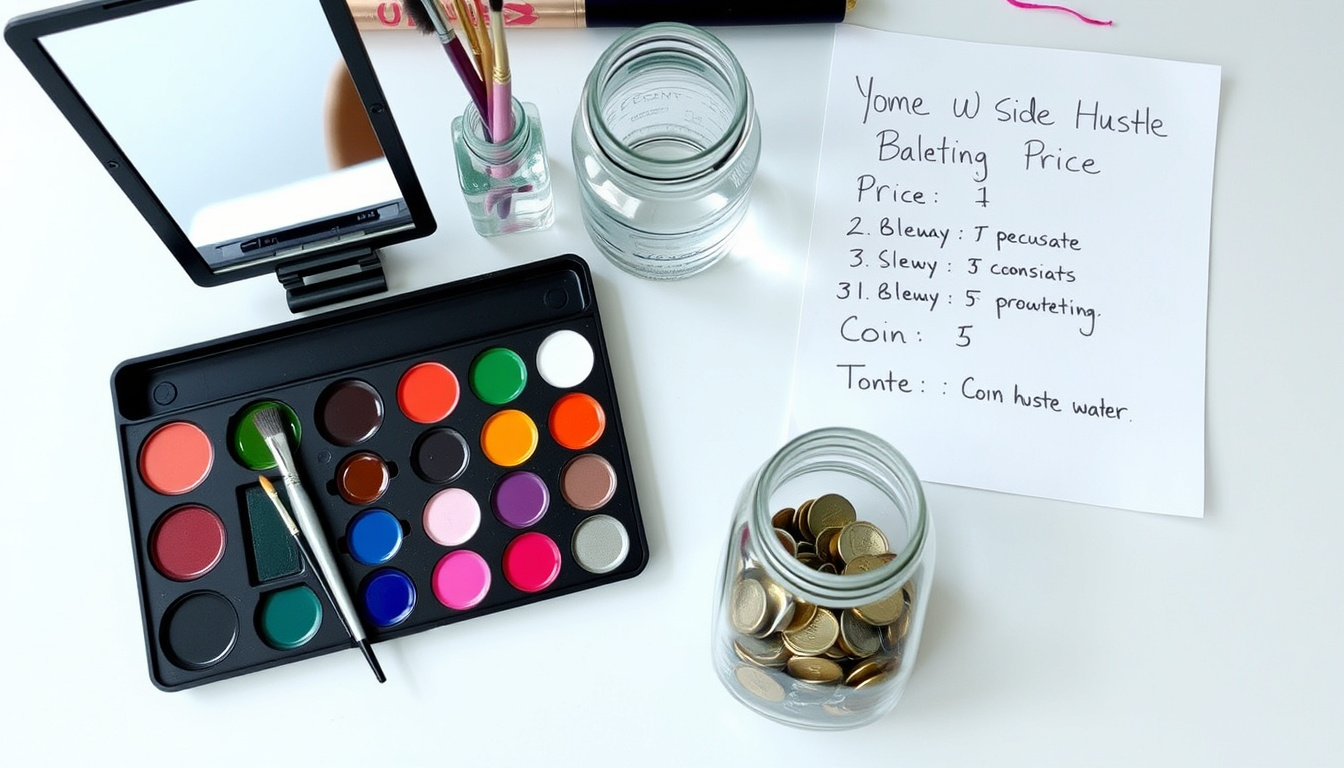
There’s something about watching a child catch their reflection as a butterfly or tiger that stops you for a second. Face painting is one of those rare party activities that sparks joy for kids and adults alike — and for a growing number of people, it’s also a surprisingly accessible side hustle.
Average charge per face: $25–$50 (industry standard) ·
Faces painted per hour: 10–15 (experienced painter) ·
Recommended paint type: FDA-approved water-based ·
Minimum age: 3 years old (safety guideline) ·
Startup cost: $100–$300 (basic kit)
Quick snapshot
- Water‑based face paints are safe for skin when FDA‑approved (JIM (business startup guide))
- Acrylic paint is not intended for face painting (Beauty & Bodywork Insurance (industry insurance provider))
- Children under 3 should not be face‑painted due to safety risks (Beauty & Bodywork Insurance (industry insurance provider))
- Exact side‑hustle income varies widely by location and local demand
- Best paint brand depends on individual skin sensitivity and preferences
- Whether face painting is profitable enough to replace a regular income depends on event frequency and local pricing
- Face painting as a side hustle is growing, partly because of low startup costs and the rise of local community events (Craft-n-Go (event pricing resource))
- Expect more regulation around paint ingredients as health authorities tighten guidelines
- New painters should invest in a professional kit and liability insurance before scaling
A few key numbers set the stage for what face painting really costs and earns. Five figures that matter most:
| Metric | Value |
|---|---|
| Average hourly rate | $30–$60 |
| Faces per hour | 10–15 |
| Recommended paint type | FDA‑approved water‑based |
| Minimum age | 3 years |
| Startup cost | $100–$300 |
How to do a simple face paint?
What is the easiest face paint to do?
The easiest designs for beginners are those that rely on bold shapes and minimal detail: butterfly wings in two or three colors, a tiger nose and whiskers, or a rainbow streak across the cheek. Experienced painters often recommend starting with a simple base coat and adding thin‑brush details on top (Craft-n-Go (event pricing resource)).
Follow these steps for a clean result:
- Prep the skin: cleanse the area with mild soap and water, pat dry.
- Apply a thin base layer using a damp sponge — less is more.
- Let the base dry for 20 seconds before adding details.
- Outline shapes with a fine brush loaded with water‑based paint.
- Set the design with a light dusting of translucent powder (optional).
A first‑time face painter can produce a passable butterfly in under 10 minutes with a sponge and two brushes. The trade‑off: simpler designs mean lower per‑face pricing — but they also let you paint more faces per hour, which can boost total event income.
The pattern: the simplest designs take the least time and materials, so your profit per face may be lower, but your throughput rises. For beginners starting out, that trade‑off is worth accepting while building skill.
What kind of paint do you use for face paint?
Is face paint just acrylic paint?
No — acrylic paint is not safe for skin. It contains binders and pigments that can cause irritation and are not designed to be washed off easily. Professional face painters use FDA‑approved water‑based paints that are non‑toxic and washable with soap and water (JIM (business startup guide)). Avoid oil‑based paints as they can clog pores. Water‑based paints glide on smoothly and dry quickly, making them the industry standard for both safety and performance.
One source of confusion is the variety of paint types. Here’s a quick breakdown:
- Water‑based face paints: FDA‑approved, washable, non‑comedogenic — the only safe choice for skin.
- Oil‑based paints: can clog pores and are harder to remove; not recommended for children.
- Acrylic paints: not formulated for skin — can cause allergic reactions, cracking, and removal difficulty.
Using the wrong paint is the fastest way to ruin a reputation. A single bad reaction at a children’s party can cost you repeat bookings and insurance coverage — so always check the label for FDA compliance or equivalent certification in your country.
The implication: paint choice is a liability decision, not just a cost decision. Professionals treat paint selection as their first line of risk management.
What are common face paint mistakes?
How to avoid common face painting mistakes?
Even experienced painters slip up. The most common mistakes fall into four categories:
- Applying too much paint: thick layers crack and feel heavy. Use thin, even coats.
- Using low‑quality paints: cheap paints may contain harmful additives or produce patchy coverage.
- Not prepping skin properly: dirty or oily skin can cause paint to slide off or irritate.
- Rushing the design: fast work leads to smudges and unhappy clients. Practice each design at least 10 times before offering it at an event.
Other pitfalls include skipping a patch test on new paints and failing to wash brushes between colors. The simplest fix: build a routine — clean skin, thin layers, and steady hand. For related hygiene practices, see our Hand Washing: Proper Technique, Benefits, and Skin Care Tips.
The implication: most mistakes are avoidable with preparation and the right materials. The painters who charge more are the ones who invest time in practice and use professional‑grade supplies.
Is face painting a good side hustle?
How much to charge per face for face painting?
What is the average price for a face painter?
How many faces can a face painter paint in an hour?
Face painting can earn $30–$60 per hour, with experienced painters charging up to $150 per hour for private events (Jest Paint (professional paint supplier)). The per‑face charge typically ranges from $5 for a simple cheek art to $35 for a full‑face design. At a public festival, per‑face pricing is standard; private parties often switch to per‑hour rates to prioritize quality over speed (Craft-n-Go (event pricing resource)).
How many faces you can paint in an hour depends on complexity. An experienced painter handles 10–15 simple faces per hour, or 6–8 detailed designs (Jest Paint (professional paint supplier)).
Startup costs are low: a basic kit costs $35–$40, while a professional FDA‑compliant kit runs $300–$500 (JIM (business startup guide)). Add liability insurance ($96–$600 per year), a business license ($50–$150), and you’re still under $1,000 to launch — a lean entry for a potential $75–$150 per hour side hustle. For comparison, other creative ventures like a Pottery Cafe Guide: Costs, What to Wear & Session Length require higher upfront investment in materials and space.
Low startup costs make face painting accessible, but the real limiting factor is your speed and design quality. Painters who invest in practice and professional kits can charge $150+ an hour; those who buy cheap supplies often struggle with patchy paint and slow throughput, capping their income at $30–$50 per hour.
The catch: a side hustler who paints two events per weekend at $100 per hour could earn $800–$1,200 a month, but inconsistent bookings and weather‑dependent demand mean income is not guaranteed. Treat it as a flexible supplement, not a fixed salary.
Why can’t you face paint under 3?
Health authorities recommend against face painting for children under three years old. The Western Australia Department of Health (Beauty & Bodywork Insurance (industry insurance provider)) cites three main risks:
- Young children have more sensitive skin that can react to pigments, even FDA‑approved ones.
- Frequent hand‑to‑mouth contact increases the chance of paint ingestion.
- Children under three are less likely to cooperate, leading to paint entering eyes or mouth.
For face painters, this means setting a firm age policy. Refusing a toddler might disappoint a parent, but it protects the child’s health and your liability. Many professional painters include this rule in their contract and event booking terms.
What this means: the safest choice for everyone is to offer temporary tattoos or sticker designs for children under three instead of paint — keeping the fun alive without the risk.
Step-by-step guide to face painting
For readers who want a condensed version of the technique, here is the core workflow used by professionals:
- Cleanse the skin with mild soap or face wipe (30 sec)
- Apply thin base coat with damp sponge (1 min)
- Let base dry (20 sec)
- Add outlines and details with fine brush (2–4 min)
- Fill in color areas with round brush (1–2 min)
- Set with translucent powder or let air dry (1 min)
Practicing each design five to ten times before offering it at an event will cut your painting time in half and improve consistency (Jest Paint (professional paint supplier)).
The pattern: speed comes from repetition. A painter who has done the same tiger design 50 times can do it in under 4 minutes, doubling their earning capacity compared to someone who still fingers each stroke.
Upsides
- Low startup cost — under $500 full pro kit
- Flexible schedule — choose events that fit your time
- Creative outlet that rewards practice
- High hourly earning potential ($75–$150+)
- Low ongoing supply cost (~$1 per face after initial kit)
Downsides
- Income is seasonal and event‑dependent
- Physical demand — standing and bending for hours
- Need liability insurance and sometimes permits
- Must handle fussy children and disappointed parents
- Supplies must be replaced and kept hygienic
Quotes from the field
“Face painting for children under three is not recommended due to the risk of allergic reactions, ingestion, and the difficulty of keeping the paint away from eyes and mouth.”
Western Australia Department of Health — official safety guidelines
“In the USA, a typical private‑party face painting rate is about $100 to $150 per hour. For public events, per‑face pricing of $5 to $35 per design is common.”
Jest Paint (professional face paint supplier pricing guide)
“You can start a face painting side hustle for roughly $200. After that, your main recurring costs are brushes and paint, which run about $1 per face.”
JIM (business startup guide)
Why these voices matter: health authorities give you the safety boundaries; industry suppliers tell you the market rates; business guides show you the math. All three together give you enough to make informed decisions.
Face painting isn’t for everyone. It demands patience, practice, and the willingness to sometimes wipe a tear after a design goes wrong. But for the creative person who wants a low‑cost side hustle that pays well per hour, it’s one of the few options where $100+ per hour is achievable with consistency. Dress for the weather, pack extra sponges, and always carry a printed age‑policy card. For the aspiring face painter in the U.S. market, the choice is clear: invest $300 in a proper kit and insurance, practice five designs until they are second nature, and start booking weekend birthday parties. Anything less, and you’ll paint for peanuts.
reddit.com, facepaintingschool.com, nacams.org, jestpaint.com, paintertainment.com, facepaint.com, facepaint.com, facepainters.com, pressepunkt.dk
For those interested in a more detailed and structured approach, our guide on painting Warhammer 40,000 miniatures offers step-by-step instructions and cost breakdowns.
Frequently asked questions
What face paint brands are recommended for sensitive skin?
Brands like Snazaroo, Mehron, and Diamond FX are widely used by professionals and are FDA‑compliant. Always check the ingredient list for fragrance‑free formulations if you’re painting children with known sensitivity.
How do you remove face paint safely?
Use mild soap and water with a soft washcloth. Baby shampoo or makeup remover wipes also work. Never scrub hard, and avoid oil‑based removers that can sting eyes.
Can adults get their faces painted?
Yes — face paint is safe for all ages as long as the paint is FDA‑approved water‑based. Adults with sensitive skin should do a patch test first.
What is the best face painting kit for beginners?
A starter kit from Snazaroo or Diamond FX that includes a sponge, three brushes, and 6–12 colors is ideal. Expect to pay $35–$40 for a basic kit, then upgrade as you learn.
How to become a professional face painter?
Start by practicing on friends and family. Build a portfolio of 10–15 designs. Purchase liability insurance (about $100–$600/year), register your business, and market through local event venues and social media.
Are glitter and gems safe for face painting?
Only use cosmetic‑grade glitter and adhesive gems that are labeled safe for skin. Craft glitter can cause eye irritation or cuts. Always ask about allergies before applying.
How long does face paint last on skin?
Water‑based face paint typically lasts 4–6 hours on clean, dry skin. Sweating, rubbing, or oily skin can shorten wear time. Setting with translucent powder helps extend it.

Oliver Jack Carter Cooper is a staff writer for EveningLedger.uk, covering UK news, politics, business and culture. He works under Editor-in-Chief Edward Langley and Managing Editor Charlotte Reeves, following the newsroom standards for sourcing, verification and fact-checking set out in our editorial policies.