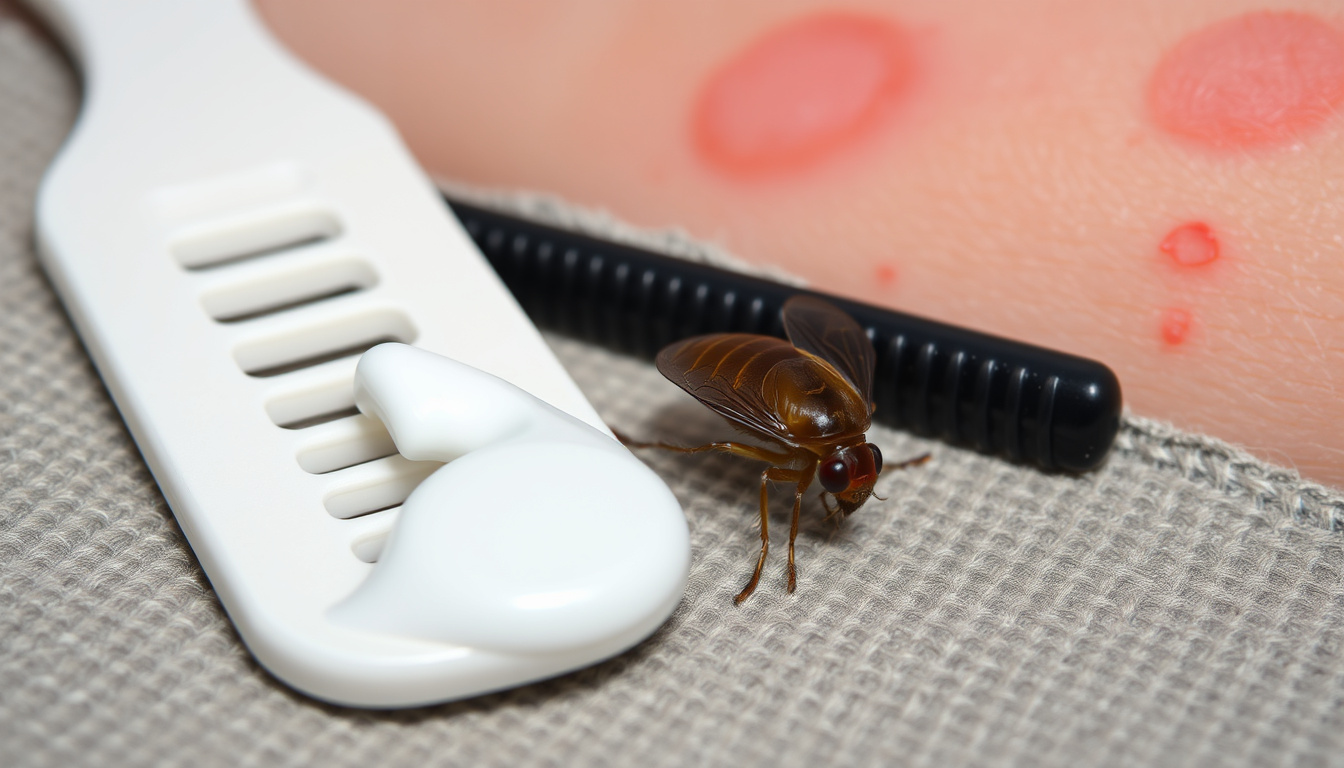
If you’ve ever woken up with a line of tiny, angry red bumps on your ankles, you’ve likely wondered what kind of insect left its mark—flea bites are among the most common and confusing bug bites, often mistaken for bed bugs or mosquitoes. This guide walks through how to identify them, treat the itch, and show fleas the door for good.
Flea Bites: A Complete Guide to Identification, Treatment, and Control
Itch duration after a flea bite: Up to 1 week ·
Typical bite location on humans: Ankles and lower legs ·
Flea species common in homes: Cat flea (Ctenocephalides felis) ·
Eggs laid per female flea per day: Up to 50
Quick snapshot
- Flea bites appear as small red bumps in lines or clusters, mainly on lower legs (Cleveland Clinic dermatology experts)
- Hydrocortisone cream 1% reduces itching and inflammation (Better Health Channel (Victoria government health service))
- Vacuuming daily for at least two weeks helps eliminate indoor flea populations (GoodRx pharmacy health reference)
- Whether a single “instant kill” spray can eliminate all fleas on a bed without chemical residue concerns
- Exact effectiveness of home remedies (e.g., essential oils) compared to clinical treatments for flea bites
- A full flea infestation typically takes 2–4 weeks to resolve with daily vacuuming, pet treatment, and insect growth regulators (Better Health Channel (Victoria government health service))
- If home treatment fails, a pest control professional may be needed to break the flea life cycle (Better Health Channel (Victoria government health service))
Here are the essential facts about flea bites at a glance.
| Common flea species in homes | Cat flea (Ctenocephalides felis) |
| Flea bite primary location on humans | Ankles and lower legs |
| Time to itch after bite | Immediate to 30 minutes |
| Recommended bite first aid | Cold compress + hydrocortisone cream |
| Minimum vacuuming frequency for control | Daily for 2 weeks |
| Temperature to kill fleas in wash | 130°F (54°C) water |
How do I know if my bites are from fleas?
Pattern and location of flea bites
- Flea bites usually appear in clusters or a straight line, most commonly on the lower legs and ankles (Cleveland Clinic dermatology experts).
- Each bite has a tiny dark puncture surrounded by a reddened area, with less swelling than other insect bites (WebMD medical reference).
What do flea bites look like on humans?
- Small, raised red or pink bumps, sometimes with a central red spot or ring (Cleveland Clinic dermatology experts).
- They can also appear on knees, elbows, armpits, or other creased areas where fleas can reach (Active Pest Control pest management guide).
Are flea bites itchy?
- Yes — the bite becomes itchy almost immediately because flea saliva injected during feeding causes a histamine reaction (Better Health Channel (Victoria government health service)).
- Itch can last up to one week; scratching raises the risk of secondary infection (Cleveland Clinic dermatology experts).
The implication: The combination of location, pattern, and immediate itch strongly points to fleas as the cause.
What can be mistaken for flea bites?
Four common insect bites share some features, but key differences in appearance, location, and pattern help separate them.
| Feature | Flea bites | Bed bug bites | Mosquito bites | Chigger bites |
|---|---|---|---|---|
| Appearance | Small red bump with dark puncture; less swelling | Swollen, raised red welts, often without a central dot | Puffy, irregular raised bumps | Small red pustules, may develop a crust |
| Common location | Lower legs, ankles (below knee) | Face, neck, arms, hands (exposed skin during sleep) | Any exposed skin, not limited to one area | Waist, ankles, skin folds (tight clothing areas) |
| Pattern | Clusters or straight lines on lower legs | Linear clusters, often zigzag or row of three | Random, scattered | Grouped in clusters, often around belt line |
| Onset of itch | Immediate to 30 minutes | Delayed (hours to days) | Immediate | Intense itching within hours, lasts longer |
The pattern: Flea bites are concentrated below the knee with a visible puncture, while bed bug bites appear where you sleep and mosquito bites are random. Chigger bites love waistbands and folds.
Misidentifying flea bites as bed bugs can waste time and money on the wrong treatment. Focusing on location (lower legs vs. exposed sleep areas) is the fastest diagnostic clue.
Flea bites vs bed bug bites
- Bed bug bites often appear in a straight line or cluster on skin exposed during sleep (face, arms, neck); they tend to be larger and more swollen (Healthline health journalism).
- Flea bites are concentrated on lower legs with a distinct puncture, rarely appearing above the waist unless you’re sitting on infested furniture.
Flea bites vs mosquito bites
- Mosquito bites are more raised, irregular, and appear anywhere; they itch immediately but lack the central dark puncture spot of flea bites.
Flea bites vs chigger bites
- Chigger bites appear around the waist, ankles, and skin folds, with intense itching that lasts longer (often days) and may form a crust — flea bites itch immediately and have a visible hole.
The implication: The clear pattern difference saves time and treatment targets.
Can fleas live in my bed?
Do fleas live in bed sheets?
- Adult fleas can live in bedding, mattress seams, and box springs, especially if a pet sleeps in the bed (GoodRx pharmacy health reference).
- Flea eggs and larvae may be present in sheets and mattress crevices.
Where do fleas hide in a bed?
- Mattress seams, box spring fabric, and the crevices between bed frame and mattress are common hiding spots.
- Fleas prefer dark, warm places and can linger in undisturbed bedding for several days.
How to check for fleas in bed?
- Look for tiny black specks on sheets (flea dirt) — wipe them with a damp cloth; if they turn reddish, it’s digested blood (Active Pest Control pest management guide).
- If you see bites on your upper body, it may indicate fleas are in the mattress.
- Use a flashlight to inspect mattress seams and box springs — fleas will jump if disturbed.
Fleas don’t live on humans, but they can infest your bed from a pet’s sleeping spot. Treating the bed without treating the pet guarantees re-infestation within days.
The implication: Without treating the pet, any bed treatment is temporary.
What kills fleas instantly on bed?
What kills fleas instantly on bed?
- Sprays containing pyrethrins or permethrin can kill adult fleas on contact on bedding — always remove pets and follow label directions (U.S. EPA pest control guidance).
Can vacuuming help remove fleas from bed?
- Yes — vacuum the mattress and box springs thoroughly to remove fleas, eggs, and larvae; dispose of the vacuum bag immediately in an outdoor bin (GoodRx pharmacy health reference).
What sprays kill fleas on mattresses?
- EPA-registered insecticide sprays labeled for mattress use (e.g., containing methoprene or pyriproxyfen) kill fleas and stop egg development.
- Steam cleaning (at least 130°F/54°C) kills all flea life stages without chemicals (Better Health Channel (Victoria government health service)).
Washing all bedding in hot water (130°F/54°C) and drying on high heat kills fleas in all stages — eggs, larvae, pupae, and adults.
The pattern: The combination of washing, vacuuming, and targeted sprays creates a multi-stage assault on fleas.
What clears up flea bites fast?
Home remedies for flea bite relief
- Cold compresses applied for 10–15 minutes reduce inflammation and numb the area (Better Health Channel (Victoria government health service)).
- Over-the-counter hydrocortisone cream (1%) calms itching and swelling (Cleveland Clinic dermatology experts).
- Calamine lotion or colloidal oatmeal baths soothe irritated skin (Better Health Channel (Victoria government health service)).
- Oral antihistamines (e.g., diphenhydramine) help when itching is severe or waking you up (WebMD medical reference).
Step-by-step first aid for flea bites
- Wash the area with soap and water.
- Apply a cold compress for 10–15 minutes.
- Apply over-the-counter hydrocortisone cream (1%).
- Take an oral antihistamine if itching is severe.
- Avoid scratching; cover bites if needed.
When to see a doctor for flea bites
- If redness spreads, the area feels warm, or pus appears — signs of infection (Active Pest Control pest management guide).
- Severe allergic reactions include hives, difficulty breathing, or swelling of the lips or throat — seek emergency care.
How to stop flea bite itch fast
- Wash the area with soap and water to reduce infection risk (Healthline health journalism).
- Apply a cold pack for 10 minutes, then hydrocortisone cream.
- Resist scratching — keep nails short and cover bites with a bandage if needed.
The implication: Immediate action reduces discomfort and infection risk.
What kills 100% of fleas in the house?
How to control fleas and ticks around your home
- Treat all pets with a vet-approved flea product (topical or oral) — this is the single most important step (U.S. EPA pest control guidance).
- Vacuum all carpets, rugs, and upholstery daily for at least two weeks to remove eggs, larvae, and adults.
Best practices for flea elimination
- Use insect growth regulators (IGRs) like methoprene or pyriproxyfen — they prevent eggs and larvae from maturing into biting adults (U.S. EPA pest control guidance).
- Steam clean carpets and furniture once a week to kill eggs and larvae in hard-to-reach fibers.
- Treat shaded outdoor areas where pets rest with EPA-registered products.
Can vacuuming every day get rid of fleas?
- Yes — daily vacuuming combined with pet treatment and IGRs is the proven method to break the flea life cycle (GoodRx pharmacy health reference).
- No single product kills 100% of fleas in one go; a multi-step approach over several weeks is necessary.
For homeowners with pets, the choice is between treating the pet and environment simultaneously — or watching fleas return every few weeks. The evidence is clear: treat the pet first, then the house.
The implication: The integrated approach is the only proven path to complete elimination.
Clarity check
Confirmed facts
- Flea bites appear as small, red bumps in lines or clusters on lower legs (Cleveland Clinic).
- Fleas can live in bedding and mattress crevices (GoodRx).
- Hydrocortisone cream reduces itching from flea bites (Better Health Channel).
- Vacuuming daily for at least two weeks helps eliminate flea populations indoors (EPA).
- Treating pets is essential to prevent re-infestation (EPA).
What’s unclear
- Whether a single “instant kill” product can eliminate all fleas on a bed without chemical residue concerns.
- The exact effectiveness of home remedies (e.g., essential oils) compared to clinical treatments for flea bites.
Expert perspectives
“Flea bites are small, raised red bumps that are intensely itchy. They usually appear on the lower legs and feet where fleas can easily reach.”
“Flea bites can become infected if scratched. Wash the area with soap and water and avoid scratching to reduce the risk.”
— Better Health Channel (Victoria government health service)
“Controlling fleas requires treating all pets in the home with an EPA-registered product and then treating the home environment, especially carpets and bedding.”
— U.S. Environmental Protection Agency
For anyone sharing a home with a cat or dog, flea bites are an avoidable nuisance — but only if you treat both the pet and the environment together. The evidence-backed path is simple: monthly flea prevention for your pet, daily vacuuming for two weeks, and a single application of an IGR indoors. Without that combination, you’re likely to keep scratching.
activepestcontrol.com, healthline.com, petnaturalremedy.com, youtube.com, romexpest.com, kiwireview.org
Frequently asked questions
Are flea bites dangerous?
For most people, flea bites are a mild irritant. However, fleas can transmit diseases like murine typhus and cat scratch fever, and some people experience severe allergic reactions. Bites that become infected require medical attention (Cleveland Clinic).
How long do flea bites last?
Itching from flea bites can last up to one week. The red bumps typically fade in 1–2 weeks if not scratched (WebMD).
Can fleas live on humans?
Fleas do not live on humans. They prefer furry pets. But they will bite humans when pets are not available, and they can temporarily hide in clothing or bedding (Better Health Channel).
Do fleas bite through clothing?
Fleas can bite through thin clothing like socks or tights, but they generally prefer exposed skin. That’s why bites cluster on ankles and lower legs (Healthline).
Is it safe to use flea sprays on bedding?
Only use sprays labeled for use on mattresses and bedding. Always remove pets and follow label instructions. Steam cleaning or hot-water washing are safer alternatives (EPA).
Can fleas transmit diseases?
Yes. Fleas can transmit murine typhus, cat scratch fever (Bartonella), and tapeworms. In rare cases, plague (Yersinia pestis) has been spread by fleas in some parts of the world (CDC).
How do I prevent flea bites while traveling?
Avoid contact with stray animals, keep accommodations clean, and inspect beds in areas with known flea infestations. Pack insect repellent containing DEET for lower legs (CDC Yellow Book).
What is the best flea treatment for my cat?
Veterinarians typically recommend prescription topical or oral products containing fipronil, selamectin, or fluralaner. Over-the-counter products may be less effective. Always consult your vet (American Veterinary Medical Association).

Oliver Jack Carter Cooper is a staff writer for EveningLedger.uk, covering UK news, politics, business and culture. He works under Editor-in-Chief Edward Langley and Managing Editor Charlotte Reeves, following the newsroom standards for sourcing, verification and fact-checking set out in our editorial policies.