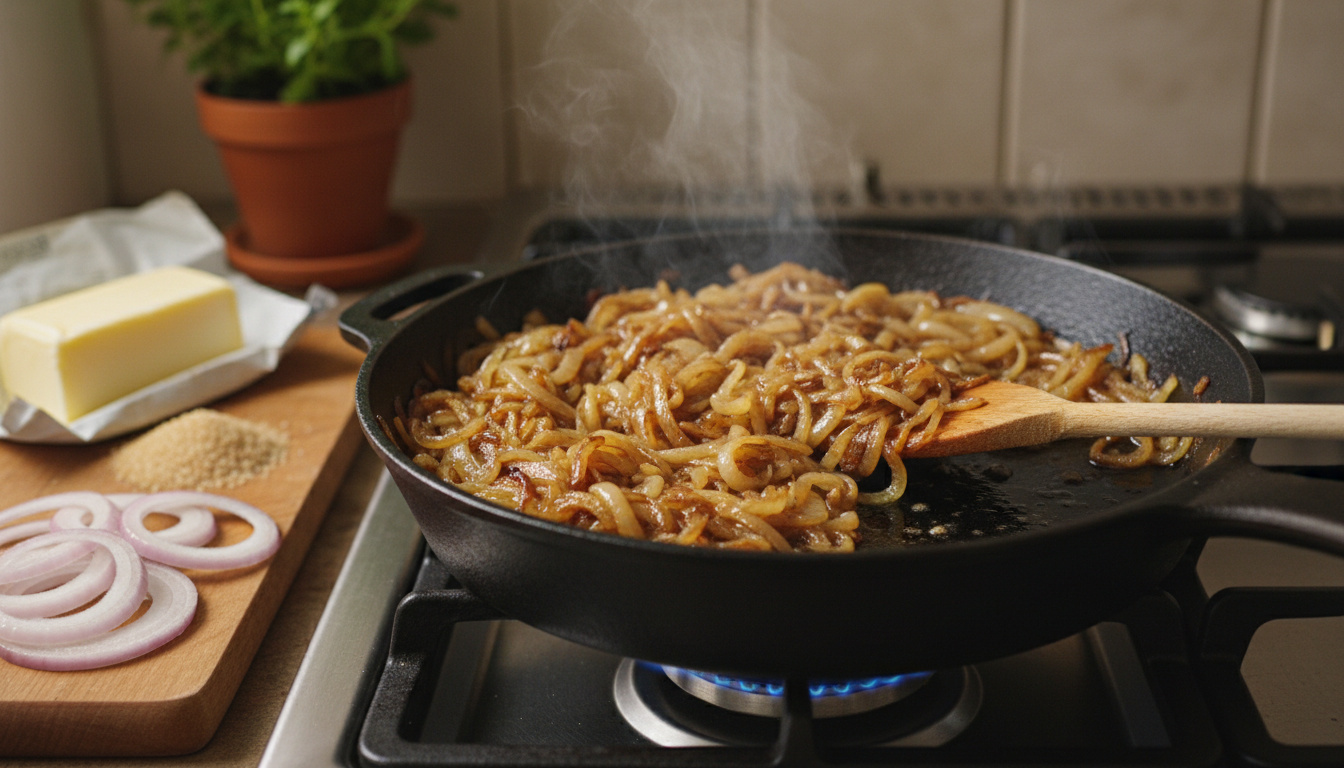
Caramelized onions transform simple dishes into complex, sweet-savory experiences. The process involves slowly cooking onions until their natural sugars break down into rich, brown compounds, creating a depth of flavor that enhances everything from burgers to tarts.
Home cooks face a choice between traditional methods requiring patience and modern shortcuts promising results in minutes. While authentic caramelization demands anywhere from 45 minutes to two hours of low-heat cooking, contemporary techniques utilizing added sugars, high heat, and specific moisture management can produce acceptable alternatives within five to twenty minutes. Quick methods prioritize speed over the deep jammy softness of classic preparations, often retaining some crunch while developing sweetness and color.
How to Make Quick Caramelized Onions
Contemporary cooking techniques have compressed the caramelization timeline significantly. While traditionalists advocate for slow rendering, multiple validated approaches now deliver acceptable results between five and twenty minutes through specific mechanical and chemical interventions.
45+ minutes over low heat produces authentic jammy texture through natural sugar breakdown alone.
10-15 minutes utilizing added sugars and high heat to accelerate browning reactions.
Natural pigments create visual depth while maintaining slightly sweeter flavor profiles.
Thin slicing proves essential for rapid heat penetration and topping compatibility.
Several critical factors determine success in accelerated methods:
- Thin slicing (¼-inch half-moons or thinner) creates maximum surface area for heat exposure
- Medium-high heat initiates rapid moisture evaporation and Maillard reactions
- Frequent stirring prevents burning while scraping browned bits from pan surfaces
- Added sugars lower the caramelization temperature threshold significantly
- High water content (90% in raw onions) remains the primary barrier to browning
- Nonstick or heavy-bottomed pans provide necessary heat distribution control
- Dry-start techniques eliminate initial oil barriers to moisture release
| Method | Duration | Primary Ingredient | Heat Level | Texture Outcome | Best Application |
|---|---|---|---|---|---|
| Traditional Slow | 45-80 minutes | Oil, Salt | Medium-Low | Jammy, Soft | Side dishes, tarts |
| Balsamic Boost | 10-15 minutes | Balsamic Glaze | Medium | Golden, Slightly Firm | Pizza toppings |
| Brown Sugar Stovetop | 20-25 minutes | Brown Sugar | Medium to Low | Syrupy, Tender | Sliders, sandwiches |
| Dry-Start No Oil | 15-20 minutes | Brown Sugar (added later) | Medium-High | Crunchy, Deep Brown | Burger toppings |
| Water Steam | 30-35 minutes | Water (initially) | High then Medium | Sticky, Brown | General cooking |
| Ultra-High Heat | 5 minutes | Minimal additives | Very High | Charred, Crisp | Quick garnishes |
How to Caramelize Onions for Burgers
Burger applications demand specific textural considerations distinct from side dishes or tart fillings. The onions must provide sweet contrast without overwhelming the patty or creating structural instability.
Selecting the Right Cut and Onion Type
Red onions enhance visual appeal through their natural pigments while contributing slightly sweeter flavor profiles compared to standard yellow varieties. Slice onions into super-thin half-moons to ensure rapid cooking and manageable texture atop beef patties.
Speed Techniques for Immediate Service
When preparing toppings for immediate burger assembly, the dry-start method proves particularly effective. Begin with a hot nonstick skillet, add sliced onions without oil, and allow them to sear undisturbed for three to four minutes until light browning occurs. This initial dehydration step accelerates subsequent caramelization once fat and sugar are introduced.
Apply ¼ to ½ cup of quick-caramelized onions per burger immediately after cooking. The residual heat from the patty will further soften the onions, integrating them into the overall bite while maintaining distinct textural contrast.
Joshua Weissman demonstrates ultra-fast techniques specifically designed for burger applications, utilizing intense heat and constant motion to achieve charred sweetness suitable for immediate consumption.
How to Caramelize Red Onions
Red onions contain different anthocyanin profiles that affect both the visual outcome and flavor chemistry during heat application. These pigments react uniquely to high temperatures, creating distinctive purple-bronze hues impossible to achieve with yellow or white varieties.
Flavor Profile Variations
While all onions contain roughly 5-10% natural sugars, Vidalia and red onions offer enhanced sweetness that becomes concentrated during cooking. The reduced sulfur content in red varieties results in less sharpness, allowing the sweet notes to dominate earlier in the cooking process.
Visual Presentation Considerations
The residual color retention in red onions makes them particularly suitable for open-faced presentations or dishes where visual contrast contributes to overall appeal. When preparing quick toppings for gourmet burgers, the vibrant rings maintain identifiable structure even after sugar-accelerated cooking.
How to Caramelize Onions with Sugar or Brown Sugar
Adding external sugars fundamentally changes the chemistry of onion caramelization. While traditional methods rely solely on internal fructose and glucose, supplemental sweeteners create accelerated browning through lowered activation temperatures and enhanced Maillard reaction sites.
Brown sugar accelerates caramelization more effectively than white sugar due to its molasses content, which melts into a syrupy coating that adheres to onion surfaces. White sugar tends to crystallize or burn before achieving even distribution.
The dry-start method combined with brown sugar addition yields deep brown results within fifteen minutes, though the texture remains crunchier than slow-cooked alternatives. This approach works particularly well for vegan preparations where butter is replaced with neutral oils.
Sugar additions lower the temperature at which burning occurs. Continuous stirring becomes essential once sugars are introduced, as the window between ideal caramelization and carbonation narrows significantly compared to traditional methods.
Adding water during initial phases helps regulate temperature while forcing steam penetration, effectively halving traditional cooking times while maintaining more authentic texture than sugar-heavy shortcuts.
What Is the Actual Timeline for Caramelizing Onions?
Understanding the chronological stages helps cooks identify when transitions between heat levels and ingredient additions should occur. The following sequence applies to accelerated methods; traditional cooking simply extends the middle phase.
- Preparation Phase (5 minutes): Peel and slice onions uniformly to ensure even cooking.
- Initial Dehydration (3-4 minutes): Dry-start methods require undisturbed contact with hot pan surfaces to force moisture release.
- Steam Evaporation (7-10 minutes): Water content must reduce significantly before browning can commence; cover briefly to accelerate this phase if using the steaming method.
- Sugar Integration (2-3 minutes): Add brown sugar or balsamic glaze once onions show initial golden coloring; stir constantly to prevent burning.
- Final Reduction (3-5 minutes): Reduce heat to low, allowing syrupy coating to thicken and adhere to onion surfaces.
- Resting (2 minutes): Remove from heat and allow residual pan warmth to complete the texture development.
What Distinguishes True Caramelization from Quick Browning?
Confusion persists regarding whether accelerated methods achieve actual caramelization or merely superficial browning. The distinction carries both chemical and culinary significance.
- Caramelization requires temperatures exceeding 300°F (149°C) to polymerize sugars into brown pigments
- Onions contain 90% water by weight, which must evaporate before browning chemistry proceeds
- Natural sugar content (5-10%) suffices for traditional methods given sufficient time
- Maillard reactions between amino acids and sugars contribute savory depth distinct from pure sugar caramelization
- Exact variation in sugar content between individual onion bulbs and growing conditions
- Precise threshold temperatures for Maillard reactions in home kitchen environments with varying pan materials
- Long-term flavor compound stability in quick-method onions versus slow-cooked alternatives
- Optimal moisture retention levels for specific culinary applications
Why Does Caramelization Require Specific Conditions?
The chemistry underlying onion transformation involves two distinct processes: caramelization proper (the thermal decomposition of sugars) and the Maillard reaction (interactions between amino acids and reducing sugars). Both require specific thermal and environmental conditions to proceed favorably.
High water content acts as a thermal buffer, maintaining internal onion temperatures below the threshold required for browning reactions. Quick methods overcome this barrier through mechanical means—thin slicing increases surface area-to-volume ratios, while high heat accelerates steam evacuation. The Maillard reaction contributes savory “browned” flavors distinct from the pure sweetness of caramelized sugars, creating the complex taste profile associated with well-cooked onions.
When preparing Can Dogs Eat Spinach or other vegetable-focused dishes, understanding these heat dynamics proves equally valuable for achieving desired textures without nutrient degradation.
Where Do These Methods Originate?
Contemporary quick-caramelization techniques represent relatively recent adaptations to modern time constraints, diverging from classical French culinary traditions that emphasized patience and natural sugar rendering.
The distinction between true caramelization and expedited browning matters less in practical applications than many purists suggest. What matters is the balance of sweetness, acidity, and texture achieved in the final product.
Contemporary Culinary Analysis
Adding water at the beginning seems counterintuitive when trying to brown onions, but the steaming phase actually softens the cellular structure more rapidly than dry heat alone, allowing subsequent evaporation and browning to occur more evenly.
Food Science Observation
How Should You Choose Your Method?
Select traditional low-heat techniques when texture matters most—such as for tarts, French onion soup, or side dishes where jammy consistency provides the primary appeal. Choose accelerated sugar-assisted methods for burger toppings, pizza garnishes, or when time constraints demand immediate results. For those seeking rapid health recovery through nutrition, consider researching How to Get Rid of the Flu in 24 Hours alongside your culinary preparations.
Common Questions
Can you realistically caramelize onions in 5 minutes?
Ultra-fast methods utilizing extremely high heat and thin slicing can produce browned onions in roughly 5 minutes, though the texture remains crunchy rather than jammy, and the flavor lacks the depth of slower techniques.
Does adding sugar change the final flavor significantly?
Yes. Brown sugar introduces molasses notes and creates a syrupy coating that tastes sweeter than onions caramelized through natural sugars alone. Some palates prefer this intensity, while others find it masks the onion’s inherent complexity.
Why do onions burn when sugar is added?
Sugar lowers the temperature at which burning occurs and can crystallize or carbonize rapidly if the pan becomes too dry. Constant stirring and moderate heat reduction upon sugar addition prevent scorching.
Can caramelized onions be stored for later use?
Properly cooled caramelized onions store refrigerated for up to five days in airtight containers. They also freeze well for several months, though quick-method onions may lose textural integrity faster than traditionally cooked versions.
Are red onions sweeter than yellow when caramelized?
Red onions generally contain less sulfur and more natural sugars than standard yellow storage onions, resulting in milder, slightly sweeter flavor profiles when subjected to heat, though the difference becomes subtle once sugars are added.

Oliver Jack Carter Cooper is a staff writer for EveningLedger.uk, covering UK news, politics, business and culture. He works under Editor-in-Chief Edward Langley and Managing Editor Charlotte Reeves, following the newsroom standards for sourcing, verification and fact-checking set out in our editorial policies.