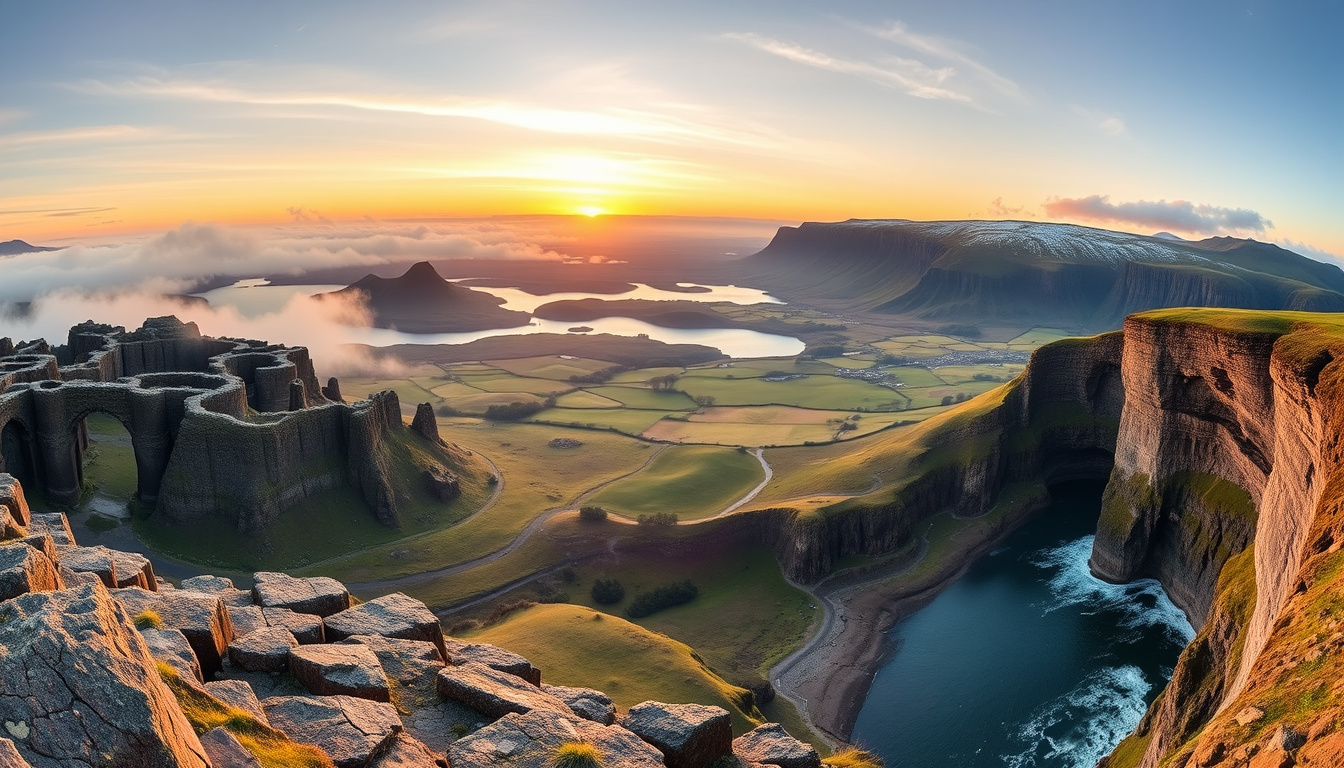
If you’ve ever stood somewhere in Britain and felt the scenery quietly steal your breath, you’re not alone — the UK has an uncanny habit of surprising even people who’ve lived here for years. Whether it’s a coastline that reads like a geology textbook or a lake district that pulls silver medals in travel rankings, there’s a depth to British landscapes that keeps visitors coming back. This guide cuts through the noise by leaning on official tourism boards and traveler-tested itineraries to point you toward the places that genuinely deliver.
Natural Wonders: 7 ·
Most Beautiful Places Listed: 30 ·
Top Things to Do: 15 ·
Prettiest Places in England: 20 ·
Best Days Out Areas: 10+
Quick snapshot
- Seven Natural Wonders list established and maintained (Wikipedia)
- Tripadvisor top 15 ongoing rankings available (Tripadvisor)
- Lake District crowned most stunning destination for 2026 by Big 7 Travel (Travel and Tour World)
- Subjective “nicest place” rankings vary by source and personal criteria
- 8th Wonder of the World is not formally recognized — various UK sites claim this title informally
- New direct rail access opens Scottish Highlands routes to more travelers
- Peak District National Park remains top family destination
| Label | Value |
|---|---|
| UK Countries | 4 (England, Scotland, Wales, Northern Ireland) |
| UNESCO Sites | 33 |
| National Parks | 15 |
| Top Listed Places | 30+ |
What is the nicest place to visit in the UK?
The Lake District consistently emerges as the top answer to this question, having clinched the silver medal in Big 7 Travel’s 2026 destination rankings while being officially recognized as England’s newest UNESCO World Heritage Site (Travel and Tour World). What sets it apart is the density of natural assets packed into one region — sixteen lakes including Windermere (the largest), Scafell Pike rising to 978 metres as England’s highest peak, and a network of trails that range from gentle lakeside walks to serious mountain climbs.
Lake District highlights
- Windermere — the larger of the Lake District’s two major lakes, popular for boat trips and watersports
- Derwentwater — three miles wide, declared a Site of Special Scientific Interest and home to Britain’s rarest fish, the Vendace (Time Out)
- Derwent Island — features a National Trust manor house open to the public five days per year
For families planning a UK trip, the Lake District delivers variety without the logistical headache of covering vast distances — everything from gentle boat rides to mountain hikes sits within a single national park.
Scottish Highlands appeal
Queen’s View in Perthshire claimed the top spot in Big 7 Travel’s 2026 rankings, underscoring the Highlands’ magnetic pull for travelers seeking dramatic lochs and mountains (Travel and Tour World). The region benefits from improved access — Stirling will launch an affordable direct train service from London in 2026, making the Gateway to the Highlands more reachable for day-trippers (Time Out).
Traveler favorites
- Loch Lomond and the Trossachs National Park — accessible from Stirling, combining loch scenery with forest trails
- Anglesey — designated a National Landscape with Llanddwyn Island, Dingle Nature Reserve, and Benllech beach
- Windsor Great Park — the only non-London attraction in the top 10 most-visited UK attractions in 2025, featuring a four-kilometre tree-lined Long Walk down to Windsor Castle (Euronews)
The pattern across top traveler picks is clear: places that deliver scenic impact without requiring expert-level fitness tend to dominate the rankings. The Lake District’s UNESCO status now adds official international recognition to what crowds had already decided.
What are the 7 wonders of the UK?
Britain’s Seven Natural Wonders concept draws from a mix of geological spectacle, historical significance, and traveler endorsement. The official compilation includes sites from across all four UK countries, each offering something distinct in scale, formation, or cultural resonance.
Seven Natural Wonders list
| Wonder | Location | Key Facts |
|---|---|---|
| Jurassic Coast | East Devon to Dorset | 95 miles; UNESCO World Heritage Site since 2001; spans Triassic, Jurassic, Cretaceous periods (Atlas & Boots) |
| Giant’s Causeway | County Antrim, Northern Ireland | Around 40,000 interlocking basalt columns; UNESCO World Heritage Site since 1986; columns vary from hexagonal to four, five, seven, or eight sides (Atlas & Boots) |
| Scafell Pike | Cumbria, England | England’s highest mountain at 978 metres above sea level; popular for hiking and mountaineering |
| Snowdon (Yr Wyddfa) | Gwynedd, Wales | England and Wales’ highest mountain; within Snowdonia (Eryri) National Park, one of Britain’s 15 national parks (Visit Britain) |
| Chalk Cliffs of the South Downs | East Sussex, England | The Seven Sisters — ancient valleys eroded by the sea within South Downs National Park; 40 minutes from Brighton |
| Loch Coruisk | Isle of Skye, Scotland | Freshwater loch surrounded by the Cuillin hills; accessible by boat from Elgol |
| Windsor Great Park | Berkshire, England | The Long Walk is a four-kilometre tree-lined avenue down to Windsor Castle; only non-London site in the 2025 top 10 UK attractions |
The UK spans just 94,000 square miles yet contains geological formations spanning 500 million years. The Seven Natural Wonders list acts as a curated shortcut — each site represents a distinct category of natural spectacle, from volcanic basalt columns to chalk sea cliffs.
Key sites like Giant’s Causeway
The Giant’s Causeway stands out for its sheer geometric oddity — around 40,000 interlocking basalt columns, most hexagonal but some with four, five, seven, or eight sides, created by ancient volcanic activity (Atlas & Boots). It’s Northern Ireland’s only UNESCO World Heritage Site and draws visitors who can walk the columns, explore the causeway’s legend (Finn MacCool versus the Scottish giant), and learn the geology through visitor center exhibits. The site is managed by the National Trust and remains free to access, though parking costs apply.
Where can I go for 3 days in the UK?
Three days in England works best as a focused regional circuit rather than an attempt to cover distance between major cities. Tour operators like TourRadar offer verified three-day England tours that concentrate on specific areas — the Cotswolds, the Lake District, or the Jurassic Coast — allowing visitors to experience depth rather than rushing through highlights (TourRadar).
England 3-day itineraries
- Lake District long weekend — day one covers Windermere and lakeside villages; day two tackles a Scafell Pike trail (or a lower alternative for families); day three explores Derwentwater and nearby Keswick
- Jurassic Coast run — base yourself in Lyme Regis or Weymouth; visit Durdle Door, Lulworth Cove, and Kimmeridge on day one; explore Lyme Regis fossils and the cliff path on day two; finish with a boat trip or coastal walk on day three
- Cornwall circuit — focus on the north coast: St Ives, Land’s End, and the coastal path between Mousehole and Penzance
Short trip destinations
| Destination | Best For | Accessibility |
|---|---|---|
| Lake District | Scenery, hiking, family outdoor activities | 2-3 hours from Manchester; direct trains to Windermere and Oxenholme |
| Yorkshire Dales | Rolling hills, traditional villages, accessible trails | 2 hours from Leeds; bus connections to key villages |
| Cornwall | Beaches, coastal walks, surf culture | 4+ hours from London by rail; fly to Newquay for faster access |
| Bath | Roman history, Georgian architecture, spa culture | 90 minutes from London Paddington by train |
For travelers planning a 3-day trip in 2026, Stirling’s new direct London rail link opens up a different kind of circuit — combining Stirling itself with Loch Lomond and the Trossachs becomes a realistic three-day itinerary without requiring a car.
Which part of the UK is most beautiful?
Beauty rankings vary depending on what you’re measuring, but several sources converge on similar regions. Insight Vacations lists 11 most beautiful places in the UK that skew heavily toward Scotland, Wales, and the northern English landscapes that dominate the Seven Natural Wonders compilation (Insight Vacations).
Top 11 beautiful places
- Scottish Highlands — lochs, mountains, and the drama of Culloden and Glen Coe
- Lake District — fell landscapes, lakes, and literary connections to Wordsworth and Beatrix Potter
- North Yorkshire Moors — heather-covered hills, Whitby Abbey, and the Cleveland Way
- Peak District — accessible from major cities, with the Pennine Way and cavern systems at Castleton
- Pembrokeshire Coast — Wales’s only coastal national park, with cliff-top paths and sheltered beaches
Regional beauty rankings
When ranking by objective metrics — UNESCO designations, national park coverage, visitor satisfaction scores — the Lake District and Scottish Highlands lead. The Lake District’s 2026 Big 7 Travel ranking as a silver medal destination, combined with its recent UNESCO World Heritage Site status, gives it both traveler endorsement and institutional validation (Travel and Tour World).
What this means: for first-time UK visitors or those with limited time, the Lake District or Scottish Highlands offer the highest density of scenic impact per mile traveled. Other regions excel in specific seasons — the Peak District’s bluebell woods in May, the Yorkshire Dales in August when the grass turns gold — but the Highlands and Lakes deliver regardless of when you visit.
Scotland and the Lake District are the “obvious” beautiful choices — which means peak season crowds can detract from the experience. The counter-strategy: visit shoulder season (April-May or September-October) or focus on lesser-known corners of these regions (the Trossachs over Loch Lomond, Buttermere over Windermere) to capture the same landscape with fewer people.
What are the must sees in the UK?
Tripadvisor’s top 15 UK attractions blend iconic landmarks with natural wonders — a mix that gives visitors both the famous photo opportunities and the landscapes that make Britain distinctive (Tripadvisor).
Tripadvisor top 15
- Natural History Museum London — most-visited UK attraction in 2025 with 7.1 million visitors; dinosaurs, the mammals exhibition, and the Darwin Centre (Euronews)
- Tower of London — medieval fortress, Crown Jewels, and centuries of royal history
- British Museum — Egyptian mummies, the Rosetta Stone, and artifacts from every major civilization
- Edinburgh Castle — Scotland’s most famous landmark, sitting atop an extinct volcano
- Roman Baths — Bath’s ancient thermal complex, still producing mineral-rich water
Essential attractions
| Attraction | Type | Why It Matters |
|---|---|---|
| Jurassic Coast | Natural UNESCO Site | 95-mile geological record spanning 185 million years; fossil hunting and dramatic cliffs |
| Giant’s Causeway | Natural UNESCO Site | 40,000 basalt columns; unique on a global scale; accessible and family-friendly |
| Windsor Great Park | Royal Landscape | Four-kilometre Long Walk; deer park; only non-London site in top 10 UK attractions |
| Scafell Pike | Mountain Summit | England’s highest peak; classic mountaineering and hiking challenge |
| Snowdon (Yr Wyddfa) | Mountain Summit | Highest point in England and Wales; multiple ascent routes including the Snowdon Mountain Railway |
| Malham Cove | Limestone Cliff | 80-metre cliff face in North Yorkshire; Harry Potter filming location; popular climbing spot |
The UK’s most-visited attractions include both entirely free sites (British Museum, most of the Jurassic Coast) and paid-for experiences (Tower of London, Roman Baths). This creates a practical strategy: spend on one or two premium experiences and balance with free natural wonders that cost only transport and time.
What people are saying
“Britain’s natural wonders represent an extraordinary range of geological and landscape diversity within a relatively compact area — from chalk cliffs to volcanic basalt, from freshwater lochs to ancient woodlands.”
— Visit Britain (official tourism body for England, Scotland, Wales, and Northern Ireland) on Britain’s natural landscape portfolio
“The Lake District’s designation as a UNESCO World Heritage Site in 2017 was the culmination of decades of advocacy for protecting England’s mountain and lake landscape, recognizing its cultural as well as natural significance.”
— Hand Luggage Only (travel publication specializing in UK destinations)
“For families looking to combine education with outdoor activity, the Jurassic Coast offers a unique proposition — you can literally find your own fossil and hold 185 million years of geological history in your hands.”
— Atlas & Boots (specialist travel publication focused on outdoor and natural destinations)
The consensus across official tourism bodies, specialist publications, and traveler reviews points toward a UK that rewards slow exploration over rushed itineraries. The sites that consistently top rankings — the Lake District, the Giant’s Causeway, the Jurassic Coast — share a common trait: they’re places where you can spend three days and still find new things, whether that’s a hidden cove, a lesser-known trail, or a viewpoint that the crowds haven’t found yet.
For travelers planning their first UK trip in 2026, the strategic move is to pick one region and go deep rather than attempting to scatter across multiple destinations. The Lake District and Scottish Highlands currently dominate traveler satisfaction rankings and now have better infrastructure (new Stirling rail link, improved visitor centers) to support that deeper engagement. The payoff — standing at Scafell Pike’s summit or watching the sunset over Windermere — is the kind of memory that justifies the journey itself.
Related reading: Peak District National Park
timeout.com, handluggageonly.co.uk, tripadvisor.com, telegraph.co.uk
Travelers drawn to the Lake District often extend their UK adventure to Scotland’s top destinations, where highlands and islands deliver rugged splendor.
Frequently asked questions
What are unique places to visit in the UK?
Beyond the famous attractions, consider the Seven Sisters chalk cliffs in the South Downs (40 minutes from Brighton), Malham Cove’s 80-metre limestone cliff face in North Yorkshire (also a Harry Potter filming location), or Derwentwater in the Lake District — three miles wide and home to Britain’s rarest fish, the Vendace. Anglesey offers coastal walks and nature reserves away from the usual tourist circuit.
What are the best places to visit in the UK for families?
The Lake District leads for families — it offers accessible walks, boat trips on Windermere, outdoor adventure centers, and the literary connections to Beatrix Potter. Windsor Great Park (free entry, four-kilometre tree-lined walk to the castle) works well as a day trip from London. The Natural History Museum in London draws 7.1 million visitors annually and remains entirely free.
What are top places to visit in the UK for couples?
The Scottish Highlands and Lake District work for scenic couple retreats — think loch-side hotels in the Trossachs or a cottage in the Borrowdale valley. Bath offers a romantic mix of spa culture and Georgian architecture. For a shorter trip, the Seven Sisters coastal path near Brighton provides dramatic views without requiring a full day of hiking.
Where is the 8th wonder of the world in the UK?
The “8th wonder” title isn’t formally recognized in the UK — various attractions claim it informally (the Peak District, the White Cliffs of Dover, certain Lake District viewpoints). This reflects the subjective nature of “wonder” rankings rather than any official designation. The Seven Natural Wonders list remains the established reference point.
What are the top 10 beautiful places in the UK?
Based on multiple rankings (Big 7 Travel, Insight Vacations, Tripadvisor): the Lake District, Scottish Highlands, Jurassic Coast, Giant’s Causeway, Seven Sisters cliffs, Snowdonia, the Cotswolds, the Yorkshire Dales, Cornwall’s coastline, and Windsor Great Park. These span all four UK countries and represent the most traveler-endorsed destinations.
What are top 20 places to visit in the UK?
Beyond the top 10, include Edinburgh Castle, the Roman Baths at Bath, the British Museum, the Tower of London, Malham Cove, Scafell Pike, Windermere, Derwentwater, Anglesey, the Peak District, the Pembrokeshire Coast, the Eden Project in Cornwall, Whitby in Yorkshire, Stonehenge, and Stratford-upon-Avon — each offering a distinct slice of British landscape, history, or culture.
What places to visit in the UK near London?
Within two hours of London: Windsor Great Park (one hour), the Seven Sisters and South Downs (90 minutes to Brighton, then 40 minutes to the cliffs), the Cotswolds (90 minutes to Cheltenham or Bibury), Canterbury and the Kent coast (one hour), and the Peak District (two hours). These work as day trips or short weekend breaks.

Oliver Jack Carter Cooper is a staff writer for EveningLedger.uk, covering UK news, politics, business and culture. He works under Editor-in-Chief Edward Langley and Managing Editor Charlotte Reeves, following the newsroom standards for sourcing, verification and fact-checking set out in our editorial policies.