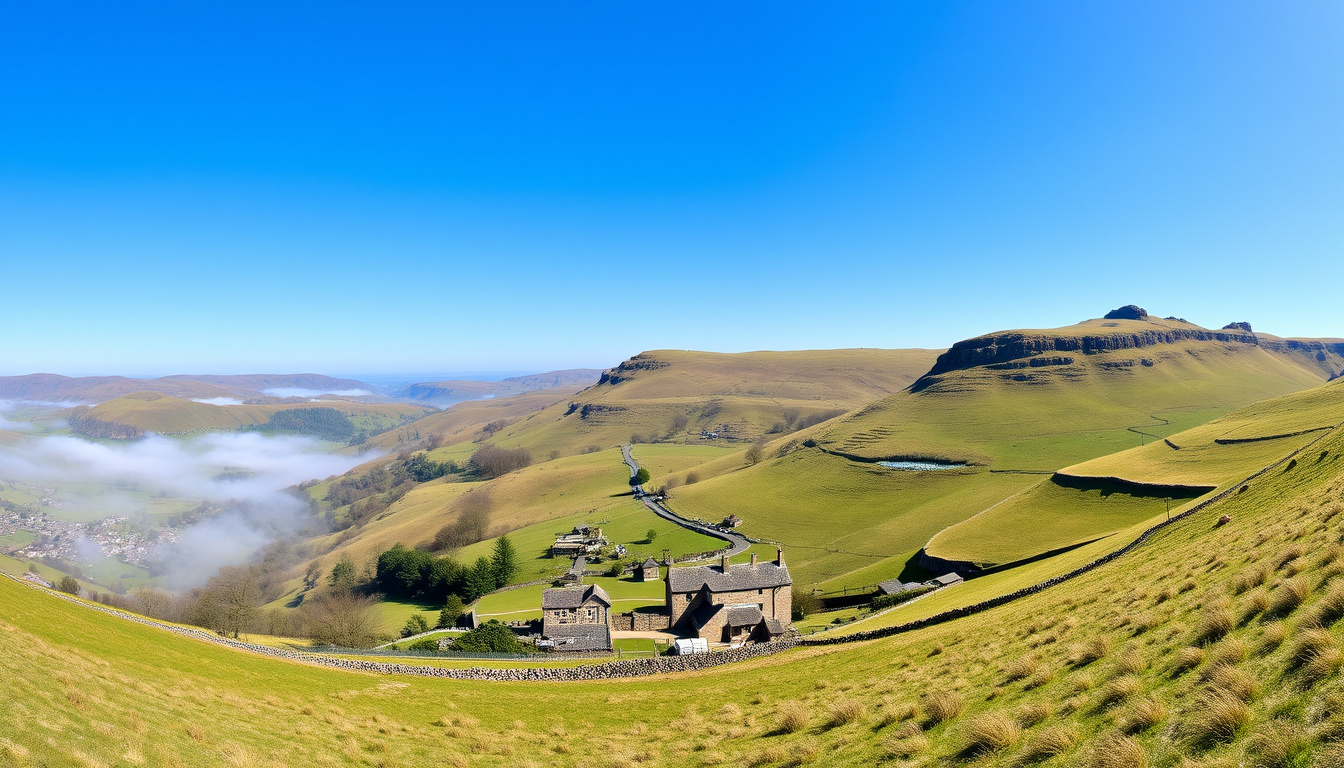
The Peak District pulls in millions of visitors each year partly because it delivers landscapes that feel remarkably different depending on which valley you drop into—and it sits within an hour of Manchester, Sheffield, Derby, and Nottingham. This guide sorts through the landmarks, villages, and trails worth prioritising so you can plan with confidence rather than just good intentions.
Size: 550 square miles · Established: 1951 · Highest Point: Kinder Scout (636 m) · Location: Central England
Quick snapshot
- No single authoritative “official 7 Wonders” list exists; sources compile their own versions from top-rated trails and landmarks
- Precise visitor count fluctuates year-on-year with weekend weather patterns affecting totals
- Continued growth in trail cycling and wild camping discussions likely reshape visitor management debates
- Seasonal festivals in towns like Wirksworth (September) and Eyam draw increasing regional attendance
The table below pulls together the essential details visitors need before setting out—establishment date, area, highest point, and the park authority’s own website.
| Detail | Value |
|---|---|
| Established | 1951 |
| Area | 550 square miles |
| Highest Peak | Kinder Scout 636m |
| Authority Site | peakdistrict.gov.uk |
| Regional Divisions | White Peak (limestone) · Dark Peak (moorland) |
| Top Trail (TripAdvisor 2026) | Monsal Trail (#1) |
Where is the Peak District National Park located?
The park stretches across central England, straddling Derbyshire, Staffordshire, Cheshire, and Yorkshire. At its heart sits Derbyshire, where most visitors base themselves and where the most recognisable landscapes cluster.
Boundaries and regions
Three distinct zones shape the visitor experience. The White Peak covers the south and west with rolling limestone dales, underground caverns, and the gentle green patchwork that most people associate with the area. The Dark Peak dominates the north and east with exposed gritstone moorland, boggy peat, and wide-open views from edges like Kinder Scout and Stanage (Kitti Around the World). The north-western fringe around Dovestone Reservoir offers a different character again—family-friendly reservoirs, family adventure walks, and shorter trails that don’t demand the fitness level of a Dark Peak crossing.
Nearby cities
Manchester lies roughly 30 miles to the northwest, making the park a surprisingly accessible escape for city dwellers. Sheffield borders the park’s eastern edge, while Derby and Nottingham sit within an hour’s drive to the south. This proximity to major population centres partly explains why millions of visits occur annually—the park functions less as a remote wilderness and more as an extended backyard for northern England.
Because the park sits within an hour of several major cities, weekend crowds concentrate around Bakewell and Castleton in peak season. Travellers who prioritise quiet can orient toward the Dark Peak or visit midweek to experience a dramatically emptier landscape.
The implication for planning is straightforward: treat White Peak and Dark Peak as two separate mini-destinations within one park. Each offers dramatically different terrain and atmosphere, and mixing them in a single visit rarely does either justice.
What are the 7 wonders of the Peak District?
No single authority has issued an official list of seven wonders, but several sources compile versions drawing from top-rated trails, iconic landmarks, and distinctive geological features. The concept typically groups natural and historical highlights that locals and visitors consistently name as unforgettable.
Natural features
Five natural landmarks dominate most “7 wonders” lists. Mam Tor delivers a 5-mile ridge walk with 360-degree views and ranks second on TripAdvisor’s 2026 trail rankings (TripAdvisor). Kinder Scout, the highest point at 636 metres, combines the historical weight of the 1932 mass trespass with wide moorland walking and ranks third on TripAdvisor (TripAdvisor). Dovedale draws hundreds of thousands to its famous stepping stones and steep limestone gorge walls (Kitti Around the World). Monsal Dale offers one of the most photographed river valleys in England, best viewed from the Monsal Head overlook. Padley Gorge provides a mystical woodland experience with mossy boulders and a small river running through steep-sided woods—a 3-mile walk that rewards those who want something gentler than a ridge walk (She Walks in England).
Historical sites
Two historical highlights round out most versions. Chatsworth House, the Derbyshire seat of the Dukes of Devonshire, anchors the southern White Peak and attracts visitors with its art collection, gardens, and farmyard (VisitBritain). Eyam Village preserves the story of the 1665 plague village, where residents quarantined themselves to prevent spread to neighbouring communities—a narrative that ranks it consistently in visitor top-spots lists (YouTube).
What is the prettiest town in the Peak District?
Bakewell consistently claims the title of prettiest and most-visited town in the park—and with good reason. It holds the rare distinction of being the only town wholly contained within the national park boundaries, meaning every cobbled courtyard, riverside path, and weekly market falls inside the protected zone rather than on its edge.
Top picturesque villages
Bakewell itself features the UK’s oldest five-arched bridge across the River Wye, cobbled courtyards, and a market that has run for over 500 years (Peaklass). Just downstream, Ashford-in-the-Water presents the classic “chocolate box” village image—stone bridges, a mercury pump, and a duck pond that appears in countless photographs (Peak District Walks). Hartington adds a central duck pond, a cheese shop operating for over 40 years, and easy access to Biggin-by-Dale and Wolfscote Dale for those who want to walk beyond the village (Peaklass). Tissington takes the concept further with immaculate gardens, Tissington Hall visible from the village centre, and its own duck pond—”like stepping into an impossibly beautiful storybook,” in the words of local guides (Peaklass).
Castleton and adventure bases
Castleton operates differently: it functions as the adventure gateway to Mam Tor, Winnats Pass, Kinder Scout, and four show caverns. The Blue John Cavern contains the rare Blue John mineral found nowhere else in Britain, giving the village a geological distinction that drives independent tourism (Peaklass). Baslow similarly serves as a base for Chatsworth House, Derwent River picnics, and Baslow Edge views (Sawday’s). Those who prioritise relaxation over exertion tend to favour Bakewell and Tissington; those chasing views and physical challenge head to Castleton or Hathersage, the latter an outdoor-shop-equipped adventure village near Stanage Edge.
The “prettiest town” question matters practically because accommodation booking depends on it. Bakewell and Castleton book solid months ahead in summer. Travellers who discover Hartington or Ashford-in-the-Water find similar character with less competition for rooms.
What this means for visitors is that choosing your base shapes your experience more than any single trail. Quieter villages offer comparable charm with shorter booking lead times.
Is Peak District National Park worth visiting?
The question deserves a direct answer based on what the park actually offers relative to alternatives in central England. Millions of visits annually suggest the answer is yes for a broad audience, though the value proposition shifts depending on what you’re looking for.
Pros and cons
Upsides
- Accessibility from major northern cities makes it a realistic day-trip or weekend destination
- Trail diversity ranges from flat riverside walks to demanding gritstone ridge walks
- Compact geography means you can reach dramatically different landscapes within a 30-minute drive
- Established tourism infrastructure—B&Bs, pubs, visitor centres—removes most logistical friction
- Britain’s oldest national park status means decades of path maintenance and waymarking
Downsides
- Popular areas like Bakewell and Mam Tor can feel crowded on fine weekend afternoons
- Weather shifts rapidly, particularly on Dark Peak moorland where fog can disorient walkers
- Mobile signal drops out across large sections, a safety consideration for remote walking
- Some accommodation in the park is pricier than comparable options outside the boundary
Visitor reviews
TripAdvisor rankings consistently place the park among Britain’s top outdoor destinations, with the Monsal Trail, Mam Tor, and Chatsworth House drawing particular praise (TripAdvisor). The 8.5-mile Monsal Trail, which runs through old railway tunnels between Bakewell and Baslow, ranks first among hiking trails—a combination of ease, scenery, and historical interest that appeals across age groups (Peaklass). Matlock Bath—a village on the park’s eastern fringe—earns mixed reviews: “feels like a slightly retro seaside town in the middle of the Peaks, with fish and chips, arcades and motorbikes lining the promenade,” according to travel guides, which captures its peculiar charm without pretending it suits every visitor (Sawday’s).
What not to miss in Peak District?
Beyond the headline attractions, several specific experiences define what regular visitors call their “non-negotiable” moments in the park. These aren’t the tallest peaks or the most-photographed villages, but the details that reward those who stay longer than a day trip allows.
Must-see sights
The Monsal Trail deserves the top spot on any itinerary: an 8.5-mile traffic-free route through former railway tunnels and viaducts that transforms the landscape from industrial relic to immersive nature corridor (Peaklass). For geological interest, the Blue John Cavern at Castleton offers the only place in Britain where the banded purple-and-yellow mineral Blue John occurs naturally—a spectacle that justifies the underground tour independent of broader park interests (Peaklass). Stanage Edge, a 7.3-mile walk to a gritstone escarpment overlooking the Hope Valley, combines accessible climbingroutes with some of the park’s most cinematic views (She Walks in England).
Landmarks and trails
Two lesser-known walks merit inclusion for visitors with more than two days. Lud’s Church, a 3-mile mystical gorge walk, descends into a moss-covered chasm associated with 15th-century religious dissent—and rewards anyone who wants to step away from the ridge-walking mainstream (She Walks in England). The Roaches via Lud’s Church circuit extends to 6.5 miles, adding open heathland and the iconic gritstone rock formations of The Roaches themselves (She Walks in England). For water-focused visitors, Dovestone Reservoir on the north-western edge offers family-friendly circuits and access to surrounding moorland without the navigational demands of Kinder Scout (Kitti Around the World).
Many visitors arrive expecting a uniform landscape and leave surprised by how different each valley feels. The White Peak’s gentle limestone dales share almost nothing visually with the Dark Peak’s exposed gritstone moorland. Treating these as two separate mini-destinations within one park re calibrates expectations appropriately.
It’s Britain’s oldest national park and the site of Kinder Scout, where a 1932 mass trespass helped kickstart the right to roam.
— Sawday’s Guide, Sawday’s
Walking into Tissington is like stepping into an impossibly beautiful storybook.
— Peaklass, Peaklass
For anyone based in Manchester, Sheffield, or the East Midlands, the Peak District functions as an outdoor resource within driving distance rather than a destination requiring multi-day logistics. The implication is straightforward: the park rewards repeat visits far more than it rewards a single rushed itinerary. Those who return find new trails, rediscover favourite villages in different seasons, and gradually develop the map knowledge that transforms a pleasant walk into something more like exploration.
Related reading: Things to Do in Budapest · Things to Do in Berlin
Among the Peak District’s prettiest towns, Bakewell charms families and couples alike with diverse things to do in Bakewell nestled in its historic heart.
Frequently asked questions
What is the weather like in Peak District National Park?
The weather changes rapidly, especially in the Dark Peak where moorland fog can appear within minutes. Summers are mild (15-22°C typical), winters cold with occasional snow on higher ground. Always check conditions before heading onto moorland trails and carry layers regardless of the forecast.
Where to find accommodation in Peak District National Park?
Bakewell, Castleton, and Baslow offer the widest range of B&Bs and pubs with rooms. Tissington and Hartington suit visitors seeking quieter villages. Booking ahead is essential from spring through autumn; midweek winter stays offer better availability and lower prices.
What are the best camping spots in Peak District National Park?
Certified campsites concentrate in the White Peak around fields and farmsteads, particularly near Hartington and Bakewell. The Dark Peak has fewer formal sites; many wild camping discussions focus on the right-to-roam access enabled by the 1932 trespass legacy, though legal status varies by location.
What are popular trails in Peak District National Park?
TripAdvisor’s 2026 rankings place the Monsal Trail (#1), Mam Tor (#2), and Kinder Scout (#3). Other consistently popular routes include Dovedale, Stanage Edge (7.3 miles), and Padley Gorge (3 miles). Route difficulty ranges from accessible family walks to demanding edge hikes requiring navigation skills.
How to drive through Peak District National Park?
The A6 runs through the park’s heart from Bakewell northward, passing Miller’s Dale and Monsal Dale stations. The Snake Pass (A57) crosses the Dark Peak between Sheffield and Manchester. Traffic can be heavy on summer weekends; parking at trailheads fills early. Many visitors base themselves in one village and walk rather than drive between sites.
What do reviews say about Peak District National Park?
Visitor reviews consistently praise the landscape diversity, path quality, and proximity to major cities. Common criticisms focus on summer crowds at honeypot sites and variable weather. The Monsal Trail receives particular praise for combining ease, scenery, and historical interest in a single route.
Where to see photos of Peak District National Park?
Peak District photography concentrates on Monsal Head, Dovedale stepping stones, Bakewell riverside, Stanage Edge, and the White Peak villages in morning light. Peak District Walks and She Walks in England offer curated route photography that helps visitors anticipate what they’ll encounter before arriving.

Oliver Jack Carter Cooper is a staff writer for EveningLedger.uk, covering UK news, politics, business and culture. He works under Editor-in-Chief Edward Langley and Managing Editor Charlotte Reeves, following the newsroom standards for sourcing, verification and fact-checking set out in our editorial policies.