
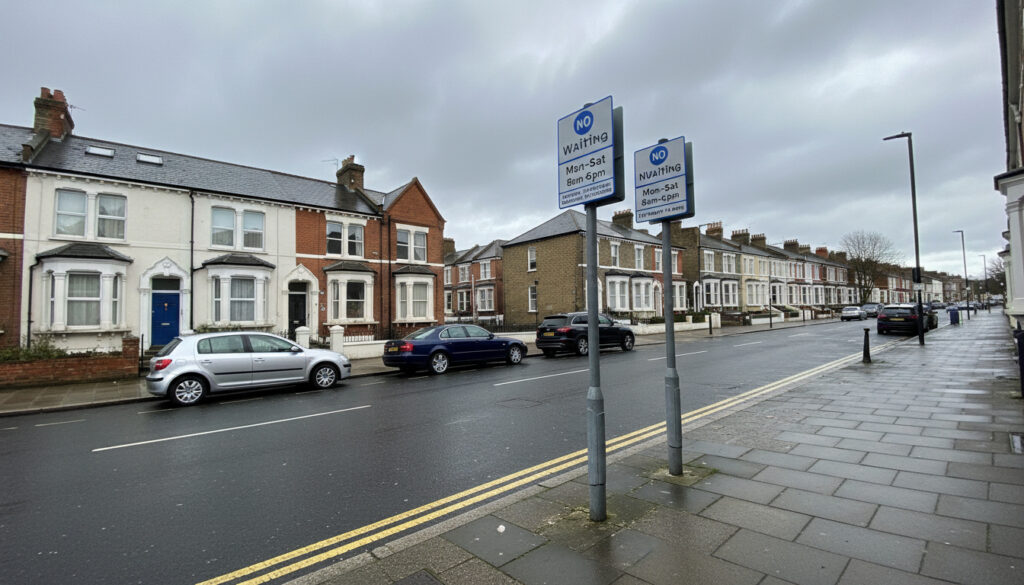
Single yellow lines on UK roads indicate specific parking and waiting restrictions that apply only during the times displayed on nearby upright signs. Unlike double yellow lines, which prohibit stopping at all times, single yellow lines permit parking outside the posted hours, though exact times vary by local authority.
These markings form part of the statutory traffic management framework under the Highway Code. Drivers must check adjacent time plates to determine when restrictions are active, as councils set these individually to manage traffic flow and ensure road safety.
Understanding the distinction between single and double yellow lines, along with associated kerb markings, helps motorists avoid penalties that can reach £130 in some regions. The rules apply across England, Scotland, and Wales, though specific enforcement times differ by location.
What Does a Single Yellow Line Mean for Parking?
No parking during sign-posted hours
Check nearby signs for times
Loading bays, blue badge holders
£70 fine (discount to £35 if paid early)
- Always verify upright time plates adjacent to the markings, as restrictions vary by street
- Single yellow lines allow parking outside the specified hours, unlike double yellows
- Local authorities set individual time restrictions to manage peak traffic periods
- Brief loading and unloading is often permitted unless kerb markings prohibit it
- Blue Badge holders may park for up to three hours with the badge clearly displayed
- No automatic exemption applies on Sundays or bank holidays unless signs specifically state this
- Penalties are issued via Parking Charge Notices (PCNs) enforced by civil officers
| Aspect | Details | Notes |
|---|---|---|
| Marking Type | Single yellow line | Painted along road edge or kerb |
| Restriction Basis | Time-limited waiting | Hours displayed on upright signs |
| Signage Requirement | Mandatory time plates | Yellow or white upright signs |
| Outside Posted Hours | Parking generally permitted | Subject to other local restrictions |
| Loading Unloading | Usually allowed briefly | Unless single/double yellow kerb markings present |
| Enforcement Method | PCN issued by local authority | Civil enforcement officers monitor compliance |
| Fine Range | Up to £130 (varies by council) | 50% reduction typically applies for prompt payment |
| Blue Badge Exemption | Up to 3 hours parking | Badge must be visible on dashboard |
When Can You Park on a Single Yellow Line?
Understanding Time Restrictions
Parking on a single yellow line is permitted only outside the hours displayed on adjacent upright signs. These time plates typically indicate morning and evening restrictions, such as 8am to 6pm or 8am to 7pm, though specific times are determined by individual local authorities. The RAC confirms that without visible signage indicating specific times, drivers must consult local council regulations.
Restrictions generally cover peak traffic periods when road clearance is essential for safety and flow. During these windows, waiting and parking are prohibited, and enforcement officers issue fines to vehicles in contravention.
Parking Outside Controlled Hours
Once the posted restriction period ends, motorists may typically park on single yellow lines without penalty. However, drivers should verify that no additional controls apply, such as resident permit zones or time-limited bays indicated by separate signage. Confused.com notes that outside specified hours, single yellow lines generally revert to unrestricted status.
Time plates must display restriction hours clearly. If signs are missing or obscured, contact the local council to confirm applicable times before parking, as assumptions about standard hours may lead to penalties.
Weekends and Bank Holidays
Single yellow line restrictions do not automatically suspend on Sundays or bank holidays. Fines apply on these days unless the upright signs specifically state that restrictions are exempt during bank holidays. Guidance from the RAC emphasizes that each local authority sets its own calendar exemptions.
Single Yellow Line vs Double Yellow Line: Key Differences
Timing and Duration
Single yellow lines restrict parking only during the hours shown on signs, allowing parking at other times. Double yellow lines prohibit waiting and parking at all times, including overnight and on weekends, with no requirement for additional signage to indicate this permanent restriction. The Highway Code establishes that double yellow lines alone convey the prohibition without supplementary plates.
Signage Requirements
Single yellow lines require upright time plates to inform drivers when restrictions apply. Double yellow lines need no such signs; the marking itself constitutes the legal restriction. Hi-Way Traffic Management explains that this distinction is critical for determining legal parking without checking for additional plates.
Loading and Stopping Rules
Loading and unloading on single yellow lines is generally permitted for short periods unless yellow kerb markings prohibit it. On double yellow lines, loading is banned entirely unless specifically allowed by local signage or unmarked kerbs. Highway Code guidance indicates that double yellow kerb markings specifically indicate no loading at any time.
| Feature | Single Yellow Line | Double Yellow Line |
|---|---|---|
| Timing | Restricted hours only (check signs) | All times, no exceptions except specified |
| Signs Required | Yes, for exact restriction times | Not required; lines alone prohibit |
| Loading | Often allowed outside hours or briefly | Prohibited unless kerb unmarked |
Fines and Penalties for Illegal Single Yellow Line Parking
Parking Charge Notice Amounts
Local authorities issue Parking Charge Notices (PCNs) for single yellow line violations, with fines varying by council location. Hi-Way Traffic Management reports that fines can reach up to £130 in certain areas, particularly within London. Outside the capital, penalties typically start at £70. Check My Car Insurance documentation before travelling helps ensure full compliance with local regulations.
Early payment usually reduces the fine by 50%, but once payment is made, no appeal is possible. Drivers should verify their liability before submitting payment if they believe the PCN was issued in error.
Enforcement Process
Civil enforcement officers patrol streets and issue PCNs when vehicles are observed parked during restricted hours. GOV.UK traffic sign guidance indicates that enforcement relies on clear signage being present, though the legal burden remains on drivers to check for restrictions.
Grounds for appeal include missing or obscured time plates, incorrect vehicle registration recording, or valid Blue Badge display that was not noted by the officer. Evidence such as photographs of signage and timestamped parking records support challenge applications.
Evolution of Yellow Line Parking Controls
- : Yellow lines first introduced as on-street parking controls to manage increasing vehicle traffic in urban centres.
- : Expansion of controlled parking zones across UK towns and cities to protect traffic flow and improve road safety.
- : Highway Code Rules 238-252 standardize yellow line meanings, with local authorities retaining powers to set specific restriction times via Traffic Regulation Orders.
Established Rules vs. Local Variations
Verified Requirements
- Single yellow lines indicate time-restricted waiting
- Upright signs are mandatory to show restriction times
- Local authorities set specific hours via Traffic Regulation Orders
- Enforcement is civil, not criminal, resulting in PCNs
- Blue Badge holders may park for up to three hours
Ambiguous Scenarios
- Exact default hours when signs are missing or vandalized
- Specific differences between English and Scottish enforcement practices
- Minimum duration for ” brief” loading activities
- Uniform bank holiday exemption policies across all councils
Purpose and Context of Single Yellow Lines
Single yellow lines function as traffic management tools designed to maintain clear roadways during periods of high demand. Local councils implement these restrictions to ensure adequate space for moving vehicles, emergency services access, and efficient public transport flow. The markings balance the need for parking availability against road safety requirements.
Unlike permanent no-parking zones, single yellow lines offer flexibility, allowing residents and visitors to park during off-peak hours while maintaining traffic flow during busy periods. This approach is particularly common in residential areas near commercial centres, schools, and medical facilities where demand fluctuates throughout the day. Evans Halshaw notes that these variations reflect local traffic patterns rather than national standardization.
Official Guidance and Expert Sources
Single yellow lines indicate a prohibition of waiting at the times shown on the associated signs. Outside of these times, parking is generally permitted unless other restrictions apply.
Highway Code Rule 247, Highway Code UK
It is an offence to park on single yellow lines during the times of operation shown on the time plates. These times vary from location to location and even side to side.
RAC Driving Advice, RAC
Summary of Single Yellow Line Parking Rules
Single yellow lines permit parking outside the hours displayed on adjacent time plates, with restrictions varying by local authority. Drivers must check upright signs for specific times, watch for kerb markings that may prohibit loading, and understand that bank holidays carry no automatic exemptions. Blue Badge holders benefit from limited parking rights, while all motorists face PCNs up to £130 for violations. Reviewing Check My Car Insurance and local council guidance before parking ensures compliance with current regulations.
Frequently Asked Questions
Can Blue Badge holders park on single yellow lines?
Yes, Blue Badge holders may park on single yellow lines for up to three hours with the badge clearly displayed on the dashboard. Local variations may apply, so verify specific council rules.
Is loading allowed on single yellow lines?
Brief loading and unloading is generally permitted unless prohibited by single yellow kerb markings or specific signs. Continuous activity or goods transfer qualifies; extended waiting does not.
Do single yellow lines apply on bank holidays?
Restrictions apply on bank holidays unless the upright signs specifically state “exempt bank holidays” or similar wording. No automatic nationwide exemption exists.
What if there are no signs next to a single yellow line?
Time plates should display restriction hours. If signs are missing, check the immediate area for zone entry signs or contact the local council to confirm applicable times before parking.
How long can you stop for drop-offs on single yellow lines?
Brief stops for picking up or dropping off passengers are usually permitted unless signs prohibit stopping. The vehicle must not be left unattended for extended periods.
Are single yellow line rules different in London?
While the basic rules are consistent UK-wide, London boroughs may set longer restriction hours and impose higher fines up to £130. Always check local time plates in the capital.

Oliver Jack Carter Cooper is a staff writer for EveningLedger.uk, covering UK news, politics, business and culture. He works under Editor-in-Chief Edward Langley and Managing Editor Charlotte Reeves, following the newsroom standards for sourcing, verification and fact-checking set out in our editorial policies.