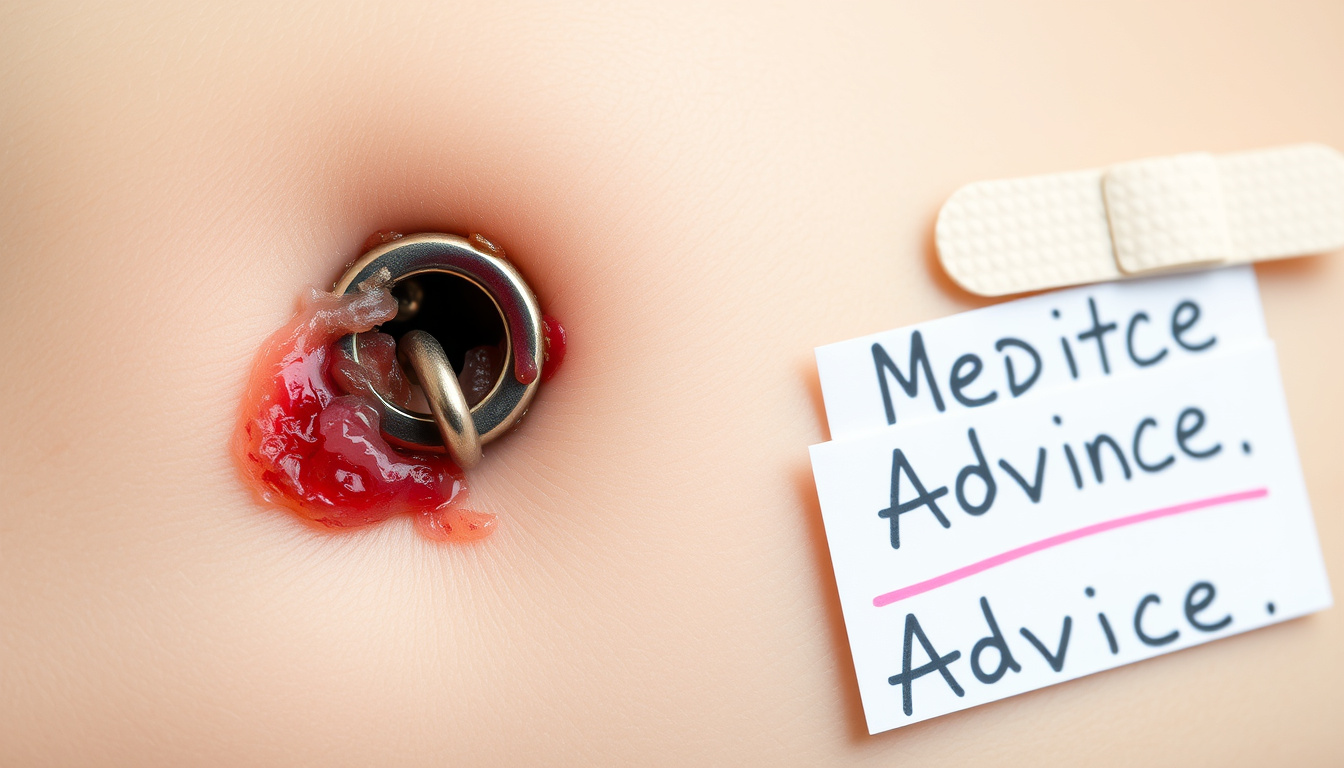
A belly button piercing can take anywhere from nine months to a year and a half to fully heal, and during that time, infection remains a genuine concern. Understanding the difference between normal healing and an actual infection can mean the difference between a minor complication and something that requires medical attention. This guide breaks down the symptoms, treatment options, and warning signs that should prompt a visit to a healthcare professional.
The navel area harbors a significant amount of bacteria, making it particularly vulnerable to infection during the healing process. Whether someone is experiencing their first signs of trouble or has had a piercing for years that suddenly becomes problematic, recognizing the key indicators matters.
What Are the Symptoms of an Infected Belly Button Piercing?
Several distinct symptoms set an infected belly button piercing apart from typical healing irritation. According to the NHS, infections can develop when bacteria enter the wound site, particularly during the first weeks after piercing when the tissue remains most vulnerable.
Redness, swelling, and pus discharge at the piercing site
Sea salt soaks, saline solution, and antibacterial ointments
Fever, spreading redness, or symptoms lasting beyond 2-3 days
Proper cleaning routine and avoiding contamination sources
Key Insights to Remember
- Severe pain or burning at the site typically indicates infection rather than normal healing
- Bright red skin or red streaks radiating from the piercing signal potential infection
- Foul-smelling discharge in colors like yellow, green, gray, or brown warrants attention
- Warmth or heat radiating from the navel area often accompanies infection
- Systemic symptoms including fever, chills, nausea, or feeling generally unwell require prompt medical evaluation
- Significant swelling that makes the skin appear tight or shiny differs from minor early-stage swelling
| Symptom | Normal Healing | Infection Sign |
|---|---|---|
| Redness | Mild pink around piercing | Spreading, hot, or streaking |
| Pain | Mild tenderness that decreases over time | Intense, throbbing, or worsening |
| Swelling | Minor, typically only during first days | Severe, tight, or shiny skin |
| Discharge | Clear or milky-white fluid, no odor | Thick, colored (yellow/green/brown), foul-smelling |
| Heat | Slightly warm like surrounding skin | Hot to touch, radiating warmth |
| Systemic Symptoms | None | Fever, chills, feeling unwell |
How to Treat an Infected Belly Button Piercing?
Treatment approaches depend on the severity of the infection. The Cleveland Clinic recommends starting with consistent home care for mild cases while knowing precisely when professional medical intervention becomes necessary.
Cleaning and Care Routine
According to Healthline, cleaning the piercing twice daily forms the foundation of home treatment. The recommended solution consists of one-quarter teaspoon of non-iodized sea salt dissolved in one cup of warm distilled water. Soak the area for five to ten minutes, or apply the solution with a clean cotton swab.
After cleaning, a thin layer of over-the-counter triple antibiotic ointment, such as Neosporin, may be applied. Medical News Today notes that this approach helps combat surface bacteria while the saline solution works to flush debris from the wound channel.
Managing Swelling and Discomfort
A warm compress using a clean cloth soaked in warm water can help reduce swelling when applied for five to ten minutes, three to four times daily. This moisture helps soften any crusting while increasing blood flow to the area to support healing.
Avoid alcohol-based products, hydrogen peroxide, and harsh soaps, as these can damage healing tissue and potentially worsen infection. Keeping the area dry and avoiding tight clothing prevents further irritation during the recovery process.
Jewelry Considerations
Removing the jewelry without professional advice can actually trap infection inside the wound, according to the Medical News Today. If an allergic reaction to the jewelry material seems likely, characterized by itching and redness without pus, switching to implant-grade titanium or stainless steel may help.
Healing Belly Button Piercing vs Infected: How to Tell the Difference?
Distinguishing between normal healing and infection requires paying close attention to how symptoms evolve over time. According to Bodycandy’s guide on fixing infected piercings, monitoring daily changes provides the clearest picture of what is happening.
Early-Stage Signs Worth Watching
When redness appears specifically around the top hole of a belly button piercing, the context matters significantly. Mild pink coloration that remains localized and does not spread typically indicates irritation rather than infection. However, bright red coloration with visible streaking or accompanied by pain and pus production suggests infection requiring treatment.
A belly button piercing that becomes sore years after the initial healing period presents a different scenario. WebMD advises that this could stem from trauma or jewelry irritation, but new symptoms like pus, localized heat, or swelling point toward reinfection. Even fully healed piercings can become infected if bacteria enter the area.
Similar Concerns Across Piercing Types
The NHS explains that small bumps developing near nose piercings or other cartilage piercings share similar dynamics with navel piercings. These bumps often form during the normal healing process, but the presence of pus or significant swelling indicates infection rather than typical healing tissue response.
Improving symptoms over several days suggest normal healing is occurring. Sudden worsening or failure to improve after two to three days of dedicated home care signals that professional medical evaluation is necessary.
What Do Infected Belly Button Piercing Pictures Show?
Visual documentation found across health and piercing resources reveals consistent patterns that distinguish infected sites from normally healing ones. Images of infected piercings typically show bright red inflammation extending beyond the immediate piercing channel, with visible streaking that follows lymphatic pathways.
What to Look For in Images
Infected belly button piercing photographs generally display significant swelling that makes surrounding skin appear stretched or shiny. The discharge visible in these images tends to be thick and colored, pooling around the piercing channel rather than forming simple crusties.
In contrast, photographs of normally healing belly button piercings show only mild pink coloration concentrated directly at the entry and exit points. Small amounts of clear or whitish crusting may be visible, but the surrounding skin appears otherwise normal with minimal swelling.
While images can provide helpful context, self-diagnosis based solely on photographs is unreliable. The appearance of piercings varies significantly between individuals, and what looks alarming in a photo may represent normal variation, while subtle infection signs may not photograph clearly.
How Does the Healing Timeline Progress?
Understanding the typical progression of belly button piercing healing helps contextualize when symptoms might indicate problems. The full healing process commonly spans nine to twelve months, though some individuals require up to eighteen months for complete tissue maturation. For those seeking comprehensive aftercare guidance, consulting resources on proper piercing aftercare can provide valuable support throughout recovery.
- Days 1 through 3: Initial redness and tenderness appear around the piercing site. Mild swelling is normal during this period, distinguishing it from later infection-related swelling.
- Week 1: The piercing reaches its peak vulnerability period. Crusting may develop around the jewelry as lymph fluid dries. This stage marks the most common window for early infection development.
- Weeks 2 through 4: Symptoms should gradually improve if healing normally. Any sudden worsening during this phase warrants attention.
- Month 2 through 6: Tissue continues strengthening around the jewelry channel. Irritation from clothing or movement typically decreases.
- Month 6 through 12: Most of the healing occurs during this period. Continued care prevents late-onset infection in the still-maturing tissue.
What Is Known and What Remains Uncertain?
Medical sources consistently establish certain facts about infected belly button piercings. Daily cleaning with saline solution represents the foundation of both prevention and treatment. Symptoms including spreading redness, colored discharge, fever, and localized heat clearly indicate infection requiring intervention.
Certain aspects remain less predictable. Whether a mild infection will resolve on its own with home care versus requiring professional treatment cannot be determined without individual assessment. The exact timeline for when an infected piercing transitions from manageable at home to requiring medical antibiotics varies based on the specific bacteria involved and individual immune response.
| Established Information | Uncertain Information |
|---|---|
| Daily saline cleaning prevents infection | Whether mild infections always need antibiotics |
| Colored, smelly discharge indicates infection | Exact timeline for home treatment success |
| Spreading redness requires medical attention | Risk factors that increase severe infection likelihood |
| Removing jewelry can trap infection | Which cases can safely resolve without professional care |
Why Do Belly Button Piercings Become Infected?
The belly button’s anatomy creates specific challenges for piercing healing. This area naturally harbors moisture and bacteria in skin folds, making it susceptible to bacterial overgrowth when a wound provides an entry point. The friction from clothing, combined with movement during daily activities, can repeatedly irritate the healing tissue.
Poor initial sterilization during the piercing procedure increases infection risk significantly. Choosing practitioners registered with organizations like the Association of Professional Piercers helps ensure sterile technique from the beginning. Aftercare non-compliance, whether through inadequate cleaning or use of inappropriate products, commonly contributes to infection development.
Physical trauma to the piercing site, such as catching jewelry on clothing or accidentally bumping the navel, creates opportunities for bacteria to reach vulnerable tissue. Even after healing appears complete, established piercings can become reinfected through similar mechanisms.
What Do Medical Sources Say?
“Antibiotics may be prescribed if an infected piercing does not respond to home treatment within a few days.”
— NHS Guidelines on Infected Piercings
“Apply a thin layer of over-the-counter antibiotic ointment such as Bacitracin after cleaning the infected area.”
— Cleveland Clinic Recommendations
What Are the Next Steps?
Monitoring symptoms carefully forms the first step when concerned about a potentially infected belly button piercing. Keeping track of whether redness spreads, discharge continues or changes color, and pain intensifies or diminishes provides crucial information for determining next actions.
Implementing the home care routine consistently for at least two to three days allows adequate time to assess whether improvement occurs. If symptoms fail to improve or worsen during this period, seeking medical evaluation becomes necessary. In cases where severe symptoms develop, including fever or rapidly spreading redness, prompt medical attention should be sought without waiting for home treatment to demonstrate effect.
Those with underlying health conditions that affect immune function should consult healthcare providers early, as they face higher risk for complications. Additionally, anyone experiencing symptoms that could indicate more serious conditions should consider whether those symptoms warrant separate evaluation—for example, Blood Clot in Lung – Symptoms, Causes, Treatment if respiratory symptoms develop, or Symptoms of Stomach Cancer – Early Signs, Pain Location, When to See Doctor if abdominal concerns arise that may be unrelated to the piercing.
Frequently Asked Questions
How long does it take for an infected belly button piercing to heal with treatment?
With appropriate home care, mild infections often begin improving within two to three days. Complete resolution typically occurs within one to two weeks. Severe infections requiring antibiotics may take longer.
Can I use hydrogen peroxide to clean an infected belly button piercing?
No, hydrogen peroxide damages healing tissue and can worsen infection. Saline solution or sea salt water provides safer, effective cleaning without the cellular damage caused by peroxide products.
Should I remove my belly button jewelry if it is infected?
Removing the jewelry can trap infection inside the wound tract. Medical professionals recommend leaving jewelry in place until evaluated, as removal may close the channel and seal bacteria inside.
Is my belly button piercing infected or just healing?
Healing piercings show mild symptoms that gradually improve over time. Infections typically present worsening symptoms, colored discharge, spreading redness, or systemic effects like fever.
When should I go to the emergency room for an infected piercing?
Seek emergency care for rapidly spreading redness, severe fever and chills, intense pain, or any signs of difficulty breathing, as these could indicate serious systemic infection or allergic reaction.
Can swimming cause belly button piercing infection?
Yes, swimming pools, hot tubs, lakes, and oceans contain bacteria that can infect healing piercings. Avoid these water sources until the piercing fully heals, typically nine months or longer.
What type of doctor treats infected belly button piercings?
Primary care physicians, urgent care providers, and dermatologists commonly treat infected piercings. For severe cases, infectious disease specialists may be consulted.

Oliver Jack Carter Cooper is a staff writer for EveningLedger.uk, covering UK news, politics, business and culture. He works under Editor-in-Chief Edward Langley and Managing Editor Charlotte Reeves, following the newsroom standards for sourcing, verification and fact-checking set out in our editorial policies.