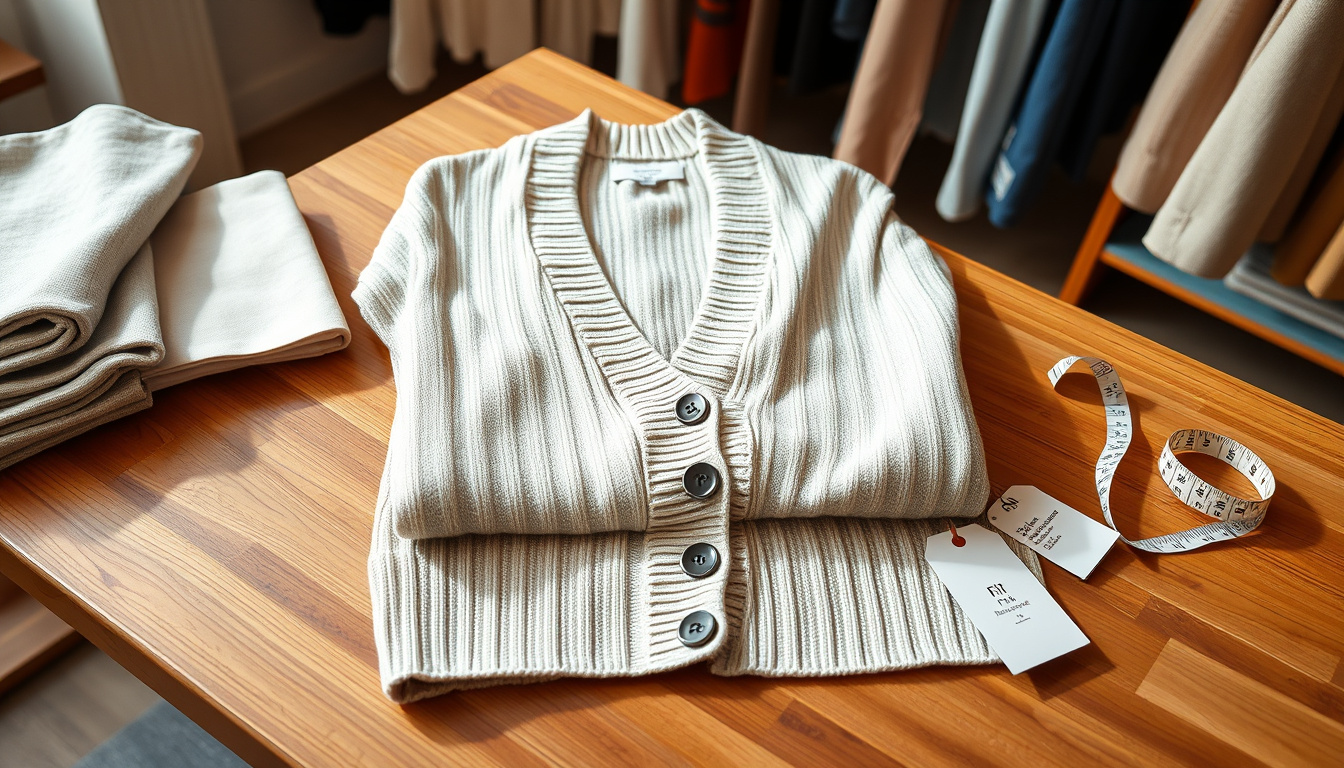
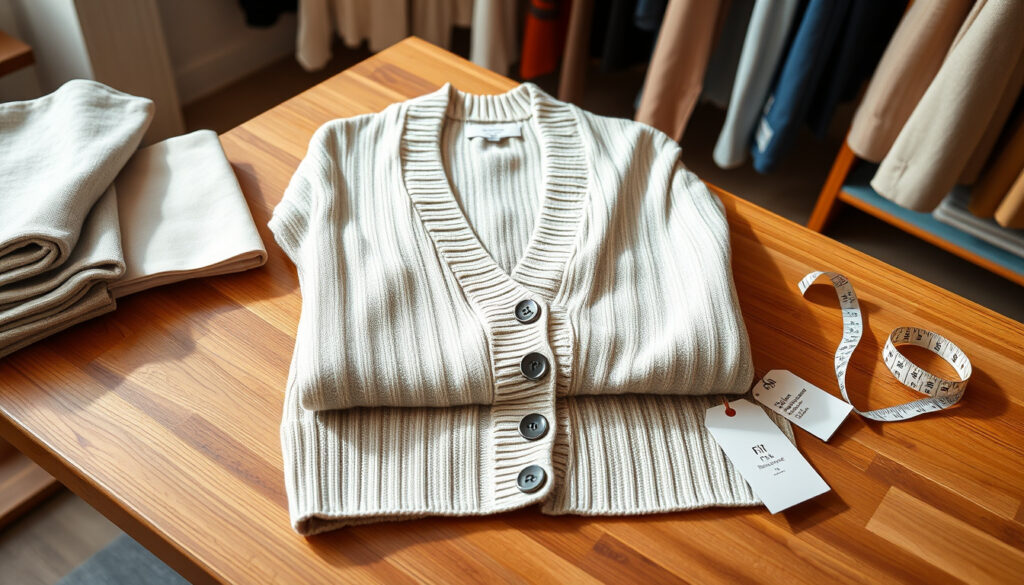
Anyone who has stood before an open wardrobe holding a dress that needs something over it understands the appeal of a cardigan. A women’s cardigan is best treated as a layering system: the silhouette matches the outfit, the fabric matches the season, and the size matches a tape measure, not a label — Pendleton (heritage Oregon woolen mill) publishes garment measurements showing a 40-inch bust in XS and 54.5 in XXL on a relaxed merino style, which is why fit varies far more than labels suggest.
Cardigan styles commonly available: buttoned, wrap, longline, cropped, thermal, and designer ·
Typical knit materials: viscose, wool blends, merino, mohair, and cotton knits ·
AllSaints cardigan range focus: black, white, brown, cream, and cropped silhouettes ·
Seasonal use case: light layering when the sun goes in or for evening wear
Quick snapshot
- Cardigan length varies by style — cropped, standard, and long silhouettes each carry different measurements (ASOS (UK-based fashion retailer)).
- Retailers including AllSaints (fashion retailer) list cropped cardigans in black, white, brown, and cream.
- Designer cardigans are sold through multi-brand retailers such as Net-a-Porter and brand-specific stores.
- Sale dates and discount percentages vary by retailer.
- The “best” fabric depends on your climate and layering preference.
- Durability differences between designer and high-street cardigans are not standardized.
- Cardigans are positioned as light layers for when the sun goes in and for evening wear.
- Buying windows track seasonal weather and retailer markdown cycles rather than a fixed release date.
- Check garment measurements (bust, length, sleeve) before relying on a size letter.
- Compare fabric composition and confirm the return policy before ordering sale items.
Six data points, one pattern: the same word “cardigan” covers a wider range of lengths, materials, and price tiers than any single size chart can capture.
| Label | Value |
|---|---|
| Common cardigan categories | buttoned, wrap, longline, cropped, thermal, and designer |
| Primary materials | viscose, wool, merino, mohair, cotton, and synthetic blends |
| Typical retail settings | women’s clothing departments, knitwear sections, and designer boutiques |
| AllSaints cardigan colors | black, white, brown, and cream |
| Best cardigan length for layering | hip-length or longline for most outfits |
| Real-world sizing example | Pendleton relaxed merino: bust 40 in (XS) to 54.5 in (XXL); length 25.5 in (XS) to 28 in (XXL) |
The implication: browsable categories narrow the rack, but fit data is where the real decision happens — especially when the silhouette range runs from cropped to longline.
What should I look for when choosing a women’s cardigan?
A cardigan is a simple object — a front-opening knit — but the category splits into distinct silhouettes the moment you start comparing. Three decisions matter most: length, fabric weight, and how the front closes.
Silhouette and length
- Cropped styles end above the hip and shift proportion toward high-waisted bottoms.
- Hip-length styles are the most versatile across work and weekend outfits.
- Longline styles add coverage and layer well over dresses and tunics.
Length changes the job description: a cropped cardigan frames an outfit, a hip-length one behaves like a second layer, and a longline one works almost like a lightweight coat.
Fabric weight
- Cotton and viscose knits are light and breathe easily indoors.
- Wool and wool blends add warmth without excessive bulk.
- Merino and mohair sit at the premium end of the knit spectrum.
The fiber label sorts this out faster than the price tag: OUI (European knitwear brand) places cotton as breathable and gentle on the skin, while wool and merino are warm fibers with a refined appearance, and cashmere or fine-wool blends are marketed for lightness and softness.
Closure style
- Button-front cardigans are the traditional default and the easiest to adjust.
- Wrap cardigans create a defined waistline without buttons.
- Open-front cardigans work as unstructured, lightweight layers.
Closure also changes how the cardigan behaves over a long wearing: buttons add structure, a wrap adjusts at the waist, and an open front turns the garment into a drape rather than a fitted layer.
The pattern: length decides the job, fabric decides the season, and closure decides the silhouette. If you compare only one thing, compare length against the outfit it will layer over.
The pattern: the same three variables — length, fiber, and closure — decide whether a cardigan earns a regular place in the rotation.
How should a women’s cardigan fit?
Fit separates a cardigan that works from one that pulls, gapes, or slides off the shoulders. Two measurements matter: your body’s, and the garment’s.
Shoulder fit
- The shoulder seam should sit at your natural shoulder point.
- No pulling across the upper back when you reach forward.
- The neckline should lie flat against the collarbone when buttoned.
According to How to Fashion Edition (wardrobe styling resource)‘s cardigan fit guide, the shoulder seam is the first check — it should align with the natural shoulder point, and when the cardigan is buttoned it should allow room for a fitted top underneath without pulling or gaping.
Sleeve length
- Sleeves should reach the wrist in a classic fit.
- A cropped sleeve is a styling decision, not a fit error.
- Sleeves that are too short read shorter still when the cardigan is worn open.
Keep the sleeve length in proportion to the body of the cardigan: an open-front layer with short sleeves looks abbreviated rather than intentional if the crop is not the point of the design.
Layering ease
- Button the cardigan over a fitted top and check the front for gaping.
- Raise both arms — the shoulders should move without strain.
- If the knit bunches under a blazer, the cardigan is too bulky for that layer.
The sizing caveat comes from ASOS (UK-based fashion retailer): its own-brand sweater and cardigan charts are based on body measurements, but brand sizing can vary — so treat any chart as a guide, not a universal standard.
A size letter describes the body a garment was designed for, not the garment itself. The letter gets you to the right rack; the garment chart gets you to the right fit.
What fabrics are best for a women’s cardigan?
Fabric determines warmth, drape, and how much care a cardigan demands. There is no single best fiber — only the best fiber for your climate, your washing habits, and the season you are dressing for.
Natural fibers
- Cotton knits breathe and soften with wear.
- Wool and merino provide warmth with a refined drape.
- Cashmere and fine-wool blends are marketed for lightness, softness, and a luxury feel.
That hierarchy comes from OUI (European knitwear brand)‘s knitwear editorial: cotton for breathability and comfort, wool and merino for warmth with a refined appearance, and cashmere or fine-wool blends for a lighter, softer, more luxurious hand.
Synthetic blends
- Viscose knits feel soft and fluid with a dressier drape.
- Synthetic blends add stretch and recovery at cuffs and hems.
- Blended yarns are common in mid-range knitwear for easier washing and lower weight.
Blends are not a downgrade by default; they are a compromise between drape, ease of care, and price. The label tells you which compromise you are making.
Warmth and care
- Chunky wool knits offer the most warmth and need the gentlest washing.
- Merino balances warmth, softness, and easier care than standard wool.
- Cotton and viscose cardigans suit mild days and indoor offices.
Mohair sits at the premium end as well, with a soft halo that dresses up a simple outfit — but like cashmere, it rewards careful handling more than everyday wool does.
Why this matters: the fiber label tells you more than any size chart. If you run warm, cotton and viscose will earn more wear; if you run cold, merino and wool will carry you across three seasons.
How do I style a cropped women’s cardigan?
The cropped cardigan is the knitwear equivalent of a proportion trick: it adds a layer without covering the waist. That makes it a natural partner for high-waisted bottoms and full skirts.
High-waist pairings
- Wear it with high-waisted trousers or a pencil skirt to define the waistline.
- Keep the cardigan open over a thin tucked-in top for a clean vertical line.
- Black, white, brown, and cream crops pair with most trouser colors.
OUI (European knitwear brand) is direct on this — dresses, skirts, and high-waisted trousers are the natural pairings for a cardigan that ends above the waist.
Layering over dresses
- A cropped cardigan over a slip dress adds coverage without hiding the waistline.
- Use it over A-line or midi dresses to balance volume on top.
- Keep accessories small so the crop reads as intentional styling.
Casual outfits
- Pair a white or cream crop with high-waisted jeans for the default casual look.
- Retailers including AllSaints list cropped cardigans in black, white, brown, and cream.
- Neutral crops are the easiest to rotate across the rest of a wardrobe.
Because the crop ends above the hip, it works best when the outfit already has a clear waistline — otherwise the layer can read as a misfit rather than a choice.
The implication: a cropped cardigan is a proportion tool, not a warmth tool. If warmth is the priority, a hip-length or longline cardigan is the better spend.
What is a thermal cardigan for women?
Thermal cardigans sit at the functional end of the knitwear rack. They are built for cold-weather layering — denser construction, warmer fibers, and a job closer to insulation than decoration.
Thermal knit construction
- Denser knits and tighter stitching trap more air against the body.
- Insulating blends add warmth without the bulk of a winter coat.
- Thermal styles differ from lightweight fashion cardigans in weight and stitch density.
Cold-weather use
- Layer a thermal cardigan over a long-sleeve top and under a coat.
- Use it at home when heating is low or for cold-weather errands.
- Wool and wool blends are the fibers that carry most of the warmth.
Layering role
- Think of a thermal cardigan as a buttoned base-layer alternative.
- It should sit flat under a blazer or coat without bunching.
- Choose a less bulky knit if the cardigan has to layer under outerwear.
A thermal cardigan differs from a fashion cardigan in intent: one is built to keep you warm, the other to finish an outfit. Which one you need depends on how cold your winter actually is.
Thermal cardigans are the rare knitwear category where construction outranks color and brand. Dense stitch and warm fiber do what styling alone can’t — and the label will tell you whether the warmth is real.
The catch: thermal construction adds warmth, but it also reduces the dressier drape of a fine knit. If you need one layer to do both jobs, a mid-weight merino cardigan is the usual compromise.
Women’s cardigan: upsides and downsides
One garment, two truths: the cardigan is the easiest layer to add and the easiest layer to get wrong at checkout. The trade-offs run through fit, fabric, and price tier.
Upsides
- Layers without bulk: wears open or buttoned and adjusts as temperatures shift.
- Length range covers cropped, hip-length, and longline, so one category fits many silhouettes.
- Natural fibers cover every season — cotton for mild days, wool and merino for cold ones.
- Garment measurements, when published, turn sizing from a gamble into a calculation.
Downsides
- Brand sizing varies, so the same letter size can fit differently across labels.
- Light knit fabrics like viscose and cotton offer limited warmth in deep winter.
- Designer price tags often reflect fiber, brand, and design rather than guaranteed durability.
The trade-off: the cardigan’s greatest strength — adaptability — is also its main trap. A cardigan that doesn’t fit or isn’t warm enough for its job becomes an unworn hanger item, whatever it cost.
How to choose a women’s cardigan: a step-by-step framework
Five minutes of checking beats one season of regret. Run this framework in order, and the choice narrows itself.
- Name the job. Office layer, evening topper, cold-weather base, or casual weekend knit — the use case sets length and fabric.
- Read the fiber label. Cotton and viscose run light; wool and merino run warm; cashmere and fine-wool blends sit at the luxury end.
- Measure your body, then check the chart. Compare your bust, waist, and hip against the retailer’s body-measurement chart.
- Look for garment measurements. Body charts tell you if the size fits your body; garment charts tell you how the cardigan sits on it. Pendleton publishes both on its relaxed merino cardigan — Pendleton (heritage Oregon woolen mill) lists a 40-inch bust in XS and a 54.5-inch bust in XXL, with length from 25.5 to 28 inches.
- Run the three fit tests. Shoulder seam at the natural shoulder point, buttoned ease over a fitted top, and free arm movement — the checks How to Fashion Edition (wardrobe styling resource)’s fit guide recommends.
- Check the return policy. Knit sizing varies too much to skip this, especially on sale items.
A sale price moves the tag, not the fiber. A discounted viscose knit is still a light knit in December — check the composition before the discount does the deciding.
The payoff: once the framework becomes habit, a cardigan purchase takes about five minutes — and the hanger-item rate drops to near zero.
What’s confirmed and what’s still unclear
With most cardigan data coming from retailers rather than independent testing, it pays to separate what is recorded from what is assumed.
Confirmed facts
- Retailers list women’s cardigans in knits, including buttoned, wrap, longline, and cropped styles (ASOS cardigan category).
- Designer cardigans are sold through multi-brand retailers such as Net-a-Porter as well as brand-specific stores.
- AllSaints markets women’s cardigans in black, white, brown, cream, and cropped silhouettes (AllSaints knitwear category).
What’s still unclear
- Specific sale dates and discount percentages vary by retailer and region.
- Which fabric is “best” depends on local climate and layering preference.
- Durability differences between designer and high-street cardigans are not standardized.
- Whether a designer cardigan’s higher price reflects longer wear or brand and material positioning is not measured anywhere uniform.
Why this matters: none of the open questions are reasons to avoid buying a cardigan. They are reasons to verify what you can — fiber, fit, and return policy — before you pay.
What the fit guides and retailers say
Three sources, three angles on the same problem: how a cardigan should relate to the body that wears it.
Own-brand sizing starts with the body, not the garment: ASOS builds its women’s sweater and cardigan charts from body measurements — and warns that brand sizing can vary, so the chart is a guide rather than a universal standard.
ASOS (UK-based fashion retailer), size-chart guidance for sweaters and cardigans
Fit carries the style signal: straight or relaxed cardigan fits create a more casual, contemporary look, while tailored fits read as classic and polished.
OUI (European knitwear brand), knitwear editorial on finding the perfect cardigan
The starting points are mechanical: the shoulder seam should align with the natural shoulder point, and a buttoned cardigan should leave room for a fitted top underneath without pulling or gaping.
How to Fashion Edition (wardrobe styling resource), women’s cardigan fit guide
The takeaway: retailers and fit guides converge on one message — fit is a measurement problem before it is a style problem. Resolve the measurements first and the styling follows.
The final takeaway
Cardigans are forgiving to wear and easy to misbuy. The readers who get the most from them treat the category as a layering system: define the job, read the fiber label, verify garment measurements, and run the fit tests before the price tag gets a vote. For the UK high-street shopper weighing a designer markdown against a mid-range merino knit, the choice is clear: buy the fiber and fit you can verify — or pay for the label instead of the layer.
Frequently asked questions
What is the difference between a women’s cardigan and a bolero?
A bolero is a very short, open-front layer that ends above the waist, closer to a shrug than a full cardigan. A women’s cardigan is a front-opening knit designed to layer over outfits and usually reaches the hip or below.
Can I wear a women’s cardigan to the office?
Yes. Fine knits suit dressy or office outfits, so a hip-length cardigan in a smooth merino, wool, or cotton knit works over a collared shirt or a simple dress. Neutral colors — black, cream, brown, or white — keep it looking intentional rather than casual.
How many cardigans should a woman own?
A practical minimum is three: a fine knit for the office, a longline style for colder days and dresses, and a cropped cardigan for high-waisted outfits and evenings out. Each length serves a different outfit formula, which is why one cardigan rarely covers a full wardrobe.
What is the best length for a plus-size women’s cardigan?
Hip-length and longline styles offer the most coverage and the most forgiving line, and they layer well over dresses and tunics. Because cardigan length varies by style, check garment measurements for bust and length rather than relying on the size letter.
Do women’s cardigans shrink in the wash?
Some knit fibers — especially wool and wool blends — can shrink when washed too hot or tumbled dry. Retailers publish care guidance on product pages for viscose, wool, and knit blends, so follow that guidance instead of a generic wash cycle.
What shoes go with a longline women’s cardigan?
Ankle boots, loafers, and low heels balance a longline cardigan best. Because the layer extends past the hip, it creates a long vertical line; shoes with a little weight at the ankle keep the outfit grounded instead of swamped.
Related reading
- Stool Bar Buying Guide — a room-by-room guide to choosing a tall seating piece, for readers applying the same fit-and-purpose logic.
- Books Read: Free Online Books, Genres, and Must-Read Lists — practical selection guidance for the next long evening in.

Oliver Jack Carter Cooper is a staff writer for EveningLedger.uk, covering UK news, politics, business and culture. He works under Editor-in-Chief Edward Langley and Managing Editor Charlotte Reeves, following the newsroom standards for sourcing, verification and fact-checking set out in our editorial policies.