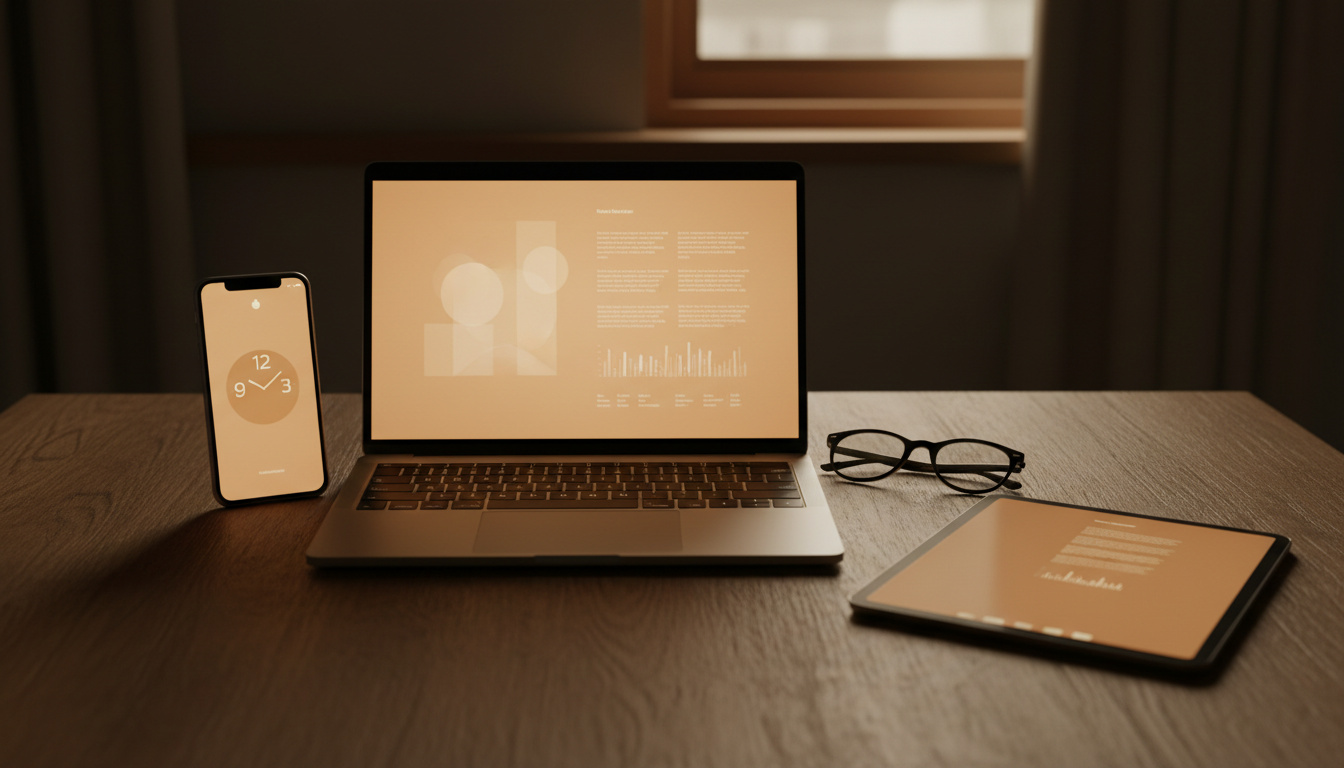
Digital screens emit high-energy visible light that peaks between 400 and 500 nanometers, commonly referred to as blue light. This specific portion of the light spectrum has become a focal point for health researchers as modern lifestyles increasingly tether individuals to iPhones, laptops, and monitors throughout the day and into the evening.
The concern extends beyond simple eye discomfort. According to UC Davis Health, evening exposure to this wavelength suppresses melatonin production, fundamentally disrupting sleep cycles and circadian rhythms. While the evidence regarding permanent retinal damage remains mixed, the immediate effects—including digital eye strain characterized by dryness, fatigue, and visual discomfort—are well-documented across clinical observations.
Mitigating these effects requires a multi-layered approach combining built-in software features, hardware modifications, and behavioral adjustments. This guide examines device-specific configurations for iOS, Android, macOS, and Windows systems, alongside broader prevention strategies supported by ophthalmological research.
What Is Blue Light?
- Built-in Software Filters: Night Shift, Night Light, and f.lux adjust color temperature to warmer tones after sunset.
- Display Adjustments: Manual brightness reduction and Dark Mode settings decrease high-energy emission intensity.
- Physical Barriers: Screen protectors and specialized glasses filter wavelengths before they reach the retina.
- Behavioral Protocols: The 20-20-20 rule and screen curfews address usage patterns rather than hardware.
- Blue light exposure between 400-500nm suppresses natural melatonin secretion, delaying sleep onset.
- Digital eye strain manifests as dryness, fatigue, and discomfort, though permanent damage remains scientifically disputed.
- Night mode features shift display spectra toward red wavelengths, reducing but not eliminating blue light emission.
- Prolonged screen time exacerbates symptoms regardless of filter use, necessitating regular breaks.
- Blue light blocking glasses show mixed effectiveness results in clinical reviews.
- Filter efficacy varies significantly across device manufacturers and individual display calibrations.
- Ophthalmological associations emphasize combining technical filters with regular visual breaks.
| Fact | Physiological Impact | Source Basis |
|---|---|---|
| Wavelength range 400-500nm | High-energy visible light penetrates eye structures | Optometric clinical standards |
| Evening exposure | Melatonin suppression, circadian rhythm disruption | UC Davis Health |
| Digital eye strain | Accommodation fatigue, reduced blink rate, dryness | Oscar Wylee |
| Filter activation | Spectral shift reduces but does not eliminate exposure | Optical research |
| 20-20-20 rule | Muscular relaxation, reduced accommodative spasm | Zenni Optical |
| Screen protectors | Physical filtration without software color distortion | OcuShield |
How to Reduce Blue Light on Phones and Tablets
iPhone and iPad Configuration
Apple integrates blue light management through Night Shift, accessible via Settings > Display & Brightness. Users may schedule automatic activation aligned with sunset or customize specific hours based on personal sleep schedules. The Control Center provides rapid manual toggling for immediate environmental adaptation. For additional reduction, Smart Invert within Accessibility > Display Accommodations inverts colors intelligently without the jarring full inversion that affects media consumption.
Android Implementation
Android devices typically house blue light filtration under Display settings labeled as Night Mode or Eye Comfort Shield, depending on manufacturer interface variations. Configuration options generally include intensity sliders and automated sunset-to-sunrise scheduling. Lower-end devices may require third-party applications from the Play Store to achieve comparable functionality.
Medical consensus suggests activating filters three hours before intended sleep time to allow natural melatonin accumulation. Automated sunset scheduling often proves suboptimal during winter months when darkness falls earlier than circadian preparation requires.
How to Reduce Blue Light on PCs, Laptops, and MacBooks
macOS Night Shift and Dark Mode
MacBook and iMac users navigate to System Preferences > Displays > Night Shift to configure spectral shifting. The interface provides granular color temperature control via slider, allowing warmer tones than default presets. Complementary Dark Mode, accessed through System Preferences > General, reduces overall luminance by inverting interface brightness without affecting color accuracy of creative work.
Windows Night Light Settings
Windows 10 and 11 incorporate Night Light within Display settings, offering automated blue light reduction based on geographical sunset data or manual scheduling. The intensity scale permits customization from subtle warming to significant amber shifting. Users reporting persistent eye strain despite software solutions should verify graphics driver compatibility, as outdated drivers occasionally disable these features.
Cross-Platform Brightness Management
Manual brightness reduction serves as the most immediate mitigation strategy across all operating systems. Reducing luminance through hardware keys or system controls decreases blue light emission proportionally, particularly critical in dimly lit environments where high contrast exacerbates pupil dilation and strain.
Other Ways to Prevent Blue Light Exposure
Physical Filters and Screen Protectors
Hardware filtration involves applying medically certified screen protectors to iPhones, iPads, and laptop displays. Unlike software solutions that tint the entire color gamut, physical filters intercept specific wavelengths while preserving color accuracy for design work. Selection requires verification of scientific backing, as consumer market products vary widely in actual filtration percentages.
Blue Light Blocking Glasses
Specialized lenses claim to block high-energy visible light before ocular contact. Effectiveness remains debated within optometric literature, with some studies showing minimal melatonin preservation compared to software solutions. Consumers should avoid unverified low-cost alternatives that may provide minimal actual filtration while introducing optical distortion.
Behavioral Modifications
The 20-20-20 rule—shifting focus to objects 20 feet distant for 20 seconds every 20 minutes—reduces accommodative spasm and blink rate normalization. Complementary strategies include deliberate blinking exercises, preservative-free artificial tears, and enforcing a one-hour device curfew before sleep.
No single intervention completely eliminates blue light exposure from digital devices. Software filters reduce emission but do not remove it; glasses filter only incident light reaching the eyes while screens continue emitting to the surrounding environment. Comprehensive protection requires stacking multiple mitigation layers rather than relying on any solitary solution.
Third-party applications offering enhanced customization over built-in systems may introduce color tinting that affects visual tasks and often require ongoing subscription fees. Similarly, screen protector effectiveness varies by brand, with some products providing merely cosmetic tinting rather than scientifically measurable wavelength filtration.
Daily Implementation Sequence
Effective blue light management follows a chronological protocol throughout waking hours:
- : Verify Night Shift/Night Light schedules align with personal sleep targets rather than default sunset times.
- : Initiate 20-20-20 cycles; set timers for 20-minute breaks focusing on distant objects to interrupt sustained accommodation.
- : Manually enable maximum filter warmth three hours before bedtime, overriding automatic dimming features.
- : Cease device usage entirely one hour before sleep; if essential tasks remain, employ blue light blocking glasses combined with maximum software filtration.
- : Maintain dim ambient lighting to reduce the contrast between bright screens and surrounding darkness.
Established Facts and Remaining Questions
Scientifically Established
- Blue light between 400-490nm suppresses melatonin secretion
- Digital eye strain causes documented discomfort and dryness
- Night mode features measurably shift display spectra toward longer wavelengths
- Regular visual breaks reduce accommodative fatigue
- Screen brightness directly correlates with blue light emission intensity
Currently Uncertain
- Whether blue light causes permanent retinal damage or reversible fatigue only
- Quantified effectiveness of consumer-grade blocking glasses versus placebo
- Long-term consequences of chronic low-level exposure from infancy
- Optimal filtration thresholds for different age demographics
- Interaction between blue light exposure and pre-existing ocular pathologies
Why Blue Light Matters for Sleep and Vision
The human retina contains intrinsically photosensitive retinal ganglion cells containing melanopsin, a photopigment maximally sensitive to blue wavelengths. These cells regulate circadian entrainment by signaling the suprachiasmatic nucleus to suppress melatonin synthesis when detecting high-energy light. Visual disturbances such as flashing lights sometimes accompany extreme digital eye strain, though these symptoms typically resolve with cessation of exposure.
Contemporary work environments necessitate prolonged accommodation at fixed focal distances, reducing blink rates from baseline 15-20 per minute to 3-5 per minute during concentrated screen work. This tear film destabilization, combined with high-energy light exposure, creates a compound risk factor for ocular surface disease that extends beyond simple sleep disruption into daytime functional impairment.
Medical Perspectives and Recommendations
Activating night mode features and adhering to the 20-20-20 rule provides measurable relief from digital eye strain, though no intervention completely eliminates the physiological effects of prolonged screen exposure.
— UC Davis Health, Department of Ophthalmology
Built-in filters reduce blue light emission but results vary by device and individual sensitivity; combination approaches incorporating behavioral breaks provide superior protection to any single technical solution.
— Oscar Wylee Clinical Review
Authoritative sources emphasize that while technical filters provide partial relief, the most robust protection derives from limiting cumulative exposure duration. The American Academy of Ophthalmology specifically recommends filter activation combined with conscious blinking exercises and environmental humidity management.
Key Takeaways
Reducing blue light exposure requires configuring built-in device filters like Night Shift and Night Light, maintaining reduced brightness levels, and adhering to the 20-20-20 rule during work sessions. While physical screen protectors and glasses offer supplementary filtration, behavioral modifications including pre-sleep device curfews remain the most reliable method for preserving sleep architecture. Those experiencing persistent visual phenomena should consult ophthalmological specialists to rule out underlying pathology.
Does blue light cause permanent eye damage?
Current evidence remains mixed regarding permanent retinal damage. While blue light contributes to digital eye strain and discomfort, conclusive proof of irreversible structural damage from consumer device exposure has not been established in peer-reviewed literature.
Do blue light blocking glasses actually work?
Effectiveness varies significantly by lens quality. Medical reviews indicate inconsistent results for sleep improvement compared to software filters. Avoid low-quality alternatives lacking scientific certification, as these may provide minimal filtration while introducing visual distortion.
How long before bed should I stop using screens?
Ophthalmological recommendations suggest ceasing device usage one hour before intended sleep time. If work requirements prevent complete cessation, maximize night mode warmth settings and consider supplementary protective measures during this critical circadian preparation window.
Does lowering screen brightness eliminate blue light?
Reducing brightness decreases blue light intensity proportionally but does not eliminate emission entirely. Combined with night mode activation, dimming represents an effective immediate mitigation strategy, particularly in low ambient light environments where high contrast strains ocular muscles.
Is Night Shift sufficient protection on its own?
Night Shift and comparable features provide partial protection by shifting spectral output, though results vary by device calibration and individual physiology. Optimal protection requires combining built-in filters with regular breaks, reduced brightness, and behavioral limits on total exposure duration.
Can I use blue light filters during daytime work?
Daytime filter use remains optional as blue light exposure during daylight hours helps regulate healthy circadian rhythms. However, individuals experiencing acute digital eye strain may benefit from moderate filtration during intensive screen work regardless of time of day.

Oliver Jack Carter Cooper is a staff writer for EveningLedger.uk, covering UK news, politics, business and culture. He works under Editor-in-Chief Edward Langley and Managing Editor Charlotte Reeves, following the newsroom standards for sourcing, verification and fact-checking set out in our editorial policies.