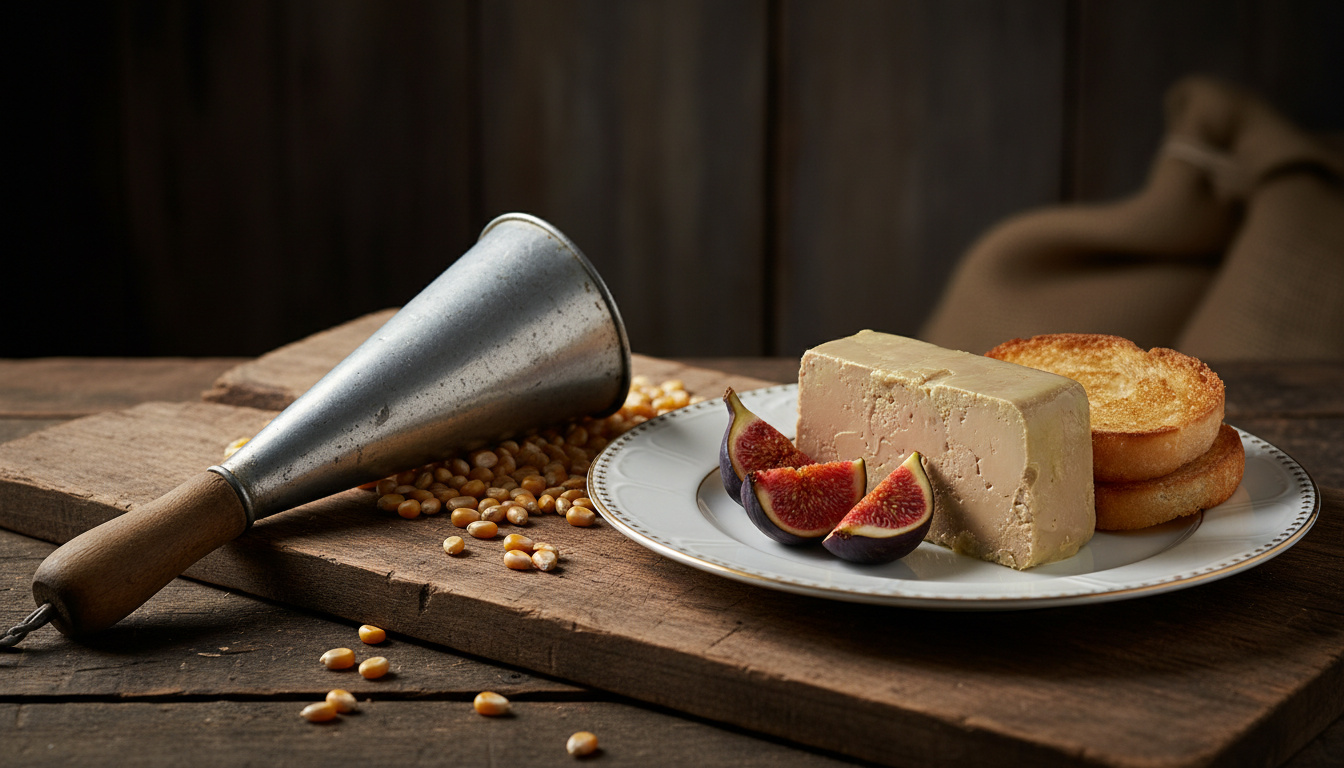
Foie gras represents one of the most divisive luxury foods in contemporary gastronomy. This delicacy consists specifically of the liver from a duck or goose that has undergone specialized fattening through a process known as gavage, or force-feeding. French law formally protects the product as part of the nation’s cultural heritage, defining it strictly as the liver of poultry fattened by gavage.
The production method dates back millennia, with evidence suggesting origins in ancient Egyptian practices around 2500 BCE. Modern preparation follows rigorous standards, with European regulations mandating minimum liver weights of 300 grams for ducks and 400 grams for geese. Despite its status as a protected culinary tradition, the practice faces significant ethical scrutiny and legal restrictions across various jurisdictions.
What Is Foie Gras Made Of?
Liver of specially fattened duck or goose exclusively
Force-feeding (gavage) with corn over controlled periods
Protected French cultural and gastronomic heritage
Four distinct grades from whole lobes to emulsified preparations
- Terminology: “Foie gras” translates literally from French as “fatty liver,” with the word “gavage” deriving from the Picard term “gave” meaning throat or gullet.
- Source Animals: Only ducks and geese are used; chickens and other poultry are excluded from formal legal definitions.
- Feeding Process: Birds receive progressive, controlled quantities of corn to stimulate lipid accumulation through sugar degradation.
- Minimum Weights: European regulations mandate 300g minimum for duck livers and 400g for goose livers.
- Product Grades: Four classifications exist: whole foie gras, assembled foie gras, bloc de foie gras, and bloc with pieces.
- Historical Roots: Evidence points to Egyptian origins circa 2500 BCE, millennia before French codification.
- Nutritional Profile: Contains significant iron, vitamin A, and folic acid (vitamin B9).
| Aspect | Details |
|---|---|
| Source Species | Duck or Goose only |
| Production Method | Gavage (force-feeding) |
| Etymology | Picard “gave” (throat/gullet) |
| French Legal Status | Protected cultural heritage |
| Duck Liver Minimum | 300 grams |
| Goose Liver Minimum | 400 grams |
| Primary Feed | Corn |
| Key Nutrients | Iron, Vitamin A, Vitamin B9 |
| Historical Origin | Ancient Egypt, c. 2500 BCE |
| Serving Temperature | Cold or hot |
What Is the Foie Gras Controversy?
The production of foie gras centers on the practice of gavage, whereby birds receive controlled amounts of feed through a tube to enlarge their livers beyond natural proportions. This process, while legally defined and culturally protected in France, generates significant ethical debate regarding animal welfare standards and the physiological impacts of force-feeding.
Available documentation provides extensive technical details regarding production mechanics but offers limited insight into specific welfare allegations or counter-arguments. Standard production involves day-old birds raised in brooders for 4-5 weeks, followed by approximately 2.5 months of outdoor ranging before the feeding phase commences around 12 weeks of age.
Current available sources focus primarily on French legal definitions and culinary classifications rather than substantive analysis of animal welfare debates, ethical arguments, or specific allegations regarding production practices.
How Does the Production Process Work?
The fattening phase involves progressive feeding designed to accumulate lipids from corn sugar degradation. Birds transition from outdoor ranges to controlled environments where they receive measured quantities of feed. This phase aims to achieve the minimum regulatory weights: 300g for ducks and 400g for geese.
Where Is Foie Gras Banned?
Jurisdictional restrictions on foie gras production and sales vary significantly across regions, though specific legislative details remain incomplete in current documentation. While certain territories prohibit production based on animal welfare legislation, the precise legal status in key markets including the United Kingdom remains unverified in available sources.
Detailed information regarding current production bans, import restrictions, and sales regulations in specific jurisdictions was not present in the reviewed documentation. This includes specific UK legality status and comprehensive international ban lists.
What Is the Status in the UK?
The legal framework surrounding foie gras within the United Kingdom requires clarification beyond the scope of currently available sources. Whether domestic production occurs, whether importation is restricted, and whether sales are permitted in England, Scotland, Wales, and Northern Ireland remains undocumented in the provided research materials.
Is Foie Gras the Same as Pâté?
Distinct categories of foie gras products exist, with significant differences between whole preparations and blended compositions. Whole foie gras comprises one or two complete lobes from a single animal, presenting uniform coloration when sliced. Assembled foie gras combines pieces from different animals, creating a marbled aesthetic.
Bloc de foie gras represents an emulsified preparation ensuring homogeneous taste throughout, while “bloc with pieces” incorporates visible liver chunks added after the initial blending process. These classifications determine both texture and price points within the luxury market.
European regulations specify that parfaits must contain a minimum of 75% foie gras, while pâtés and mousses require at least 50% foie gras content, distinguishing them from preparations containing 100% whole liver lobes.
What Is Pâté de Foie Gras?
This term designates preparations where foie gras constitutes the primary but not sole ingredient. Unlike whole foie gras, these products incorporate additional components such as seasonings, spirits, or other organ meats, resulting in a spreadable consistency distinct from the solid slices of pure foie gras. The label “pâté de foie gras” legally requires only 50% foie gras content, whereas “parfait de foie gras” demands 75%.
What Does Foie Gras Taste Like?
The product is described as having a “refined and unique taste” characterized by rich, buttery texture and subtle sweetness derived from the corn-feeding process. Foie gras is typically served cold or hot and can be consumed fresh, semi-cooked, or cooked, with preparation methods significantly altering textural density.
Traditional pairings include liqueur wines and champagne, with the dish frequently appearing as an appetizer or accompaniment to other courses. The flavor profile intensifies when seared, developing caramelized exterior notes while maintaining a creamy interior. How to Caramelize Onions provides complementary preparation techniques often paired with this dish.
Is Foie Gras Healthy?
Nutritionally, foie gras delivers concentrated sources of heme iron, vitamin A, and folic acid (vitamin B9). However, comprehensive health assessments regarding fat content, cholesterol levels, and potential cardiovascular impacts were not available in the reviewed documentation. The high caloric density and lipid concentration suggest consumption should remain occasional rather than routine.
How Has Foie Gras Production Evolved?
- — Ancient Egyptians develop earliest known force-feeding techniques for waterfowl liver fattening.
- — Day-old ducklings and goslings occupy brooder facilities with controlled temperature and feed access.
- — Birds access outdoor ranges for approximately 2.5 months in complete freedom to develop skeletal structure.
- — Progressive feeding commences using corn to stimulate lipid accumulation through sugar degradation.
- — Harvesting occurs once livers reach regulatory minimums: 300g for ducks, 400g for geese.
Which Aspects of Foie Gras Remain Uncertain?
| Established Information | Information Unavailable in Sources |
|---|---|
| French legal definition and heritage protection status | Comprehensive UK production, import, and sales regulations |
| Production process stages (brooder, outdoor, gavage) | Specific jurisdictional ban lists beyond general references |
| European minimum weight regulations (300g/400g) | Current market pricing and economic analysis |
| Product classification system (whole, assembled, bloc) | Standardized pronunciation guides |
| Ancient Egyptian origins circa 2500 BCE | Detailed animal welfare assessment studies |
| Basic nutritional composition (iron, vitamins A and B9) | Comprehensive health risk/benefit clinical analyses |
What Cultural Significance Does Foie Gras Hold?
French law classifies foie gras as part of the country’s protected cultural and gastronomic heritage, elevating it beyond mere agricultural commodity to cultural artifact status. This legal protection reflects centuries of culinary tradition, particularly in southwestern France where production remains concentrated.
The dish occupies a unique position in haute cuisine, serving as both luxury ingredient and symbolic marker of French gastronomic identity. Its preparation and service follow strict traditions, with specific seasonal associations—particularly with winter holidays and celebratory meals—despite year-round availability.
What Do Primary Sources Say?
Foie gras is defined as the liver of a duck or goose specially fattened by gavage.
— French Legal Definition, Wikipedia and Agricultural Sources
The term derives from the Picard word ‘gave’ meaning throat or gullet.
— Elevage Gavage Industry Documentation
Parfaits must contain minimum 75% foie gras, while pâtés and mousses contain at least 50%.
— Foie Gras Classification Standards
What Is the Bottom Line on Foie Gras?
Foie gras constitutes a legally defined, culturally protected luxury food product derived from force-fed duck or goose livers, with documented origins in ancient Egypt and strictly regulated European production standards. While culinary authorities celebrate its unique taste and nutritional density, significant gaps remain in publicly available documentation regarding specific welfare assessments, international legal restrictions, and current market pricing. Can Dogs Eat Spinach explores entirely separate dietary considerations, as foie gras remains strictly a human culinary concern.
Frequently Asked Questions
How much is foie gras?
Current pricing information was not available in reviewed documentation. Market costs vary significantly based on product grade, origin, and retailer.
Foie gras pronunciation?
Standard French pronunciation approximates “fwah grah” though regional variations exist. Specific phonetic guidance was not present in available sources.
What is foie gras in english?
The literal English translation reads “fatty liver” though the French term remains standard in culinary contexts worldwide.
Pâté de foie gras meaning?
This designates a preparation containing foie gras mixed with other ingredients, requiring minimum 50% foie gras content for products labeled as such.
What is foie gras in uk?
Available research did not specify current UK import, sale, or production regulations regarding this product.

Oliver Jack Carter Cooper is a staff writer for EveningLedger.uk, covering UK news, politics, business and culture. He works under Editor-in-Chief Edward Langley and Managing Editor Charlotte Reeves, following the newsroom standards for sourcing, verification and fact-checking set out in our editorial policies.