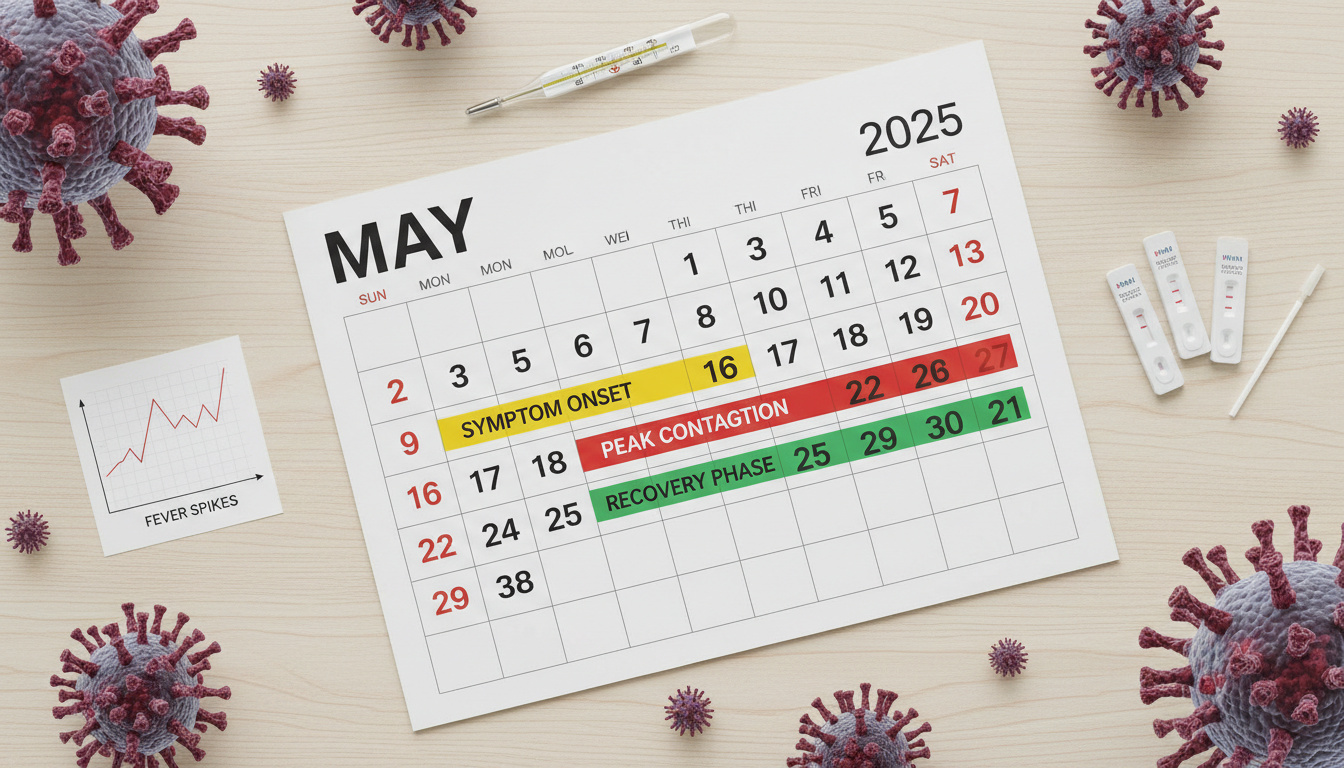
In 2025, COVID-19 continues to circulate through communities worldwide, with new variants like NB.1.8.1 and Nimbus shaping current infection timelines. While the virus has evolved significantly since the early pandemic days, the fundamental questions remain consistent: how long symptoms persist, when individuals cease being contagious, and what recovery truly looks like in the modern context.
Current data indicate that most healthy individuals experience symptom resolution within one to two weeks, though significant variation exists based on vaccination status, prior infection history, and the specific variant contracted. Unlike the early days of widespread pneumonia, contemporary cases predominantly manifest as upper respiratory infections with distinct, predictable durations.
This analysis examines the latest clinical findings regarding COVID-19 duration, from initial exposure through potential long-term effects, drawing on recent research regarding 2025 variants and recovery patterns.
How Long Do Acute COVID-19 Symptoms Last in 2025?
Mild Case
5-7 days typical symptom duration
Moderate
7-14 days with gradual improvement
Severe
2-6 weeks recovery period
Long COVID
3+ months persistent symptoms
For healthy individuals with mild to moderate COVID-19, symptoms typically resolve in 7-10 days. Recovery varies by factors including infection severity, vaccination status, and reinfection history. Vaccinated individuals generally recover faster with fewer lingering effects, while subsequent infections tend to be shorter than initial cases.
- Vaccination accelerates recovery: Vaccinated individuals typically experience shorter illness duration and reduced risk of persistent symptoms compared to unvaccinated patients.
- Reinfection patterns: Subsequent infections generally last less time than initial cases, with UK research showing fatigue rates dropping from 17.3% after first infection to 10.8% after third exposure.
- Variant consistency: Current 2025 variants including NB.1.8.1, JN.1, Stratus, and Nimbus maintain similar symptom timelines to previous strains, primarily affecting the upper respiratory tract.
- Early treatment impact: Paxlovid, when prescribed within five days of symptom onset, significantly reduces hospitalization risk and may shorten recovery time.
- Symptom specificity: The Nimbus variant associates with pronounced “razor blade” sore throats, while JN.1 shows resurgence of anosmia, though overall loss of taste and smell occurs less frequently than in early pandemic waves.
- Individual variability: Underlying health conditions, age, and immune response significantly influence whether symptoms resolve in days or persist for weeks.
| Phase | Duration | Clinical Notes |
|---|---|---|
| Incubation | 2-14 days | Average 5 days; varies by variant |
| Symptom Onset | Day 1-3 | Fever, cough, sore throat emerge |
| Symptom Peak | Days 3-5 | Highest viral load and severity |
| Acute Illness (Mild) | 7-10 days | Most common presentation in 2025 |
| Acute Illness (Moderate) | 7-14 days | May include prolonged fatigue |
| Severe Disease | 2-6 weeks | Possible hospitalization required |
| Contagious Period | Up to 10 days | Begins 48 hours before symptoms |
| Long COVID Threshold | 3+ months | Persistent symptoms post-infection |
Current variants do not introduce radically new symptoms, maintaining consistent fever, cough, and upper respiratory presentations across NB.1.8.1 and related strains.
How Long Are You Contagious with COVID-19 in 2025?
Understanding the Contagious Window
Individuals can transmit SARS-CoV-2 from 48 hours before symptom onset until approximately 10 days after infection begins. The highest risk of transmission occurs during the first five days of symptomatic illness, when viral loads peak.
When to End Isolation
Contagiousness extends beyond symptom resolution for some individuals, necessitating careful isolation protocols even as patients begin feeling better. Silent transmission during the incubation period complicates containment efforts, as people unknowingly spread the virus before experiencing symptoms.
People become contagious during the incubation period before experiencing any symptoms whatsoever. This silent transmission phase necessitates rapid testing when exposure occurs, as individuals may spread the virus while feeling completely healthy.
How Long Does It Take to Test Negative After COVID?
Testing Timeline Variability
The timeline for testing negative varies significantly among individuals, influenced by viral load, immune response, and testing methodology. While symptoms typically resolve within 7-10 days for mild cases, viral shedding may persist beyond symptom cessation, particularly detectable through PCR testing compared to rapid antigen tests.
From Exposure to Symptoms
Symptoms generally emerge within an average of five days following exposure, though the incubation window spans 2-14 days depending on the specific variant and individual immune factors. The Delta variant demonstrated shorter incubation periods averaging 4.3 days, while current 2025 strains maintain similar timelines to earlier Omicron iterations.
Healthcare providers recommend testing with antigen kits when flu-like symptoms appear, with positive results warranting immediate isolation and potential medical consultation.
What Is Long COVID and How Long Does It Last?
Recognizing Persistent Symptoms
Long COVID encompasses symptoms persisting three months or longer following acute infection, manifesting as brain fog, breathlessness, fatigue, post-exertional malaise, dizziness, irregular heartbeat, and gastrointestinal disturbances. These prolonged effects differ fundamentally from influenza or pneumonia in both duration and intensity.
Risk Factors and Duration
Research indicates higher prevalence among unvaccinated individuals and those experiencing severe acute infection. UK data reveal increased hospitalization risks in deprived areas, suggesting socioeconomic factors influence long COVID outcomes.
While typical COVID-19 resolves within weeks, long COVID symptoms burden patients for months. Post-exertional malaise—where physical or mental effort triggers symptom relapse—serves as a distinguishing feature not present in standard recovery timelines.
Studies consistently demonstrate that vaccinated individuals face lower risks of developing long COVID symptoms compared to unvaccinated populations, with breakthrough infections resulting in shorter symptom duration and reduced severity of persistent effects.
What Is the Timeline from COVID-19 Exposure to Recovery?
- Day 0: Exposure to SARS-CoV-2 virus occurs through respiratory droplets or aerosols.
- Days 2-5: Incubation period progresses, averaging five days with a range of 2-14 days.
- Day 1-3: Symptom onset typically begins with fever, cough, or sore throat presentation.
- Days 3-5: Symptom peak occurs; highest contagiousness during this window.
- Days 5-10: Contagious period continues; symptoms may begin resolving for mild cases.
- Days 7-10: Recovery phase for healthy individuals with mild infection.
- Day 10+: Contagious period ends for most; testing may remain positive for some.
- Month 3+: Long COVID threshold if symptoms persist beyond this point.
What Do We Know for Certain About COVID-19 Duration in 2025?
Established Information
- Acute symptoms last 7-10 days for mild cases in healthy individuals
- Contagious period extends up to 10 days post-infection onset
- Incubation averages 5 days with a 2-14 day range
- Vaccination reduces both severity and duration of illness
- Long COVID is defined as symptoms persisting beyond 3 months
Remaining Uncertainties
- Precise duration differences between specific 2025 variants
- Individual long COVID recovery timelines and predictors
- Exact testing negative windows for all patient populations
- Long-term immunity duration from new variant exposures
How Have 2025 Variants Changed Recovery Timelines?
Current 2025 variants—including NB.1.8.1, JN.1, Stratus, and Nimbus—have not introduced radically new symptom profiles or duration timelines compared to earlier Omicron iterations. These strains maintain high transmissibility while primarily affecting upper respiratory passages rather than causing widespread pneumonia.
The Nimbus variant notably produces intense “razor blade” sore throat sensations, while JN.1 correlates with renewed instances of anosmia. Despite these specific symptom variations, the overall duration of illness remains consistent with previous years’ patterns. Prevention strategies continue emphasizing updated vaccines, masks for high-risk individuals, and early Paxlovid administration.
Readers monitoring persistent symptoms should note that while COVID-19 typically resolves within weeks, other conditions may present differently. For instance, Symptoms of Stomach Cancer involve distinct gastrointestinal patterns and timelines that differ significantly from viral respiratory infections.
What Do Health Authorities Say About COVID-19 Duration?
The average incubation period remains 5 days, ranging from 2-14 days post-exposure, supporting continued 14-day quarantine recommendations in specific contexts to curb community spread.
— ADA Clinical Guidelines
Experts reference CDC and WHO guidelines confirming no new unusual symptoms in current variants, maintaining established protocols for isolation and symptom monitoring.
— Parade Health Reporting
How Should You Approach COVID-19 Recovery in 2025?
For most individuals, COVID-19 in 2025 follows a predictable trajectory: symptoms emerge within five days of exposure, peak around day three, and resolve within 7-10 days for mild cases. Contagiousness persists for approximately ten days, requiring careful isolation to protect vulnerable populations. While long COVID remains a concern for a subset of patients, vaccination and early treatment options provide significant protective benefits against both severity and duration. For additional historical health context, see How Did Ed Gein Die.
Frequently Asked Questions
What is the incubation period for COVID?
The incubation period averages five days following exposure, though it ranges from 2-14 days depending on the specific variant and individual immune factors. Current 2025 strains maintain similar timelines to earlier Omicron iterations.
Can you have COVID without symptoms?
Asymptomatic infection occurs frequently and contributes significantly to community transmission. Individuals remain contagious from 48 hours before potential symptom onset through approximately day ten of infection.
How does vaccination affect COVID duration?
Vaccination reduces both the severity and duration of acute illness. Vaccinated patients typically recover faster with fewer lingering effects and significantly lower risk of developing long COVID symptoms.
When should you seek medical attention for COVID?
Immediate medical attention is necessary for breathing difficulties, persistent chest pain, sudden confusion, or high fever exceeding three days. These symptoms may indicate severe disease requiring intervention.
How long does loss of taste and smell last with new variants?
Anosmia duration varies significantly by variant. While JN.1 shows renewed association with this symptom, overall occurrence has decreased compared to early pandemic waves, typically resolving within weeks.
What is Paxlovid and when should it be taken?
Paxlovid is an antiviral medication reducing hospitalization risk when prescribed within five days of symptom onset. It requires medical evaluation and prescription for appropriate administration.
How long does a sore throat last with the Nimbus variant?
The Nimbus variant produces intense “razor blade” throat sensations that typically persist during the acute phase of illness, generally resolving within the standard 7-10 day recovery window for mild cases.

Oliver Jack Carter Cooper is a staff writer for EveningLedger.uk, covering UK news, politics, business and culture. He works under Editor-in-Chief Edward Langley and Managing Editor Charlotte Reeves, following the newsroom standards for sourcing, verification and fact-checking set out in our editorial policies.