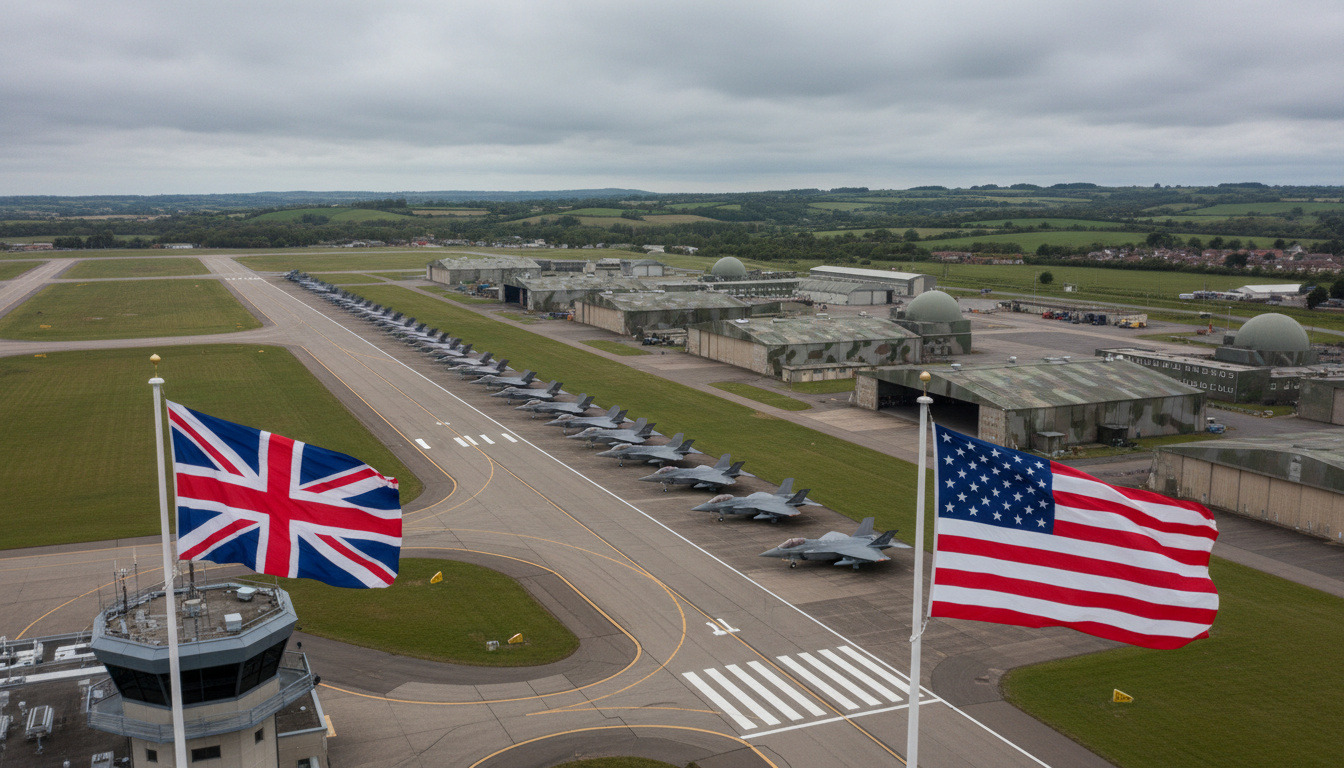
UK foreign policy has shifted significantly as the government authorized expanded United States military access to British bases for operations targeting Iranian positions. This development, unfolding over March 23-24, 2026, dominates today’s headlines alongside economic repercussions and domestic protests.
The decision marks day 24 of the ongoing regional conflict involving the US, Israel, and Iran, with Prime Minister Keir Starmer emphasizing the move serves de-escalation rather than escalation. BBC correspondents report from multiple locations including London, Jerusalem, and Dubai as international reactions and economic impacts compound.
Domestic opposition has intensified, with hundreds marching in London and political parties demanding parliamentary scrutiny of the expanded military cooperation.
What Is the Latest BBC News in the UK Today?
Base Access Expanded
UK authorizes US aircraft to use Diego Garcia for strikes on Iranian targets threatening Strait of Hormuz shipping.
London Protests
Hundreds march via Stop the War Coalition demanding parliamentary vote on military involvement.
Economic Pressure
Jet fuel prices rise and 500 flights cancelled as inflation projections tick upward to 3.5 percent.
Regional Strikes
Reports of hits on Natanz uranium facility and ongoing exchanges between Israel and Hezbollah.
Key Insights from Today’s Coverage
- Policy shift allows US aircraft from British bases to strike targets attacking shipping in the Strait of Hormuz, expanding from initial defensive-only parameters
- Iranian officials report civilian deaths in southern and northern regions alongside strikes on the Natanz uranium-enrichment facility
- Prime Minister Keir Starmer defends the decision as calculated and necessary for UK interests, rejecting characterizations of a U-turn
- Conservative opposition labels the move the “mother of all U-turns” while Greens and Liberal Democrats demand immediate parliamentary votes
- President Trump previously criticized UK and NATO allies as “cowards” on day 21, subsequently praising base access as a “victory”
- Iran’s foreign minister explicitly warned that UK cooperation endangers British lives
- Economic impacts include rising jet fuel costs, flight cancellations, and inflationary pressures noted by UK, US, and European central banks
| Story | Key Fact | Source | Time |
|---|---|---|---|
| Base Access Policy | Expanded to allow strikes on Hormuz threats | UK Government | March 23, 2026 |
| Iran Strikes | Natanz facility and civilian areas hit | Iranian Officials | March 23, 2026 |
| London Protests | Hundreds march via Stop the War Coalition | BBC News | March 23, 2026 |
| Flight Cancellations | 500 flights cancelled Middle East routes | Industry Data | Ongoing |
| Inflation Projection | UK rate ticking up toward 3.5% | Economic Forecasts | March 24, 2026 |
| Trump Statement | Praised base access as victory after earlier criticism | White House | March 23, 2026 |
What Is Happening in the UK Right Now According to BBC?
Military Cooperation and Strategic Access
The United Kingdom has shifted its policy regarding the use of British military installations, specifically permitting American aircraft stationed at Diego Garcia and other UK bases to conduct offensive operations against Iranian targets. This represents an expansion from previous restrictions limiting base usage to defensive strikes only. BBC reports indicate the change targets threats to commercial shipping in the Strait of Hormuz, a vital artery for global energy flows.
Prime Minister Keir Starmer defended the decision during public statements, characterizing the policy evolution as deliberate rather than reactive. He emphasized that the calculations prioritize UK national interests, regional stability, and economic security over immediate political pressures. US Central Command has released footage claiming to show declining Iranian military capabilities following coalition strikes, while Marine deployments to the region continue.
Government officials maintain this expansion does not constitute direct UK combat engagement or explicit protection of the Strait itself, but rather support for allies responding to Iranian attacks on shipping lanes and energy infrastructure.
Domestic Political Reactions
Westminster has responded with sharp divisions. The Conservative opposition has characterized the policy shift as the “mother of all U-turns,” while the Green Party and Liberal Democrats have united in demanding parliamentary votes before any further military cooperation proceeds. BBC footage from London shows hundreds protesting through the Stop the War Coalition, reflecting significant public unease regarding escalation risks.
Government ministers counter that the actions represent necessary responses to Iranian aggression rather than offensive military adventurism. They distinguish between direct combat operations and the provision of logistical support to allied forces.
How Reliable Is BBC News Coverage of UK Stories?
BBC News (UK) – Guide to History, Access and Reliability provides context on the organization’s editorial standards and verification processes. Today’s coverage demonstrates these protocols through multi-source verification of casualty reports and official statements from Tehran, London, and Washington.
Verification and Multi-Platform Reporting
BBC correspondents operate from bureaus in Jerusalem, Dubai, London, and Turkey, providing ground-level verification of military claims. The corporation’s Persian service, reaching an estimated 24 million viewers despite signal jamming within Iran, offers crucial local perspective often absent from Western feeds. This infrastructure allows cross-referencing of Iranian official statements regarding the Natanz facility against satellite imagery and independent witnesses.
Attribution standards require specific sourcing for casualty figures and military claims. When Iranian officials report civilian deaths in southern and northern regions, BBC reports attribute these directly to Iranian state media or health ministry statements, qualifying them accordingly. Similarly, US Central Command footage receives contextual framing regarding its unverified status despite official provenance.
Editorial Independence and Expert Analysis
The broadcaster maintains explicit separation between reporting and government communications, as evidenced by coverage of the “calculated decision” narrative versus opposition “U-turn” characterizations. Expert commentators cited across radio, television, and digital platforms stress the rational necessity of government decisions while simultaneously documenting human costs, preserving analytical distance from Downing Street messaging.
Where Can I Access BBC UK News Live Today?
BBC.co.uk/news/uk provides continuous updates on the unfolding situation, with developing stories flagged in real-time. The broadcaster offers live streaming through its website and dedicated applications, ensuring access to BBC.com news coverage for both domestic and international audiences.
Live correspondents are currently reporting from Jerusalem, Dubai, London, and Turkey, with the BBC Persian service providing specialized coverage despite ongoing signal interference within Iran.
For hyperlocal updates alongside national stories, BBC Weather Burgess Hill – Current Conditions and Forecasts demonstrates the breadth of regional coverage available through the BBC network.
Events regarding UK base usage and Iranian responses remain fluid. Live updates may shift rapidly as diplomatic and military developments occur across time zones.
Additional governmental sources including Gov.uk news provide official statements complementing journalistic coverage, while Reuters UK offers alternative wire service verification of major developments.
How Did Today’s Major UK Foreign Policy Developments Unfold?
- — President Trump criticizes UK and NATO allies as “cowards” for limited support, according to White House statements reported by BBC.
- — UK Government announces expanded base access policy allowing US strikes on Iranian targets threatening Hormuz shipping. Source
- — Stop the War Coalition organizes hundreds for protest march through London demanding parliamentary vote.
- — Iranian officials report strikes on Natanz uranium-enrichment facility and civilian casualties in northern and southern regions.
- — Prime Minister Keir Starmer addresses media describing decisions as calculated for de-escalation, not U-turns.
- — Iran’s foreign minister issues direct warning that UK cooperation endangers British lives.
- — Economic impacts materialize with 500 flight cancellations and revised inflation projections of 3.5 percent. Source
What Facts Are Confirmed About UK Involvement in the Iran Conflict?
| Established Information | Information That Remains Unclear |
|---|---|
| UK expanded US access to British bases including Diego Garcia for operations targeting Iranian threats to Hormuz shipping | Whether Parliament will hold binding votes on future military cooperation expansion |
| Prime Minister Keir Starmer publicly defended the policy shift as calculated rather than a U-turn | The full extent of future UK military commitments if US operations intensify |
| Hundreds participated in London protests organized by Stop the War Coalition on March 23 | Precise casualty figures from strikes on Natanz and other locations, with claims varying between Iranian officials and coalition sources |
| Iran’s foreign minister explicitly warned the policy endangers British lives | The specific duration of expanded base access authorization and sunset clauses |
| 500 flights cancelled and jet fuel prices rose due to Middle East disruptions | Whether Conservative “U-turn” characterizations will trigger formal parliamentary challenges |
| UK inflation projections revised upward toward 3.5% reversing prior downtrends | Whether NATO allies beyond the UK will expand similar base access commitments |
Why Has the UK Expanded Military Base Access for US Operations?
The decision to permit expanded American military use of British territories stems from the strategic importance of the Strait of Hormuz, through which significant portions of global energy shipments transit. Government statements emphasize that unrestricted access to these shipping lanes remains essential for UK energy security and economic stability, justifying the shift from defensive-only posture to offensive support capabilities.
Prime Minister Starmer’s administration frames the cooperation as protective rather than aggressive, arguing that permitting strikes on Iranian assets threatening commercial shipping prevents wider regional destabilization that would inevitably impact British interests. This calculation weighs immediate military cooperation against the risks of Strait closure or sustained energy market volatility.
The timing follows three weeks of escalating regional conflict involving exchanges between Israeli forces and Hezbollah, alongside direct US-Iranian tensions. UK policy appears calibrated to support swift resolution—what officials term “de-escalation through decisive action”—without committing British combat forces to direct engagement.
What Are Officials and Experts Saying About the UK’s Position?
These are calculated decisions, not U-turns. The priority remains de-escalation for UK interests, regional stability, and our economy.
— Prime Minister Keir Starmer, speaking March 23, 2026, as reported by BBC
This endangers British lives.
— Iranian Foreign Minister, regarding expanded UK base access, March 23, 2026
The mother of all U-turns.
— Conservative Party statement on government policy shift, March 23, 2026
Expert commentators cited across BBC platforms note the rational necessity of protecting energy flows while simultaneously documenting the human costs of regional military action. Public opinion appears divided between those praising Starmer’s handling of alliance mobilization and others concerned about escalation risks should Washington expand demands for base usage further.
What Is the Current State of UK News According to BBC Today?
Today’s BBC News UK coverage centers on the government’s expanded authorization of US military operations from British bases targeting Iranian threats to the Strait of Hormuz, a policy shift generating significant domestic protest and opposition criticism while drawing warnings from Tehran. The developments occur alongside measurable economic impacts including flight cancellations and inflationary pressures, with comprehensive reporting from correspondents across London, Jerusalem, and Dubai providing verified updates on military, political, and humanitarian dimensions of the conflict’s 24th day.
Frequently Asked Questions
What are the main topics on BBC UK news today?
Dominated by UK foreign policy shifts regarding US base access for Iran operations, London protests against military involvement, economic impacts including flight cancellations and inflation, and ongoing regional military exchanges.
How can I verify BBC’s reporting on UK base usage?
Cross-reference coverage with official government statements at Gov.uk and wire services such as Reuters. BBC attributes specific claims to named officials and distinguishes between verified and unverified footage.
What economic impacts is BBC reporting from the Iran conflict?
Jet fuel price increases, 500 flight cancellations, and UK inflation projections rising to 3.5% due to Middle East shipping disruptions and energy market volatility.
Who is reporting for BBC from the Middle East?
Correspondents are stationed in Jerusalem, Dubai, and Turkey, with the BBC Persian service providing coverage to 24 million viewers despite signal jamming in Iran.
What did President Trump say about UK support?
On day 21 he criticized UK and NATO allies as “cowards,” but subsequently praised the expanded base access as a “victory” for coalition efforts.
Are there protests against UK involvement?
Yes, hundreds marched in London on March 23 via the Stop the War Coalition, while the Greens and Liberal Democrats demand parliamentary votes on military cooperation.
How reliable is BBC’s casualty reporting?
BBC attributes casualty figures to specific sources—Iranian officials for civilian deaths, US Central Command for military targets—while noting verification limitations in active conflict zones.

Oliver Jack Carter Cooper is a staff writer for EveningLedger.uk, covering UK news, politics, business and culture. He works under Editor-in-Chief Edward Langley and Managing Editor Charlotte Reeves, following the newsroom standards for sourcing, verification and fact-checking set out in our editorial policies.