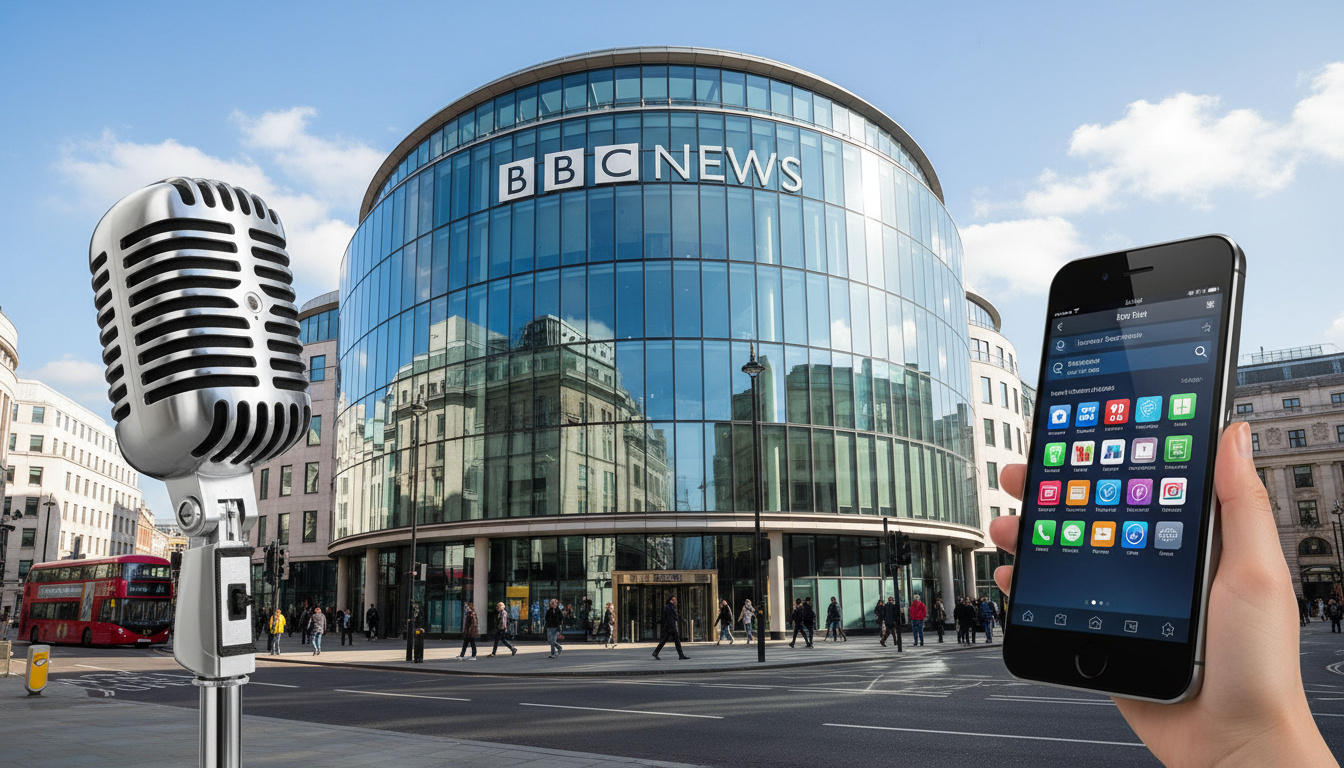
BBC News operates as the news and current affairs division of the British Broadcasting Corporation, a public service broadcaster founded in 1922 and headquartered in London. The organization delivers domestic and international coverage across television, radio, and digital platforms, funded primarily through the UK television licence fee rather than commercial advertising revenue.
Tracing its origins to the British Broadcasting Company’s first radio bulletin on 14 November 1922 from London’s 2LO studio, the service has evolved from restricted evening broadcasts into a comprehensive 24-hour news operation. Governed by a Royal Charter that mandates editorial independence while requiring ministerial consultation on funding, BBC News maintains a distinctive position as a publicly funded yet operationally autonomous institution within British media.
What is BBC News UK?
Operates under Royal Charter with mandated editorial independence
Primary revenue from UK household licences, not commercial advertising
Continuous domestic news since 1997 via dedicated channels
Television, radio, website, mobile apps, and streaming services
- Founded in 1922 as part of the British Broadcasting Company, transitioning to a Corporation under Royal Charter in 1927 with John Reith as first Director-General
- Charter obligations require impartiality and accuracy, with governance structures designed to ensure independence from government editorial control
- Reached 90% of UK adults weekly through combined television, radio, and digital services according to historical audience data
- Pioneered 24-hour domestic news with the 1997 launch of BBC News 24, now known as the BBC News Channel
- Relocated to New Broadcasting House between 2012 and 2013, consolidating operations from previous locations including Alexandra Palace and Television Centre
- Maintains global reach through BBC World Service and international-facing platforms while retaining distinct UK-focused domestic output
| Attribute | Details |
|---|---|
| Founded | 14 November 1922 (radio); 1936 (television) |
| Headquarters | Broadcasting House, Portland Place, London |
| Legal Structure | Public corporation under Royal Charter |
| Primary Funding | UK TV licence fee (approximately £3.7 billion annually) |
| Key Channels | BBC News Channel, BBC World News, BBC One, BBC Radio 4 |
| Digital Services | BBC News website, mobile app, BBC iPlayer |
| Known As | “The Beeb” or “Auntie” |
| Key Figures | Richard Dimbleby (historical anchor); Huw Edwards (2022 royal coverage) |
The organization’s funding model distinguishes it from commercial competitors, with the BBC Annual Report detailing how licence fee revenue supports news operations alongside other public service broadcasting mandates.
How can I access BBC News in the UK?
Television Channels
BBC News operates dedicated channels including the BBC News Channel, which provides 24-hour domestic coverage launched in 1997, and BBC World News for international perspectives. Regular bulletins air on BBC One and BBC Two, with the flagship BBC News at Ten maintaining a traditional evening slot. Viewers receive these channels via terrestrial, satellite, cable, or internet-connected television services without additional subscription fees beyond the standard TV licence.
Radio Services
Radio news content originates from Broadcasting House, with BBC Radio 4 providing comprehensive bulletins and programmes such as The World This Weekend, launched in 1967. The network of BBC local radio stations, established beginning with BBC Leicester in 1967, delivers regional news coverage alongside national bulletins, accessible via analogue and digital radio receivers or through the BBC Sounds application.
Digital Platforms and Streaming
The BBC News website and mobile application offer live updates, video streams, and personalized headline feeds. BBC iPlayer, launched in 2007, enables streaming of news programmes and live channel broadcasts, requiring TV licence validation for live content but providing free catch-up access within 30 days. The BBC News app download is available across iOS and Android devices, offering offline reading capabilities and breaking news alerts. For localized meteorological information alongside news coverage, users can access the BBC Weather Burgess Hill – Current Conditions and Forecasts.
BBC iPlayer provides live streaming of the BBC News Channel and on-demand access to investigative programmes including Panorama, which debuted in 1953. The service requires a valid TV licence for viewing live content or downloading programmes, with content typically available for 30 days following initial broadcast.
Is BBC News biased or reliable?
Charter Obligations and Editorial Standards
The BBC Royal Charter explicitly mandates that the corporation provide impartial and accurate news coverage, with editorial guidelines enforced through internal governance structures. Unlike commercial broadcasters, the BBC faces oversight from the BBC Board regarding content standards, while Ofcom regulates commercial BBC activities though not core public news services.
Historical Credibility
The organization established its reputation for reliability during the 1926 General Strike, when it became the sole permitted news source for the British public, broadcasting from Savoy Hill studios. This historical role cemented the BBC’s position as a trusted national institution, with the London Museum noting the broadcaster’s evolution into a widely respected news authority during this period.
Contemporary Assessments
While the BBC is widely regarded for news respectability, questions regarding bias periodically surface in public discourse. The historical record notes internal restructurings under Director-General Hugh Carleton Greene in the 1960s, which modernized reporting styles to mirror independent television news formats, though specific contemporary bias assessments or reliability ratings were not detailed in available source materials.
What are the latest BBC News UK developments?
Recent significant coverage events include the corporation’s handling of Queen Elizabeth II’s death in September 2022, when BBC News provided continuous live broadcasting across all platforms from New Broadcasting House. This coverage drew substantial audiences, continuing the tradition of major national event broadcasting established during the 1953 coronation, which attracted 22 million viewers.
Operational developments include the complete relocation of news production to New Broadcasting House between 2012 and 2013, consolidating operations previously distributed across Alexandra Palace, Lime Grove Studios, and Television Centre. The digital transition has accelerated, with increasing emphasis on streaming delivery via BBC iPlayer and mobile applications alongside traditional broadcast formats.
The death of Queen Elizabeth II in September 2022 marked one of the most significant broadcasting events in recent decades, with BBC News suspending regular programming to provide continuous coverage. Huw Edwards anchored the coverage, continuing the tradition established by Richard Dimbleby, who became the first Panorama anchor in 1955.
The future of the TV licence fee model remains under government review, with potential decriminalization of licence fee evasion and discussions regarding alternative funding mechanisms. While the current Royal Charter guarantees funding until its next renewal, the long-term financial structure faces political scrutiny, introducing uncertainty regarding resource allocation for news operations.
How has BBC News evolved since 1922?
- – First radio bulletin broadcast from London’s 2LO studio, restricted to post-7pm timings to avoid competing with newspapers
- – Became sole national news source during the General Strike, establishing credibility
- – Transitioned to British Broadcasting Corporation under Royal Charter
- – Launched independent news operation, reducing reliance on newspaper wire services
- – Commenced television transmissions from Alexandra Palace
- – Introduced regular televised bulletins from Alexandra Palace
- – Launched BBC Two in colour, Radio 1 for youth audiences, and BBC local radio beginning with BBC Leicester
- – Debuted BBC News 24 (now BBC News Channel) for 24-hour domestic coverage
- – Released BBC iPlayer streaming service
- – Completed relocation to New Broadcasting House, centralizing production
What facts are established versus uncertain?
| Established Information | Uncertain or Evolving Areas |
|---|---|
| Founded 14 November 1922; Royal Charter governance since 1927 | Specific outcomes of ongoing licence fee funding reviews |
| Headquarters located at Broadcasting House, Portland Place, London | Precise current weekly audience figures beyond historical 90% reach estimates |
| Primary funding via UK TV licence fee (approximately £3.7 billion) | Future regulatory changes regarding decriminalization of licence fee evasion |
| 24-hour coverage available through BBC News Channel since 1997 | Specific daily schedule variations for regional bulletins |
| Editorial independence mandated by Royal Charter | Details of specific recent Ofcom rulings on bias complaints |
What is the historical significance of BBC News?
BBC News occupies a unique position within British public life, having served as the primary information source during national crises including the 1926 General Strike. The organization’s development from radio bulletins to multi-platform digital delivery reflects broader transformations in media consumption while maintaining the core mandate of public service journalism established by the 1927 Royal Charter.
The broadcaster’s nicknames—”The Beeb” and “Auntie”—reflect its perceived role as a national institution rather than purely a commercial enterprise. Production facilities have migrated from Savoy Hill in the 1920s through Alexandra Palace, Lime Grove Studios, and Television Centre, before consolidating at New Broadcasting House, mirroring the technological evolution from radio to colour television to digital streaming.
Contemporary operations balance domestic UK-focused coverage through the BBC News Channel and Radio 4 against international reach via BBC World Service. This dual function requires maintaining distinct editorial streams while sharing resources and journalistic standards. For information regarding severe weather alerts that may interrupt regular programming, the Met Office Rain Warning – Current UK Status and Guide provides official government meteorological updates.
What do primary sources indicate about BBC News?
The British Broadcasting Company broadcast its first radio bulletin from London on 14 November 1922, initially restricted to post-7pm broadcasts using newspaper wire services to avoid competing with print media.
During the General Strike of 1926, the BBC became the sole source of news for the British public, establishing its reputation for trustworthiness and reliability in news reporting.
The Royal Charter defines the BBC’s public service mission, ensuring editorial independence while allowing government review and renewal periodically.
What defines BBC News in 2025?
BBC News remains Britain’s primary public service news provider, distinguished by its licence-fee funding model and Royal Charter governance. The organization continues its transition from traditional broadcast formats toward digital-first delivery through streaming platforms and mobile applications, while maintaining the 24-hour television and radio services established over previous decades. As funding models face governmental review, the broadcaster’s editorial independence and comprehensive coverage of both domestic UK affairs and international events sustain its position within the British media landscape. For access assistance, the BBC News Help pages provide technical support and service information.
Frequently asked questions
Is BBC News free to access?
BBC News content is free at the point of use for UK residents who hold a valid TV licence. The licence fee funds all BBC services, meaning no additional subscription is required for website, app, or television access, though live streaming requires licence validation.
What is the difference between BBC News and BBC World News?
BBC News Channel provides 24-hour coverage focused on UK domestic affairs, while BBC World News targets international audiences with global reporting priorities. Both operate from New Broadcasting House but maintain distinct editorial teams and programming schedules.
Do I need a TV licence to watch BBC News online?
A TV licence is required to watch or download BBC programmes via BBC iPlayer, including live streams of BBC News Channel. However, accessing the BBC News website for text articles or watching clips that are not live streams does not require a licence.
What time are the main BBC TV news bulletins?
BBC One airs the BBC News at One, BBC News at Six, and BBC News at Ten on weekdays, with weekend variations. The BBC News Channel provides continuous coverage throughout the day and night without scheduled breaks.
How can I download the BBC News app?
The BBC News app is available free of charge from the Apple App Store for iOS devices and Google Play Store for Android devices. The application offers breaking news alerts, personalized feeds, and offline reading capabilities.
Who ensures BBC News remains impartial?
Impartiality is enforced through the BBC’s Editorial Guidelines, overseen by the BBC Board and the Director-General. While Ofcom regulates commercial BBC activities, core public news services fall under Charter-based self-regulation with accountability to Parliament through the BBC’s Royal Charter renewal process.
Can I watch BBC News without a television?
Yes, BBC News is accessible via radio through BBC Radio 4 and local stations, through the BBC News website on computers and mobile devices, and through the BBC iPlayer app on tablets and smartphones, though live viewing requires a TV licence regardless of device.

Oliver Jack Carter Cooper is a staff writer for EveningLedger.uk, covering UK news, politics, business and culture. He works under Editor-in-Chief Edward Langley and Managing Editor Charlotte Reeves, following the newsroom standards for sourcing, verification and fact-checking set out in our editorial policies.