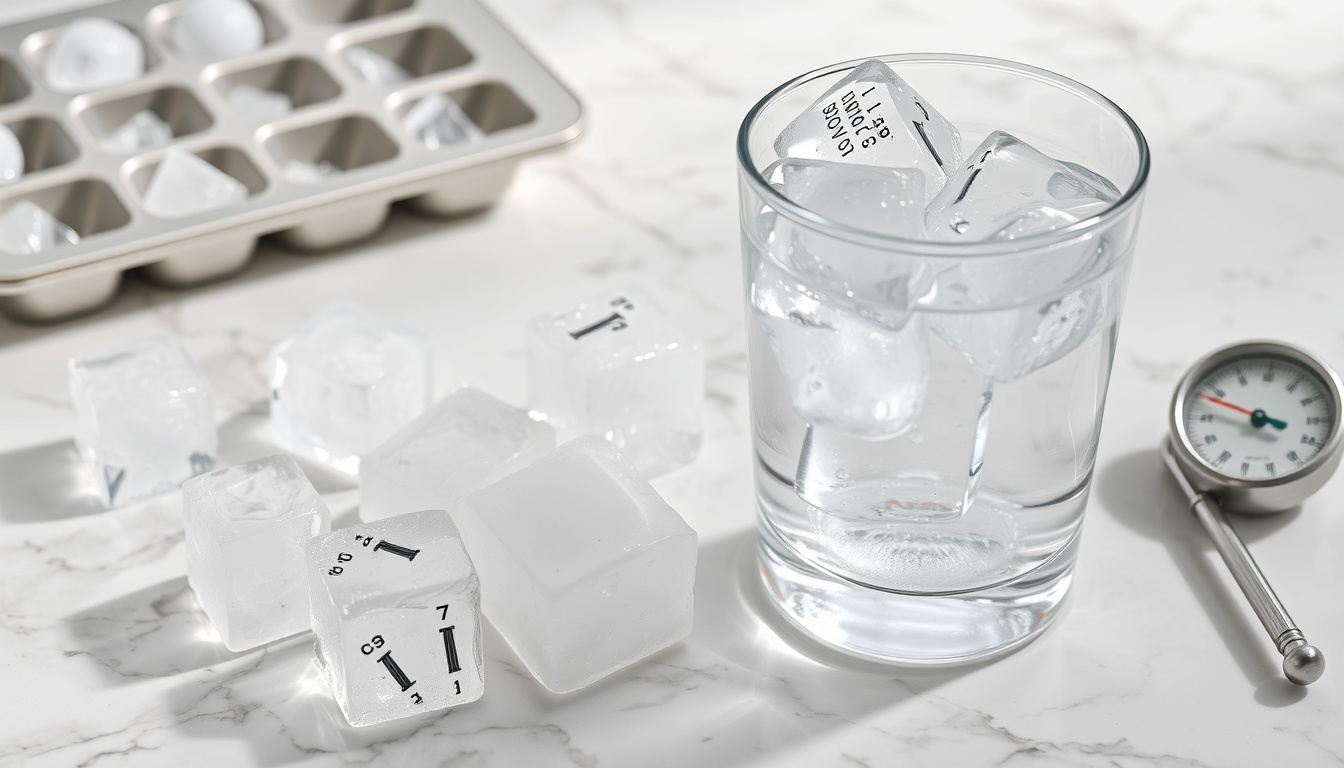
Most of us never think twice about ice cubes — they’re the quiet workhorse of every cold drink, from a lunchtime soft drink to a Friday-night old fashioned. Yet the cube you choose changes the drink: M&S sells a 2kg bag of ice cubes for £1.70 — 85p per kilo — while six cocktail ice balls cost £4.00, and the formats that matter — tray cubes, giant cubes, crushed, nugget and reusable — come with different prices, daily-use safety notes and a slang that turns “ice” into diamonds.
ALDI price: £0.99 per 1kg bag of Super Cube Ice Cubes (ALDI UK) · Ice Club largest bag: 12kg (Ice Club) · Home option: ice cube trays from The Range (The Range) · Definition: small pieces of ice, often cube-shaped, used to cool drinks (Simple English Wikipedia)
Quick snapshot
- ALDI sells Gianni’s Super Cube Ice Cubes at £0.99 per 1kg bag (ALDI UK)
- Ice Club sells Classic Ice Cubes in 12kg bags or multipacks (Ice Club)
- Simple English Wikipedia defines ice cubes as small pieces of ice used to cool drinks (Simple English Wikipedia)
- Prices and availability at ASDA and Lidl aren’t covered in the retail listings checked (Grocefully’s price comparison)
- No source we found quantifies which countries put ice in drinks most often (Grocefully’s price comparison)
- The exact intended meaning of the ice cube emoji shifts with context and platform (Grocefully’s price comparison)
- No expiry timeline ticks on bagged ice — the signal that matters is pack scale and price per kilo (Sainsbury’s product page)
- The Ice Co markets Super Cubes as three times larger than standard cubes and slow-melting (Sainsbury’s product page)
- Cocktail fans: large-format, slow-melting cubes are the upgrade path
- Budget shoppers: compare price per kilo before buying
- Home users: trays keep the per-drink cost near zero
Ice cubes: the key facts
Six facts, one pattern: pack size does most of the work in the price-per-kilo story, and premium shapes do the rest.
| Fact | Detail |
|---|---|
| Definition | Small pieces of ice, often cube-shaped, used to cool drinks (Simple English Wikipedia) |
| ALDI price | £0.99 per 1kg bag of Gianni’s Super Cube Ice Cubes (ALDI UK) |
| Ice Club pack sizes | 12kg bags; multipacks of 12×1kg or 5×1.8kg (Ice Club) |
| The Ice Co Super Cubes | Extra-large cubes made with spring water (Sainsbury’s product page) |
| The Range option | Ice cube trays for making ice at home (The Range) |
| The Ice Co party ice | Made with pure British water that is fine-filtered (Sainsbury’s product page) |
| Cheapest per kilo (comparison) | Iceland Pure Ice Premium Ice Cubes listed at £1.00 per 2kg — 50p per kilo (Grocefully’s price comparison) |
The pattern: the per-kilo price falls as pack size rises, and the premium sits in the shape, not the water.
What are the different types of ice cubes?
Retail ice has split into five families: standard tray cubes, large cubes and spheres, crushed and nugget ice, and reusable cubes. Ocado’s ice-cube category carries all of them — standard, super-size, crushed, ice balls, giant cocktail ice and reusable — so the choice isn’t about availability anymore, it’s about what the cube has to do (Ocado’s ice-cube range).
Standard tray cubes
- The home default: fill a tray, freeze, pop out — The Range sells trays in every size for exactly this.
- Small cubes melt quickly because they have more surface area for their volume — fine for a soft drink, less fine for something you sip slowly.
Standard cubes are the baseline every other format is compared against. They chill fast, and that speed comes with a cost: dilution. If you’re drinking something quickly, you won’t notice. If you’re nursing a whisky, you will.
The economics look different at this end too. Bagged standard cubes are the cheapest part of the market — the cost table later shows how the price per kilo climbs as the cube gets bigger.
Large cubes and spheres
- M&S’s Giant Cocktail Ice Balls — six pieces, 603g total, £4.00 — are the supermarket version of the cocktail-bar sphere (Ocado’s ice-cube range).
- Big cubes and spheres have less surface area relative to their volume, so they melt slower and dilute less.
Large-format ice is the cocktail upgrade. Less surface area means a slower melt, which keeps spirits cold without watering them down as fast. That’s the entire pitch behind craft ice and gourmet ice — the same frozen water, cut or frozen into a shape that dilutes slower.
The trade-off is price. These formats cost several times more per kilo than standard cubes, and most need a freezer that can actually accommodate them.
Crushed and nugget ice
- Sainsbury’s directs crushed ice at smoothies, cocktails, shakes and juices (Sainsbury’s product page).
- Crushed ice chills drinks fastest and dilutes them fastest — ideal for frozen-style drinks, wrong for slow sips.
Nugget ice — the soft, chewable pellets from commercial machines — is the closest thing to a cult format in the US. In UK retail, crushed ice is the practical version: it packs tightly around a drink, chills aggressively, and melts into the glass quickly, which is exactly what you want in a frozen drink and exactly what you don’t want in a neat pour.
Reusable ice cubes
- Reusable cubes are the non-melting alternative — no dilution, no refreezing wait.
- They’re the only format where “never melts” is a feature rather than a bug.
Reusable cubes (usually food-grade plastic or gel-filled) do one job: cool a drink without changing it. They’re popular for packed lunches and for people who hate watery drinks. The trade-off is thermodynamic: reusable cubes chill less efficiently than real ice because melting water absorbs far more heat than a solid block can. For a long, cold, un-diluted drink, they’re excellent. For serious cooling power, real ice wins.
The pattern: retail ice has split into a budget commodity and a premium craft item, and the two barely compete on the same shelf.
What is the best type of ice cube?
There is no single best cube — the right format depends on the drink, the occasion, and how much dilution you’ll tolerate. The three-way split below is how bars and brands actually think about it.
Best for cocktails
- Large, slow-melting cubes or spheres — the cocktail-bar default.
- Less surface area means slower dilution, which keeps a drink balanced longer.
If you’re making an old fashioned or a negroni, the ice is doing structural work: it chills, it dilutes just enough, and it holds the drink together. A giant cube or sphere is the industry answer because it does all three without turning the drink watery in the last ten minutes. If you’re setting up a home bar around this, a stool that fits the room matters more than you’d think — see our Stool Bar Buying Guide.
Best for soft drinks
- Regular or nugget ice — standard cubes chill quickly and are cheap enough to use generously.
- Crushed ice works when you want aggressive chill and a slushier texture.
Soft drinks don’t need architectural ice. They need cold, fast, and plenty of it. Standard cubes from a tray or a budget bag do the job, and because most soft drinks are drunk quickly, fast dilution isn’t a problem.
Best for no dilution
- Reusable ice cubes — the only format that cools without changing the drink.
When the drink itself is the point — a fine juice, a spirit you want to taste neat but cold, a long chain of small sips — reusable cubes remove the water problem entirely. They’re not as cold as real ice, but they stay cold for the length of a drink and they never leave a puddle.
The trade-off: you’re always choosing between chill speed and dilution. The perfect cube for one drink is wrong for another.
What this means: match the ice to the drink, not the brand.
Can we use ice cubes daily?
Daily ice in drinks
- Using ice cubes daily is generally safe for most people — the risk comes from the water and the equipment, not the ice itself.
For a healthy adult, ice in a drink is about as low-risk as a food habit gets. The two things worth controlling are the water you freeze and the cleanliness of the tray — the same standard you’d apply to anything else you eat or drink. It sits in the same low-friction healthy-habit zone as the routines covered in our Healthy Snacks: Top 10, Filling Ideas & Junk-Food Swaps.
Hygiene and clean trays
- Use clean, potable water and clean ice trays to avoid contamination.
- Ice absorbs nearby odours in the freezer, which is why bagged-ice brands talk about water quality.
Hygiene comes down to three things: the water you freeze, how clean the tray is, and how protected the cubes are while they freeze. The rest is noise.
A tray left uncovered is a sponge for freezer odours. The Ice Co fine-filters its party ice water (Sainsbury’s product page) — your tap water is usually fine, but the tray and the air around it are on you.
People who should be cautious
- People with sensitive teeth may prefer crushed ice, no ice, or room-temperature drinks.
- Anyone with dental damage should avoid chewing hard cubes — the enamel risk isn’t worth it.
The word “may” is doing real work here. Tooth sensitivity is individual, and the right workaround — smaller ice, warmer drinks, or a straw — depends on the person. Chewing ice, by contrast, is a harder no: crunching cubes can damage enamel over time, and the colder the cube, the more tempting it is to bite down.
Which countries put ice in their drinks?
The US and UK
- The US and UK commonly serve soft drinks, water and cocktails over ice — it’s the default, not the exception.
In both countries, “with ice” is the unspoken baseline. Order a soft drink in London or New York and it arrives with cubes; order it in some European cafés and you’ll get a bottle and a glass, no ice in sight. The difference is cultural habit, not climate — the UK’s ice habit tracks its cocktail and soft-drink culture more than its weather.
Japan and other Asian markets
- Japan is known for using ice in bars and convenience-store drinks, often in carefully shaped formats.
Japan pushes ice further than most: hand-carved ice balls in high-end bars, bagged ice in convenience stores, and a general expectation that cold drinks come with serious ice. The same “ice as craft” attitude shows up across parts of Asia in different forms, from shaved-ice desserts to meticulously layered cocktails.
Where ice is less automatic
- Serving drinks with ice is not universal — plenty of countries default to room-temperature drinks.
If you travel with a UK or US default, the absence of ice can feel like a service failure. It isn’t. In much of Europe and elsewhere, still water and soft drinks are often served unchilled or lightly chilled, and asking for ice gets you a handful of cubes or a puzzled look. The habit is regional, not universal.
The implication: “ice in drinks” is a learned regional norm, not a natural law — and the UK sits firmly in the ice camp.
Does ALDI sell ice cubes?
Yes — ALDI UK sells Gianni’s Super Cube Ice Cubes, and the price works out at £0.99 per 1kg bag (ALDI UK). The name is doing marketing for free: “Super Cube” positions the product against standard cubes, the same premium trick The Ice Co uses, just at a discount price.
ALDI Super Cube Ice Cubes
- “Super Cube” refers to size positioning, not a regulated term — the bag targets anyone who wants bigger cubes without the cocktail-ice price.
- The £0.99 price per kilo undercuts most branded options on the shelf.
The 1kg bag is the everyday sweet spot: small enough to fit a home freezer, big enough for a week of evening drinks.
Other UK supermarkets
- Tesco appears in retail-comparison data for The Ice Co’s 2kg bags at £1.40 — see the cost table below (Grocefully’s comparison).
- ASDA and Lidl don’t show verified ice prices in the retail data we found.
The pattern across UK grocers is consistent: standard cubes in 1-2kg bags are the cheapest tier, and the bigger the bag, the better the deal. ALDI’s 99p bag is mid-pack on price but aggressive on positioning.
Online and home options
- The Ice Co sells premium cubes through supermarkets and online — spring-water positioning, slow-melt promise.
- Ice Club’s classic cubes go up to 12kg bags for serious volume — the pack sizes are in the key facts above.
- Home trays from The Range cover the do-it-yourself route.
Online changes the game mainly for volume and format. A 12kg bag makes sense for a party or a pub; a 1kg bag works for a week of drinks. For everything else, a tray still wins on price per cube — the freezer does the work.
Why this matters: if a discount grocer can sell a 1kg bag at 99p, the premium formats have to justify themselves on melt speed and shape, not on the word “super”.
What are fancy ice cubes called?
Craft ice and gourmet ice
- Fancy ice is usually called craft ice or gourmet ice — sometimes “large-format ice”.
The terms overlap. Craft ice emphasises how it’s made (slow-frozen, filtered, cut to order); gourmet ice emphasises what it does (slow-melt, clear, big). Neither is a protected term, so it amounts to: ice with better marketing and a bigger shape.
Clear ice spheres
- Clear spheres — like M&S’s Giant Cocktail Ice Balls — sit at the premium end of the range.
- A sphere has the least surface area for its volume, which makes it the slowest-melting shape available.
That’s why high-end bars use spheres and giant cubes, and why “clear” matters: trapped air makes ice cloudy, and cloudy ice melts faster and looks worse in a glass.
Slang, emoji, and other names
- “On the rocks” means a drink served over ice cubes.
- “Ice” is slang for diamonds; the ice cube emoji can mean “cool” or “chilled” depending on context.
Ice has one of the more useful double lives in beverage slang. “On the rocks” has meant over-ice since the mid-20th century. Meanwhile “ice” as diamonds runs through rap lyrics and jewellery talk, and the ice cube emoji slides between “keep it cool”, “chilled drink”, and — depending on context — a nod to jewellery. Same square, very different messages.
The catch: context decides everything — “ice” can chill your drink, chill your vibe, or decorate your wrist.
Standard vs premium: the head-to-head
Four formats, one pattern: the slower the melt, the more you pay.
| Format | Melt speed | Best for | Dilution | Price position |
|---|---|---|---|---|
| Standard tray cubes | Fast | Soft drinks, everyday drinking | High | Budget |
| Large cubes and spheres | Slow | Cocktails, spirits worth savouring | Low | Premium |
| Crushed and nugget ice | Fastest | Smoothies, frozen drinks, quick chill | Highest | Mid |
| Reusable cubes | Never melts | No-dilution drinks, packed lunches | None | One-off purchase |
M&S charges £4.00 for six cocktail ice balls; ALDI charges £0.99 for a whole kilo of cubes. The premium is dilution control, and only you can decide whether your drink needs it.
Standard cubes win on price, large formats win on control, reusable cubes win on purity — everything else is marketing around the same frozen water.
What bagged ice actually costs per kilogram
Six price points, one pattern: the more carefully the ice is shaped, the more the per-kilo price climbs. The prices below are as listed at time of research; a few come from Grocefully’s grocery-comparison data rather than retailer sites.
| Product | Pack size | Price | Price per kg | Retailer |
|---|---|---|---|---|
| ALDI Gianni’s Super Cube Ice Cubes | 1kg | £0.99 | £0.99/kg | ALDI UK |
| The Ice Co Crushed Ice | 2kg | £1.40 | 70p/kg | Grocefully’s comparison |
| The Ice Co Ice Cubes | 2kg | £1.40 | 70p/kg | Grocefully’s comparison |
| M&S Ice Cubes | 2kg | £1.70 | 85p/kg | Ocado’s ice-cube range |
| M&S Giant Cocktail Ice Balls | 6 pieces (603g) | £4.00 | — | Ocado’s ice-cube range |
| The Ice Co Super Cubes | 1kg | £1.35 | £1.35/kg | Ocado’s ice-cube range |
The implication: bagged cubes are a per-kilo commodity, while cocktail formats are a per-piece luxury — and retailers price them accordingly.
Bagged ice vs homemade: the trade-offs
No table needed for this one — two options, one decision point: convenience versus control.
Upsides
- Bagged ice delivers consistent size and clarity — especially large-format cubes you can’t make in a standard tray.
- Volume is solved: party bags hold far more than a home freezer can produce in one freeze.
- Premium bags advertise their water source, so you know what you’re freezing into the glass.
Downsides
- Price per kilo rises fast once you leave standard cubes — cocktail formats can cost several times more.
- Plastic packaging and freezer space are real costs, especially for bulk party bags.
- You still need a freezer big enough to hold the bag.
The homemade route flips the same table: you control the water and the tray, you wait for the freeze, and you live with standard-sized cubes unless you buy a larger-format tray.
The trade-off: bagged ice buys consistency and scale; homemade buys control and near-zero cost. Most households end up keeping both.
What’s confirmed about ice cubes — and what’s still unclear
Confirmed facts
- ALDI sells Gianni’s Super Cube Ice Cubes at £0.99 per 1kg bag (ALDI UK).
- The Ice Co’s Super Cubes are extra-large spring-water cubes, marketed as three times larger than standard (Sainsbury’s product page).
- Ice Club sells Classic Ice Cubes in 12kg bags and multipacks (Ice Club).
- Simple English Wikipedia defines ice cubes as small pieces of ice, often cube-shaped, used to cool drinks (Simple English Wikipedia).
What’s unclear
- Exact prices and availability at ASDA and Lidl aren’t verified in the retail data we found.
- Which countries put ice in drinks most frequently is not quantified in any source we found.
- The ice cube emoji’s intended meaning changes with context and platform.
- Whether premium spring-water cubes beat filtered tap-water cubes in blind tasting — no independent taste data exists.
- Which supermarkets stock ice year-round versus seasonally is not documented in the listings checked.
What this means: the confirmed side is enough to shop with; the unclear side is enough to stay humble about “best ice cube” claims.
What retailers and encyclopedias say
“Ice cubes are small pieces of ice that are often cubes. These pieces are sometimes used to cool drinks.”
— Simple English Wikipedia (plain-language encyclopedia)
“Super Cubes are extra large ice cubes made with spring water. These slow melting, chunks of ice make high-class drinking experience.”
— The Ice Co product description (via Sainsbury’s product page)
Both quotes are verbatim. One defines the object; the other sells a feeling. The missing comma before “chunks” is in the original — when a brand sells ice, the grammar sometimes melts a little too.
Two sources, two framings: one describes a fact, the other sells an experience — the physics underneath is identical.
The takeaway for UK shoppers
UK freezers now hold everything from a budget supermarket bag to an eye-watering cocktail format, yet the difference between them is shape and branding around the same frozen water. The shoppers who get this right don’t buy the most expensive ice — they buy the right geometry for the drink, and they keep a tray for everything else. For UK cocktail drinkers, the choice is clear: spend the premium on slow-melting large cubes, or accept faster dilution — there is no third option that keeps a drink both icy and intact.
ocado.com, grocefully.com, trolley.co.uk, tesco.com, grocefully.com
Frequently asked questions
Are reusable ice cubes better than regular ice cubes?
If your priority is no dilution, yes — reusable cubes cool a drink without melting into it. If your priority is maximum chill, real ice wins, because melting absorbs heat far more effectively than a solid block can. Choose by what you’re protecting: the drink’s strength or its temperature.
How long does it take to freeze ice cubes?
It depends on the freezer and the cube size. Standard tray cubes usually freeze in a few hours; large-format cubes and spheres take longer because the centre needs time to solidify completely. For everyday drinks, the clock hardly matters.
Can ice cubes go bad?
Ice made from clean water doesn’t spoil, but it can absorb odours from the freezer, which is why home trays should be covered and why premium brands filter their water. If your cubes taste like last week’s lasagne, the ice isn’t bad — the freezer is.
Why does clear ice melt slower?
Clear ice has fewer trapped air bubbles than cloudy ice, so it’s denser, and it’s usually made in larger formats — both factors slow the melt. That’s why the best cocktail ice is big, clear and slow: less surface area for its volume, and fewer air pockets to open up as it warms.
Is chewing ice cubes bad for your teeth?
Chewing hard cubes can chip enamel and aggravate sensitive teeth. If you’re a chronic ice chewer, the kinder options are crushed ice or letting the drink warm up before you sip. The short version: crunch the drink, not the cube.
What is the best way to store ice cubes in the freezer?
Keep cubes in a sealed bag or covered container so they don’t pick up odours, and use them before they clump. If you’re using trays, let the cubes freeze fully before popping them into a bag — half-frozen cubes stick together and absorb flavours faster.

Oliver Jack Carter Cooper is a staff writer for EveningLedger.uk, covering UK news, politics, business and culture. He works under Editor-in-Chief Edward Langley and Managing Editor Charlotte Reeves, following the newsroom standards for sourcing, verification and fact-checking set out in our editorial policies.