
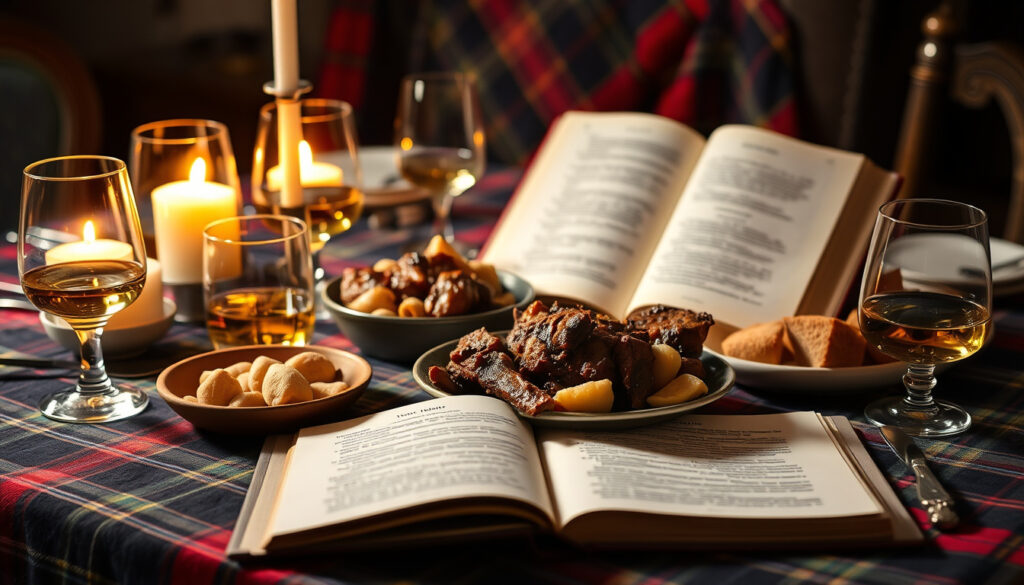
Burns Night stands as one of Scotland’s most cherished annual celebrations, uniting people across the globe in honour of the nation’s beloved poet, Robert Burns. Held every year on January 25, the occasion marks Burns’ birthday and has grown from a modest gathering of friends in 1801 into a worldwide tradition observed in over 200 countries.
The celebration centres on the Burns Supper, a ritualistic dinner that weaves together Scottish cuisine, poetry, music, and whisky into an evening of cultural remembrance. Whether attended in a grand hotel ballroom in Glasgow or around a family dining table elsewhere, the essence of the event remains unchanged: celebrating the life and legacy of the man known as Scotland’s National Bard.
When is Burns Night?
Burns Night always falls on January 25, regardless of the day of the week. This fixed date commemorates Robert Burns’ birth in 1759 and has remained consistent since the first Burns Supper was held in Alloway five years after his death. The tradition has endured for more than two centuries, maintaining its place on the Scottish calendar as an enduring symbol of national pride and literary heritage.
Key Insights
- Burns Night has been observed annually since 1801, five years after Robert Burns’ death
- The celebration now extends to over 200 countries where Scottish diaspora communities gather
- While January 25 remains fixed, some venues schedule events on adjacent evenings to accommodate weekends
- Glasgow hosts one of the largest concentrations of Burns Night events in Scotland
- The tradition began as a small gathering of Burns’ friends in Alloway and grew into a global phenomenon
- Celtic Connections, the annual folk music festival, often incorporates Burns Night programming
Burns Night Snapshot Facts
| Fact | Details |
|---|---|
| Official Date | January 25 each year |
| Originator | Robert Burns (1759-1796) |
| First Celebration | 1801 in Alloway, Ayrshire |
| Signature Dish | Haggis, neeps (turnips), tatties (potatoes) |
| Key Poem | “Address to a Haggis” |
| Closing Song | “Auld Lang Syne” |
| Global Observance | Over 200 countries |
| Typical Duration | Evening event (3-5 hours) |
Upcoming Burns Night Dates
| Year | Date | Day of Week |
|---|---|---|
| 2025 | January 25 | Saturday |
| 2026 | January 25 | Sunday |
| 2027 | January 25 | Monday |
Why is Burns Night Celebrated?
The celebration honours Robert Burns, who was born on January 25, 1759, in Alloway, Scotland. Known as the nation’s National Bard, Burns wrote some of the most celebrated poetry and songs in the English and Scots languages, including “Auld Lang Syne,” “To a Mouse,” and “Tam o’ Shanter.” His work captured Scottish life, humour, and sentiment with a clarity that resonated immediately and has endured for more than two centuries.
Robert Burns: The National Bard
Robert Burns lived only 37 years, dying on July 21, 1796, but his influence far exceeded his brief lifespan. A farmer by occupation, Burns emerged during the Scottish Enlightenment as both a poet of the people and a lyricist of international repute. His verses addressed universal themes—love, mortality, nature, social injustice—while remaining rooted in the landscapes and communities of Ayrshire.
His most famous composition, “Auld Lang Syne,” has become synonymous with New Year celebrations worldwide, sung in countless languages as people mark the transition between years. This global reach illustrates how Burns’ work transcended its Scottish origins to become part of shared human heritage.
The Origins of the Tradition
The first Burns Supper took place on July 21, 1801—the fifth anniversary of Burns’ death. A group of his friends and admirers, including the journalist James McClure, gathered at the Burns Cottage in Alloway to honour his memory. The intimate gathering featured a simple meal and readings of Burns’ poetry, establishing a format that would be replicated and expanded in the centuries that followed.
The decision to mark Burns’ birthday rather than his death date proved significant. By tying the celebration to his birth, the tradition acquired a forward-looking quality—celebrating not merely what Burns accomplished but what his legacy might inspire in future generations.
The tradition spread rapidly through Scotland’s burghs and beyond, carried by emigrants to colonies across the British Empire. By the late 19th century, Burns Clubs had been established in cities from Toronto to Calcutta, each hosting annual suppers to maintain connections with Scottish heritage.
What is a Burns Night Dinner?
The Burns Supper forms the core of Burns Night celebrations, following a structured programme that has remained remarkably consistent since its inception. Whether hosted in a hotel, community hall, or private home, the evening blends culinary tradition with literary performance and musical entertainment.
The Traditional Menu
Central to the supper is haggis—historically a spiced mixture of sheep’s offal, oats, and onions prepared within the animal’s stomach casing. While contemporary versions often use synthetic casings, the flavour profile remains traditional. The haggis is served alongside two essential accompaniments: neeps (mashed yellow turnip) and tatties (mashed potatoes).
A typical celebratory menu might include:
- Cock-a-leekie or similar starter soup
- Main course of haggis with neeps and tatties
- Whisky sauce or gravy
- Cranachan or tipsy laird for dessert
The Order of Proceedings
The evening follows a prescribed sequence that combines ritual with revelry. A piper often opens proceedings, playing Scottish airs as guests assemble. The formal programme then proceeds through several distinct phases:
- The Selkirk Grace, a prayer traditionally recited before the meal begins
- Piping in the haggis—the dish is paraded through the room by a bagpiper
- The Address to a Haggis, Burns’ famous poem recited as the dish is ceremonially cut
- The toast to the haggis
- The main meal
- Whisky toasts and recitations of Burns’ poetry and songs
- The Immortal Memory—a formal address on Burns’ life and legacy
- Ceilidh dancing to Scottish folk music
For those organising a Burns Supper at home, the event can be scaled to accommodate 10-20 guests comfortably. Booking a piper and ceilidh band well in advance is recommended, as these musicians are in high demand during the January celebration period.
Drinks and Toasts
Whisky features prominently throughout the evening, with toasts offered at various points in the programme. The toast to “the lassies” (or “the lasses”) and the reciprocal response from female guests injects wit and informality into proceedings. Tasting flights of Scotch whisky, particularly those from Speyside and Islay distilleries, often accompany the meal.
What is the Burns Night Poem?
The “Address to a Haggis” stands as the defining poem of Burns Night celebrations. Burns composed this work in 1786, and its theatrical qualities have made it the centrepiece of every formal Burns Supper since the tradition began.
Address to a Haggis
The poem humourously personifies the haggis as a dignified creature with its own character and virtues. The most frequently recited lines capture the moment of dramatic revelation:
“Fair fa’ your honest, sonsie face,
Great chieftain o’ the puddin-race!”— Robert Burns, “Address to a Haggis”
The poem concludes with a triumphant declaration as the haggis is cut open, liberating its contents for eager diners. This theatrical moment—stabbing the casing while reciting the verses—has become as much performance as poetry, requiring confidence and comic timing from the reciter.
The Address to a Haggis is traditionally delivered standing, with the reciter making eye contact with the assembled guests. The final lines—delivered as the knife pierces the haggis—typically generate applause and mark the transition to the meal proper.
Other Poems of the Evening
While the Address to a Haggis commands most attention, other Burns works feature throughout the programme. Selections from his love songs, nature poetry, and satirical verses provide variety and allow different guests to participate in readings. The Immortal Memory speaker typically draws upon several poems to construct their tribute to Burns’ achievements and relevance.
Closing with Song
The evening traditionally concludes with the singing of “Auld Lang Syne,” Burns’ adaptation of a Scottish folk melody that became an international anthem for marking endings and new beginnings. The song’s themes of remembering old friendships and moving forward together provide a fitting conclusion to an evening built around remembrance and celebration.
Burns Night in Glasgow: 2026 Events
Glasgow, Scotland’s largest city, offers one of the most vibrant concentrations of Burns Night events, with venues across the city hosting suppers, ceilidhs, and themed evenings throughout late January. The celebrations extend beyond the official date of January 25, with many events scheduled across several days to accommodate the volume of interest.
Events in Glasgow for 2026 cluster around January 23-25, with some programming extending through the weekend. Early booking is strongly advised, as venues report high demand and limited availability. Listings continue to be updated, particularly for events scheduled after the December 2025 period.
Selected Glasgow Events 2026
| Event | Date | Highlights | Venue |
|---|---|---|---|
| Burns Night Cèilidh | January 23-24 | 3-course supper, Address to haggis, dancing | Sloans |
| Toast to the Bard | January 23 | Whisky tasting, 4-course meal, live music | Mar Hall |
| Rabbie Burns Murder Mystery | January 23 | Themed dinner with drama and humour | The Butterfly and the Pig |
| Burns at WEST Brewery | January 23 | Hearty food, beer, Burns spirit | WEST Brewery |
| Burns Night | January 24 | 3-course menu, whisky, ceilidh entertainment | Corinthian Club |
| Rangers Burns Supper | January 24 | Entertainment, supporters’ gathering | Rangers FC |
| Burns at Stravaigin | January 24 | Creative Scottish dishes, storytelling, music | Stravaigin |
| Burns Night on Tall Ship Glenlee | January 24 | Supper, poetry, music, whisky aboard ship | Tall Ship Glenlee |
| Òran Mór Burns Supper | January 24-25 | Supper, dram, music, ceilidh | Òran Mór |
| Burns Evening at Mharsanta | January 25 | Classic supper, entertainment | Mharsanta |
| Big Burns Ball | January 28 | Dining, dancing in historic hotel | voco Grand Central Hotel |
The Celtic Connections folk music festival, which runs through January in Glasgow, incorporates Burns-related programming across multiple venues, including concerts and workshops at the Scottish Music Centre and Kelvingrove Museum. For visitors seeking a comprehensive Burns Night experience, combining Celtic Connections events with dedicated suppers provides an immersive programme of Scottish culture.
Burns Night Through History: A Timeline
The celebration of Burns Night has evolved from a small memorial gathering into a globally recognised cultural event, while maintaining its core traditions throughout.
- January 25, 1759 — Robert Burns is born in Alloway, Ayrshire
- July 21, 1796 — Burns dies in Dumfries at age 37
- July 21, 1801 — First Burns Supper held at Burns Cottage in Alloway
- Early 1800s — Burns Clubs established across Scotland
- Mid-1800s — Tradition spreads to Scottish communities across the British Empire
- 20th century — Burns Night becomes a mainstream Scottish celebration observed nationwide
- Present day — Over 200 countries host Burns Night events annually
- January 25, 2025 — Annual Burns Night on Burns’ birthday
- January 25, 2026 — Continued global celebration of the National Bard
What We Know and What Remains Unclear
While the essential facts of Burns Night are well documented, certain aspects of the tradition’s evolution and contemporary practice remain subject to variation and ongoing discovery.
| Established Information | Areas of Uncertainty |
|---|---|
| Burns Night is held on January 25 annually | Specific venue listings for 2025 and 2027 remain limited in some aggregators |
| The first Burns Supper took place in 1801 | Exact attendance figures at early celebrations are not fully documented |
| The Address to a Haggis is central to proceedings | Some local variations in programme elements exist across regions |
| Haggis, neeps, and tatties constitute the traditional meal | Regional Scottish variations in menu items beyond the core trio |
| Global observance spans over 200 countries | Precise count of annual events worldwide |
| Glasgow hosts numerous events for 2026 | Complete event listings for smaller venues may not be comprehensively captured |
The Cultural Significance of Burns Night
Burns Night occupies a distinctive place in Scotland’s cultural calendar, functioning simultaneously as a literary commemoration, a celebration of national identity, and an occasion for community gathering. The event’s structure—combining formal ritual with warm hospitality—reflects broader Scottish values of eloquence, inclusivity, and appreciation for both high culture and popular tradition.
The celebration resonates beyond Scotland’s borders, particularly in countries with significant Scottish heritage populations. In Canada, the United States, Australia, and New Zealand, Burns Clubs maintain active programmes that connect diaspora communities to their ancestral roots. The universal themes of Burns’ poetry—love, loss, friendship, the human condition—ensure continued relevance regardless of geographic location.
Contemporary Burns Night also demonstrates adaptability, incorporating diverse venues from historic ballrooms to working breweries, and experimenting with formats from murder mystery dinners to whisky tasting sessions. This flexibility has helped maintain engagement among younger generations while preserving the essential elements that define the tradition.
Sources and Further Reading
“Burns Night celebrates the birthday of our national poet Robert Burns with traditional suppers, poetry recitals, and whisky toasts.”
— Scotland.org
“The Address to a Haggis is recited dramatically as the haggis is cut open, before the main course is served.”
— Discover Britain
Those seeking additional information about Burns Night traditions, events, and Robert Burns’ life and works can consult official tourism resources and dedicated Burns organisations. The Scotland.org website provides comprehensive guidance on celebration formats and maintains listings of events throughout the country.
Summary
Burns Night falls on January 25 every year, commemorating the birth of Robert Burns in 1759. The celebration centres on the Burns Supper, a traditional dinner featuring haggis, poetry recitals, whisky toasts, and ceilidh dancing. Since the first gathering in 1801, the tradition has grown into a global observance spanning over 200 countries. For those in the United Kingdom, the event forms part of the broader Public Holidays UK 2025 – Full List by Region cultural calendar, while visitors to Scotland might combine Burns Night with trips to cultural institutions like the V&A Dundee – Architecture Tickets and Visitor Guide to fully appreciate Scottish heritage.
Frequently Asked Questions
What food is served at Burns Night?
The traditional Burns Night menu centres on haggis served with neeps (mashed turnips) and tatties (mashed potatoes). Additional courses may include starter soup and dessert options like cranachan.
Who was Robert Burns?
Robert Burns (1759-1796) was Scotland’s National Bard, a poet and lyricist best known for “Auld Lang Syne,” “To a Mouse,” and the “Address to a Haggis.” He was born in Alloway, Ayrshire, and died at age 37.
When is Burns Night 2027?
Burns Night 2027 falls on January 25, as the date is fixed annually to mark Robert Burns’ birthday.
What happens at a Burns Supper?
A Burns Supper follows a structured programme including the Selkirk Grace, piping in the haggis, the Address to a Haggis poem, the main meal, whisky toasts, poetry recitals, the Immortal Memory speech, and ceilidh dancing.
Why is Burns Night celebrated?
Burns Night celebrates the life and legacy of Robert Burns, Scotland’s National Poet. The first celebration was held in 1801, five years after his death, and has continued annually on his birthday.
Where did Burns Night originate?
Burns Night originated in Alloway, Ayrshire, Scotland, where the first Burns Supper was held on July 21, 1801, at Burns Cottage.
Is Burns Night only celebrated in Scotland?
No, Burns Night is celebrated worldwide, with events held in over 200 countries wherever Scottish communities have settled. Burns Clubs operate globally to maintain the tradition.

Oliver Jack Carter Cooper is a staff writer for EveningLedger.uk, covering UK news, politics, business and culture. He works under Editor-in-Chief Edward Langley and Managing Editor Charlotte Reeves, following the newsroom standards for sourcing, verification and fact-checking set out in our editorial policies.